What happened to Amaterasu when she was banished from the imperial palace? It’s an intriguing question that goes to the heart of the imperial connection and the mythical descent from the sun goddess.
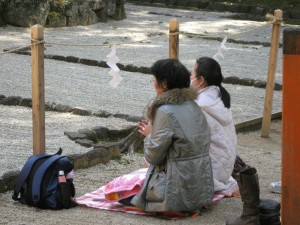
For some Hibara Jinja is sacred ground
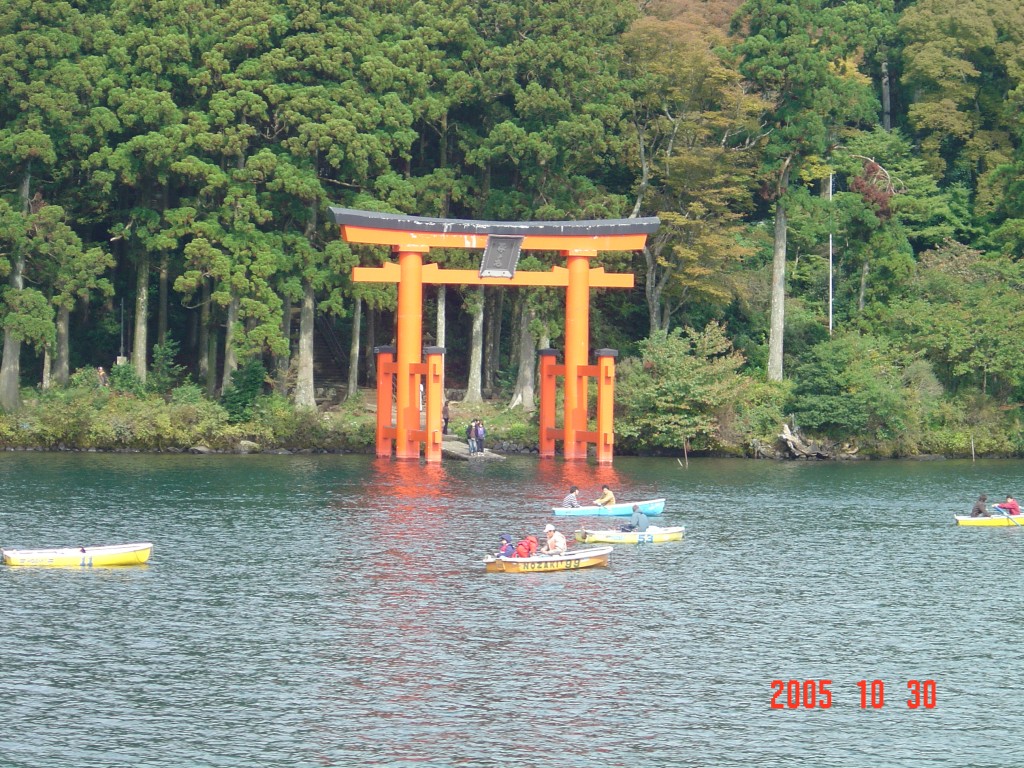
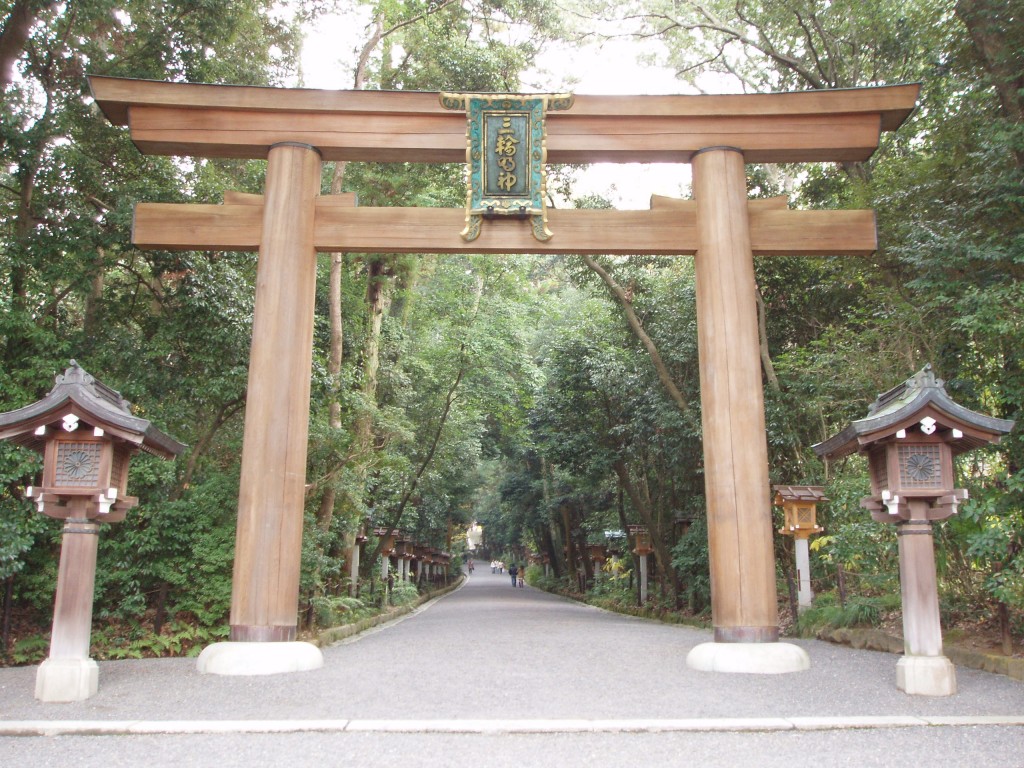
Some time ago I made a trip out to Omiwa, one of Japan’s most ancient and sacred shrines (see entry under Shrine Visits). My purpose was not Omiwa itself, but nearby Hibara Jinja. According to Shinto mythology, it is where Amaterasu was taken when she was banished from the imperial palace by the legendary Sujin. The shrine is a bare fifteen minutes walk from Omiwa where the Yamato palace was located, so she didn’t exactly get banished very far. Interestingly the unmanned shrine is the only other one to have the characteristic triple torii of Omiwa.
Hibara Jinja is the first of the many shrines known as Moto Ise which housed Amaterasu on her long trek around the middle of Japan looking for a permanent home. It’s thought that she might in fact have been carried on a military conquest to subdue the territory for the Yamato kings. According to the mythology, she appeared in a dream to announce that she wanted to be housed in Ise, because of its pleasant location. As it happens, it was a site of strategic importance for the conquest of eastern Japan.
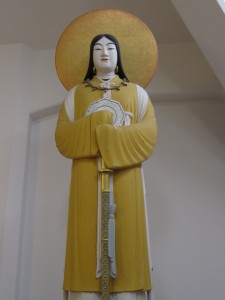
Statue of Amaterasu (Ise museum)
There’s speculation that Amaterasu was banished from the imperial palace because of an internal dispute amongst the ruling factions, and that her supporters lost out to those who championed a different deity. There’s also speculation that Amaterasu was male at the time and underwent a gender change (which would make her well ahead of her time!). Perhaps her gender was altered to fit in with the solar cult of the fishermen at Ise, which she apparently supplanted.
As the military campaign through central Japan was successful, Amaterasu’s prestige rose as a result. It’s thought that sometime around the fifth or sixth century she was claimed by the Yamato kings as royal ancestor, perhaps because they were looking for a solar deity to outshine the powerful ancestral kami of rival clans. Connection with the sun was already a vital part of kingship on the continent, and so a mythology was concocted to show royal descent.
Then in the late seventh century a usurper called Tenmu (c.631-686) ordered the compiling of a ‘history’ to prove the divine descent of his family line from the sun goddess, in order to boost his authority. It was only much later, after his death, that the official court records of Kojiki (712) and Nihon shoki (720) appeared. Tenmu was the first Yamato ruler to take the title of emperor, and the mythology he ordered to be compiled still prevails today. The present emperor is held to be the 125th in line from Amaterasu.
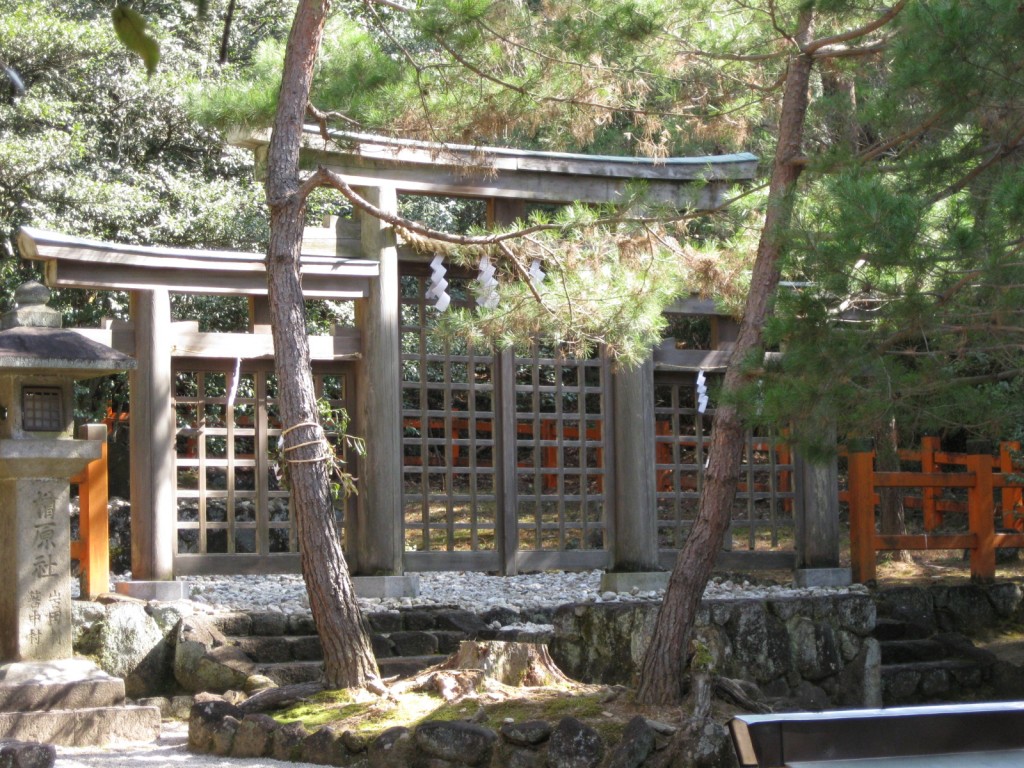
The triple torii of Hibara Jinja

 In Glimpses of Unfamiliar Japan (1894), Lafcadio Hearn shares his delight at discovering the folk customs of the Matsue region (Shimane prefecture). It was his honeymoon period and he is enchanted by all he sees. The book is available online –
 Anglo-Irish, a British diplomat who served in Korea and something of a genius too. Accomplished in literature, linguistics, and history, he was the translator of Nihongi and an authority on Shinto. The book he wrote on the subject is erudite as well as readable. His classical education enables him to make comparisons with ancient Greece, and he displays familiarity too with Chinese and Asian traditions. The book helps to contextualise early Shinto, highlighting the Asian origins of its rites and beliefs. As with Percival Lowell, Aston wrote in an age when religious expression was much richer than at present, and there are references throughout to customs which have since died out. Although he portrays Shinto as ‘primitive’ compared with Buddhism, lacking altruistic morality and an intellectual framework, he displays a familiarity with the complexities of the religion that one suspects even Shinto priests might envy. He is particularly good at outlining the development of religious feeling, illustrating for instance how nature worship turns to animism, then personification and spiritism. Interestingly, he sees ancestor worship as a late arrival, introduced from China and exploited by clan rulers for political purposes. The book is strongest on the early history, the mythology, and analysis of the many types of kami. Yet after so much fascinating detail, Aston chooses to close his book, oddly, with a startling declaration: ‘As a national religion, Shinto is almost extinct. Such meat for babes is quite inadequate as the spiritual food of a nation which in these latter days has reached a full and vigorous manhood.’ It is the one point where one feels the fallibility of the author.