The Catalpa Bow: A study of shamanistic practices in Japan by Carmen Blacker
UK: Allen and Unwin, 1975; RoutledgeCurzon, 2004. 384 pages, medium size. ISBN1-873410-85-9
This is a very inspiring book. It’s written by a University of Cambridge academic in an accessible style with personal anecdotes and engaging accounts of interviews. It covers the full gamut of ‘communing with spirits’, from early Shinto miko to Buddhist practices and the shin-butsu activities of shugendo (mountain asceticism). In so doing, it covers the history of early Shinto in authoritative fashion and provides much succinct information.
There are clear and enlightening summaries of attitudes towards death, spirits, and the afterlife. There is also discussion of the different spiritual traditions, one stream coming from the south (Melanesian and South-East Asia influences) with the more dominant northern shamanistic tradition coming down from the Altaic regions of Mongolia and beyond. Much of this draws on Japanese scholarship, and the references are often fleshed out with useful commentary.
Chapters range from descriptions of early miko-shaman to the degraded or fossilised practices still current at Osore-san and elsewhere. There is also explicit information about the once highly secret ‘entering the mountain’ rites of Shugendo. From blind mediums to witch animals, the book covers the spectrum of Japanese shamanistic spiritualism in systematic and illuminating manner.
Summary: An excellent book in every respect, both authoritative and readable, as well as being packed with valuable information.
 of the book comprises eight specially written ‘meditations’, more like prayers, which are designed to be recited individually or as a group (there is a leader and response format). The meditations are divided by season and
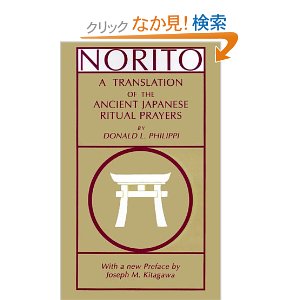 and provide insight into the relationship of humans to kami. The 32 Norito range from such occasions as a Grain Petitioning Festival, to a Great Exorcism, and the Twenty-year Shrine Moving at Ise Jingu (coming up again in 2013). The big problem here is the loss of kotodama (word magic), for the ancient incantations are supposed to be imbued with a mystical force which the commonplace words used in translation can hardly replicate. As with the Catholic shift from Latin to English, there may well be those who feel the gain in clarity comes at the loss of mystery. The publishers might have compensated for this by including the original Japanese, or even better a CD of the norito read out by Shinto priests. The book does however come with a preface by Joseph M. Kitagawa, who writes lucidly of the origin and development of norito, as well as the ethnocentric failure of Westerners to evaluate them properly. That said, the book is unlikely to appeal to those looking for something practical to use in the contemporary world, for whom the book by Ann Evans or Stuart Picken might be a better bet.