Author: John D. (Page 65 of 202)

Ponsonby-Fane exhibition

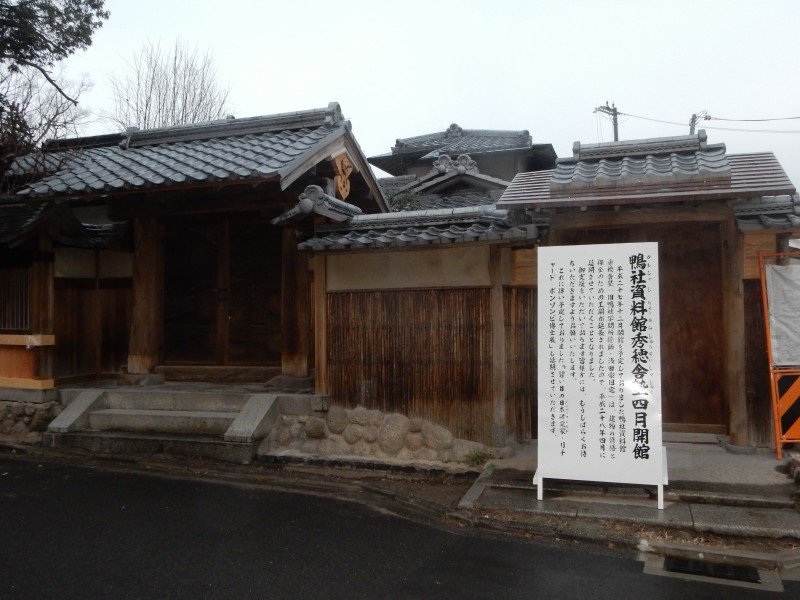
Asadake House where the Ponsonby-Fane exhibition will be held in April

Asadake House where the Ponsonby-Fane exhibition will be held in April

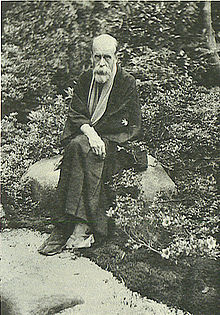
Richard Ponsonby-Fane is acknowledged as perhaps the greatest Shinto scholar of the twentieth century – and that includes Japanese scholars.  He wrote 11 weighty tomes in all about such subjects as The Imperial Family of Japan, The Vicissitudes of Shinto, Studies in Shinto and Shrines, et al. It’s an extraordinary feat for an aristocratic Englishman who had no need to push himself.  He did it as a passion, a pursuit, a principle. It derived from his belief in a divinely appointed king.  Intellectually he belonged in the seventeenth century when Charles I was guided by the Divine Right of Kings.

In the prewar years Shinto scholar Richard Ponsonby-Fane was much taken with the area and lived in an old Japanese house

In the prewar years Shinto scholar Richard Ponsonby-Fane was much taken with the Kamigamo area of Kyoto and lived in the former ‘shake machi’ there

In Japan he had found a country where they took their sovereign seriously.  He may have had personal reasons for living abroad (homosexuality), but he overcame that by plunging into his work.  The result was honours and friendship on high – in later years he insisted on wearing a scarf made for him by Empress Teimei.

According to a report in the Kyoto Shimbun, it is believed that Ponsonby-Fane’s legacy is in danger of being forgotten, which is why there will be an exhibition of his papers in April at Shimogamo Jinja.  It will take place in the Former Asadake House, which was part of the ‘shake machi‘ (Shrine town) around shrines in times past.  Ponsonby-Fane lived in the shake machi of Kamigamo Jinja in north Kyoto, and  the area retains something of its former character.

Altogether there were 340 houses in the Shimogamo shake machi in the past, all connected in some way with the shrine – priests, attendants, miko, craftsmen, groundsmen, cooks, ritualists, history experts, etc etc.  In Meiji times the system was abolished; now only two of the houses remain, one of which is the Asadake House.

The House was empty for ten years – once it belonged to the mayor.  The previous owner offered it to the shrine, who had it renovated and remodelled into an exhibition room.  The very first exhibition was held last autumn and featured Ponsonby-Fane’s material and his contribution to shrine history.

Now the Asadake House is a study centre for children who cannot learn of history at school because of the postwar constitution.  For example, in the past kami and buddhas were one, says the newspaper, but children have no place to learn about such things.  One can’t help wondering what Ponsonby-Fane would have thought of that! Remarkably, some eighty years after his death the eccentric Englishman continues to play a vital part in disseminating information about Shinto.

************************

For more about Ponsonby-Fane, see here.

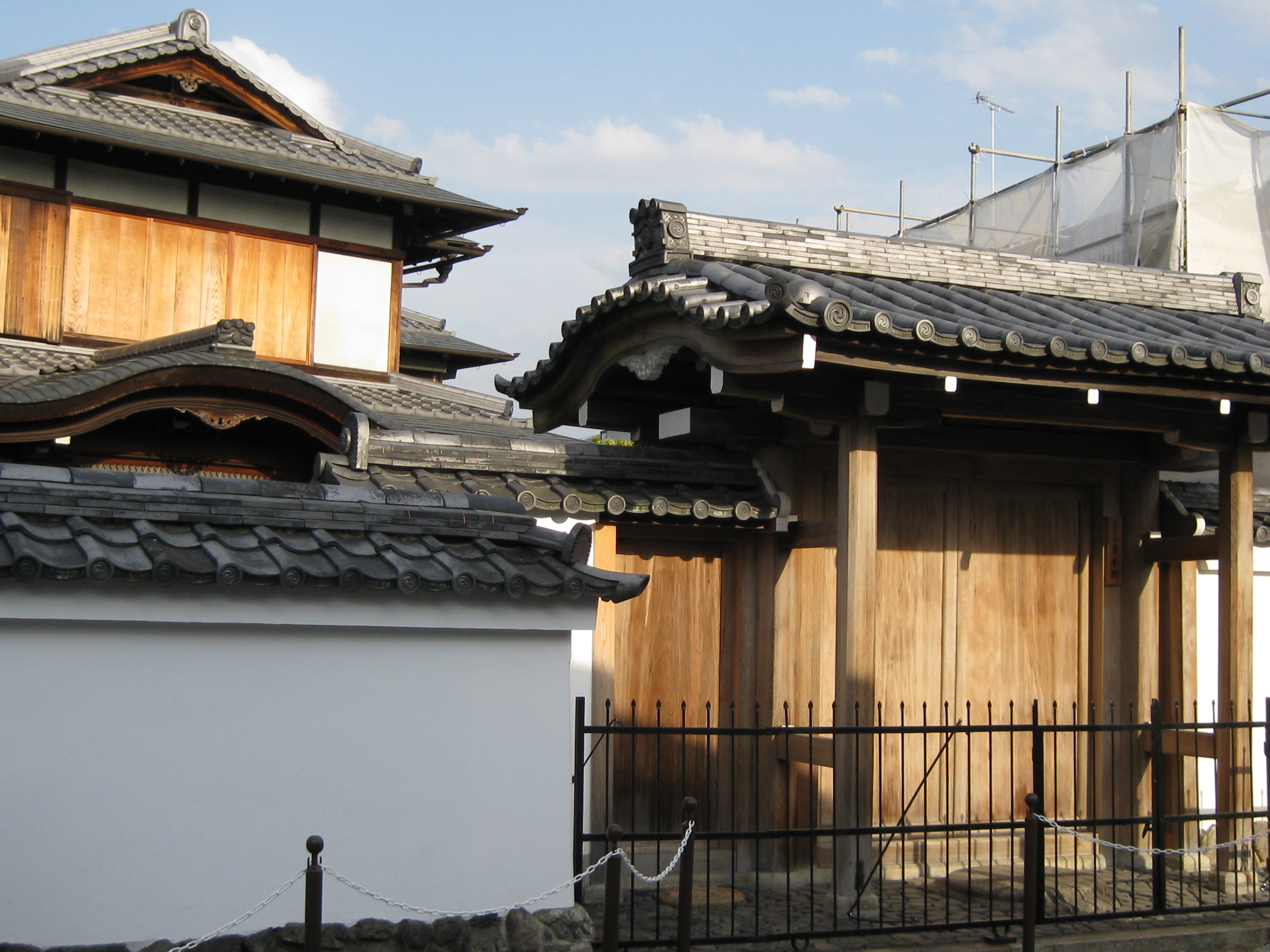
The house where Ponsonby Fane lived, now taken over by a company

The house where Ponsonby Fane once lived, now taken over by a company

Zen and Shinto 10: Shaman Mirrors

Shinto altar mirrorThis post follows up the previous post on mirrors in Zen and Shinto.  It consists of an article adapted from the latest issue of Sacred Hoop (no. 91), a magazine about shamanism.  The article is useful in placing the context of mirrors in Zen and Shinto within their wider use in East Asia, and thereby illustrates the syncretic roots out of which the two religions developed.  The author is not only a modern-day practitioner, but a sacred mirror-maker with years of experience and insight.  Since the religious use of mirrors stems from the shaman tradition, it’s instructive to learn what that has to teach us about present-day usage in both Zen and Shinto. The article is particularly good at describing the ‘energy container’ that the mirror represented to early people.

*********************

The author of the following article, Marco Hadjidakis, was born in 1957 in Holland and has studied altered states and healing since 1991, and made mirrors to commission since 2010.  He is an artist,
mystic and mirror-smith.

Shamanic mirrors are metallic discs made of bronze or other metals, polished on one side – their ‘face’ – and usually decorated on the other – their ’back’ – in the centre of which is often a knob or boss with a hole in it. This hole is to allow a cord, silk ribbon or scarf to be passed through it, which enables the mirror to be suspended or tied onto a costume etc. Some mirrors have a loop on their top edge for this purpose rather than a boss on the back. Suspending a mirror makes it easier to handle it without touching and dirtying the polished metal face.

The origin of ceremonial mirrors developed in Neolithic times with the art of grinding and polishing stone. Obsidian and jade were often used in ancient mirrors, and these stones are found in different locations around the world, such as Mexico, Anatolia and China. Polished, iron-rich meteorites may also predate cast bronze mirrors, and these have been used for a very long time in Tibet to create mirrors and other sacred objects. Ancient arrowheads, made from iron-rich meteorites, have also
been found on the Eurasian steppes, and clearly show the early use of this powerful material.
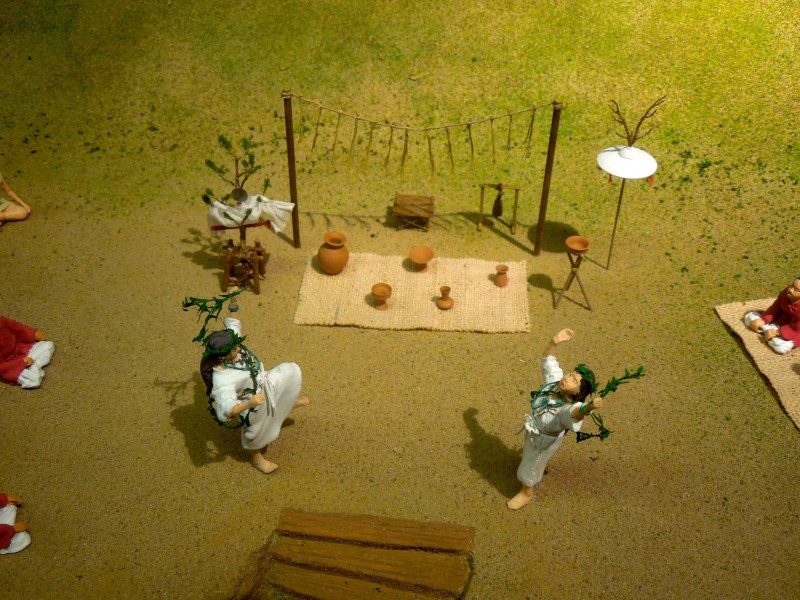
Model of a Yayoi-era ritual, with mirror hanging in the tree

Model of a Yayoi-era ritual, with mirror hanging in the tree to the left of the altar

Since the early Bronze Age [Around 3.000-2.000 BCE ] the development of bronze casting spread quickly across the world. The nomadic tribes who lived on the Central Asian steppes spread their bronze technology across a wide band, stretching from Eastern Europe, all the way to the Pacific coast of Northern China. They influenced Chinese Bronze Age culture, and subsequently Chinese influence then spread to neighbouring cultures, such as Japan and Korea to the east, and Iran and Anatolia to the west.

MIRRORS AND THE ANCESTORS
Ancestor cults are China’s root connection with mirrors; the durability of bronze created the possibility for a Chinese person to inherit an ancient mirror, dating back perhaps as far as 30 generations in their ancestral line. Such a mirror is very powerful, it has connections with all those spirits of the family lineage, and such mirrors are highly respected, and consulted with if there are important issues within the family. There is evidence to suggest that the ritual use of mirrors grew out of this ancient Chinese ancestor practice, with ideas about mirrors then spreading to regions outside of China, enabling the use of mirrors to be taken up by the shamanic cultures there. However, there is also evidence to suggest that shamanic cultures greatly influenced ancient China, which makes it seem likely that there was cross pollination of ideas regarding the ritual use of mirrors between China and the shamanic cultures of Central Asia – each influencing the other.

Over a long period of time, shamans have found many ways to use their mirrors. Some shamans use mirrors – often known as toli – to give to spirits as a house for the spirit to live in. Some shamans use them by entering a trance and working with the energies amplified by, or inherently present, in the mirror. Shamans use them for performing healings, for exorcism, for soul retrieval, and for divination. Mirrors also form part of a shaman’s armour, protecting their bodies while spirit-travelling in trance to the other worlds. When a shaman dies, traditionally their body was left in a remote place, far out in nature; often on a platform in a tree. There they were laid – with all their mirrors, their drum and other sacred items. Later generations would then accidentally ‘find’ the deceased shaman’s mirrors and other bronze objects, and after consulting the spirit of the deceased shaman to ask for permission to adopt the mirror, the shaman who found these ancient objects could use them in his own work.
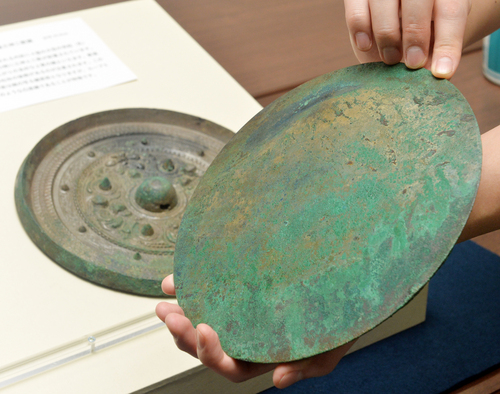
The original mirror in Kyoto National Museum, thought to be that of Himiko

Two sides of a mirror in Kyoto National Museum, thought to have belonged to Himiko

Ancient bronze mirrors did not only become sacred tools in shamanism, they also became adopted into Buddhist practice. Buddhist mirrors are called melong in China and Tibet, and darpan in Sanskrit, and these mirrors are used in Buddhist initiations to represent the nature of the enlightened mind. At one point in these initiations, the Lama shows the student the melong and tells them: “Your mind is like this mirror, in itself empty, but it will reflect everything that is exposed to it without changing because it has no judgment or attachment on what it reflects.” Many Buddhist altars contain metal mirrors, which can be truth- revealing mirrors, or part of an offering to the five senses, the mirror representing the offering of sight.

The syncretic blend of Buddhism and shamanism found in Tibet, which is sometimes called ‘Lamaism’, has followers in Mongolia, China and Nepal. In this tradition, mahasiddhas (great adepts or mystics), oracles and healers all have melongs or ‘heart protecting mirrors.’ I have also been told that a melong is involved in hungry ghost offering ceremonies. Another magical use of mirrors within Buddhism can be seen on a relief on the C9th Borobudur stupa in Java. The relief shows the Buddha surrounded by monks, who are lifting their handled mirrors, so as to charge them with the high energy of his enlightened being. This use of mirrors as a sort of ‘sacred battery’ which holds a spiritual charge also occurs in medieval Europe as Christian relics were sometimes viewed in a mirror, the mirror capturing and holding the reflection of the sacred relic for the pilgrim to take away with them.

Mirrors are multi-functional sacred objects, and shamans use them for: divination, finding lost objects, healing, exorcism, soul retrieval, and protection. They are also used when working with harmful spirits, and both to create, and also fight against, ‘black’ magic too. Depending on their culture of origin, they can also be used in Sun worship, divination, as a door to communicate with the ancestors, as protector of a house or sacred place (for example the use of mirrors in traditional feng shui), as an initiation tool, as a house for spirit helpers to live within, as a healing tool, or to direct energies and intentions. They can also act as a shield to reflect negative energies, as a symbol of authority, as a representation of a divinity or a kami (a Shinto nature spirit), as a tool for introspection, as a signal device (by reflecting light, so another can see the ‘flash’) and simply as an everyday mirror.

Ceremonies held to assist the soul of a person who has died are a major part of many shamanic traditions, and when using mirrors for this, two mirrors are required – one to protect the shaman in trance, during their travels in the underworld, and one to shine light and illuminate the ‘path of the soul,’ to help the soul find the land of the ancestors. Some mirrors are very large – over 30 cm across, while others are small – perhaps only 2 – 5 cm across, and are more like amulets. These have been made since ancient times, and in literature they are sometimes called ‘inch mirrors.’ The smaller ones could easily be mistaken for bronze buttons, they are so small. Some have simple designs on their backs: perhaps a yin-yang, four Chinese characters, or the eight trigrams (I Ching trigrams). Some have flowers, or the animals of the Chinese zodiac. In Mongolia these small toli are often attached to ceremonial headgear and other ritual objects such as phurbas and divination arrows. Shaman’s ritual objects don’t need to be large to be effective in the spirit world, and small objects can be used without attracting too much attention. Small, inch mirrors, are perfect for protection while travelling, or to work with when the shamanic work needs to be unobtrusive.

A WORLD OF MIRRORS
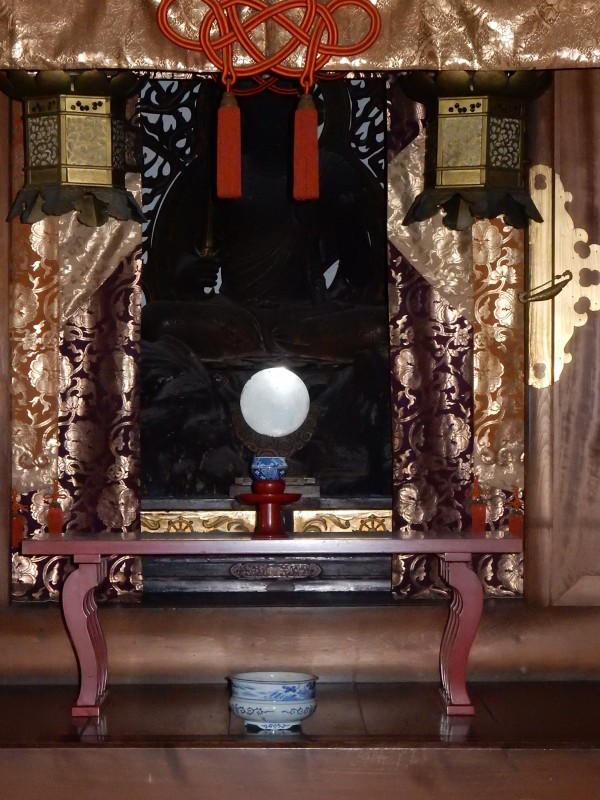
Mirror at a Zen subtemple of Nanzen-ji

Mirror at a Zen subtemple of Nanzen-ji

The face of a bronze mirror is generally convex, although some are flat. Concave mirrors are rare. In historical and ancient China, household fires were kept alive both day and night, but once a year all the fires had to die. The next day, at noon, new fires were ceremonially lit by a shaman or priest, who used a concave bronze mirror. When using such a mirror, the sun’s rays are reflected back from the mirror into a single point, which generates enough heat to light the kindling. Today we can achieve the same result by the use of a glass lens. Himalayan melong mirrors, with a bronze loop on their top edge, are sometimes polished on both sides. These are convex on the one face, and concave on the other. As a heart protecting mirror, the convex side is worn outward. Once I heard a shaman explain: ‘The convex side is to see into the future, and the concave side to see into the past’.

Some rare shaman’s mirrors have a face full of small concentric waves – almost looking as if a drop of water had fallen into a pool. Mirrors like this can not produce a recognisable reflection, and I think their function  could be to disintegrate spirits during exorcism rituals, so as to disperse their power. Both before and after the shaman works with them, mirrors are generally smudged in the smoke of herbs or incense. Bronze is very sensitive to oxidation, and the acid from our skin can easily affect their polished surface. Therefore, the tassel or silk scarves that are attached to the knob provide for a handle. Bronze mirrors are wrapped in silks, or stored in bags or boxes when not in use. This wrapping up and putting away also helps to protect them from energetic intrusions and accidental reflections – just as a blessed reflection can be held in a mirror, so too can the reflection of something harmful.

Some traditions say that only ‘altar mirrors’ should be displayed openly. In the case of a Buddhist altar, these are placed to symbolise radiant emptiness, or, on a shamanic altar, they are placed as homes for helper spirits and symbols of shamanic power. Ritual mirrors – as living things in their own right, with their own ‘master spirits’ – may have their own preference as to how they are cleaned, stored and ‘dressed.’ One needs to ‘listen’ to them to find the correct way to work with them, including what kind of offerings they require. Some traditional offerings to mirrors are incense, juniper or sage smoke, alcohol – generally vodka – songs and the sounds of drums rattles and bells. In Mongolia, shaman’s mirrors were, and still are, blooded in the blood of a sacrificed sheep. The blood is said to transfer the life force of the animal to the mirror.

Dressing a mirror with silk complements the ‘hot’ male energy of the bronze by the use of the ‘cool’ female quality of the fabric. This cloth becomes part of the sacred nature of the mirror and the combined qualities of heat and cool both play a role in healing or other work done with the it. Silks are one of the traditional offerings which people who had been cured could offer a shaman to express their gratitude. The colours of the silk fabric used to ‘dress’ a mirror represent connections with both the four (or five) elements, and the sacred directions. Some spirits ask for additional offerings to be attached to their mirror, such as beads, stones, shells or small bells too.

FORGING A MIRROR PATH
Bronze is an alloy of copper and tin (Cu and Sn), and the percentage of tin varies from about 10% to 30%. The tin content changes the colour and hardness of the bronze; for example, a high level of tin
makes the mirror brittle, and it will be prone to break easy, whereas a low level of tin gives a warm red shine, but will easily oxidize. Sometimes quantities of gold, silver, lead and sometimes zinc, can be added to the bronze, which all influence the resulting metal. (In the Tibetan language there are five different words for bronze.)
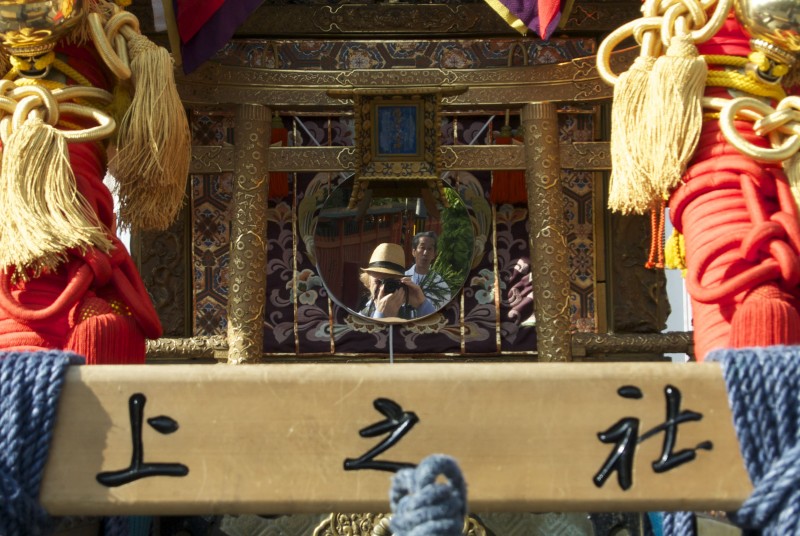
Mikoshi in Shinto festivals have mirrors on their side as a form of protection

Mikoshi in Shinto festivals have mirrors on their side as a form of protection

To add a personalised element of magic into the mix, I often like to add – and recycle – an old ring or other precious metal object that already belongs to the owner of the new mirror, to create a stronger bond between practitioner and ceremonial tool. Back in July 2001 I met the Japanese doctor, Masaru Emoto who presented his work about human consciousness having an effect on the molecular structure of water. Doctor Emoto’s theory is that, in the liquid stage, the water molecules can absorb information, which in a solid stage as ice, is frozen into the ice crystals. It seemed very obvious to me that this would also apply to metals; and any programming done in the liquid stage would, when the bronze cools, become permanently stored in the crystal structure of the solid mirror or other object. This programmed intention – through prayer and mantra – added to the intent in the original wax design – made me realise that a cast bronze mirror could be a powerful holder of intent and focus.

Because I was making sacred objects it was important to me to do them in a sacred manner. So, while the bronze is melting, I make an offering to the fire and I smudge the work. When the bronze is ready to be poured, I focus on the person that will work with the mirror, and whisper the intentions into the liquid bronze. I then pray and recite mantras while I do the pouring, which has to be done smoothly, without any interruptions, as interruptions will cause flaws in the casting. After breaking the mould, the airways  – through which the bronze was poured in, and through which the air inside escaped out – have to be removed. Then the mirror needs to be cleaned and polished. At the end of my process – as a mirror smith – I add a prayer to welcome the mirror into the world, which has the potential to be around for the next few millennia. Now it is up to the practitioner to “dress” it and to initiate it in its first ceremony.

The most powerful shamans we know of are the smiths. They are called white smiths. They made the sacred things, like drums and jaw-harps and bells and such. Their relationship must be with all four of the elemental Master Spirits – Earth (which includes the ore of metals), Air, Fire and Water, or their work cannot be completed. So, long ago, when the first white smith journeyed about making these sacred things, he was given knowledge of a special metal, a hard yellow metal, not the
gold we know of today, but another alloy we call bronze today. He culled and cultivated the metal and sat wondering what its form was to be, and it was then that the Mater Spirit of the metal spoke to him: “I must be light enough to carry on a shaman’s person. “I must be fitted with a knob so as to have silk attached, so I may be fashioned to begin new life with the green silk; preserve life with red silk; teach with yellow silk; heal with the blue silk; and for the maker of the toli and all things Spirit I must be fitted with white silk. “One side shall be polished so that I can mirror this world and take from it and give to it, and the other side may be for anyone to touch and see.”

The smith shaman thought and thought, and pondered the problem, and started making metal things: boxes, trays, crowns, cuffs, all manner of things, but the Master Spirit of the metal was never satisfied. So after much effort and time, the smith shaman finally came up with a disk, which had a place on one side to attach silk khadags, and which was smooth on the other side. He took the disc to the other shamans and told them about this story. At first they did not believe it, but then one of the lesser shamans, a healer, attached his own blue khadag and said: “So, mirror of life, will you work with me?” The disc said: “Yes, there is a burn on the white smith’s hand, go and place my shiny side against it.” The healer went and did as he was told, but nothing happened. “Did I do it wrong?” asked the Healer worriedly, for failing was dangerous. “Take me outside and let me commune with the Great Mother” said the Master Spirit, and as the healer did so and placed the disc on the Earth he could hear excited voices from the inside of the ger. The burn had disappeared!
So the toli‘s creation was completed, and the white smiths told the shamans – who would each be receiving one of these mirrors – that there could not be a relationship between the toli and the shaman, unless the spirits of the shamans were properly linked with the Master Spirits of the toli they were to receive.
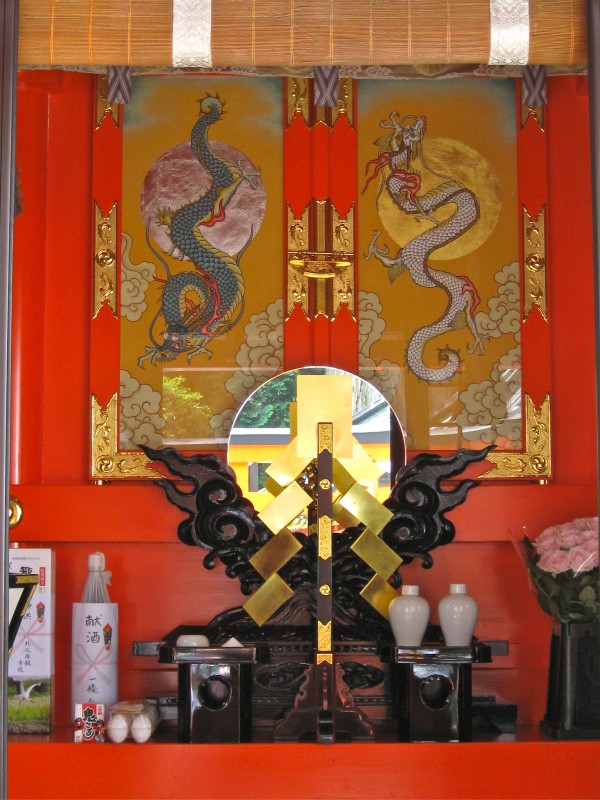

shrine mirror

Zen and Shinto 9: Mirrors

Mirror

Both Shinto and Buddhism in Japan use mirrors as spiritual symbols, and Green Shinto has covered their use in several previous posts (here and here or here or here for instance).

The essential idea, common to both religions, is that mirrors have no ego – they reflect without bias whatever is before them.  This is tied in both Zen and Shinto with the idea of original purity.   In Shinto you try to recover the purity with which you were born (the purity of another world, one might say). In Zen this takes the form of trying to recover one’s ‘Buddha nature’.  “What is the face of your original nature?”runs a well-known koan.

In both religions, then, inner purity is treasured.  This can be seen in the words of Morihei Ueshiba, founder of aikido, who drew on different aspects of Japanese spirituality in putting together his thinking about the martial art.  The quotations below are taken from The Art of Peace (tr John Stevens).

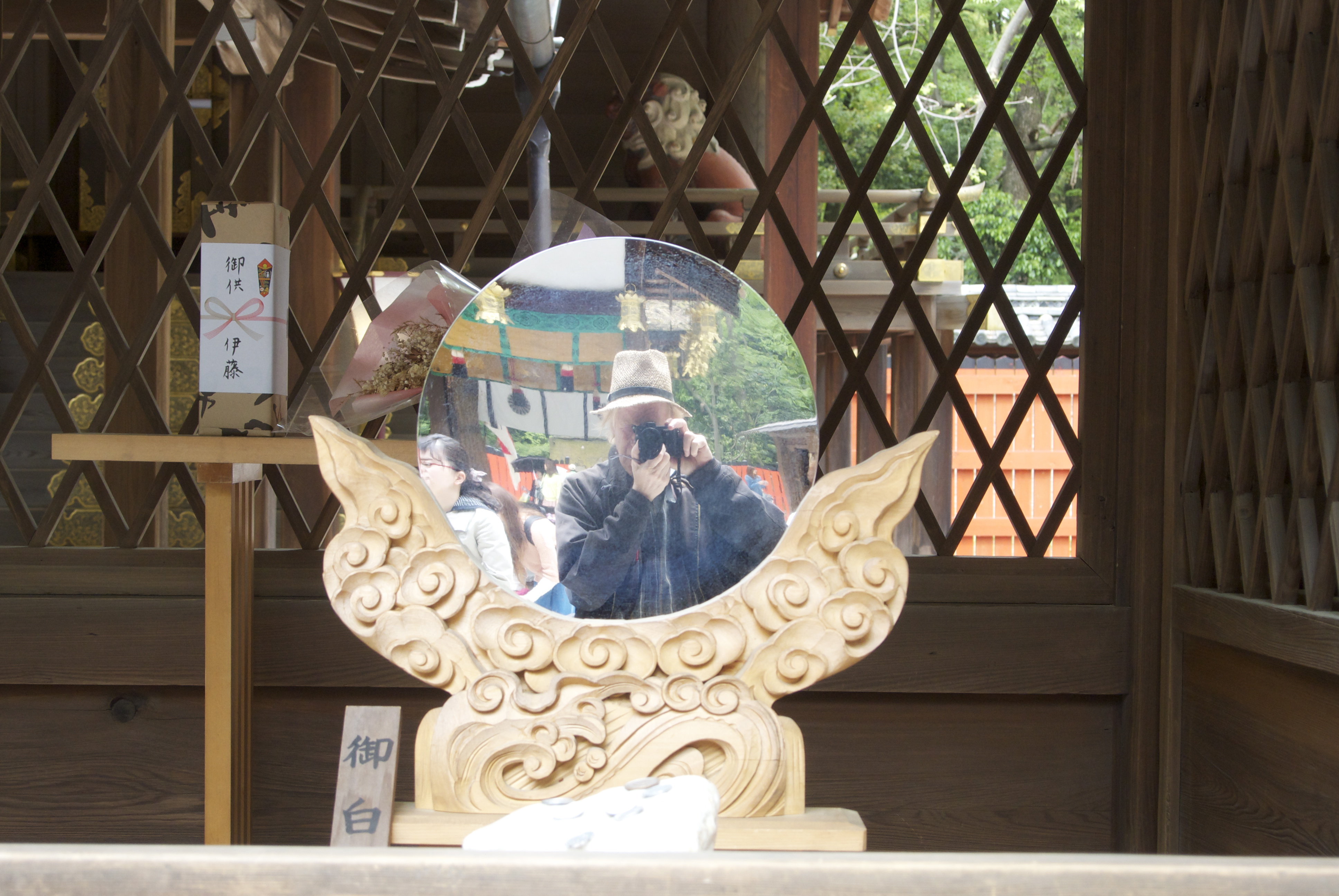
Watching you, watching me.... Altar mirrors often reflect the spirit of the kami within the person of the onlooker

The Shinto mirror reflects without ego whatever is before it

All things, material and spiritual, originate from one source and are related as if they were one family.  The past, present, and future are all contained in the life force… Return to that source and leave behind all self-centred thoughts and petty desires.

You are here for no other reason than to realize your own inner divinity and manifest your inner enlightenment.

To purify yourself you must wash away all external defilement, remove all obstacles from our path, separate yourself from disorder, and abstain from negative thoughts.  This will create a radiant state of being. Such purification allows you to return to the very beginning, where all is fresh, bright, and pristine, and you will see once again the world’s scintillating beauty.

Words such as these show why sincerity and purity are so treasured in Japanese culture.  In a recent talk in Kyoto on Zen terrorism in the 1930s, author Brian Victoria illustrated how political assassins had been defended by a Zen master because of the ‘purity’ of their heart in wanting the best for the nation.  And in the Japanese entertainment world of late there was a big scandal involving a woman called Becky.  Why?  Because she had a boyfriend and was therefore not as ‘pure’ as everyone thought.  Mirror, mirror on the wall – who’s the purest of them all? runs the Japanese version of the old folk tale.

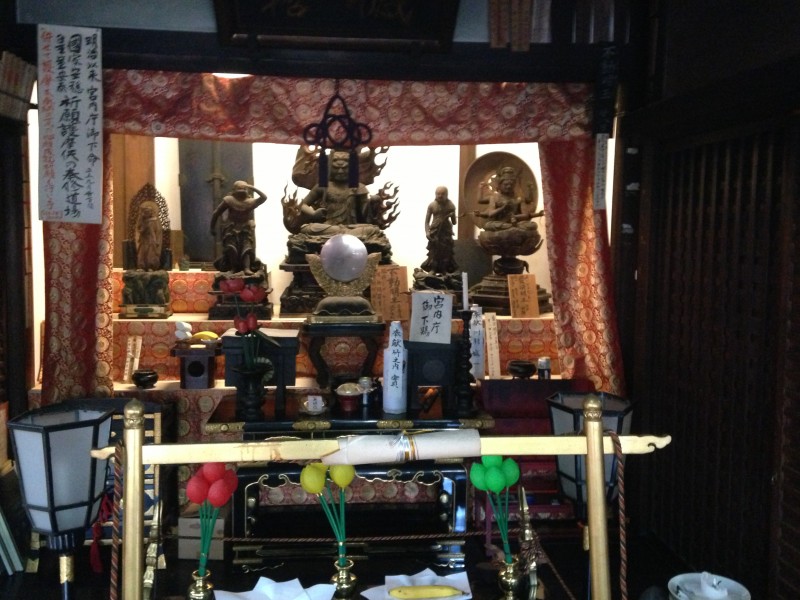
Buddhist altar with mirror

Buddhist altar with mirror

The use of mirrors in Buddhist temples, where they often feature on altars as in Shinto, derives apparently from a fifth-century Indian called Vasubandhu, who came up with the idea of eight levels of consciousness.  The top level shines with the light of a wisdom like a great mirror…  hence the expression in Buddhism of The Great Wisdom Mirror, or Great Perfect Mirror Wisdom, which reflects the universe as it really is, free of distortion from ego or ignorance.

The Buddhist mirror is thus intended to liberate the mind. Life is an illusion, and one should not be deluded by mere appearances.  Look and reflect upon reality!  In An Introduction to Zen, p. 48, D.T. Suzuki quotes a Chinese monk as writing:

This body is the Bodhi-tree
The soul is like the mirror bright;
Take heed to keep it always clean,
And let no dust collect upon it.

Later, on p.61, Suzuki comments, ‘Zen often compares the mind to a mirror free of stains.  To be simple, therefore, according to Zen, will be to keep this mirror always bright and pure and ready to reflect simply and absolutely whatever comes to it.’

Significantly in both Shinto and Buddhism the mirror is round, and the circle has great symbolic value in its never ending completeness. In ancient China the soul was conceived of as circular, which is why in Japanese mythology Amaterasu chose a round mirror to represent herself.

Zen is also focussed on the circle, and in the Dharma Hall of Zen temples one finds a ceiling painting of a dragon within a circle signifying the universe.  And in calligraphy the best-known image is the ensou or circle, interpreted variously as enlightenment, emptiness, strength or the unity of all things.  In Buddhism the moon is a symbol of awakening; in Shinto the sun.  Both religions find in the roundness of celestial objects a cause for worship, and in the depths of the mirror both find a cause for reflection.

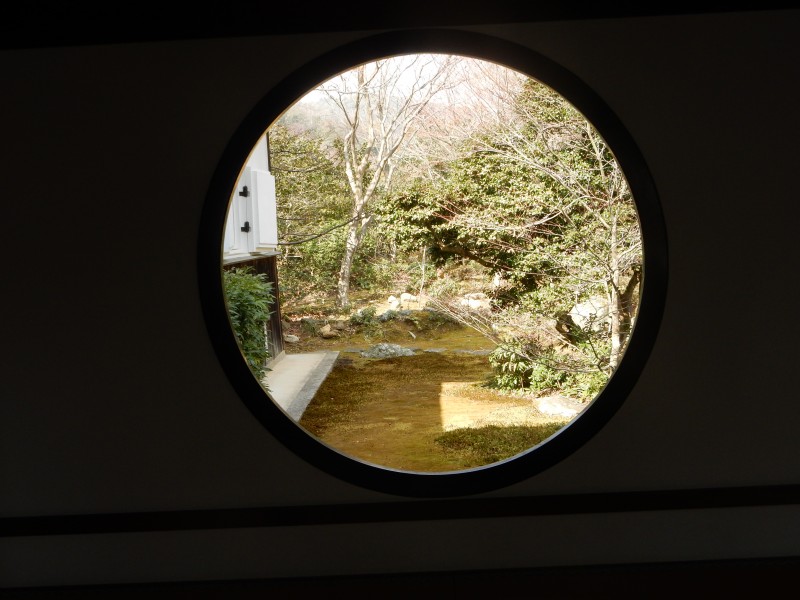
The circular window at Genko-an gives a picture of reality but is suggestive of much more

The circular window at the Zen temple of Genko-an gives a picture of reality but is suggestive of much more

Zen and Shinto 8: Animism and ancestry

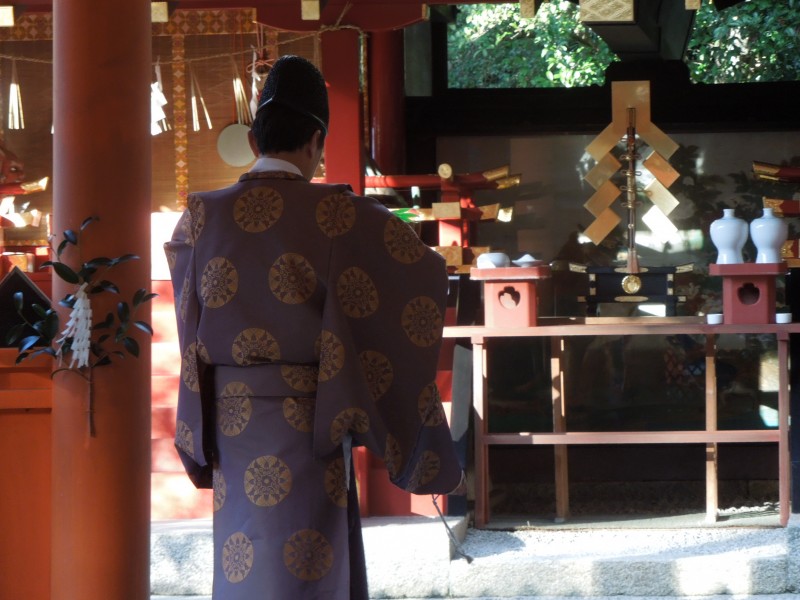
Rituals at Shinto shrines are for ancestral or animist spirits

Rituals at Shinto shrines are for ancestral or animist spirits

Green Shinto has written before of how Shinto stands on the twin pillars of animism and ancestor worship, and how these two different strands are interlocked.  (See here for instance.)  Zen too cultivates both aspects, though they are not so central to its practice.  Perhaps the influence of Shinto brought out the tendencies in the imported religion.

In an essay in Treasury of the True Dharma Eye entitled ‘The sound of the valley stream, the colors of the mountain’, Dogen, the founder of the Soto sect wrote as follows:

The sound of the valley stream, the colors of the valley stream, the sound of the mountain, and the colors of the mountain all reveal truth unstintingly.  If you do not prize honor and gain, then the valley stream and the mountain will expound truth to you without stint.

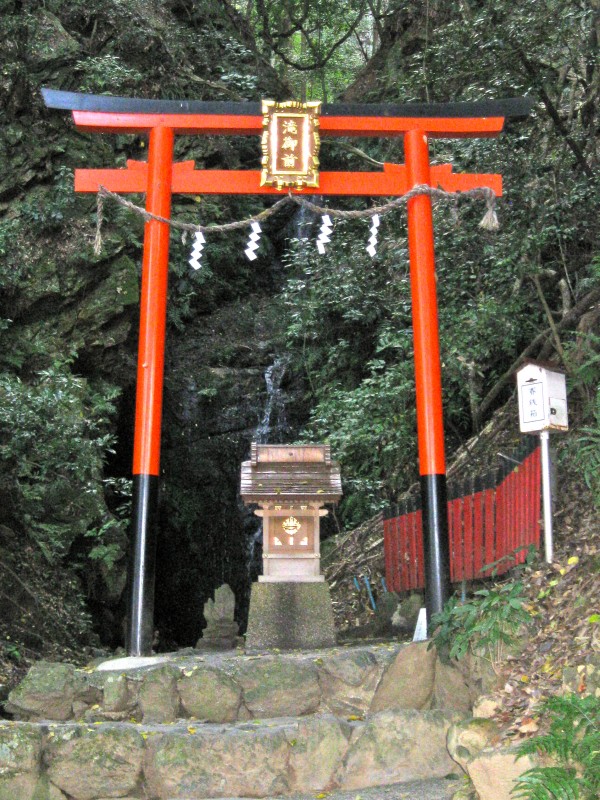
Torii nature

“The sound of the stream, the colour of the mountain…”

Dogen advocated recalling nature internally and searching out ways to live according to the laws of nature.  It all sounds very similar to the thinking of Shinto and cold water austerity (misgoi) as a way to immerse oneself in nature and so be true to one’s real self.

Along with the reverence of nature goes reverence for ancestors.  In Shinto this begins on a personal level with maintenance of the memory of one’s parents and grandparents, and then extends to the larger anonymous mass of ancestors that goes to make up the whole inherited past of the nation.

Similarly in Zen there is a concern with maintaining the spirit-memory of one’s teachers, both one’s own teacher and the whole line of transmission back to the founder of the sect, and beyond that to the founder of Zen, and beyond that to the historical and other Buddhas.  The pamphlet of the subtemple of Ryogen-in at Daitoku-ji states the following about the images of founders Rinzai and the subtemple founder Tokei:

We attend to them as if they are still here, and we hold fast to the first teaching of Zen Buddhism, ‘hoon shatoku’ (display gratitude for the kindness and virtue shown to you).

Attending to ancestral spirits as if they are still here – you could hardly get a better description of kami.  Displaying gratitude for what you have received is a key Shinto virtue too.   Here then is a strong overlap in the mindsets of Zen and Shinto – unseen spirits in a living universe.

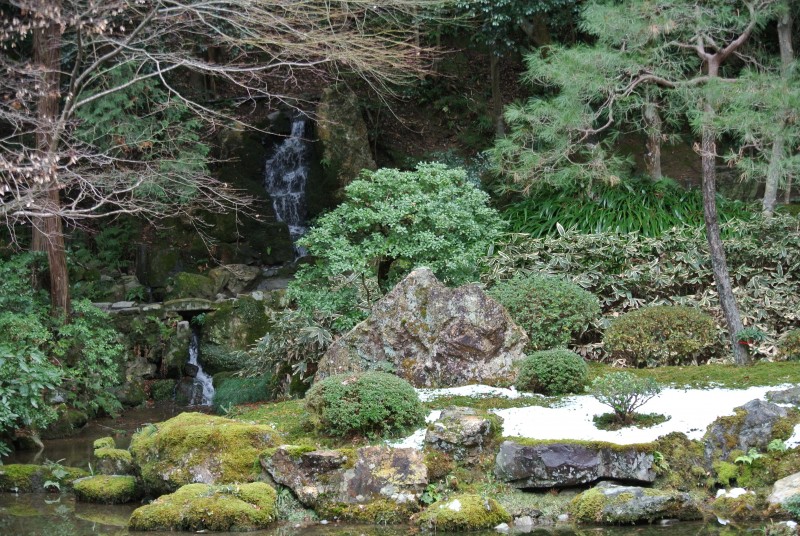
The Zen garden abstracts the quintessence of nature as a means to bring the practitioner closer to enlightenment

The Zen garden abstracts the quintessence of nature as a means to bring the practitioner closer to enlightenment

Dolls Day (Hina Matsuri)

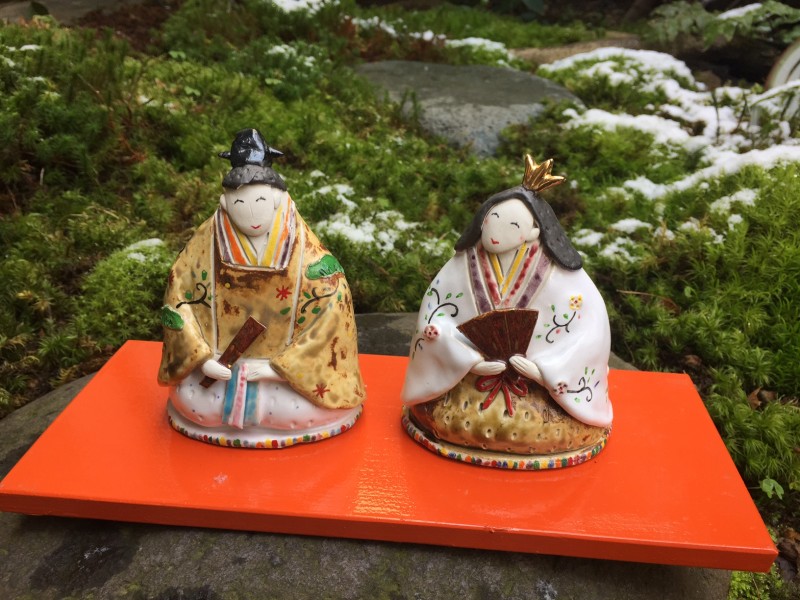
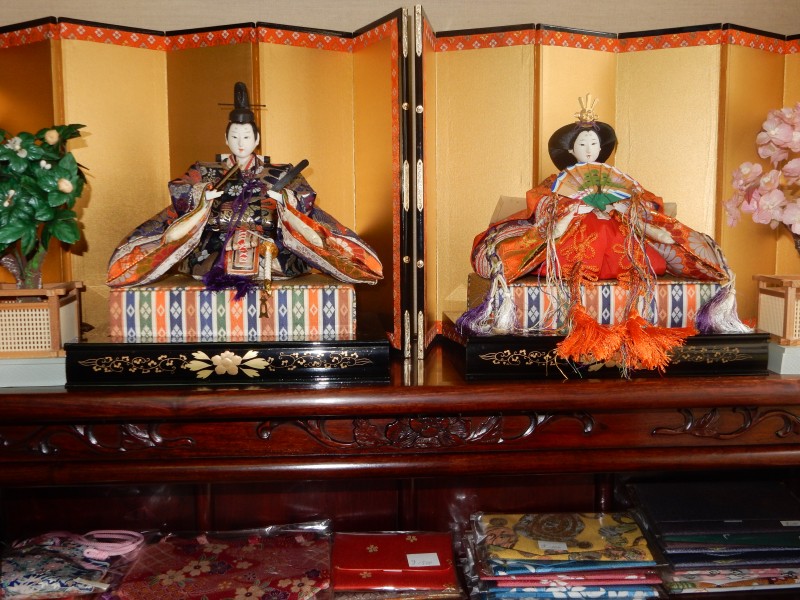
March 1, 2016, and the dolls enjoy a touch of snow in Kyoto

March 1, 2016, and the dolls enjoy a touch of snow in Kyoto (photo Y. Suzuki)

March 3 is Doll’s Day in Japan, and the stores are full of amazake (sweet sake) and sweets called arare, traditional fare which are consumed along with chirashizushi (fish on a bed of rice etc) in front of the display of family dolls.  More information courtesy Wikipedia below…Some shrines hold events to celebrate the occasion, as an article recycled below from Japan Today makes clear.

What is the connection of Doll’s Day with pagan rites?  Well, Megan Manson has come up with an answer to that in a most informative and illuminating article which I would like to specially recommend, entitled Honouring the Feminine at the Doll Festival.

*******************************************************

Origins (from Wikipedia)

The custom of displaying dolls began during the Heian period.  Formerly, people believed the dolls possessed the power to contain bad spirits.  Hinamatsuri traces its origins to an ancient Japanese custom called hina-nagashi lit. “doll floating”), in which straw hina dolls are set afloat on a boat and sent down a river to the sea, supposedly taking troubles or bad spirits with them.

Dolls

The Shimogamo Shrine (part of the Kamo Shrine complex in Kyoto) celebrates the Nagashibina by floating these dolls between the Takano and Kamo Rivers to pray for the safety of children.  People have stopped doing this now because of fishermen catching the dolls in their nets.  They now send them out to sea, and when the spectators are gone they take the boats out of the water and bring them back to the temple and burn them.

The customary drink for the festival is shirozake, a sake made from fermented rice.  A colored hina-arare, bite-sized crackers flavored with sugar or soy sauce depending on the region, and hishimochi, a diamond-shaped colored rice cake, are served.  Chirashizushi (sushi rice flavored with sugar, vinegar, topped with raw fish and a variety of ingredients) is often eaten.

A salt-based soup called ushiojiru containing clams still in the shell is also served.  Clam shells in food are deemed the symbol of a united and peaceful couple, because a pair of clam shells fits perfectly, and no pair but the original pair can do so.

Families generally start to display the dolls in February and take them down immediately after the festival. Superstition says that leaving the dolls past March 4 will result in a late marriage for the daughter.

*********************************************************

Playing with dolls: Explore the traditional trappings of Hina dolls
By Vicki L Beyer   Japan Today March 1, 2013

Traditionally in Japan the third day of the third month was celebrated as girls’ day and the fifth day of the fifth month was celebrated as boys’ day. When the decision was made to create a Children’s Day national holiday after World War II, the date of boys’ day was selected. But that doesn’t stop people from observing the girls’ day holiday with its traditional trappings, most notably the Hina dolls. In fact, an alternative name for the girls’ day holiday is Hina Matsuri, or doll festival.

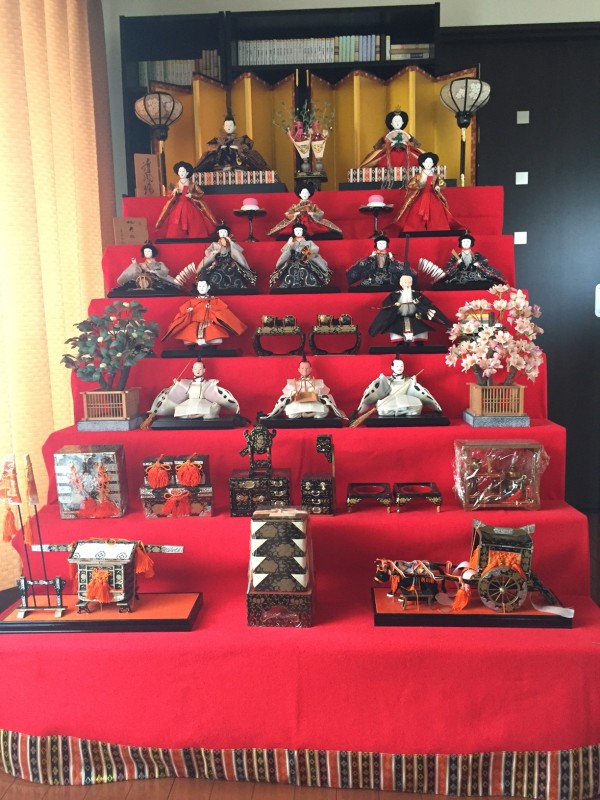
There are a number of theories as to the festival’s origins and the display of dolls representing an emperor and empress and their courtiers is believed to have begun early in the Edo Period (1603-1867). Over the years, the doll sets have become increasingly elaborate, with the grandest collections consisting of an emperor and empress, ladies-in-waiting, other courtiers, musicians with their instruments, dancers and various furnishings, including lamps, chests, food boxes and sometimes even a palanquin. The dolls, usually in Heian Period (794-1195) dress, are arranged on a red felt covered stair-step dais, with the imperial couple at the top and then the courtiers by descending rank.

IMG_1677

Picture by Y. Suzuki

Part of the tradition is that when a baby girl is born into a family, she is given a set of Hina dolls that are put on display in the family home each year during the festival, usually beginning in the middle of February. In modern Japan, where storage space is limited, some stores that sell Hina dolls offer a special storage package with the sale.

The culmination of the festival is its last day, March 3, when diamond-shaped rice cakes (“hishi-mochi”), a rice malt and sake drink (“shirozake”), and sugar-coated puffed rice (“hina arare”) are consumed.

As one would expect of a festival for girls that is centuries old, the point of the festivities is to instill femininity in young girls. Even the colors of the festival, white, pink, and pastel green, symbolize various feminine virtues.

It is believed that if the dolls are not put away promptly after the festival’s end, it will delay the girl’s marriage. (I never put mine away and got married when I was 30, so it would seem it doesn’t cause too much of a delay.)

In keeping with the marriage theme, one of the popular games of the festival is a form of Concentration that involves matching the paintings inside pairs of clam shells. Since only an original pair of clam shells will fit together properly, such a pair symbolizes the perfect match of marriage.

Display of dolls with accompanying items such as drawers, furniture and carriage (Wikicommons)
While the festival was originally a family celebration, it became a popular grade school activity in the latter half of the 20th century. Recently, the symbols and decorations of the festival have joined the ranks of seasonal decorations in train stations, hotel lobbies, department stores, and other commercial establishments. They’ve even become popular displays at this time of year in Japanese parks and gardens around the world.

In addition to these seemingly ubiquitous Hina doll images, in this season there are a number of formal (and sometimes extensive) collections of Hina dolls featured in special exhibitions.

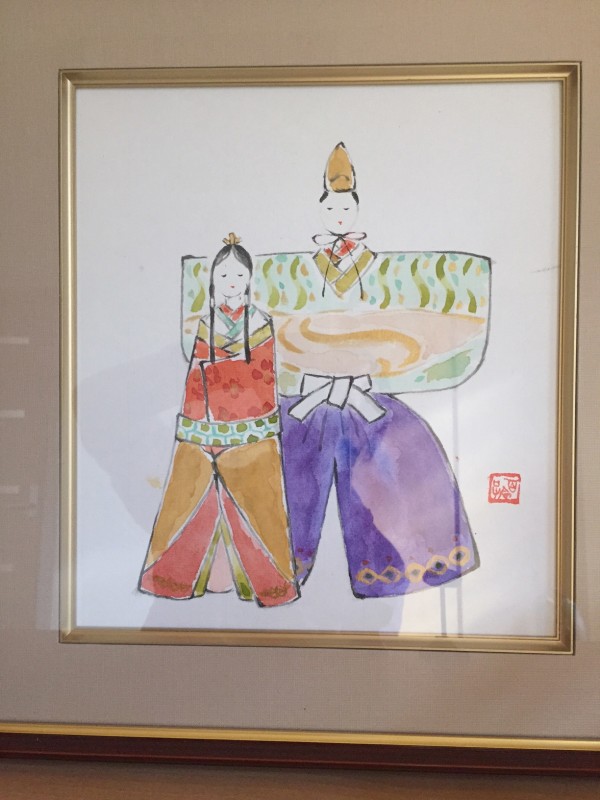
Two dolls

Zen and Shinto 7: The Dao of Rock

Shigemori Mirei garden at Matsuo Taisha

Shinto garden by Shigemori Mirei at Matsuo Taisha

In my investigations into Zen this morning, I had something of an epiphany – or perhaps I should say, an awakening.  Both Zen and Shinto share roots in Daoism (Taoism).  Zen it has been said is the result of Indian Buddhism colliding with Chinese thought.  And Shinto was conceived linguistically as shendao  – the  Way of the Gods.  In other words, the thinking behind the Way of the Tao is fundamental to both.  As Alan Watts explained in his very last book (1975), Tao is the Watercourse Way, flowing through the universe like an animating force.

Rock worship at Kamigamo Jinja

Rock worship at Kamigamo Jinja

So, you may ask, if Zen and Shinto both share this in common, why are they so very different in form and belief?  Why is one kami-oriented and particularist, while the other is self-oriented and universal?  Why does Shinto look to this life, while Zen dwells on another?

Well, the thought struck me that they may not be as different as they seem.  Both are after all based on intuitive understanding and repudiate logic and words.  Zen prides itself on a transmission outside the scriptures.  Shinto has no scriptures.  Both in short treasure non-verbal understanding. ‘He who knows does not speak; he who speaks does not know,’ said Lao-Tzu.

In the Tao Te Ching, it is said the Way can never be known or defined.  It can, however, be sensed or experienced, and its principles are observable in Nature.  In Zen this is internalised as people seek their true inner nature.  In Shinto there is the concept of kannagara, which in effect means following the laws of nature.  Both seek the Way, but whereas Zen looks inside, Shinto looks outside.  The former goes to the mountains to get closer to self, the latter goes to the mountains for closeness to the kami.  And here perhaps is the vital difference between them, for whereas the former is deeply personal, the latter is community oriented.  Zen tells you to sit in silence.  Shinto encourages communal celebration.

Living rock at Togakushi Jinja

Living rocks at Togakushi Jinja

It may be no coincidence then that both religions treasure rocks.  (Landscape architect Shigemori Mirei has done rock gardens for both.)  Zen temples are full of rocks in their beloved dry landscape gardens.  Shinto shrines are full of sacred rocks, bedecked with shimenawa straw rope or shide paper strips. Rocks in Zen may trigger enlightenment.  Rocks in Shinto are sacred vessels into which kami descend.  Both religions see them as something more than mere stone – they’re representational, mini-mountains, spirit-bodies.  On another level, they’re symbols of silence, of the non-verbal, of the eternal.

Here again Daoism lies at the root.  Daoist practitioners went into caves to meditate, and what are caves but hollowed out rock?  Significantly, in the Zen garden rocks stand for Mt Horai, the Blessed Isles of the Immortals where Daoist sages live.  They may also symbolise moments of time in a vast ocean of raked gravel. And beyond that they symbolise the biggest rock of all, the one on which we’re spinning round the solar system.  In this way they’re symbolic of Mother Earth, which, to quote Alan Watts, produced humans in the same way that trees produce apples.  We are then the children of rock, because the earth-rock has ‘peopled’ us into existence.  When Shinto followers worship rocks, they’re worshipping their ancestors in a very real sense.

It turns out then that in both Zen and Shinto rock is a means to salvation.  Don McLean was on the right lines all those years ago.  Rock truly will save your mortal soul!

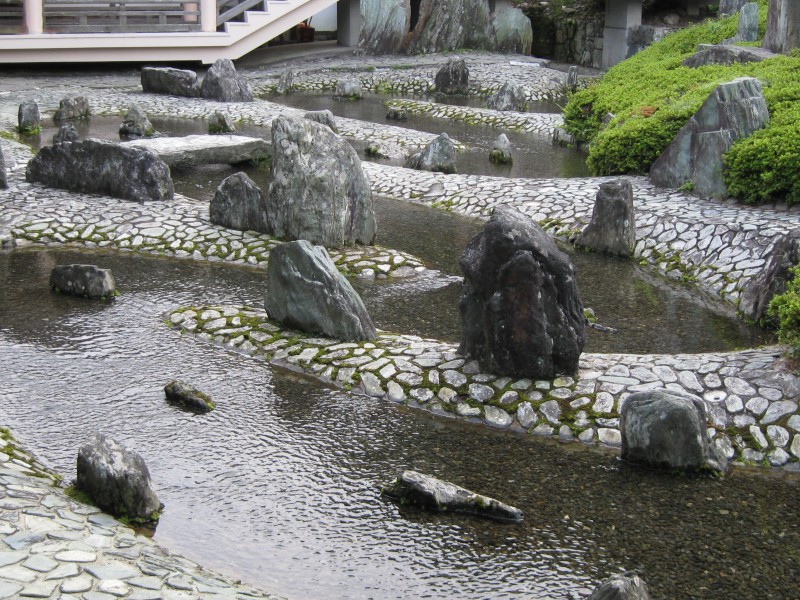
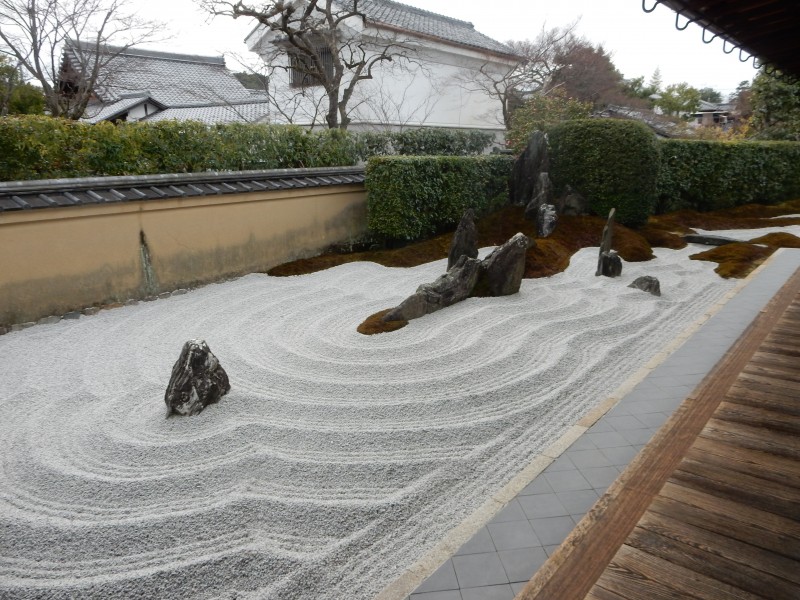
Zen garden by Shigemori Mirei at Zuiho-in, Daitoku-ji

Zen garden by Shigemori Mirei at Zuiho-in, Daitoku-ji with Mt Horai at the far end, from which a peninsula stretches out towards an individual rock, marooned and all at sea.

Zen and Shinto 6: Shokoku-ji

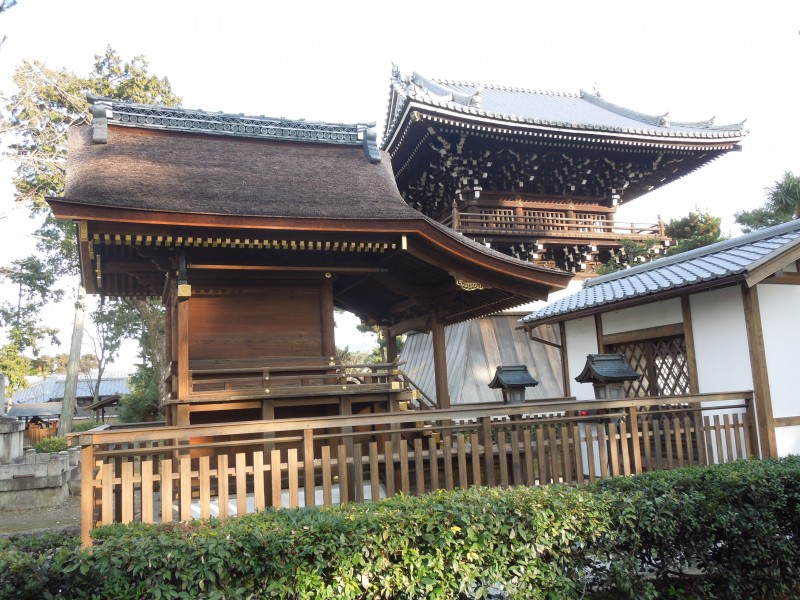
Characteristic Shinto and Buddhist roofs next to each other at Shokoku-ji. In the foreground the shingled Benzaiten shrine, in the background the tiled roof of the Zen temple's belltower.

Characteristic Shinto and Buddhist roofs next to each other at Shokoku-ji. In the foreground a shingled roof on the Sanctuary of a Benzaiten shrine, in the background the tiled roof of the Zen temple’s belltower.

Shokoku-ji was established in 1383 as a shogunate showpiece, but not long after completion burnt down and had to be completely rebuilt.  It ranked second among the Five Gozan temples and played a prominent part in furthering Zen culture.  It also accrued valuable assets, such as ownership of the Gold and Silver Pavilions.  Severely reduced in size in Meiji times, it is now a relatively peaceful area behind Doshisha University and hosts the association offices for the schools of Rinzai and Obaku Zen.

The temple is said to be the wealthiest of Kyoto’s seven large monasteries, which is why it can afford to show less concern with tourist income.  Though the grounds are free to visit, the only building usually open to the public is the museum.  A notice posted on the main building says: ‘Please respect the temple precincts, garden and environment as a religious space. You will acquire Buddha’s providence from the bottom of our heart.’

Hachiman Shrine, an appropriate kami for a temple founded by the samurai

Hachiman Shrine at Shokoku-ji, an appropriate kami for a temple founded by samurai

The monastery was set up as a personal project by the powerful shogun, Ashikaga Yoshimitsu (founder of the Golden Pavilion), with a location close to his Muromachi palace. To make space for the massive estate, locals were forced out of their homes: ‘Shokoku-ji was built on people’s grief,’ ran a saying of the time.  Construction took nine years to complete and involved the felling of Kyoto’s oldest cedar and cypress trees.

The original layout can be seen in the positioning of the lotus pond along a central axis on which stand the Hatto (Lecture Hall) and the Hojo (Abbot’s Quarters).  Noticeably missing however are the Sanmon gate and Buddha Hall, both destroyed by fire in 1788 and never replaced.  In their stead are red pine trees, giving the precincts a distinctive wooded feel.

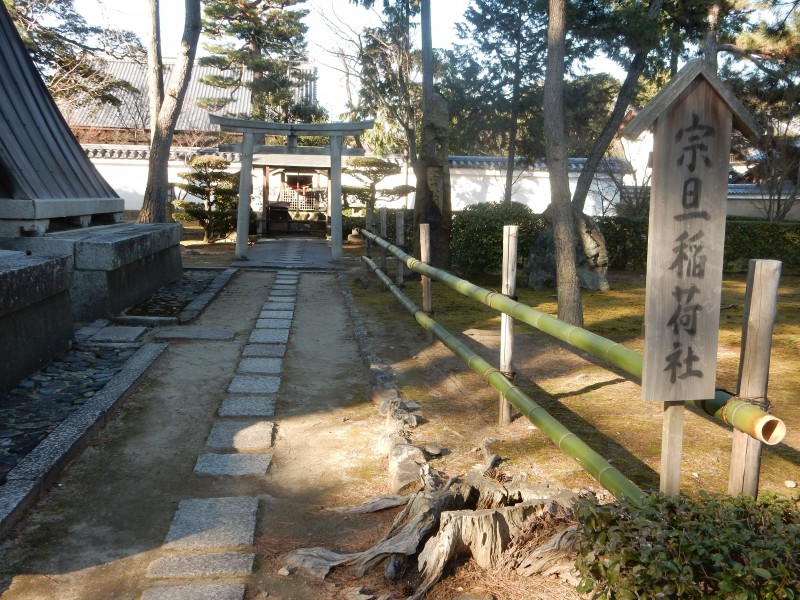
Of the thirteen buildings in the main compound three are tutelary shrines honouring Japanese kami; Hachiman, Benten and Inari.  Two of the shrines stand either side of an impressive bell-tower, one of which is dedicated, uniquely, to a white fox which impersonated tea-master Sotan, grandson of Sen no Rikyu.  Legend has it that to the astonishment of participants the fox served tea at a ceremony held at the temple.

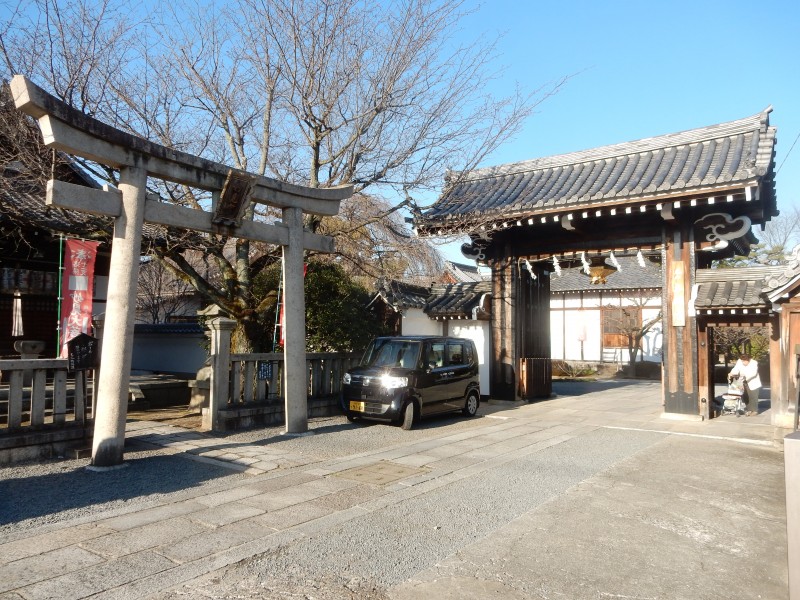
Close to Shokoku-ji is a Nichiren temple which also shows close ties to the kami (see pics below).  Not only does a tutelary shrine to Myoken stand close to the entrance, but its temple gate is festooned with shide paper strips.  It’s a reminder that kami worship remains an active part of contemporary Buddhism, in sects other than Zen – Tendai and Shingon, for instance, as well as Nichiren.  (The Pure Land sects are less kami-friendly.)

I can’t help wondering why the numerous syncretic shrines of Buddhism are completely overlooked in books on Shinto.  The obvious answer is that they belong to Buddhism rather than Shinto.  Fair enough.  But if the religion is defined as ‘kami worship’, as it often is, then surely these kami worshipping shrines deserve greater attention.  One aspect that could be drawn out is the universalism of Buddhism versus the particularism of Shinto, and as I continue my probings into the relationship I hope to be talking to some Buddhist priests about their thoughts regarding the kami.

The Sotan Inari-sha, built to honour a white fox

The Sotan Inari-sha, built to honour a white fox

Nichiren temple with adjacent torii and Buddhist gate (and a visible means of transport between the two worlds!)

Nichiren temple gate (Honman-ji) with adjacent torii  (and visible means of transport between them!)

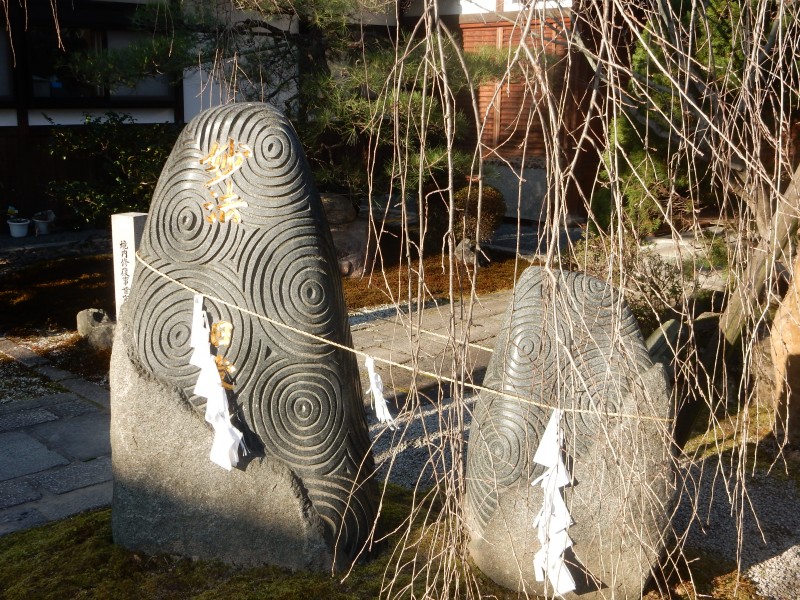
Sacred rocks have long been part of the Shinto tradition. These are Buddhist, as indicated by the whorls.

Sacred rocks have long been part of the Shinto tradition. These are Buddhist, as indicated by the whorls.

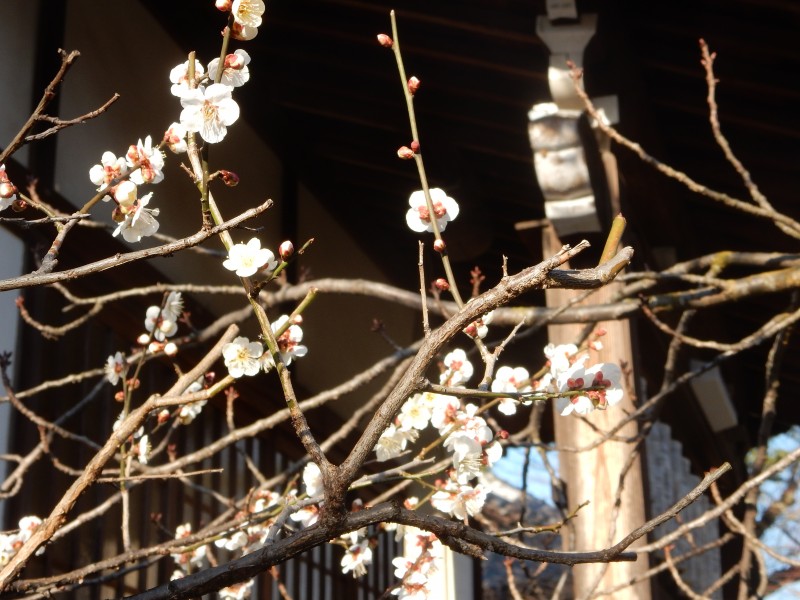
Seasonal awareness is part of the Japanese tradition too, both Shinto and Buddhist. The plum blossom have been out early this year, this fellow found basking in the sun at the Nichiren temple.

Seasonal awareness is part of the Japanese tradition too, both Shinto and Buddhist. The plum blossom have been out early this year, this example found basking in the sun at Shokoku-ji – a reminder that one of Kyoto’s most popular festivals, the large Plum Blossom Festival at Kitano Tenmangu, will be held soon on the 25th.

« Older posts Newer posts »

© 2026 Green Shinto

Theme by Anders NorénUp ↑