
The interesting Heritage of Japan site has a new article about the bamboo links of Japan and the rest of Asia. Bamboo is prominent in Shinto trappings and an important part of traditional culture, and as in other areas … Read the rest
The interesting Heritage of Japan site has a new article about the bamboo links of Japan and the rest of Asia. Bamboo is prominent in Shinto trappings and an important part of traditional culture, and as in other areas … Read the rest
An aristocrat with a penchant for cricket who went native, wore Japanese kimono with a scarf, and became the twentieth century’s foremost expert on Shinto. Richard Ponsonby-Fane (1878-1937) was the archetypal English eccentric, with a hatred of modernity that extended … Read the rest
In 2005 I went on a trip to Hawaii and visited six different Shinto shrines there – Kotohira, Izumo Taisha, Ishizuchi and Daijingu in Honolulu, plus Hilo Shrine on Hawaii island and one on Maui. At the time information was … Read the rest
Why and how did you come to formulate something called “minzoku NEO-shintô”?
When asked to define my spiritually, I usually call myself a poly-affined poly atheist. Poly-affined means maintaining membership in multiple communities, and poly-atheist means not “believing” in … Read the rest
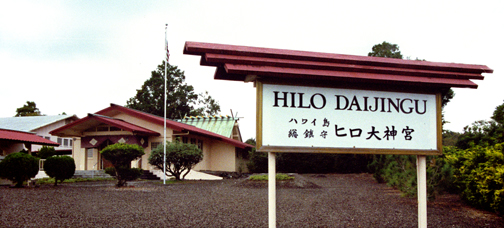
The extract below is taken from “Hawaii’s Domestication of Shinto’ by Dr. James Whitehurst, who was professor of religion at Illinois Wesleyan University in Bloomington. The article first appeared in the Christian Century November 21, 1984, p. 1100. The full … Read the rest
Anyone familiar with Shinto will know about the significance of horses. They are thought to be intermediaries between this world and that of the kami. Votive tablets (ema, literally ‘horse pictures’) originated in the practice of offering … Read the rest
The origins of the torii are something this blog has explored before, noting the Korean connections and the possibility that tori-i (bird’s roost) may have served as a perch for chickens and roosters at the gateway to villages. … Read the rest
© 2026 Green Shinto
Theme by Anders Norén — Up ↑