Author: John D. (Page 150 of 202)

Twin Cities, USA (Neo-Shinto)

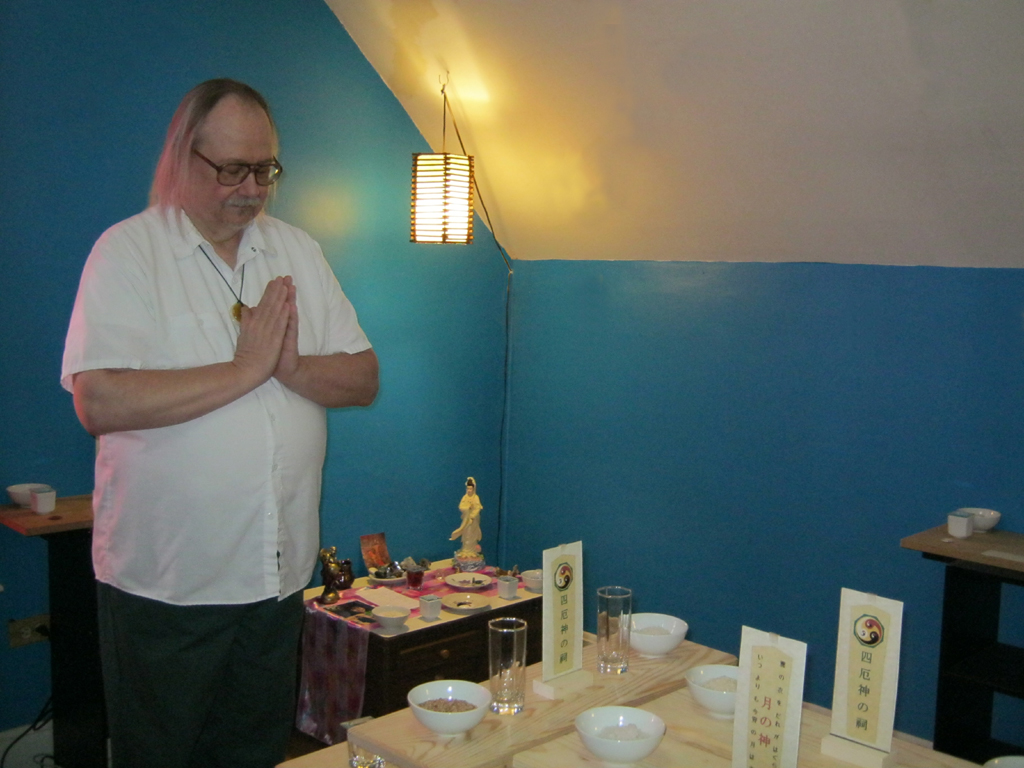
Priest Volkhvy in the honden of the minzoku neo-Shinto shrine


Why and how did you come to formulate something called “minzoku NEO-shintô”?

When asked to define my spiritually, I usually call myself a poly-affined poly atheist.  Poly-affined means maintaining membership in multiple communities, and poly-atheist means not “believing” in a lot of gods; or rather while acknowledging their existence, not assigning them the status of “god” (at least not in the Western sense of the word).

I’ve been exploring various alternative religions and philosophies for over 45 years now.  The ones that attracted me most were the “folk religions”; that is the common peoples’ expression of a particular religion.  These are not religions as they’re practiced in temples and shrines, or taught in theological seminaries or academic universities.  Instead they are the religious practices that the common people of a culture engage in to help get them through the day.

The honden as seen from the outside

The more I learned, the more I saw that these folk religions had much in common with each other.  The cultural forms are different, but the reasons behind the actions are shared.  People everywhere, being people, have the same needs and engage in similar practices to fulfil those needs.  This being the case, I wondered if it was possible to integrate the practices of my many communities in way that would be acceptable to each community.  “Minzoku NEO-shintô” is one attempt to achieve that goal.

There are several reasons why minzoku shintô (folk Shinto) was chosen for the framework.

* First, minzoku shintô is unabashedly syncretic.  It readily borrows from other sources, both Eastern and Western.  This syncretism allows for the merging with other folk religion practices.
* Second, it’s truly polytheistic, crossing boundries between disparate religious systems.  It has a very pragmatic outlook that declares, “if it works, it’s true”.
* Third it’s animistic — and that’s not animistic in the ‘how primitive’ sense.  Rather it’s animism in the sense of imbuing our view of the world with a sense of wonder, mystery, and awe.  Much of what many modern groups are trying to do is re-enchant a worldview turned coldly mechanistic, and relearn how to live in a world that’s alive.
* Fourth, because it’s based on folk practices, it can be practised anywhere; it doesn’t need an “official” priest or a shrine, just an interested lay person.  A shrine or priest are nice to have access to, but realistically for most of those who live outside of Japan neither are readily available.
* Fifth, it is very local specific.  What is practiced in one location, can vary greatly from the practices in a nearby location; each location has its own unique set of practices.
* Finally, Shinto has the extremely useful concept: kami — that which inspires feelings of reverence, awe, gratitude, fear/terror.  A word that encapsulates a number of related ideas.  That they’re everywhere and in everything.  That we are not alone, they’re our neighbors and we share the world with them.  That we are all interdependent and need to respect one another.

Could you tell us about the ‘shi-yaku-jin no hokora‘ and the kami involved?

the shi-yaku-jin shrine

The shi-yaku-jin no hokora is a small family owned shrine.  It is called a hokora as the person who maintains it, its kannushi (priest), is a layperson and not a professional Shinto priest.  It occupies two rooms on the top floor of the family home.  As a response to the current recession, it was established on November 1, 2010 to calm the shi-yaku-jin — the four misfortune kami — and mitigate their effects on eastern Minnesota and northwestern Wisconsin.

There are seven kami enshrined within the hokora.  Baba Yaga, hi-no-kami, and tsuki-no-kami are charged with the task of watching over and prevailing on the shi-yaku-jin — binbô-no-kami (kami of poverty), ekibyô-no-kami (kami of epidemic disease), kyô-no-kami (kami of disaster and famine), and shi-no-kami (kami of death) — to moderate their effects upon the Twin Cities Metropolitan Area.

The “names” of the enshrined kami were deliberately chosen to indicate that they are autochthonous kami — in fact in minzoku NEO-shintô, as practiced locally, names that can be tied to locations within Japan are generally avoided.  The “honden” (sanctuary) also contains the family ancestor altar and a butsudan (Buddhist altar). The rooms occupied by the hokora are currently in the process of being renovated.  Unfortunately, more than likely because of the presence of binbô-no-kami, the renovation is taking much longer than originally planned.

What is your relationship to other groups in the region?
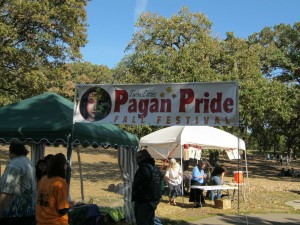
Twin Cities Pagan Pride

The hokora tends the Memorial Ancestor Shrine for the local Neo-Pagan comunity.  It maintains cordial relations with the Sacred Cedar Shrine, the Minnesota Heathens community, TwinCities Pagan Pride, Iowa Pagan Pride, Greater Chicagoland Pagan Pride, and several other local groups that sponsor meetings and Pagan festivals in the area.

How long have the projects been going, and what kind of reaction have you got (including from Japanese)?

Although I have been interested in Shinto for many years, it wasn’t until mid 2009 that I started seriously researching it, and subsequently started writing minzoku NEO-shintô: A Book of Small Traditions in early 2010.  I gave the first public presentation on minzoku shintô in September 2010 at an event sponsored by Twin Cities Pagan Pride.  Encouraged by the response, I established the shi-yaku-jin no hokora on November 1, 2010 and launched the companion website in December 2010.

It’s difficult to judge the reaction of the Japanese as most of the feedback received so far is from America and is not usually identified as being from a person of Japanese descent.  That said, I have yet to receive any negative feedback.  After public presentations, I have been told by several of people that they were pleasantly surprised that there were active practitioners of Shinto in the Midwest.  I have also received encouragement and support from a number of local Neo-Pagan leaders.  Even though it is family owned, the hokora has fifteen, for lack of a better word, ujiko (parishioners) who are willing to share the shinsen (offerings), despite knowing which kami are enshrined there.

What rituals and activities are performed?

The hokora is tended daily during which each of the gosaijin (enshrined kami) are invited to attend, offered norito and other forms of entertainment, and any special kigan (prayers) are made.  Full shinsen are made twice weekly to the kami, the ancestors, and the butsu (Buddhas).  ‘Ooharae for hokora ujiko’ (purification for parishioners) is performed on June 30th and December 31; at these times the hokora is thoroughly cleaned.
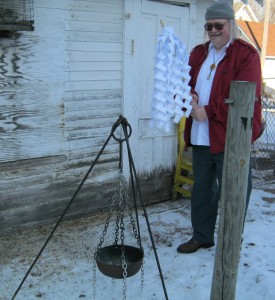
Carrying out one of the annual rituals at the shrine

Throughout the year the hokora also performs rituals for:
shôgatsu
Koliada (Slavic midwinter feast)
shimeyaki shinji (fire ritual)
higan / shunbun no hi (vernal equinox)
geshisai (midsummer)
Kupalo (Slavic midsummer feast)
higan / shûbun no hi (autumnal equinox)
obon
Samhain ritual
tôjisai (midwinter)
oomisoka (New Year’s Eve)

In addition, the hokora offers: ofuda (talisman), omamori (amulet), omikuji (fortune slips), and ema (votive tablets).

Then there are the daily “little traditions”: misogi (cold water austery) in the shower and at the sink, praying at the family ancestor altar, making offerings to the Domovik and the Domovika (Slavic domestic spirits), saying itadakimasu (for what we are about to receive) and gochisô-sama deshita (thank you for what we received) at meals; chanting rokkonshôjô (purifying the six senses) for self-purification; bowing and clapping in front of the altars; and using honorifics and polite forms of address.

What plans do you have for the future?

First and foremost, continue tending the hokora.  It’s a bit like grabbing a tiger by the tail — once you grab hold, it suddenly seems like a really bad idea to let go.  As a result, one of the top priorities is to find a successor to act as kannushi to the hokora.  The hokora has someone willing to be a miko, so a training regimen needs to be developed for her.  Work on expanding minzoku NEO-shintô: A Book of Little Traditions and continue fostering an active “minzoku NEO-shintô community” in the Midwest.  Hopefully in the future the hokora will be in a position to sponsor an annual matsuri (festival) on its founding date.

***************************************************************************************

The shi-yaku-jin hokora has a participatory virtual shrine where visitors can wash their hands, ring a bell, pick their fortune and purchase goods. Click here.

***************************************************************************************
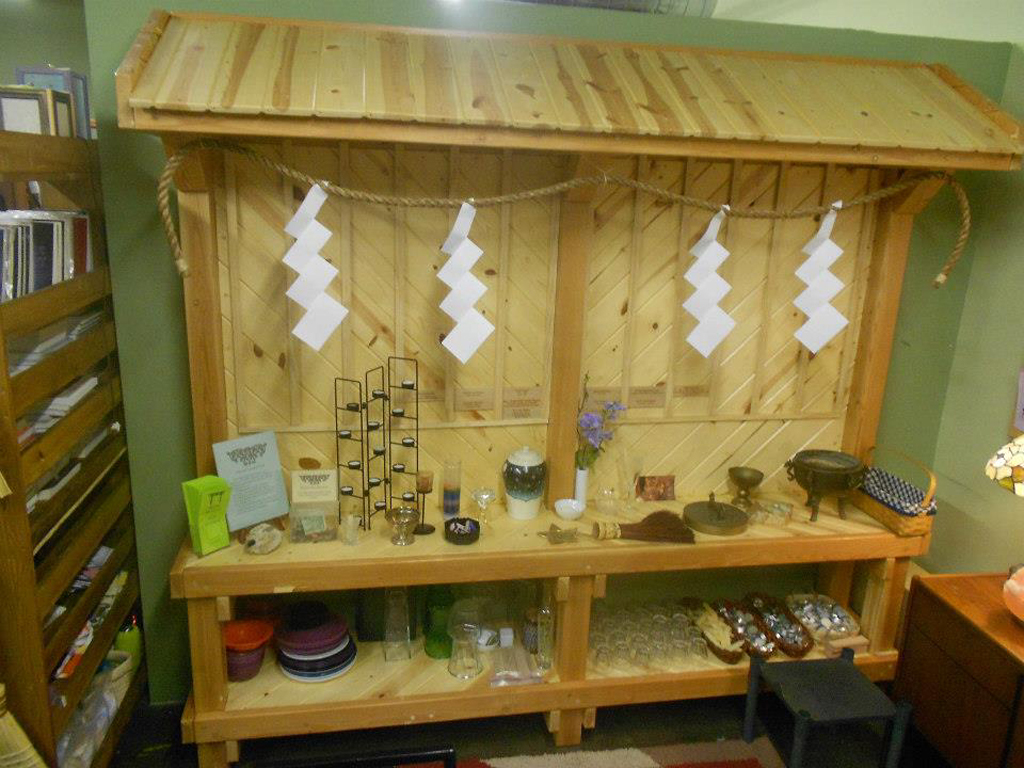
The Memorial Ancestor Shrine
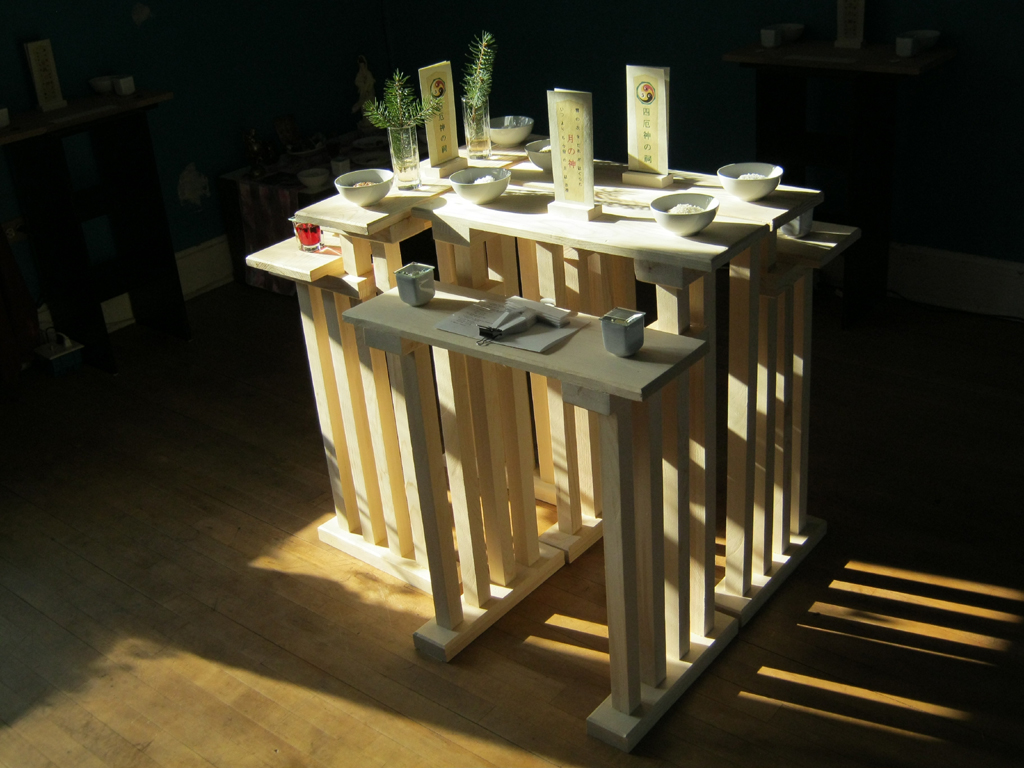
 

the shi-yaku-jin hokora, shrine of the minzoku neo-shinto
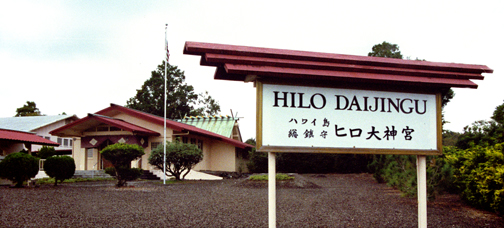
Hawaii

The extract below is taken from “Hawaii’s Domestication of Shinto’ by Dr. James Whitehurst, who was professor of religion at Illinois Wesleyan University in Bloomington.  The article first appeared in the Christian Century November 21, 1984, p. 1100.  The full article can be accessed here.

*******************************************************************************

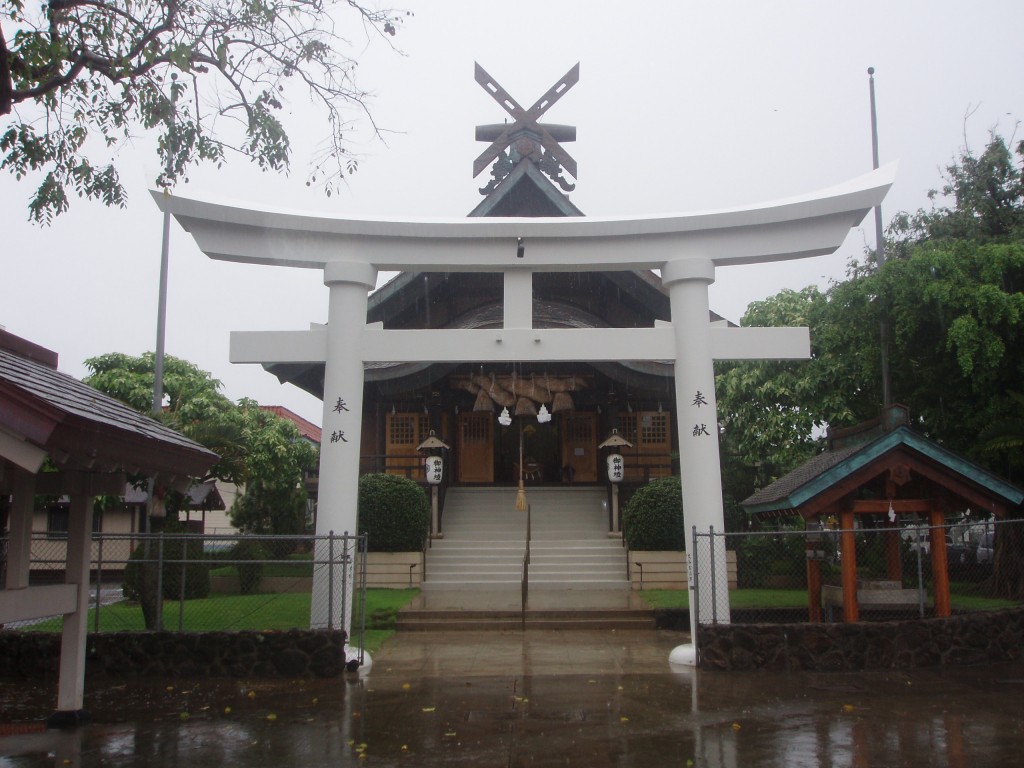
Izumo Taisha in downtown Honolulu

I discovered that Shinto had come to Hawaii with Japanese workers looking for jobs on the sugar plantations a little more than a century ago. When they found they liked Hawaii and decided to stay, the workers sent word home for brides. Parents arranged marriages, and soon boatloads of “picture brides,” as they were called, landed in Honolulu. Although marriages had been meticulously planned, the missionary-educated Hawaiians had qualms about their legality. To satisfy the public outcry, hasty weddings were arranged. At the Izumo Taisha shrine in downtown Honolulu, there were as many as 100 weddings a day. From these unions issued a population explosion that soon flooded the islands.
The immigrants brought with them their godshelves (kamidana) and the numerous festivals (matsuri), primarily associated with the agricultural cycle. As they became prosperous and moved to the cities, they constructed Shinto shrines. Their celebrations, especially the New Year’s festival, became a part of the Hawaiian landscape.
America prides itself on its religious pluralism, its hospitality to all races and religions. But how did a religion which was so much a part of the distinctive Japanese way of life manage to survive on U.S. soil?

My search for an answer took me first to an investigation of the postwar status of Shinto in Japan. In an interview with Professor Naofusa Hirai at the Kokugakuin University (a Shinto institution) in Tokyo, I learned that Shinto is a religion of nature; its deities (kami) are personifications of natural forces such as rivers, seas, mountains, fire and wind — powers that create a sense of awe and wonder in the human spirit.

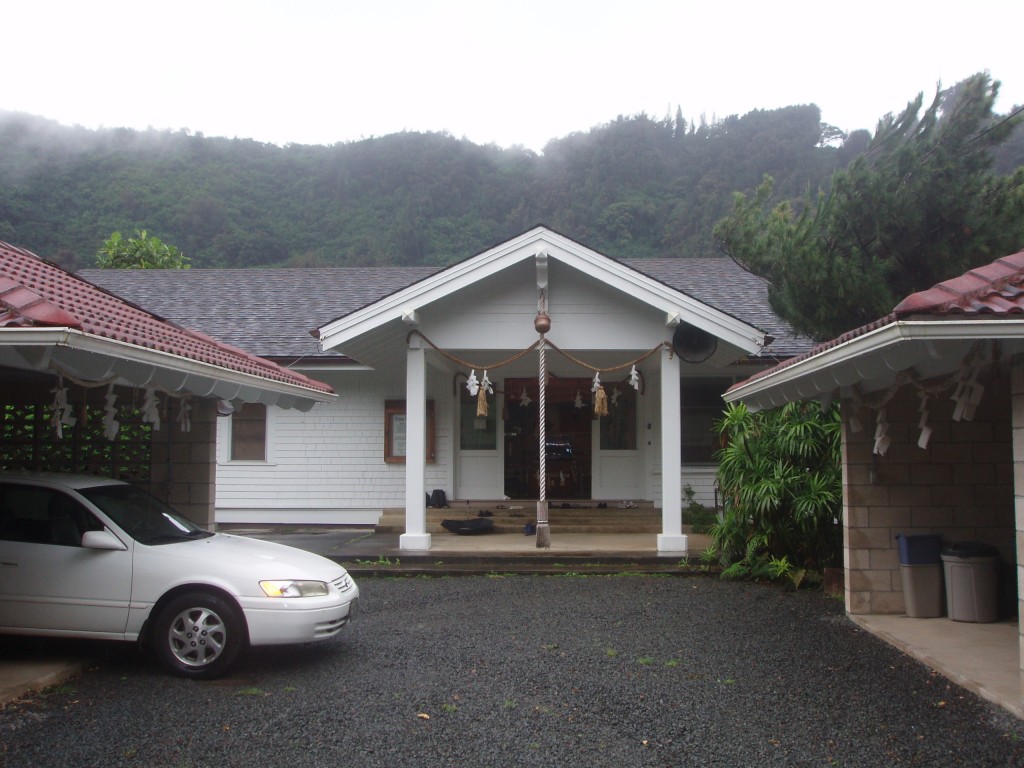
Daijingu Shrine in Honolulu

Professor Hirai regrets the way Shinto became a tool of the state, a part of the war cult. “Shinto is eager,” he said. “to shake off these nationalistic accretions and move strongly in the direction of internationalism.’’ He, with other Shinto leaders, would interpret the phrase Hakko Ichiu (the world under one roof) as pointing to the goal of democratic world government. Far from being supernationalistic, Shinto priests today are often active in peace movements.

In returning to Hawaii, I wanted to see how this new interpretation was working in the States. I interviewed Bishop Kazoc Kawasaki, head priest of the Daijingu Shrine on Pali Highway in Honolulu. Kawasaki was himself a victim of wartime prejudice and spent most of the war years in the relocation center at Camp McCoy in Wisconsin. From him I learned how easy it is for Shinto to adapt to new situations, since one of its major teachings is just that: to blend with the social and cosmic environment.

Kawasaki, a skillful communicator, employs numerous Western teaching methods such as flip charts and object lessons to get his point across. Although Shinto has generally been viewed as polytheistic, Kawasaki’s flip charts show a decidedly monotheistic emphasis, which undoubtedly communicates better to a Western-educated audience. One Creator God, Hitori Gami. is shown as the source of all lesser kami manifestations.

Kawasaki held up a fun-house mirror at the center of the sanctuary near the large, round mirror that symbolizes Amaterasu, the sun goddess. “We should be perfect mirrors, clean and without blemish,” he said, “and not distort things as this fun-house mirror does.’’ Later he displayed a group of billiard balls in a triangular rack and showed how each ball moves in relation to the others. Comparing them with a display of square blocks, he said. “These cubes are too individualistic: they can’t move well with their surroundings.” A beautiful illustration of accommodation!

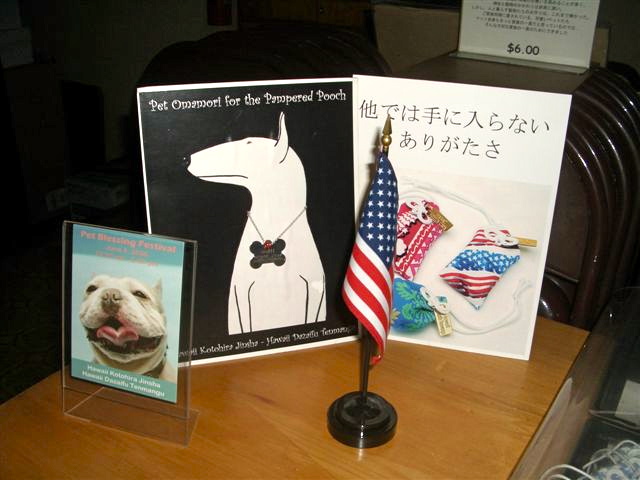
Shinto adaption to the American love of pets: advertisement for pet omamori

In the shrines of Hawaii, I found many examples of survival through adaption. Shinto has not yet succumbed to the Sunday-morning service, as has Buddhism; it celebrates in the evenings on specified days of each month, such as the 10th, 15th and 29th. But a sermon has been added to some services; wooden chairs often replace tatami mats with rounded pillows on the floor: tape-recorded music sometimes replaces the sound of drums, wooden blocks and bamboo flutes. Instead of a bamboo dipper at a basin of flowing water for purification at the entrance to a shrine area, one finds a water faucet, paper cups and a paper-towel dispenser! So far, there is no sign of Bingo, but shrines do regularly have their raffles. Stacks of rice flower, sake and fruit are often placed at the altar; after the gods have consumed the “essence,’’ the food is given away at the end of the services as door prizes.

Through such adaptions, Shinto has made itself at home in its American setting. But Americanization is usually a two-way street. Is there anything to be learned from a religion as alien as Shinto?

Through the years, I have come to respect and appreciate it in ways that would seem impossible for one who grew up during World War II. For one thing, Shinto offers a needed corrective to our domineering attitude toward nature; it maintains a fine-tuned sensitivity to the “ground of Being,” an intuitive awareness of the mystery which created and sustains us. Shinto shrines, with their unpainted surfaces and natural beauty, conjure up a feeling of sacred space as well as provide a place for quiet withdrawal.

Passing under a torii arch and washing one’s hands creates an atmosphere of readiness and receptivity. And when one arrives at the portal of the shrine, the simple clapping of the hands and bowing deeply helps one to restore a cosmic balance. Note that it is not an attuning of oneself to nature, as though nature is something outside the self; the Japanese have no word for “nature’’ in that sense. Yet it would be overly romanticizing to say that everything in modern Japan shows a perfect blending of humans and the environment; that is more likely a private achievement, expressed more in one’s enclosed garden than in the public arena — witness the beer bottles littering the pilgrim’s path up Mt. Fuji!

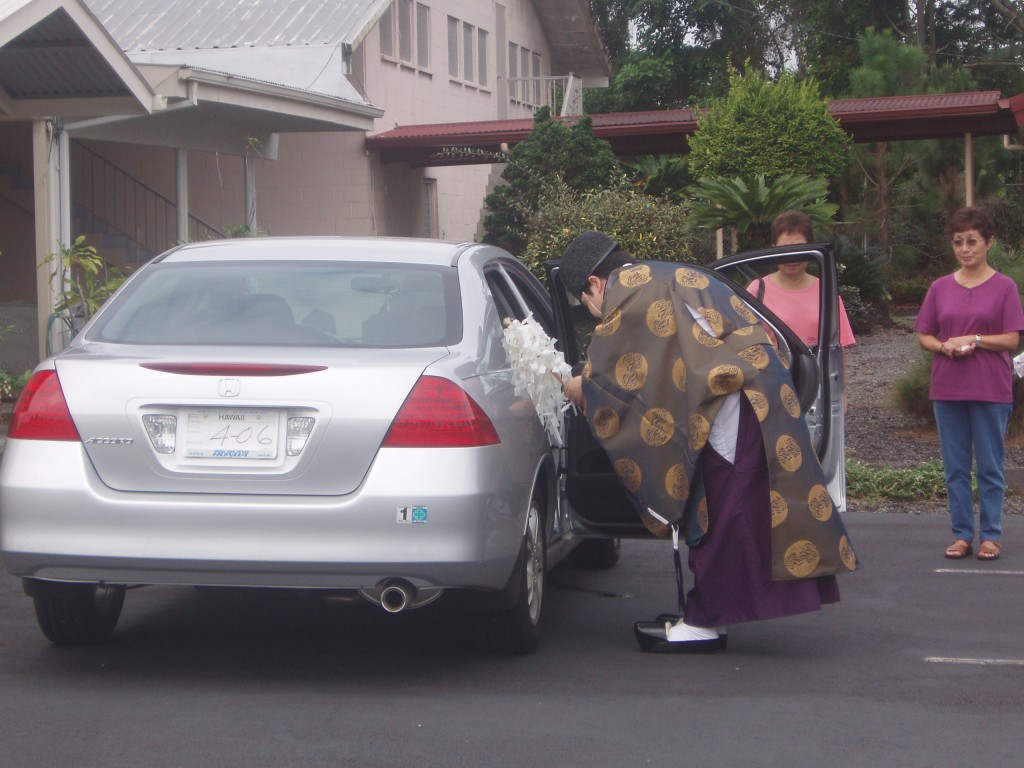
Car purification in Hilo: Shinto has little trouble adapting to modernity or the American way of life

Is nature mysticism impossible in a secular age then? Alfred Bloom of the University of Hawaii’s religion department thinks not. He insists that Shintoists. for all their love of nature, are still firmly grounded in the mundane world of business and economics. A Shinto priest sees nothing incongruous about waving his harai-gushi (purification wand with paper streamers) over the nose cone of a Boeing 747 and blessing it for secular use. Even in the machine he senses something that is more than just machine, since the divine is at the heart of all matter, even the technological products humans create. Perhaps there is something here that Westerners can appropriate.

If there is something to be gained from Shinto, there is also a pitfall to beware of: the peril that comes from too closely associating religion and culture. Shinto now regrets its close wartime associations with an imperialistic state, when it was used as a tool by the warlords.

Traditional Hawaiian sacred site and palace; could that be a torii?!

Hakko ichiu – One world! The sun rises on all alike...

Horses

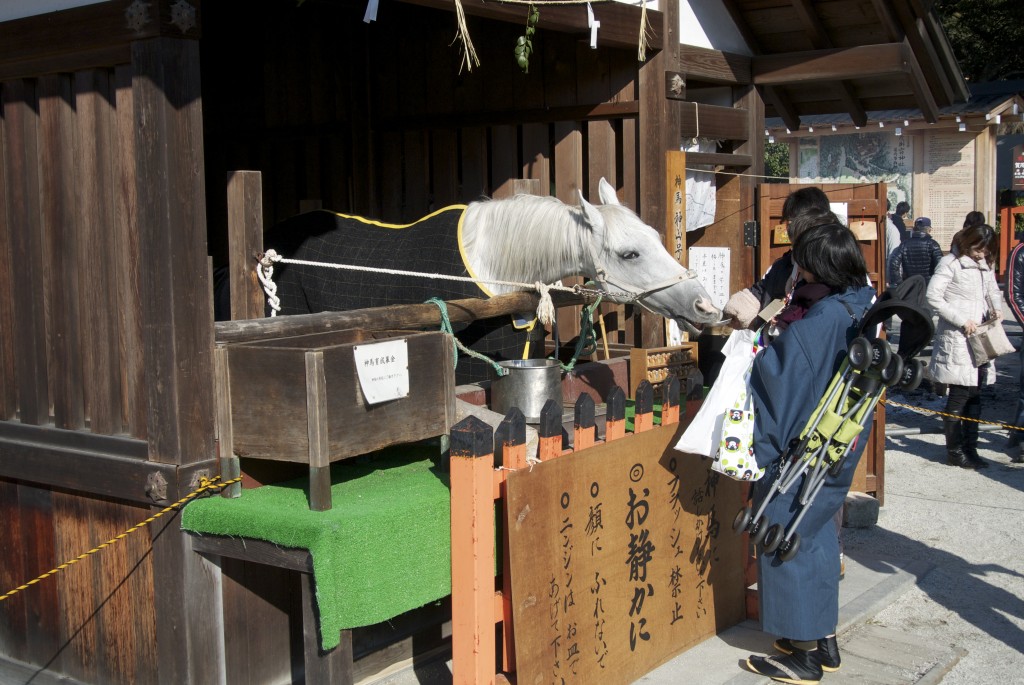
The white horse at Kamigamo Jinja being fed a carrot. You can feed but you can't touch because of the steed's purity.


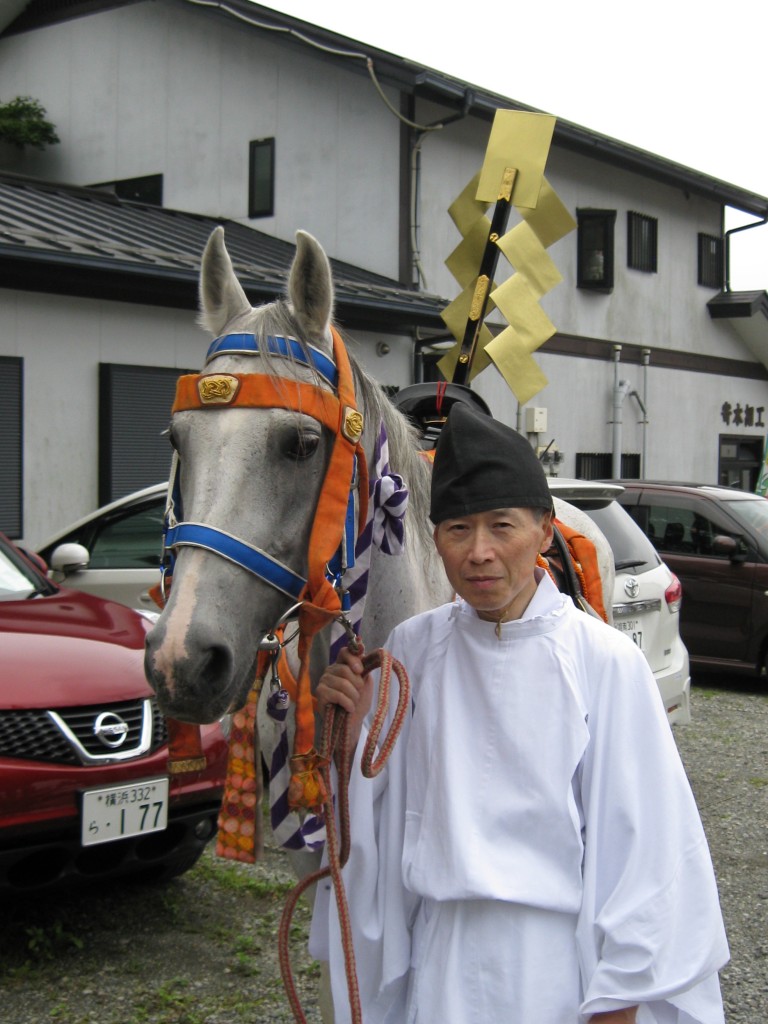
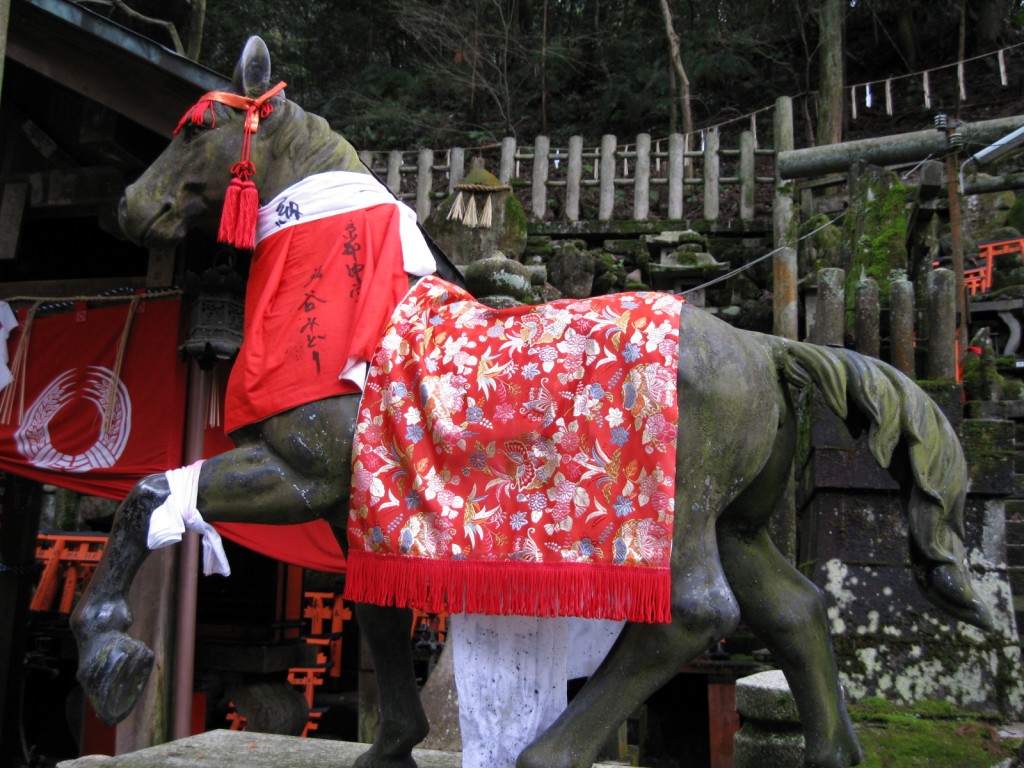
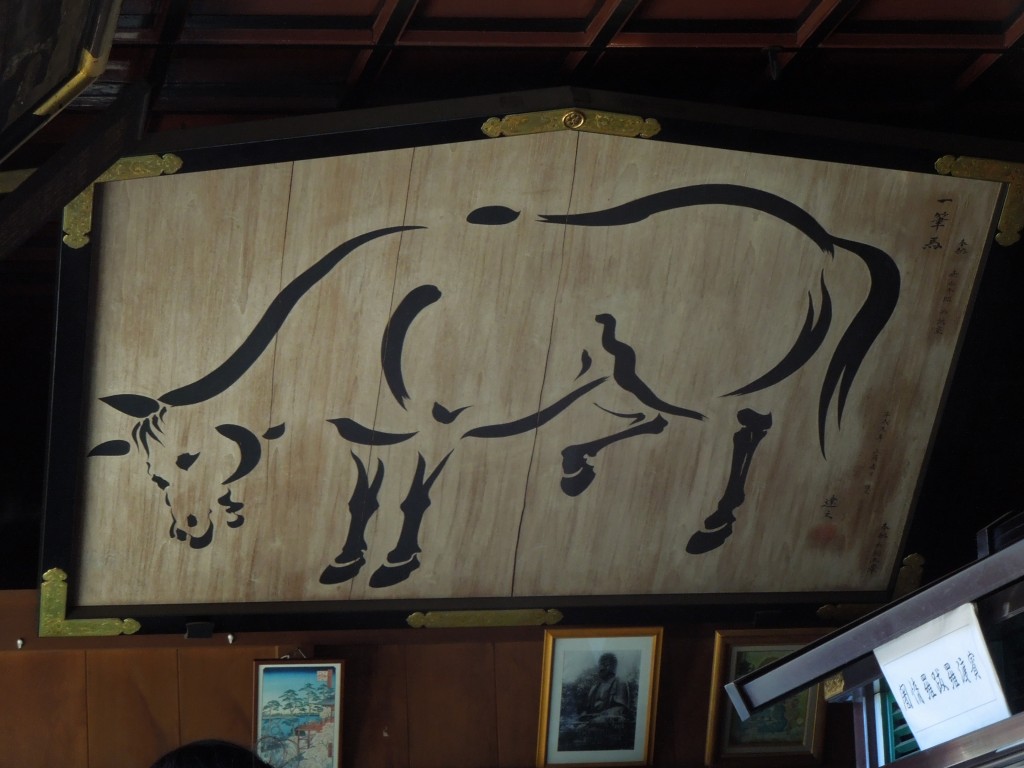
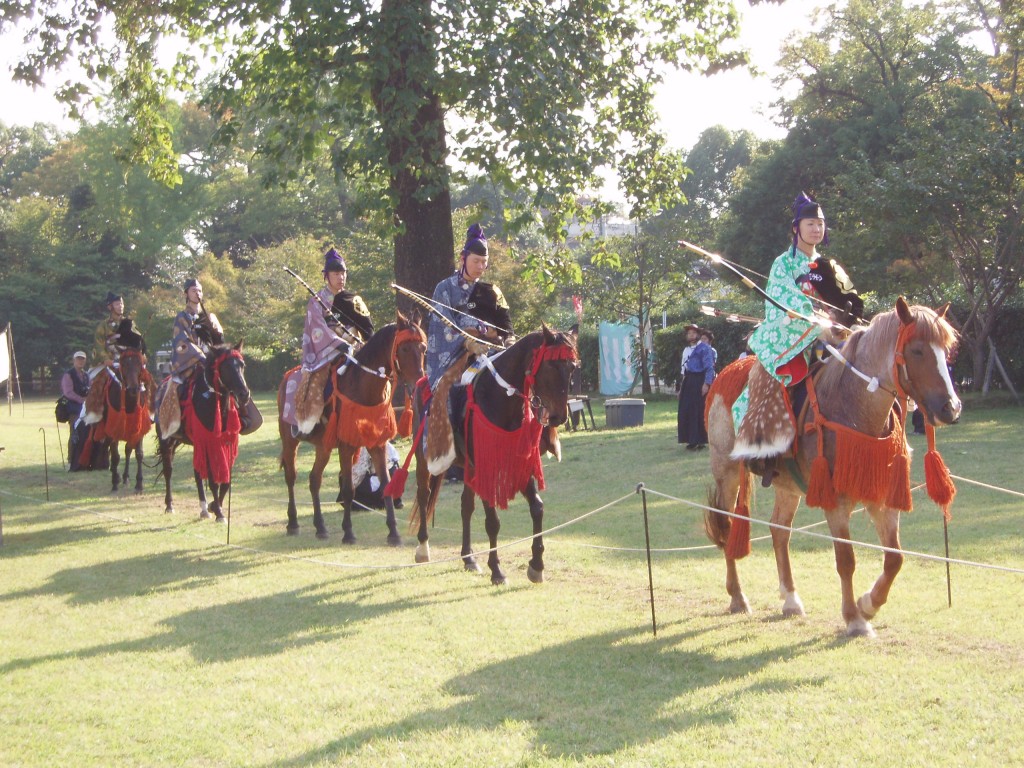
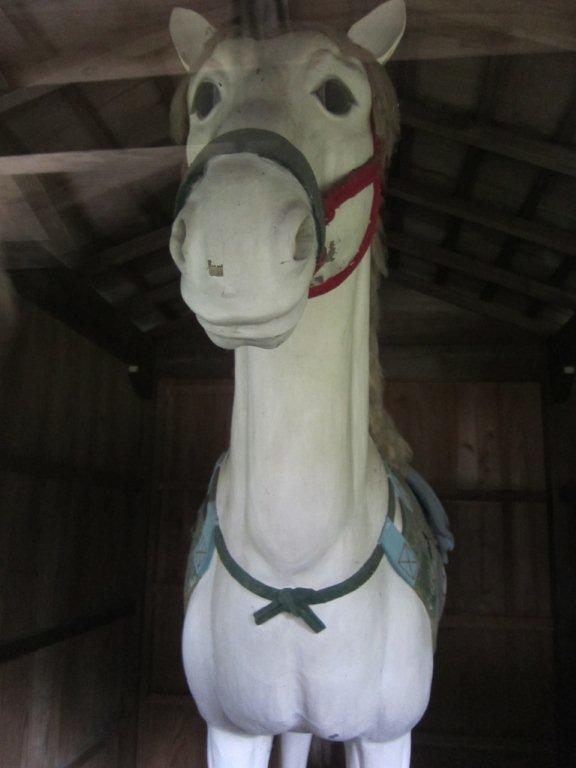
Anyone familiar with Shinto will know about the significance of horses. They are thought to be intermediaries between this world and that of the kami. Votive tablets (ema, literally ‘horse pictures’) originated in the practice of offering horses to the kami. Still today one sees horse statues at some shrines, while others have a white horse stabled on the grounds or put on horse events during their annual matsuri.

A symbolic horse-borne kami and priest at the Hakone Festival

In a fascinating article about connections with the rest of Asia, Mark Riddle looks at the subject through the lens of the Indo-European cult of the sacred horse. He identifies the principal features as follows: Horses were sacred symbols which were associated with a fertility cult and with rain. A white horse symbolised the sun and was often used in ritual sacrifice. Horses were also associated with death and funereal symbolism.

If one thinks of Mongol warriors, then clearly the horse was a vehicle of power that enabled its rider to dispense death and destruction over wide areas. It was quite literally a seat of authority. To a lowly peasant, the fast moving creature must have seemed imbued with an air of divine power. It’s but a short step to imagine the horses descending with their godlike riders from heaven. Something of this clearly entered Japan at a time when Shinto was still in the process of formation.

“Beginning in the fourth century,” writes Riddle, “horses of Inner Asian provenance were brought to Japan, and the fifth century saw the apogee of the mounted warrior culture.” The result can be found in a variety of horse-related activities in Shinto, from the use of ema to popular horse-led festivals. Here are a few examples given by Riddle:

* Horses in early tomb paintings [and haniwa] suggest that their swiftness of speed enables supernatural communication with the world beyond.

* Thrice monthly a sacred white horse is led before the kami in the Honden (Sanctuary) at Ise Jingu, combining the aspects of sun worship and sacral kingship found in the horse cult in Central Asia.

* The Shoku Nihongi (797) mentions that horses were dedicated to shrines in order to stop rain (white horse) or make it rain (black horse). [If I’m not mistaken, such a practice was carried out at Kibune Jinja near Kyoto.]

* In Eastern Japan at Tanabata (July 7) a greeting horse (mukae-uma) is hung from gates and trees to be offered as a mount for the visiting deity. It’s also offered to ancestral spirits at Obon.

***********************************************************

For an obituary of Mark Riddle, who died in 2011, click here.

Horse statue at Fushimi Inari

Modern horse depiction on an ema

Horse archery event at Kamigamo Jinja

A horse statue at Himukai Daijingu, looking down quizzically at those who come to worshp

Kami (3): Imported deities

This is the third and final part of a mini-series about Japanese kami taken from Joseph Cali’s introduction to the recently published Shinto Shrines by University of Hawaii Press.  (The paragraphing and photos are my own.) [For Part One: Concept, click here. For Part Two: Types, click here.]
 
*********************************************************************************
 
Imported and amalgamated kami
These deities came either with the immigrants who had worshipped them in their own land, or by way of Buddhism which brought with it Indian, Chinese, and Korean traditions (including Daoist and Confucian elements). Some of the deities are called by the generic term banshin. Such gods as Gozu Tenno of Yasaka Jinja originated outside Japan.  Buddhist deities were also called banshin, but in later times the term was most often applied to deities worshipped by Korean immigrants.

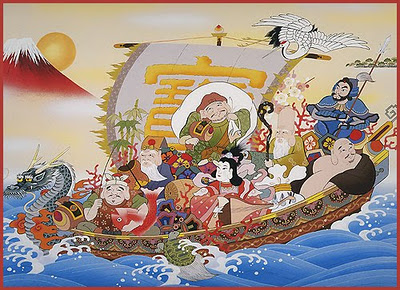
A boatload of imported deities (courtesy of omamorifromjapan)

A sort of subset of imported kami are the marebito (visiting kami) who come and go- (as in the case of Ebisu, Sukunahikona and others), often from over or under the sea. They are associated with the mythology of the stranger who enters the isolated village for a short time, bringing prosperity or destruction. The stranger is often reveled to be a powerful kami whose actions depend on whether he has been treated with good or ill will.

In most cases deities were not simply imported, but amalgamated and mixed with native traditions to the extent that they became “original Japanese” deities.

One particular grouping of imported and domestic gods came to be known as the shichifukujin (“seven lucky gods”), which are worshipped at Buddhist temples and Shinto shrines alike. They are originally individual deities that were brought together as a group in the fifteenth century, probably under the influence of the Daoist tale about the “Seven Sages of the Bamboo Grove.” They are often depicted together, riding in a treasure boat (takarabune), and are the most visually represented kami in terms of paintings and sculpture.

As in other parts of the world, in Japan seven is an auspicious number, and a shichifukujin pilgrimage (shichifukujin meguri) is conducted around the New Year to pray for happiness and prosperity. The pilgrimage, which predates the popular first shrine visit of the year (hatsumode), is usually a short route of seven shrines or temples that can be completed easily in a few hours. The deities are so well known and loved in Japan that a more detailed description of them follows here.

Benzaiten and Bishamonten, both originally Hindu

The Seven Lucky Deities

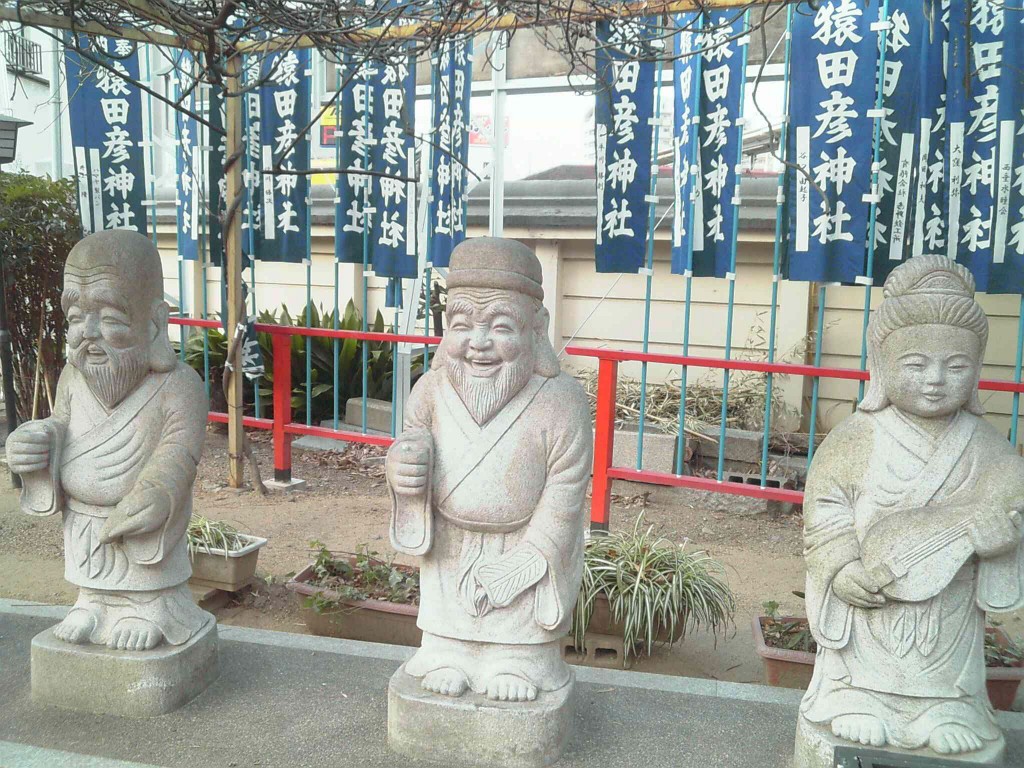
Benzaiten: This is the only female in the group. Benzaiten was originally the Hindu god Sarasvati, daughter of the dragon king, a goddess of water, and by extension, of things that “flow” (such as music and poetry). The god was absorbed into Buddhism as Benzaiten and brought to Japan, where she was further identified with a kami of grains, Uga no mitama, and also with a white snake (water is often associated with a snake or dragon). Though primarily a goddess of water (shrines to Benzaiten are mostly located near the ocean or lakes and ponds), she is also considered a goddess of the arts. The deity is depicted either in her original eight-armed form or, more often, as a two-armed, charming, lute-playing young woman.

 
Bishamonten: This is another Buddhist-absorbed Hindu god, which was originally called Vaisravana. Bishamonten is one of the “four heavenly kings” (shitenno) that guard the four directions. He is a fierce warrior god who expels demons and protects worshippers of the Lotus Sutra. He is often depicted holding a spear in one hand and a pagoda in the other. The pagoda represents the treasure house that he protects and the treasures that he distributes. Considered a god of fortune, the deity is also known as Tamonten.

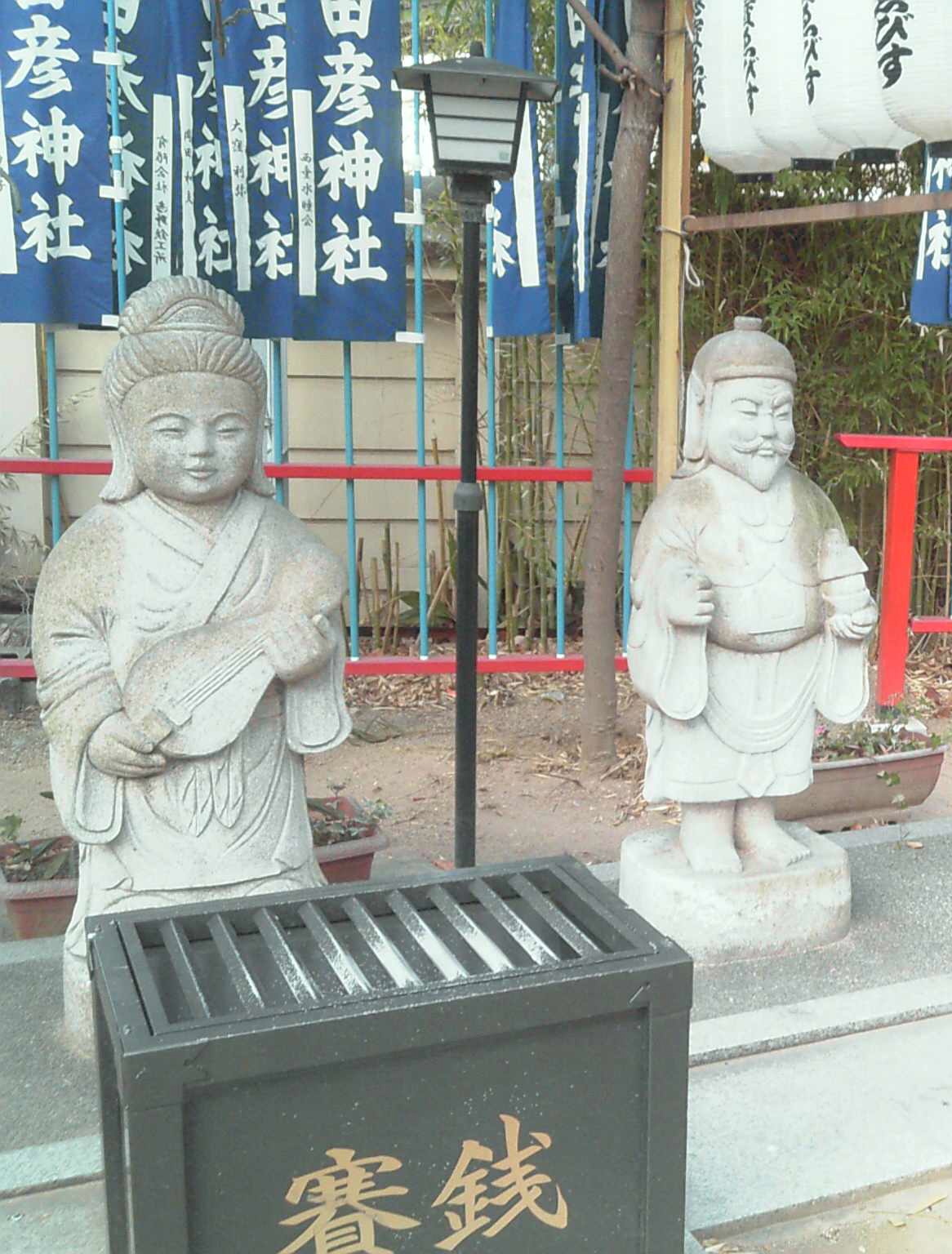
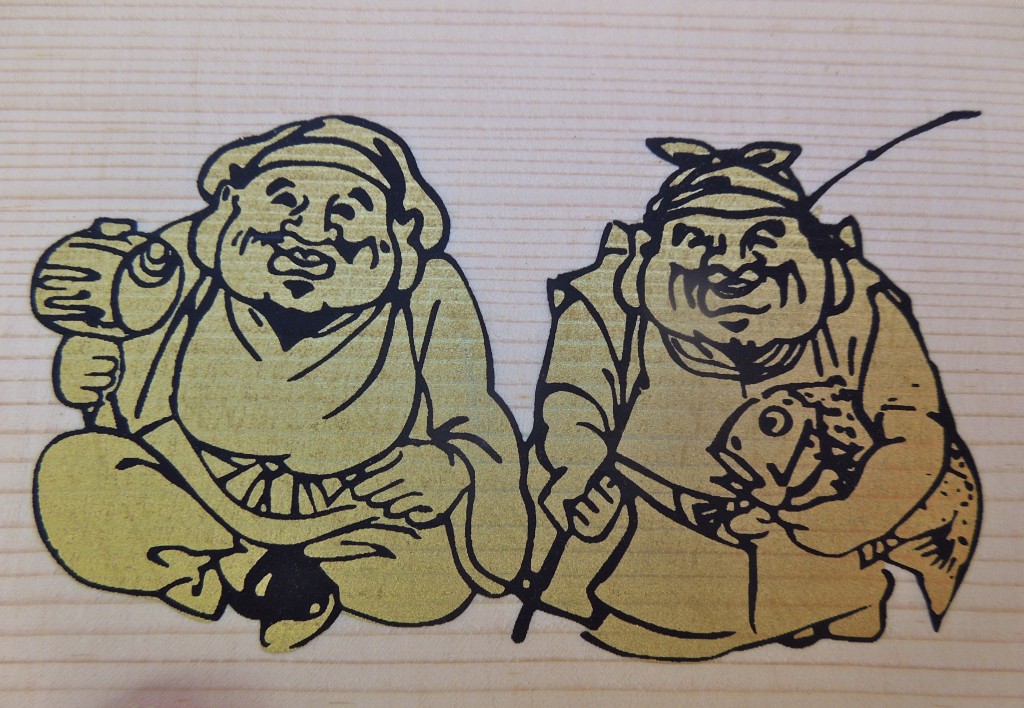
Daikokuten and Ebisu, a happy pair of good fortune deities

Daikokuten: The deity started as the Hindu god Mahakala, depicted as a black, multi-armed deity. In China he was adopted into Buddhism as a deity of the kitchen. The Chinese characters used for his name mean “big black.”  In Japan he also became associated with Okuninushi no mikoto, in which case he is called Daikoku (“great land”) sama. A god of wealth and the bountiful harvest, he is usually depicted sitting or standing on bales of rice while holding the mallet of plenty in one hand and a sack of treasure slung over his back with the other. He is also a god of fertility and often depicted as a pair with Ebisu.

Ebisu: The only original Japanese god in the grouping, Ebisu is a deity of fishermen and good fortune. His origin is ambiguous, but he was always found in fishing communities and is strongly related to a bountiful catch. He is depicted holding a fishing pole and a sea bream, which is called tai in Japanese. The fish is associated with good fortune because the expression omedetai means auspicious or joyous. Ebisu is the happiest of gods and reflective of the simple joys of the common people. He is sometimes considered the son of Daikoku.

Fukurokuju: A Chinese sage of good fortune, probably originating in Daoist tales. Associated with wealth and longevity, he is always depicted with an elongated, phallic-looking forehead, long beard, a staff and a scroll of the Lotus Sutra. He is not amalgamated with Buddhist or Shinto deities. As a god of wisdom, good fortune, virility, and longevity, he expresses typical concerns of the Daoists.

Jurojin: Another Daoist sage, Jurojin is most likely the same god originally as Fukurokuju. Though he is not usually depicted with an elongated forehead, all of the other physical aspects and associated myths are identical. He is a god of longevity and usually depicted with animals that represent long life such as a white stag. He carries a staff and a scroll of knowledge.

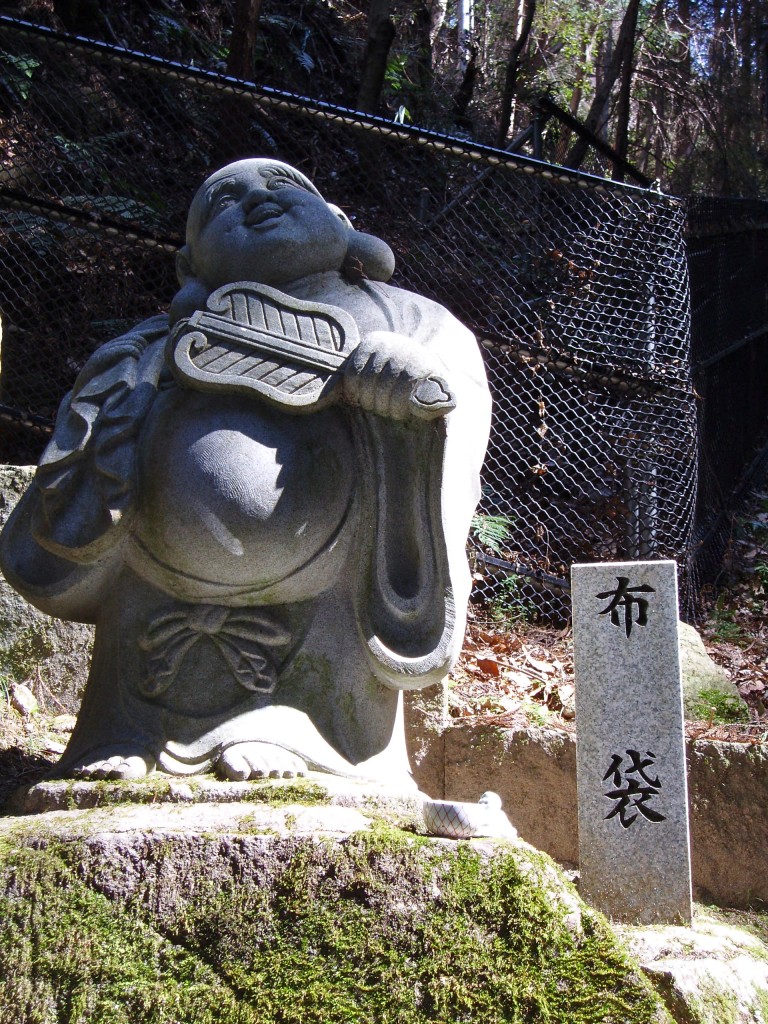
Hotei: Based on a popular tenth-century Chinese sage named Pu-tai (or Budai), he is identified with the Buddha of the future, Maitreya. As a god of happiness, he is portrayed as a “jolly fat man” with a big belly sticking out of his open robe. He has a bald head and huge earlobes—signs of good luck and happiness. He carries a huge bag endlessly full of gifts together with a “wish-fulfilling fan.”


Fukurokuju, Jurojin and Benzaiten


Hotei in all his pot-bellied splendour

It’s Setsubun time

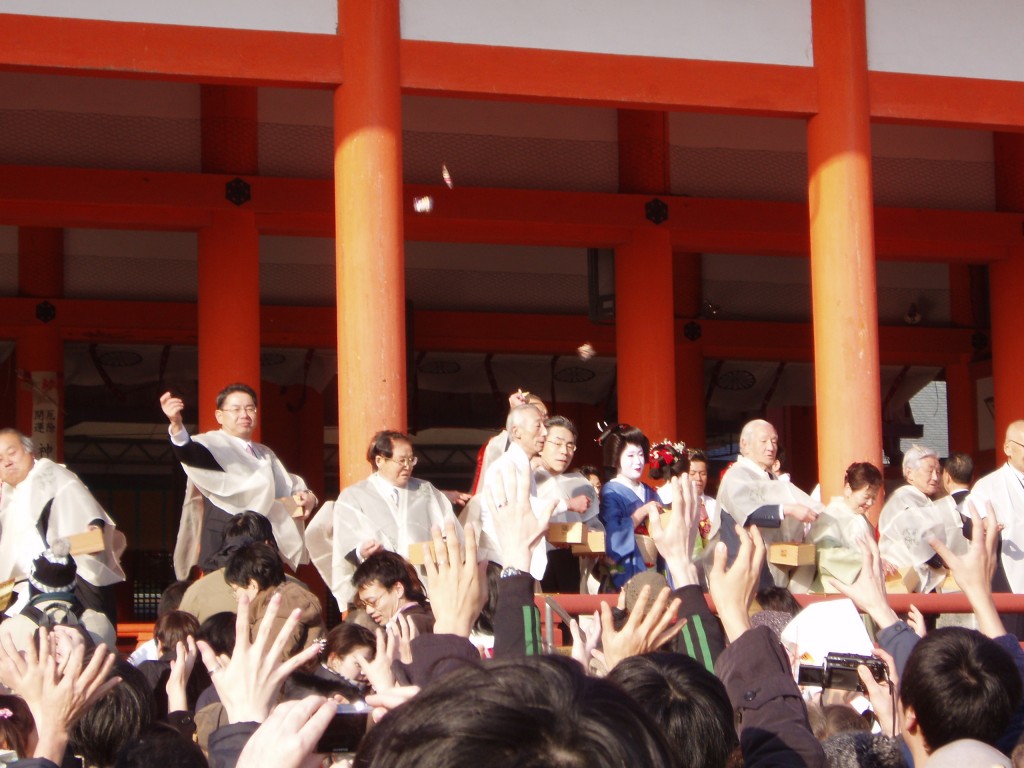
Bean throwing at the Heian Shrine


Setsubun in Kyoto lasts from Feb 2-4, though Feb 3 is the main day. It’s a syncretic festival, and below is a list of temples and shrines where activities take place, taken from Kyoto Visitor (photos are my own).  Not mentioned are the events at Shimogamo, Kamigamo and Matsuo Shrines, also the temples of Mibu dera and Shogo-in which have spectacular fire ceremonies conducted by yamabushi mountain ascetics.  Those of us who live here are spoilt – spoilt for choice!

For Setsubun description and customs, click here.
For the use of beans to drive out demons, click here.

*******************************************

One of the most popular Setsubun celebrations is mame maki (bean throwing) in which people throw roasted soy beans throughout their home, shouting ”oni wa soto” (demons out) and ”fuku wa uchi’‘ (fortune in). These beans are called fuku mame (fortune beans). It is believed that people will be healthy and happy if they pick up and eat the number of fuku mame equivalent to their age. Eating fortune sushi rolls is another Setsubun custom. The direction to face while eating your sushi roll this year is South-southeast.

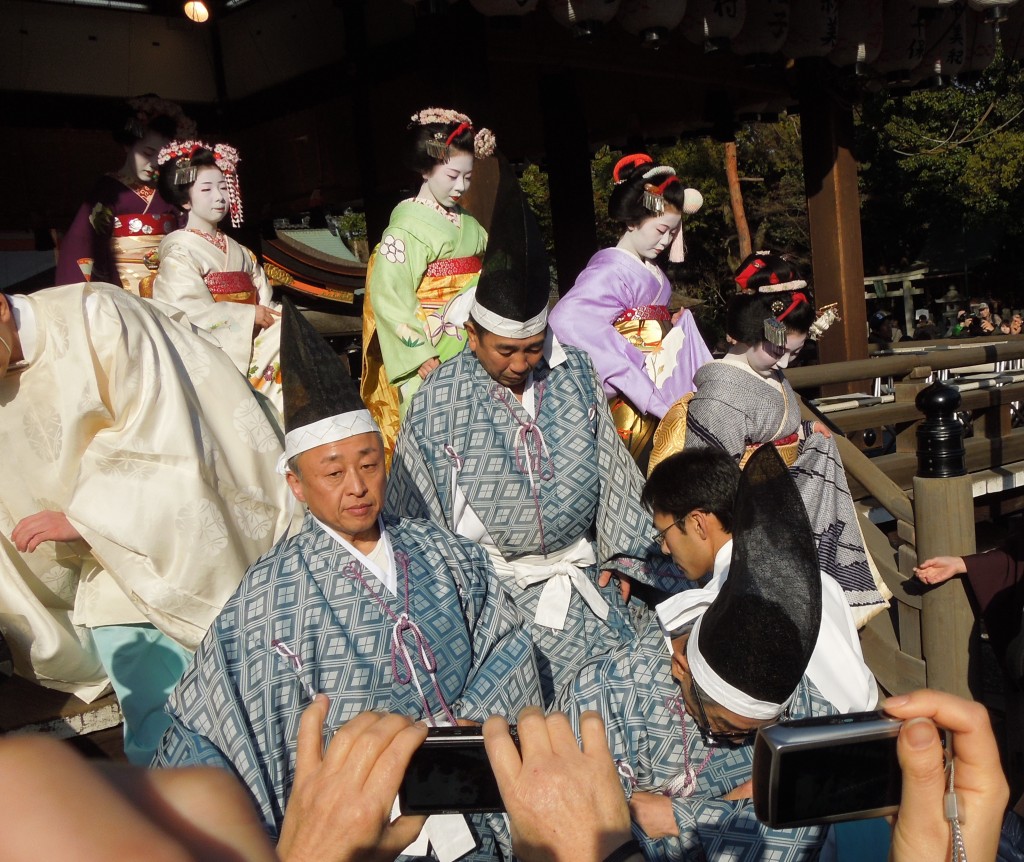
Priests and maiko at Yasaka Jinja after the bean-throwing


Feb. 2 & 3: Yasaka Shrine
A ceremony starts from 9:00 including auspicious soy bean scattering, sweet Japanese sake service, and an amulet offering; maiko from all of Kyoto’s ‘flower districts’ will visit the shrine and scatter beans (dance dedication from 13:00 & 15:00); Access: Kyoto City Bus #206, get off at Gion; Tel: 075-561-6155; web.kyoto-inet.or.jp/org/yasaka/

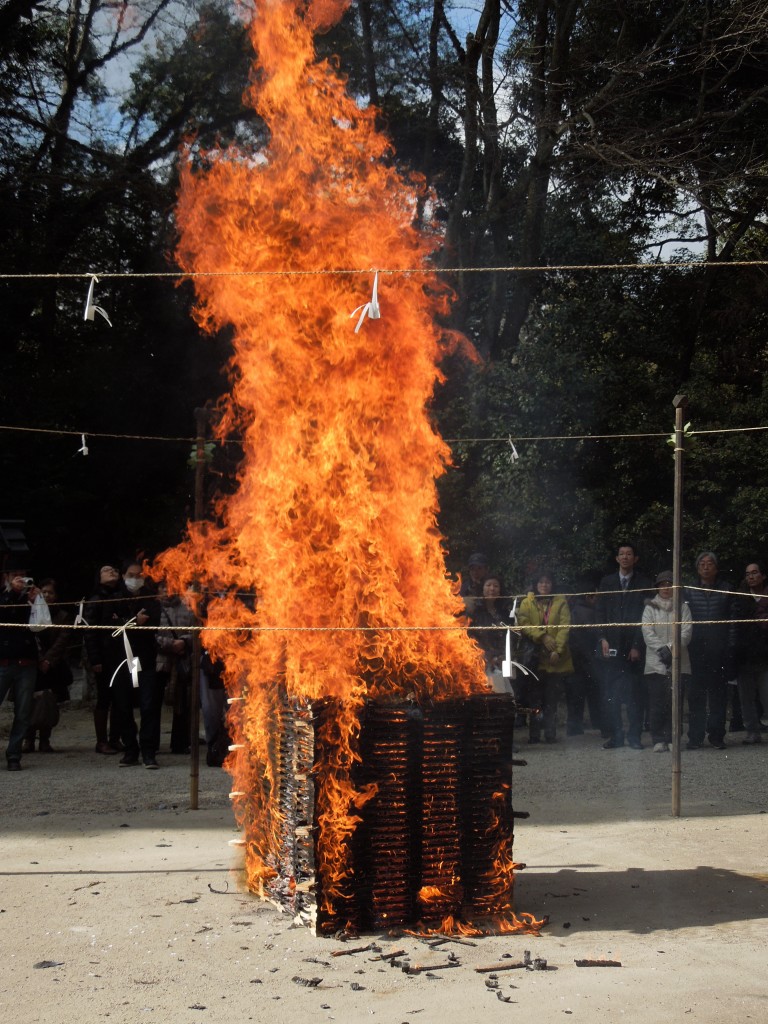
Purifying fire festivals are common, with prayers wafted up to the heavens carried on the smoke

Feb. 2-4: Yoshida Shrine
The largest Setsubun festival in the city; People come to burn old amulets, papers and other personal possessions in a huge bonfire; Many food and fun stalls line the approach to the shrine and are open until very late; Setsubun ritual from 18:00 on the 2nd; Access: Kyoto City Bus #206, get off at Kyodai Seimon-mae; Tel: 075-771-3788; www5.ocn.ne.jp/~yosida/

Feb. 3: Heian Shrine
From 12:00, Kyogen comic plays will be performed here; The festival starts from 13:00; Aspicious bean scattering from 15:00; Free sweet sake will be served throughout the day; Access: Kyoto City Bus #5, get off at Kyoto Kaikan Bijutsukan-mae; Tel: 075-761-0221; www.heianjingu.or.jp/

Feb. 3: Rozan-ji Temple
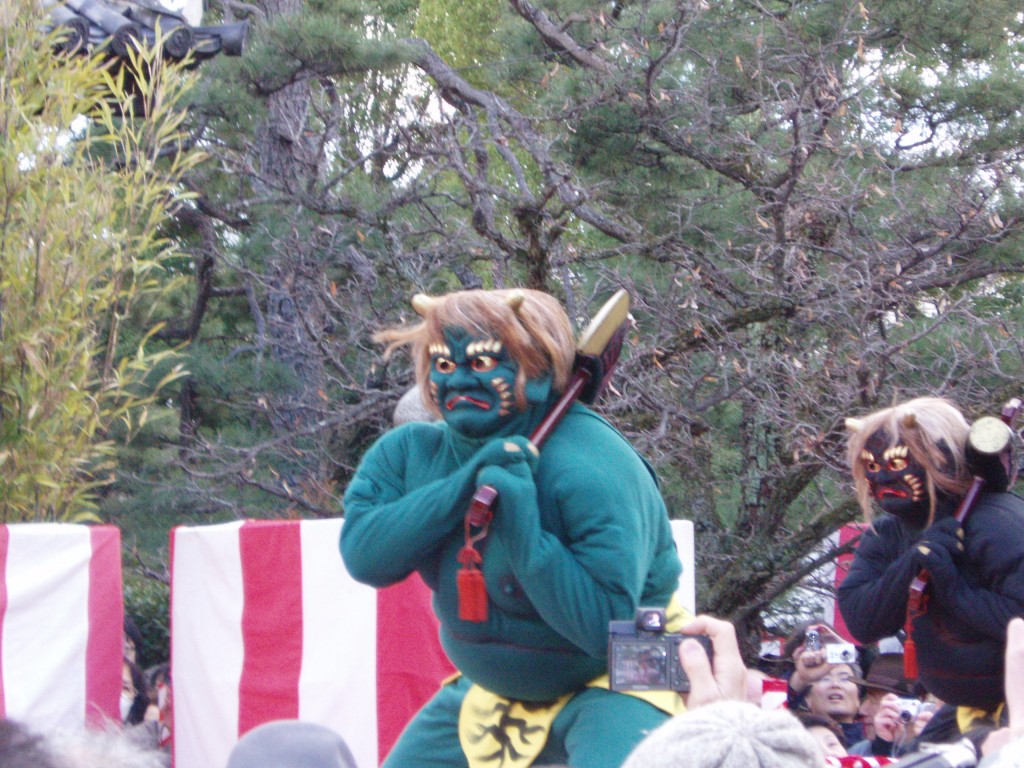
This temple is well-known for its Setsubun Oni Odori (demon dance: from 15:00); Bean scattering from 16:00 and old amulet burning from 17:00; Access: Kyoto City Bus #205, get off at Furitsu Idai Byoin-mae; Tel: 075-231-0355; www7a.biglobe.ne.jp/~rozanji/

A demon at Rozan-ji surveying the crowd arrayed before him

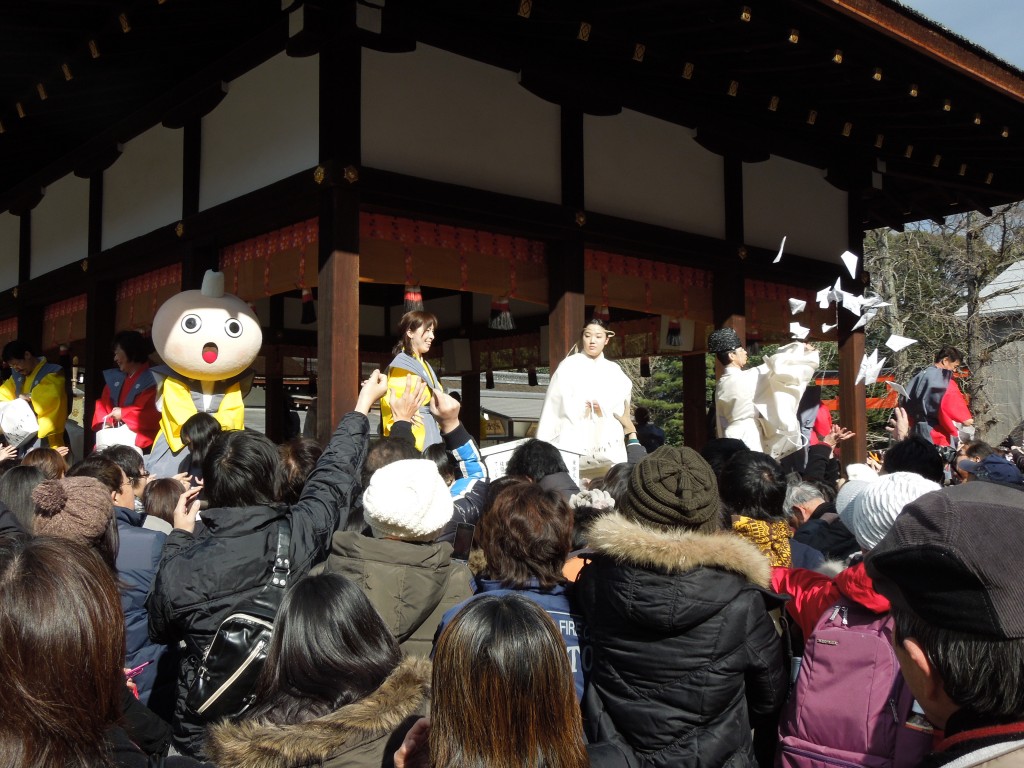
Bean throwing at Shimogamo Jinja - complete with cartoon character

*****************************************************************************

For a detailed account of Setsubun at Heian Jingu, see this illustrated post on the Kyoto and Nara Dreams blog.

Torii origins


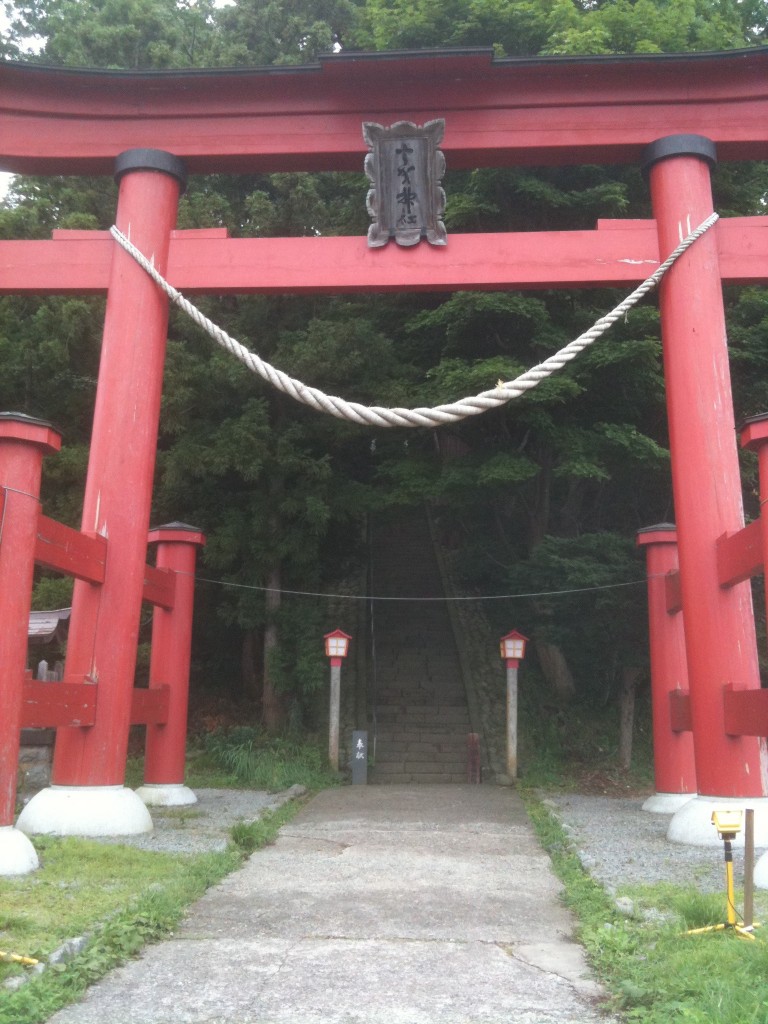
Torii – entrance to a sacred world


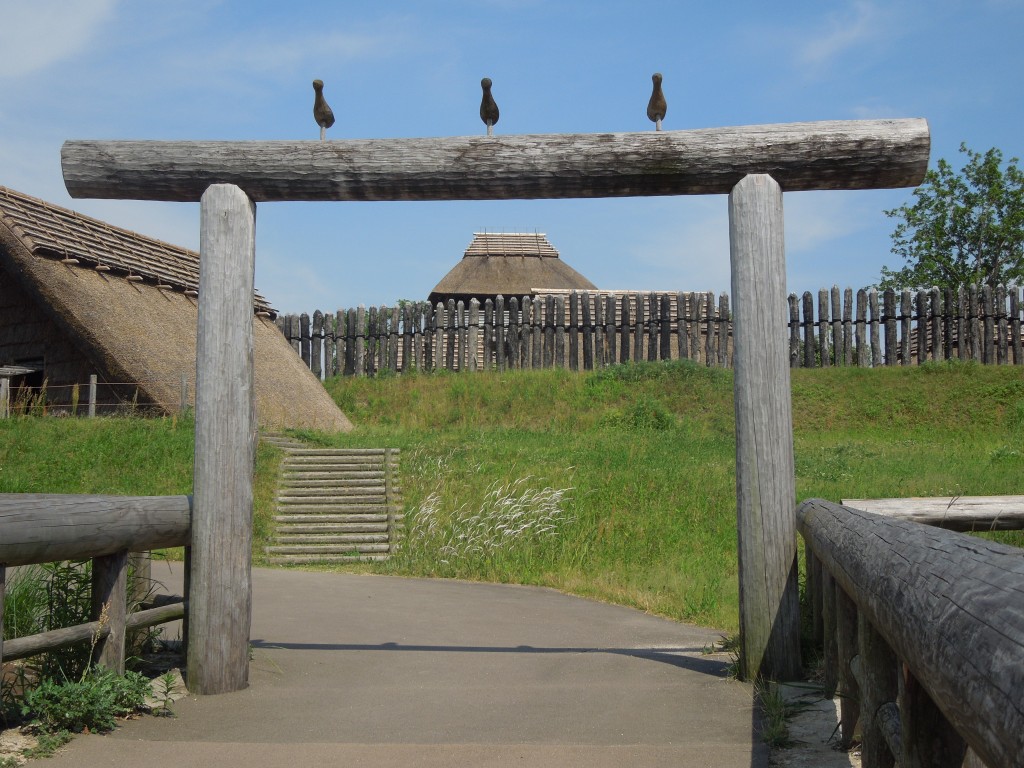
The origins of the torii are something this blog has explored before, noting the Korean connections and the possibility that tori-i (bird’s roost) may have served as a perch for chickens and roosters at the gateway to villages.  Roosters are special in Shinto because they wake up the sun in the morning, and in the famous Rock Cave myth they wake up the Sun Goddess herself.

Now a long article on torii origins has been published on the fascinating Japanese Mythology website.  The website declares its purpose as ‘to map the mythologies of Japan and to back-track the trails of their origins outside of Japan.’  It’s a refreshingly broad and international approach to what can often be stiflingly insular.

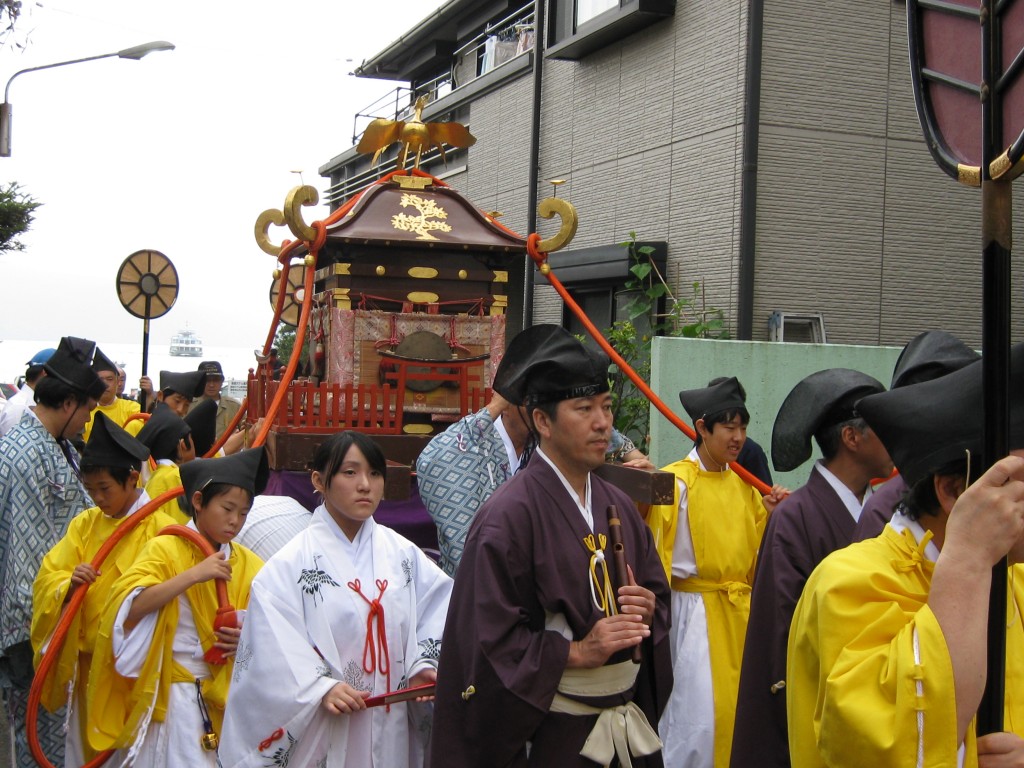
Mikoshi with phoenix on top being borne in a festival at Hakone Jinja

One possibility the article explores is the notion that the bird in question is not the rooster, but the phoenix.  Strange one might think, ’till one realises that the phoenix sits on top of the mikoshi which bears kami in parades.  Intriguing…   it is after all a symbol of renewal, and renewal lies at the very heart of Shinto.

Moreover, it’s associated with fire, and fire is the very essence of the sun.  ‘To the Japanese the Phoenix is a Talisman for Rectitude…. and they consider it a manifestation of the Sun,’ wrote William Thomas and Kate Pavitt in1922 (The Book of Talismans, Amulets and Zodiacal Gems).

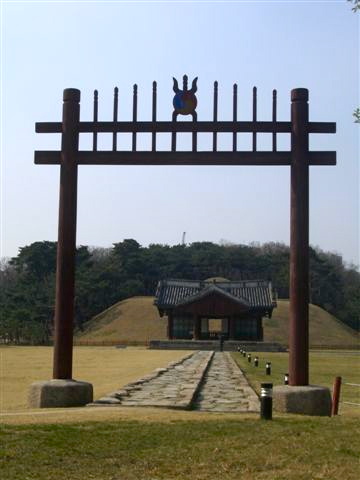
The Japanese Mythology website traces the phoenix gate connection back to Persia, or to Indo-Iranic influences spread by Saka migrants.  Photos show evidence of the trail of symbolic gates across Asia from India up to Korea, from where they may have spread to Japan.  There’s even analysis of blood groups to back up the possibility of immigrants into Japan bringing such customs with them….

It may be that early forms of the eruv doorpost emerged from and were carried by an extremely ancient migratory lineage of Semitic-Arab origin who are represented by haplogroup D-bearing  (Y-DNA) ethnic population groups including the Druzes, the Kalash(pre-Vedic culture of Pamir-Hindu Kush mountains), the Sindhi of Pakistan, etc. (see the map of the haplogroup D trail) who eventually reached Japan during the Kofun Period in substantial numbers as bearers of pre-Vedic rituals and horse and sacrificial culture with them.

Gate before a Korean burial mound in Seoul

Most fascinating of all, to me personally, is the notion that the sixth-century Japanese capital at Asuka may derive its name from the Persian for ‘Ark Saca’ or sacred place of the Saccas (Scythians).

It’s noted too that the written characters used for Asuka – 飛鳥 –  mean ‘flying bird’.  Flying bird?!!  For shamanic cultures flying birds were emissaries from on high, acting as the intermediaries between earth and  heaven.  Is this linked to the introduction of the torii in Japan, and if so which sacred bird would it be referring to?

The Japanese Mythology site has its own suggestion, deriving from the area around the Indian subcontinent.  But while travelling through Manchuria, I came across bird representations associated with shamanism that led me to suppose they may well be linked with or been imported into Japan.  It’s surely no coincidence that the emperor of Japan has a bird-shaped walking stick, not unlike the bird-surmounted pillar that stood in the Manchurian emperor’s palace.

Whatever the truth about its origins, the torii like other components in Shinto clearly shares a common heritage with East Asia.  There’s nothing unique about it, but there is something deeply appealing about it.

Gate at Yoshinogari Yayoi site in Kyushu acting as bird perch (tori-i)

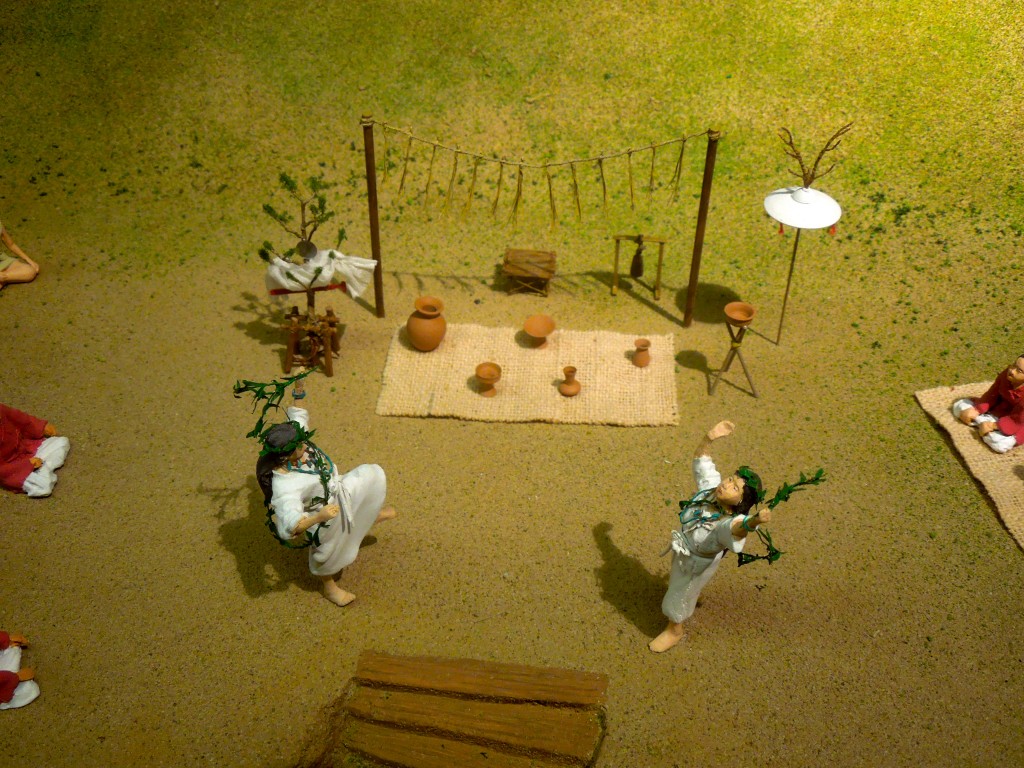
A model of how Yayoi-era rituals may have looked in Himiko’s time during the third century

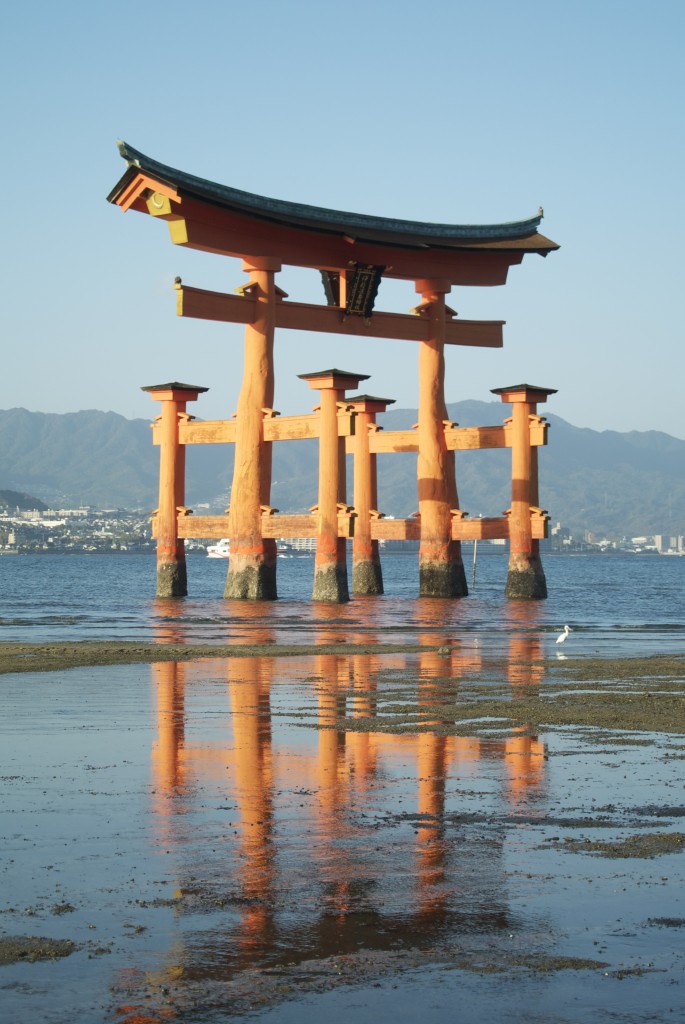
The most famous torii in the world? Itsukushima Shrine set in the Inland Sea

Ueno Park shrines

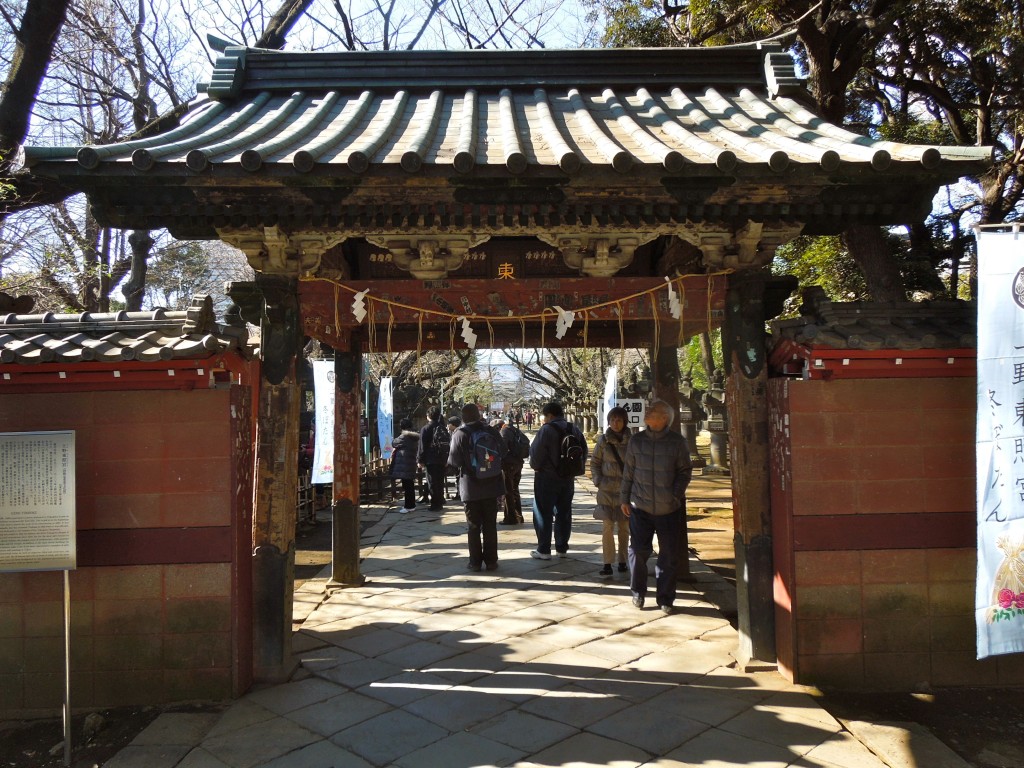
The Chinese-style entrance to Ueno Tosho-gu


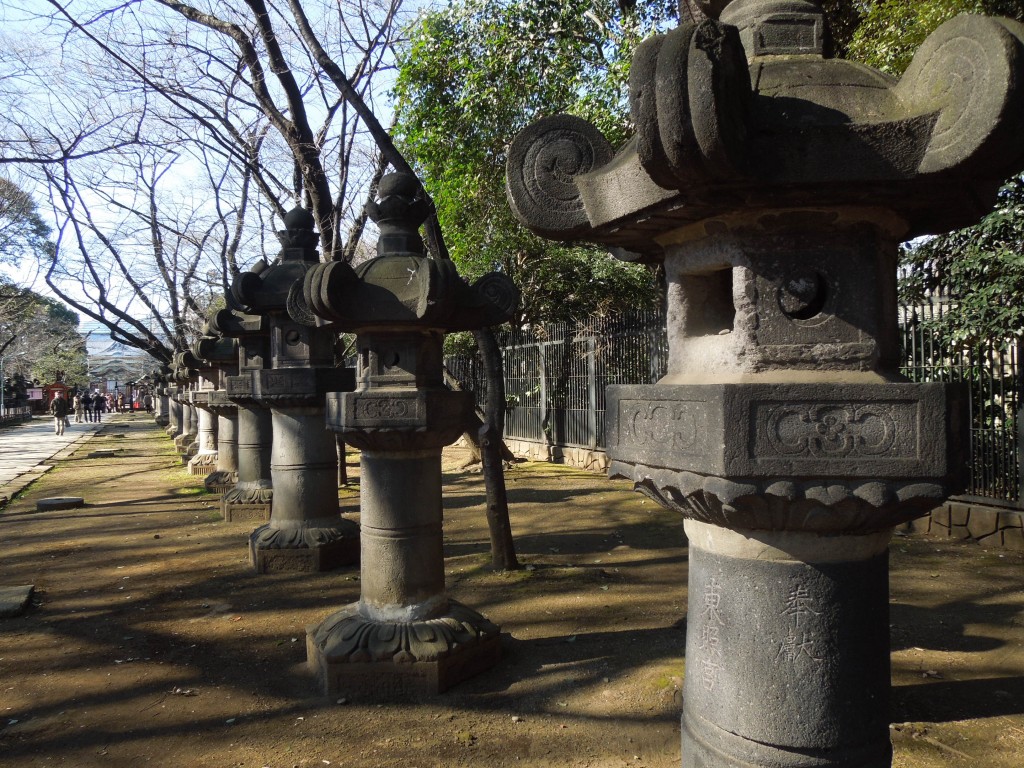
The lantern-lined path leading to the Worship Hall of Tosho-gu


Ueno Park in Tokyo is famous for several reasons.  It houses many of the country’s top museums.  It has a zoo.  Its cherry blossom parties are legendary.  And it was the site of a decisive battle in the Boshin Civil War, featuring Saigo Takamori (‘the last samurai’) whose statue stands near the southern entrance.

Not many people know, however, that the park also boasts three shrines.  The most famous is the Toshogu Shrine, one of some 200 around the country dedicated to the spirit of Tokugawa Ieyasu (1543-1616).  The shogun was deified after his death as Tosho Daigongen (Great Avatar of the Shining East).  The shrine was originally built in 1627 by a Tokugawa follower, but was rebuilt in grander style in 1651 by the third Tokugawa shogun, Iemitsu, who glorified his grandfather.

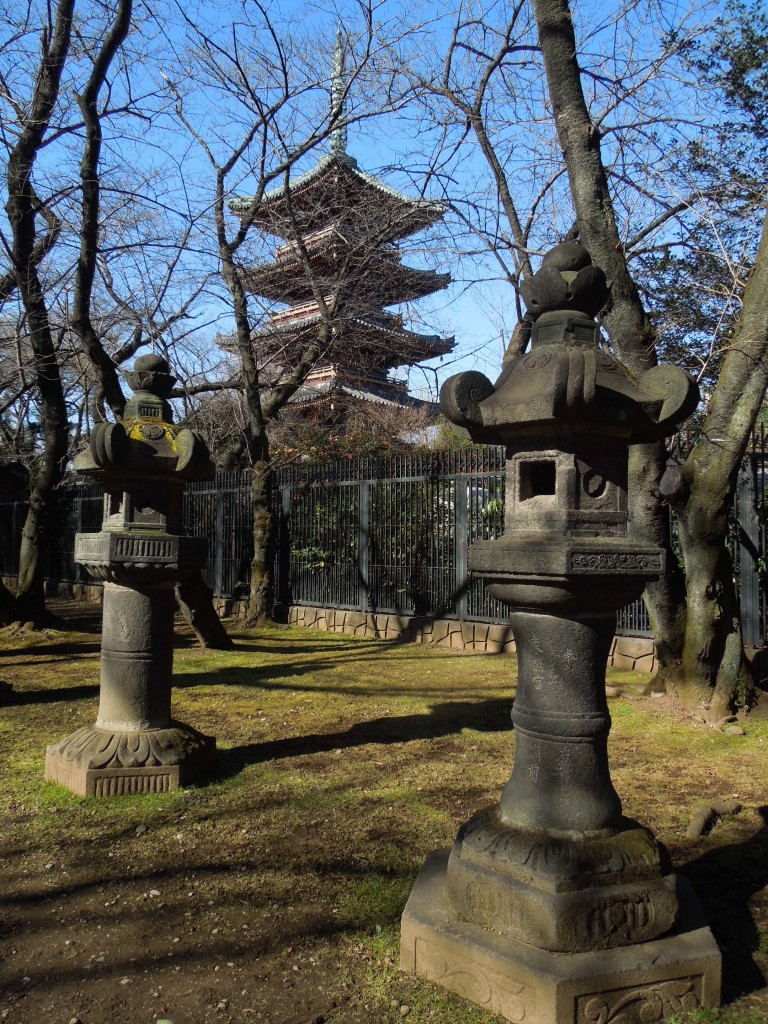
The pagoda which stands adjacent to Tosho-gu was once part of a large Shinto-Buddhist complex. Now it's in the grounds of Ueno Zoo, cut off from the adjacent Shinto shrine - an example of the ruthlessness of the separation of Shinto and Buddhism.

The shrine was built in an elaborate Gongen style, with separate structures for pilgrims and rituals.  It was part of the sprawling complex of Kanei-ji Temple, which was a funereal temple for the Tokugawa (six shoguns are buried there).

The temple was badly damaged in the Boshin War and its Shinto components separated off by the Meiji government.  The remainder was mainly destroyed in WW2, leaving the Shinobazu Pond and a five-storey pagoda to tell of the glory that once was.

Tosho-gu itself not only miraculously survived the Boshin War, but also fire and the Great Tokyo Earthquake of 1923,  In all, it’s been partially rebuilt no fewer than 16 times, and the shrine is under renovation now (till December).

Sadly I had no chance to see the colourful carvings and lavish decorations (including Kano Tanyu paintings), but the grounds boast a botan garden (peonies) and an ornate Chinese-style gate prized as an important cultural asset.

There are 200 stone lanterns lining the approach as well as 48 bronze lanterns donated by daimyo (feudal lords), whose names are written on them. Rather than illumination, the latter are used for ritual purposes as sacred fires for purification.

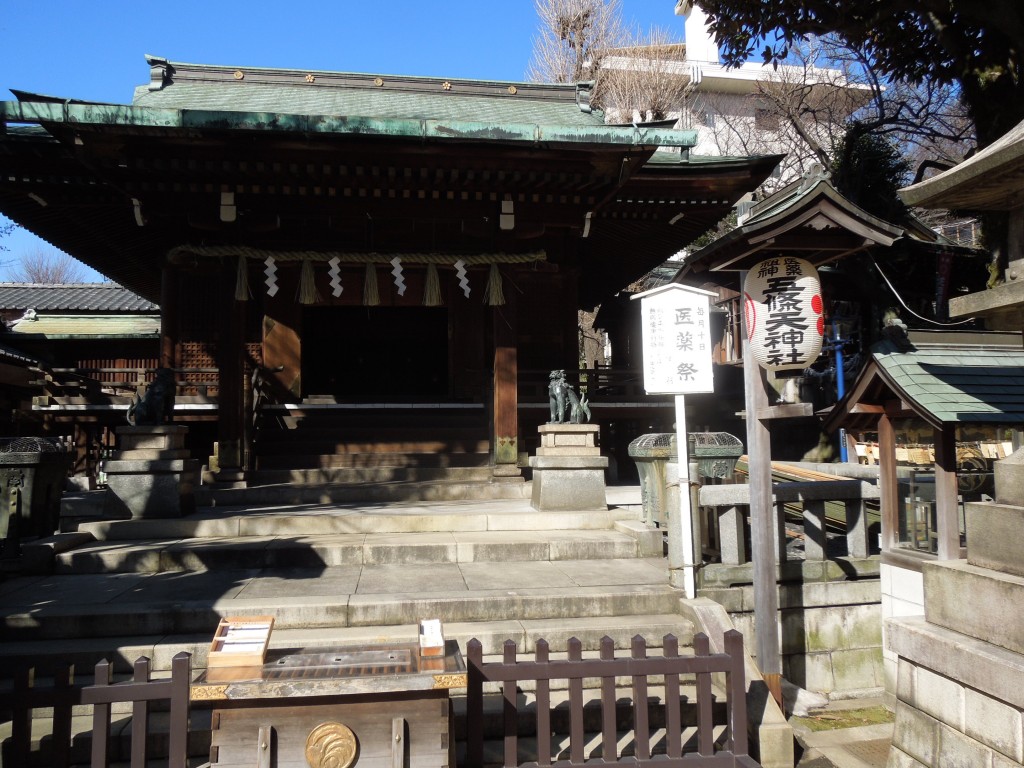
Gojouten Jinja, dedicated to medicine and healing. This is the place to come if you or your loved ones fall sick.


The other two shrines in the park now form a sort of unitary set, as they stand side-by-side.  One is a simple shrine dedicated to medicine and healing, Gojouten Shrine.  Every month on the tenth it has a medicine festival (iyaku sai).  Shrine tradition says it was established about 500 years ago, and it moved to its present position in 1928.  Like other healing shrines, it’s dedicated to Omamuchi and Sukunahikona no mikoto; in the Nihon shoki the latter is the assistant of Onamuchi in the making of Izumo and helps to heal illness among humans and their animals.

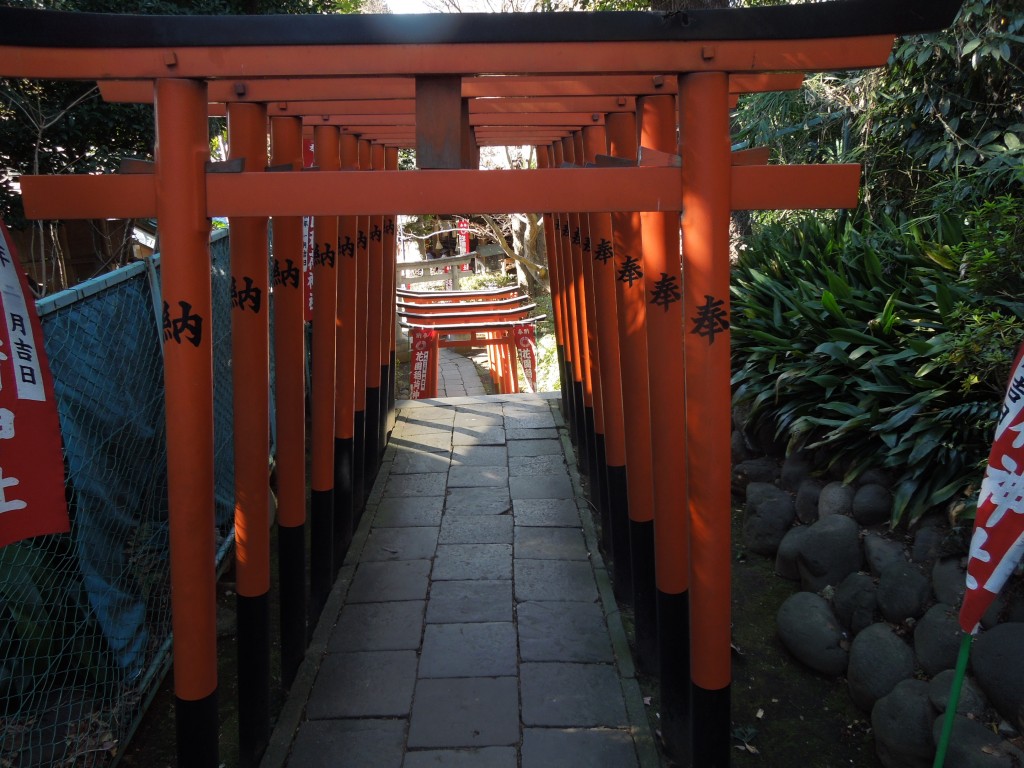
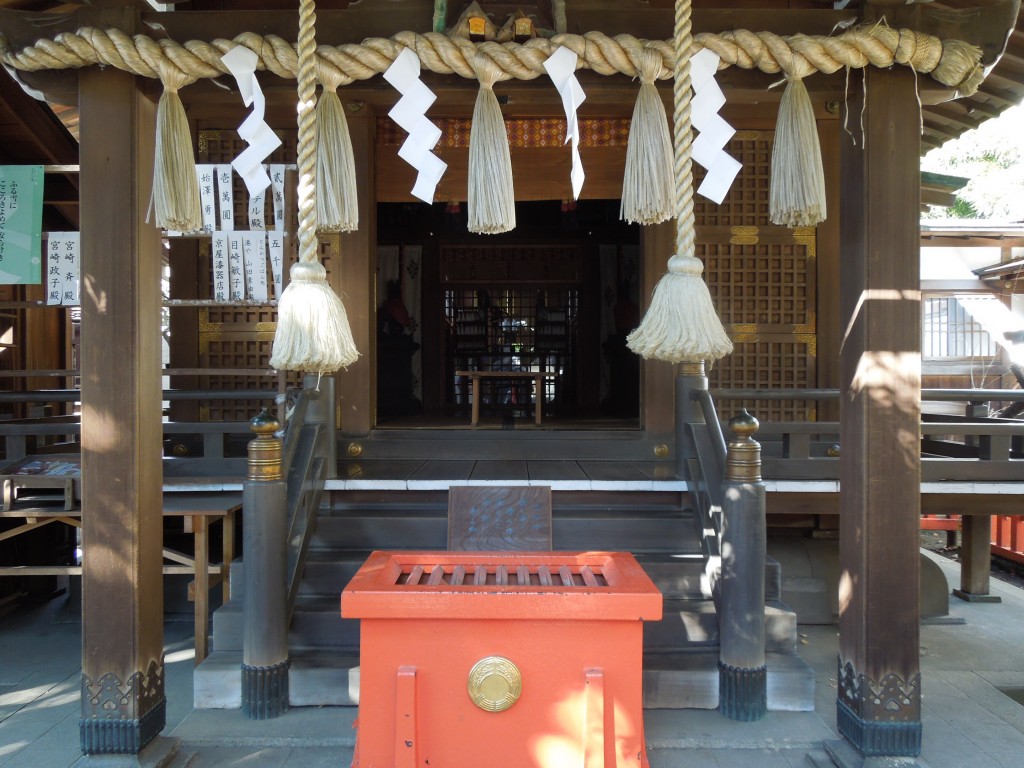
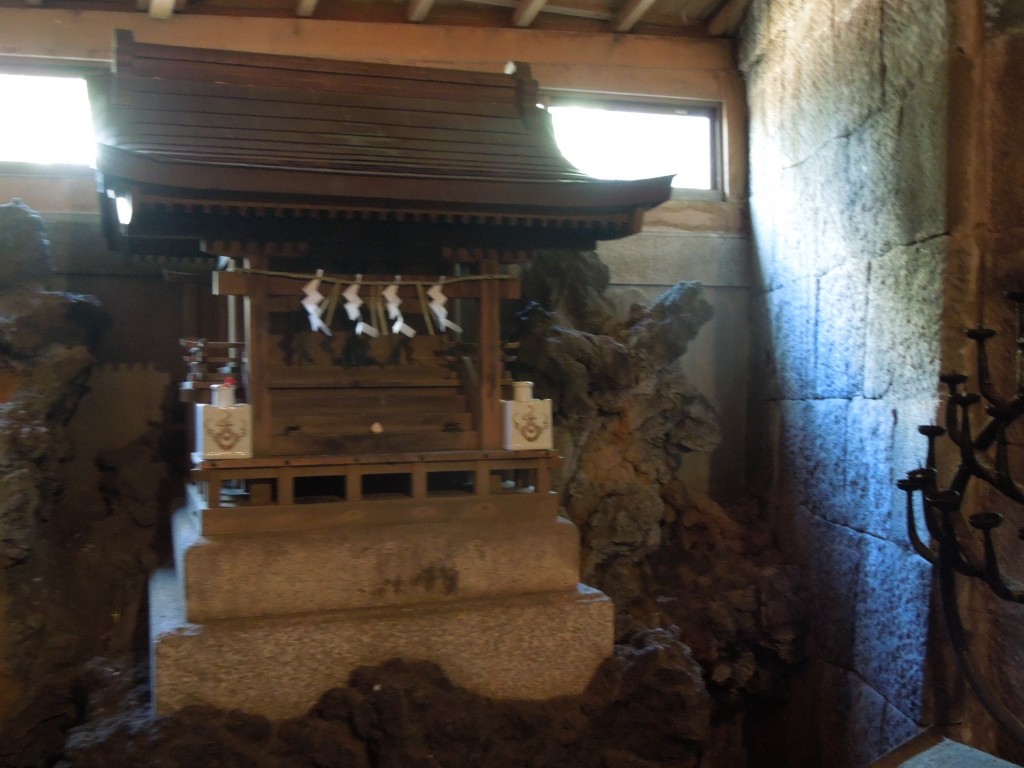
Adjacent to it is the Hanazono Inari Shrine, one of possibly 30,000 dedicated to the rice kami around the nation.  Its origins are unknown, but Tokugawa Iemitsu received a message in a dream that he should rebuild it.  In 1873 it was again rebuilt, renamed and later put together with the Gojouten Shrine.  As well as the characteristic red torii tunnel and fox guardians, the most interesting feature is an Ana-Inari Shrine (or Hole Inari), built in a rocky recess to honour a fox which was displaced by the building of Kaneiji Temple – a welcome example of sensitivity to the plight of animals which one hopes has rubbed off on nearby Ueno Zoo.

***************************************************

For a sumptuous photo tour of Ueno Toshogu, see Joseph Cali’s Shinto Shrines blog here.

****************************************************

Torii tunnel leading to Hanazono Inari Jinja


The Hanazono Inari Shrine worship hall


The Ana Inari Shrine (Hole Inari) built for a displaced fox

« Older posts Newer posts »

© 2026 Green Shinto

Theme by Anders NorénUp ↑