Author: John D. (Page 151 of 202)

Wedding styles

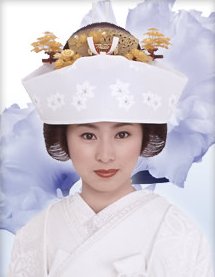
(Picture by AP)


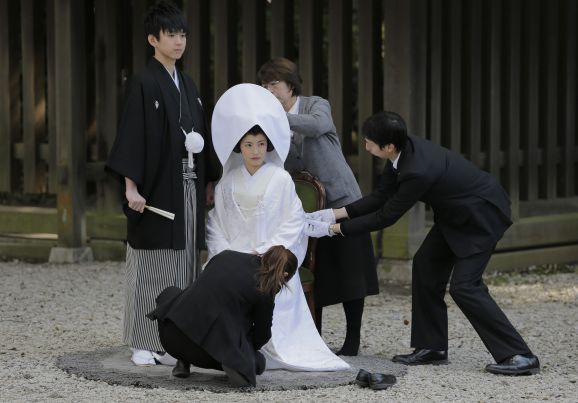
The picture today in Japan Today is of a Shinto wedding at Meiji Jingu in Tokyo.  I don’t have statistics to hand, but I’ve heard there’s a slight trend back towards Shinto-style weddings in recent years, after the fashion for wedding chapels swept the nation and captured something like 70% of the market.  (Shinto marriages were down to just 12%, with the rest at public venues.)

I’m no expert on wedding clothes, but I gather the style of hat in the above picture is the sweeping Wataboshi (cotton hat), rather than the Tsunokakushi (pictured right). The Wataboshi apparently is akin to a veil, shielding the bride’s face from others so that only the husband gets to see her in full.

The Tsunaboshi on the other hand means ‘hide the horns’, and refers to the horns of jealousy which women bear.  It symbolises the intention of the bride once married to cover up her own ‘selfish’ feelings.  No wonder Japanese women are widely reputed to make the best wives!

According to the website, factsanddetails.com, the bride’s wedding costume used to include a small dagger like those used in ritual suicides in case she dishonored her husband. The white dress is not only a symbol of purity but of mourning, because the bride is ‘dying’ to her old family and joining a new one.

Factsanddetails also say that “Shinto weddings ceremonies usually last around 20 to 30 minutes. The couple is blessing by a Shinto priest, they sip some sake and a say few words. There is no best men and no giving the bride away. Sometimes rings are exchanged. After the ceremony the families of the bride’s and groom are formally introduced to each other.  The wedding ceremony is usually only attended by close family members. Most of the guests for the wedding don’t even show up for the ceremony. They only go to the wedding party afterwards.”

***********************************************************************

For absolutely everything about Japanese weddings, click here.


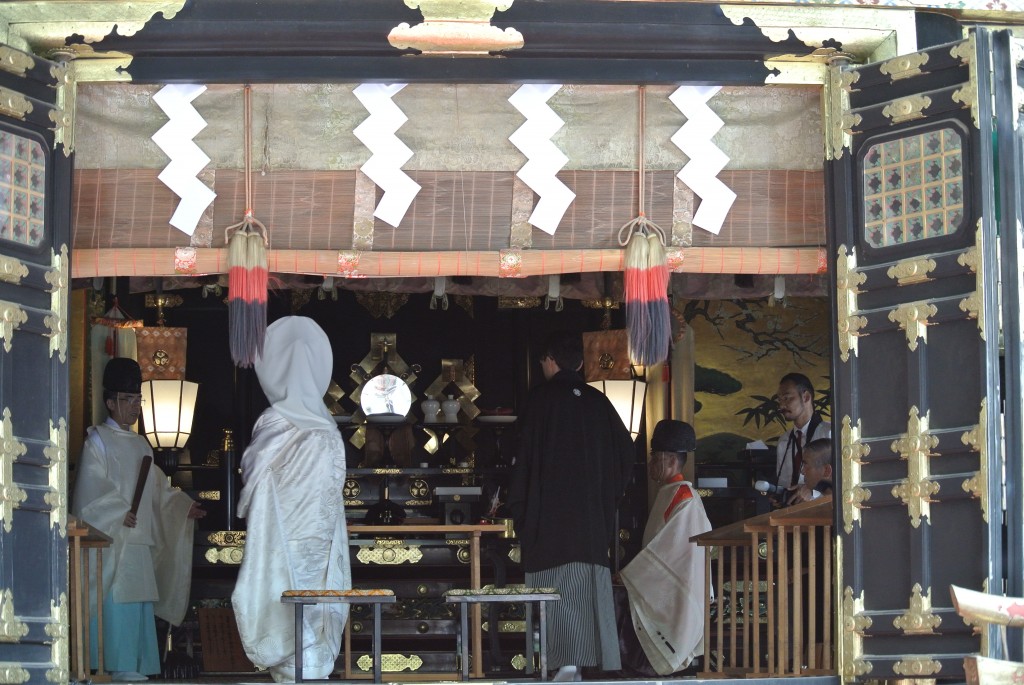
Wedding ceremony at Futarasan Jinja, Nikko


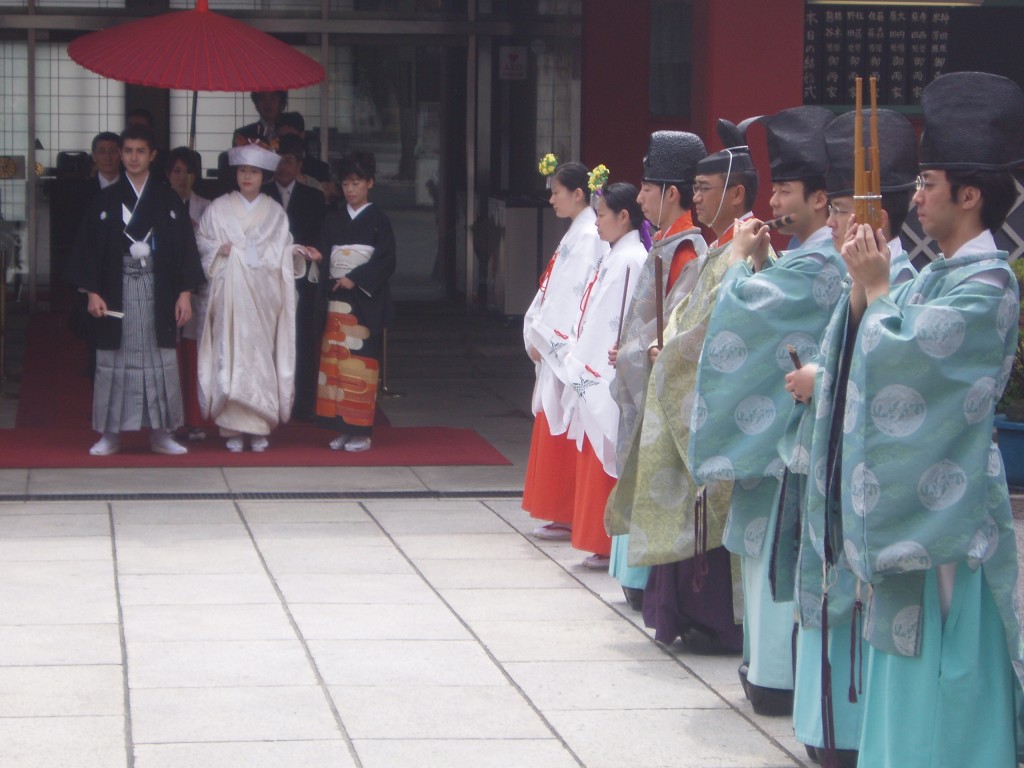
A newly married pair emerge from a Tokyo shrine


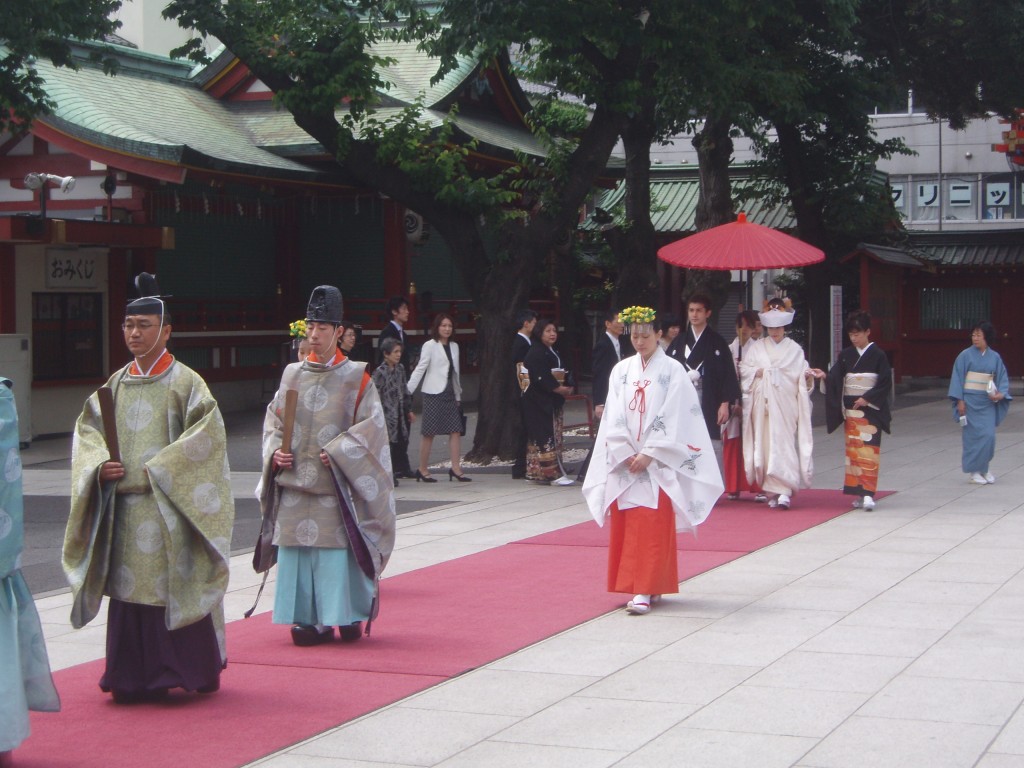
A red carpet procession for the newly married pair, led by priests and miko to a future of conjugal bliss – maybe

Kami (2): Types

Part Two of our mini-series on the kami is also extracted from the Shinto Shrines book recently out from the University of Hawaii Press.  Illustrations are my own, and not those of the publication, as is the paragraphing.

*******************************************************************
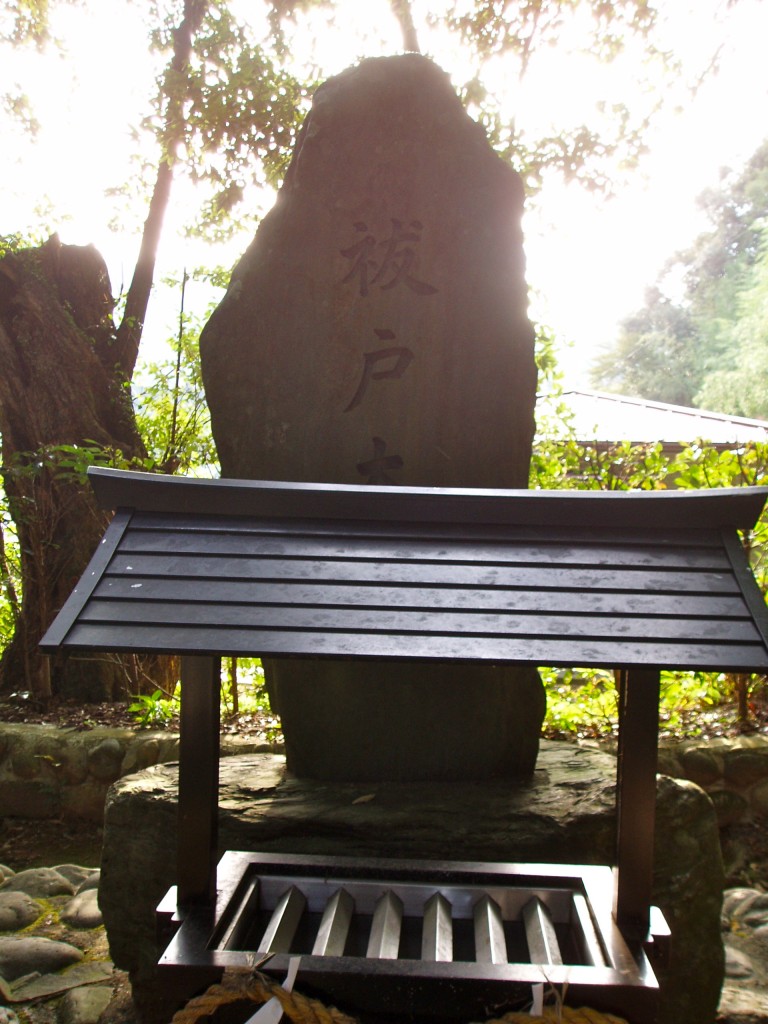
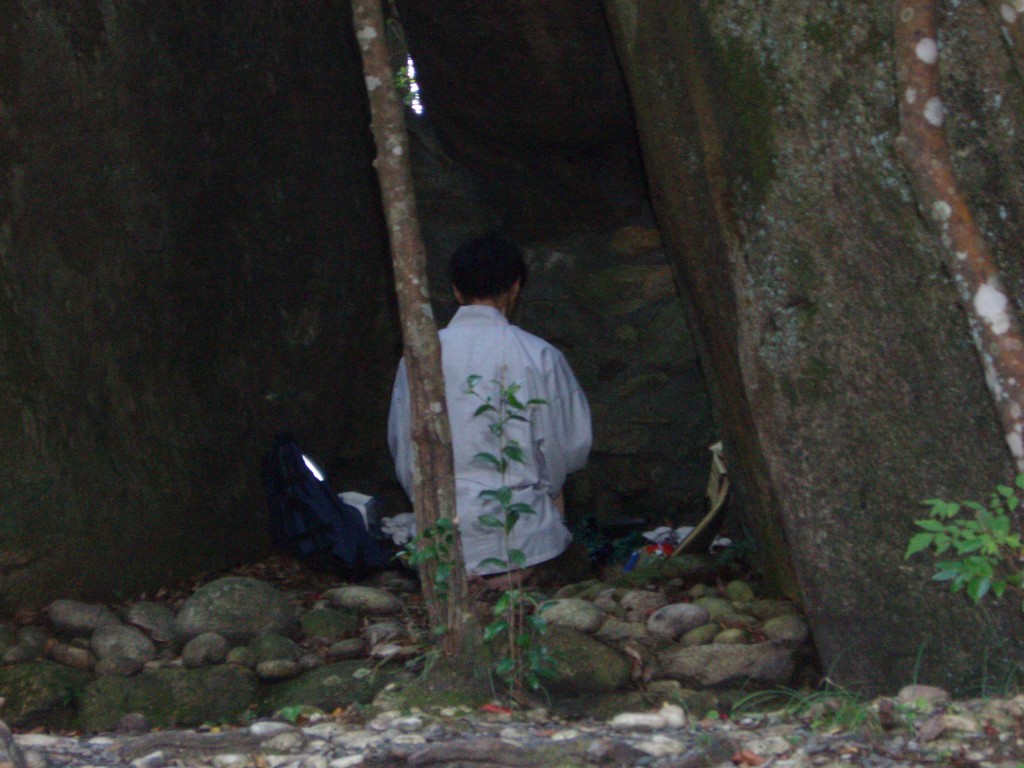
Sacred rocks can house kami of nature

Types of kami
Because kami worship was originally site specific in nature, there is a great variety and number. Even where the same kami has been enshrined in a different location, it will take on the local traditions of its new home. In addition, the multiple nature of kami is a factor in their elusive image. For example, a single kami has a rough nature (aramitama), gentle nature (nigimitama), wondrous nature, (kushimitama), and nurturing nature (sakimitama). These shikon (four spirits) are often enshrined separately. The complex nature of the Japanese language, whereby inconsistency even in naming is common, adds to the problem. It may be helpful to understand something of the “eight million” kami (yaoyorozu) of Shinto by looking at the various ways they are made manifest.

Kami of nature:
There are kami that reside in a certain place, or manifest in that place spontaneously or when called upon. Often the place is notable in some way: a waterfall, a mountain of distinct shape, a volcano, a large rock, a large or unusually shaped tree. Though there are many tales of kami making an appearance in humanoid or animal form (especially white animals), the manifestation is generally considered to be in the heart of the worshipper, or in the result that occurs from calling the kami (such as healing or an answered prayer). Kami of nature can also be manifest in the active forces such as rain, wind, thunder, fire, and sunshine.

Kami of folk worship:
What is sometimes called “Folk Shinto” pertains to the local beliefs and practices that grow spontaneously among the people of a given location. It is usually a result of an ad hoc blending of myths, legends, superstitions, literary works, or clan origins. It also reflects the degree of isolation or wider distribution of a particular clan or occupational group.
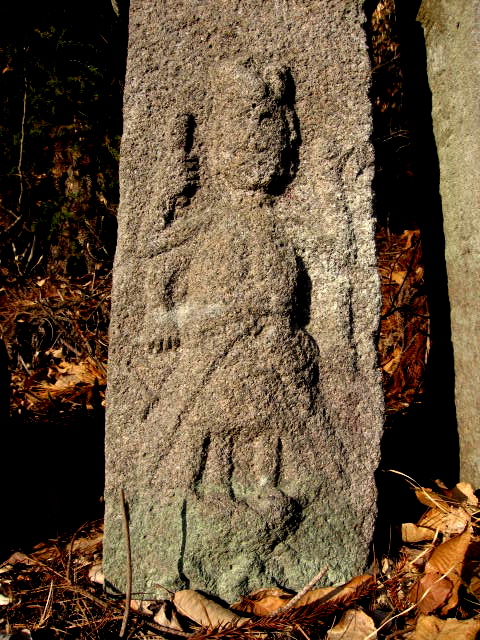
Dosojin from a roadside in Nagano Prefecture

Some folk kami, such as the dosojin (deities of roads and boundaries), tend to be phallic in nature, and are most often seen in male/female pairs. Such kami are generally related to the concerns of daily life such as agriculture, fishing, the hearth, fertility, disease prevention, and good or bad fortune. It could be argued that so-called “folk worship” is the origin of Shinto, its true source and the power that sustains it. Folk Shinto is closely related to shamanism and divination as well.

Kami of deification:
These are humans who were raised to the status of kami after death. There are numerous examples and various reasons for such enshrinement. For example, Emperor Ojin (r. A.D. 270–310) is enshrined as the kami Hachiman, who is revered as a protector of the country and a god of war. Thanks largely to his popularity among the samurai of the Kamakura period (1185–1333), there are said to be about 25,000 Hachiman shrines in Japan today.

A different case involves Sugawara no Michizane, enshrined as the kami Tenman Tenjin. Though he came to be considered a kami of education, he was originally enshrined to appease his vengeful ghost (goryo), which was thought to be causing plagues in the capital of Kyoto. Today there are about 10,000 Tenjin shrines throughout the country.

Another example is Tokugawa Ieyasu, the first Edo shogun, who unified the country and who decided that after his death he should be enshrined as a kami, for the purpose of watching over the country. His descendants duly carried out his wish, and today the magnificent Nikko Toshogu is one of the most popular destinations in Japan for worshippers and tourists alike. It was mentioned above that deification of kami was somewhat akin to that of a saint, but it differs in that the attributes that make a kami are not decided by any central authority and the person concerned is generally a secular figure such as a scholar, a general, an ancestor or benefactor of a community or clan (uji), or a member of the imperial family.
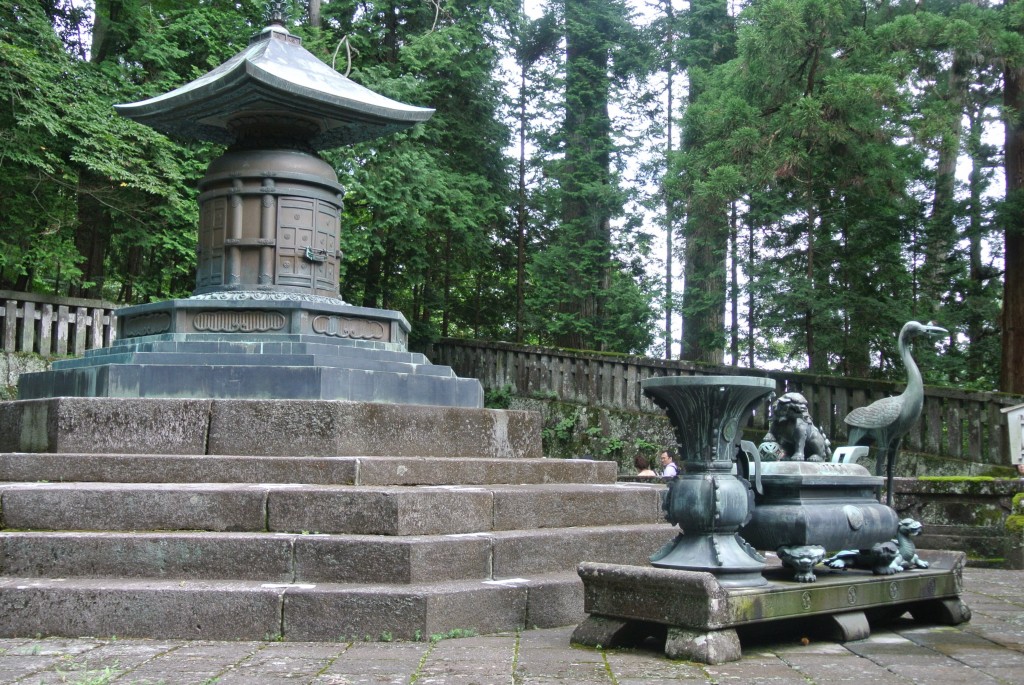
The grave of Ieyasu at Tosho-gu, Nikko, where he is deified as Tosho Daigongen (Great Avatar of the Shining East)


Kami of shared belief: Kami that are common to a wide spectrum of geographical areas are generally those that have been spread from one original location. Such are the kami of the Kojiki and Nihon shoki—for example, Amaterasu, Susano-o, and Okuninushi—who were local kami proselytized into national figures, along with the beliefs surrounding them.

The process of enshrining the kami of one place in another location is called “dividing the spirit” (bunrei). Essentially, the kami is “invited” to enter into a new place and installed there in a ceremony called kanjo; there is no limitation on the number of places that a kami can be enshrined, nor is the power of the divided deity any less than the original. In addition to the Hachiman and Tenjin shrines mentioned above, Inari shrines are said to be the most frequent at about 32,000, followed by about 18,000 for Ise shrines. (However, though they enshrine Amaterasu and are called Ise shrines, the spirit is not divided from Ise Jingu).

This process was expedited during certain periods of history, when the right to enshrine a particular kami was sold, as was the case with the expansion of Inari (a rice kami) shrines—a sort of religious franchising. Enshrinement of these kami expanded to the extent that today, two-thirds of existing shrines are said to be of the Hachiman, Inari, Ise, or Tenjin lineages.

A word of caution: there are no precise figures on the number or type of enshrinements of a particular divinity. The numbers quoted in this book are from an old survey and probably represent guesswork more than actual accounting. (For example, the total number of just these shrines exceeds the overall number registered as religious bodies.) Indeed, the number of registered Hachiman shrines is said to be no more than two thousand. Since no comprehensive shrine count has ever been done, numbers are anecdotal and vary widely.
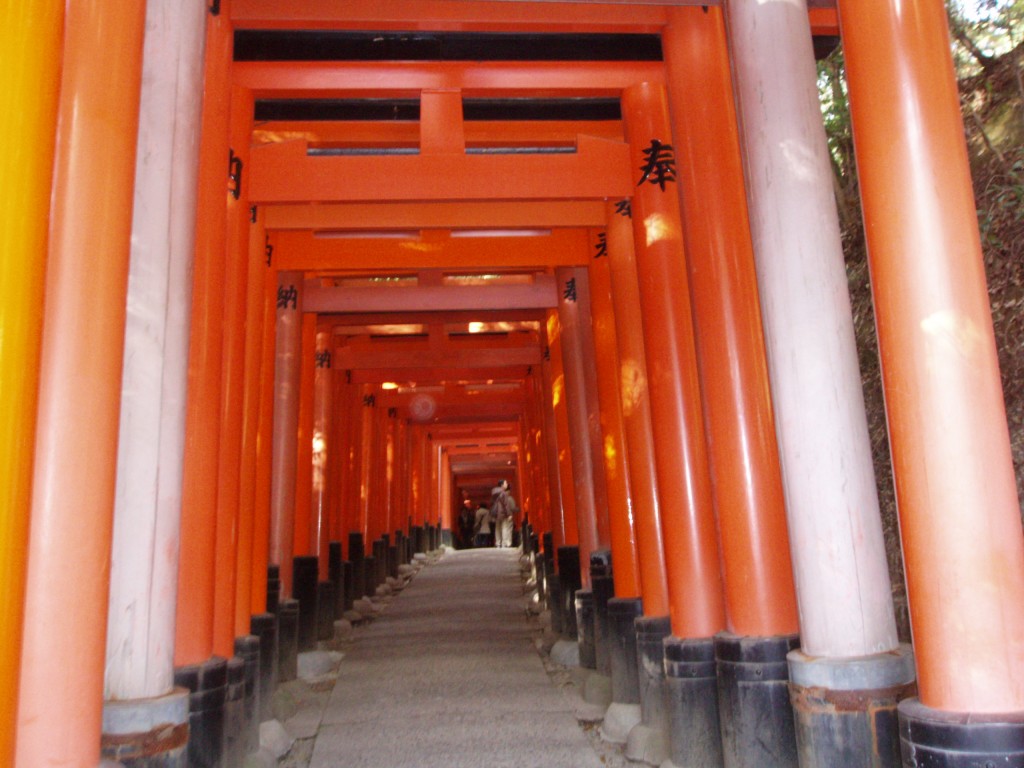
Red torii tunnels, characteristic of Inari shrines where the rice kami is enshrined

Kami (1): Concept

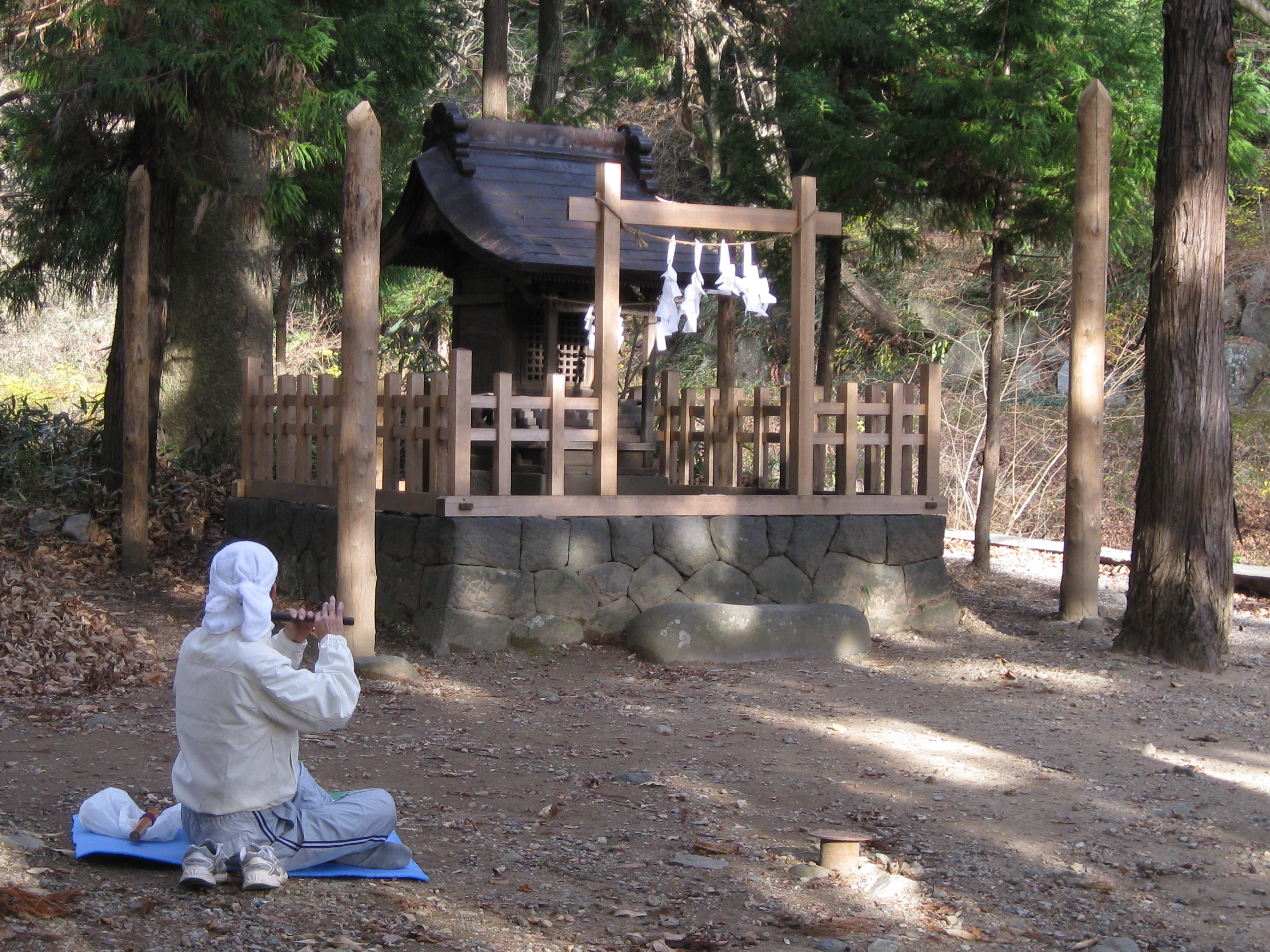
Playing for the kami... but what exactly is a kami?


Kami are central to Shinto.  Indeed, the very name Shinto means ‘way of the kami’.  So an obvious question is what exactly is or are kami?

In Shinto Shrines (University of Hawaii Press), Joseph Cali provides an admirably clear overview of the subject. Well, as co-author I would say that, wouldn’t I…   But I do stand in genuine admiration of what Joseph accomplished in the book, particularly in terms of a 50-page Introduction that is as objective and succinct as any account I’ve seen.  (The extract below is accompanied by my own photos.)

*******************************************************************************

Broad definition of Shinto
If there is one single, broad definition of Shinto, it would probably be “Shinto is a belief in kami.” Shinto is considered a “natural” as opposed to a revealed religion. It has no founder and no prophets. It has morality tales and myths that have been preserved in writings and influence its practices, but there is no doctrine such as the “Ten Commandments” that dictates the correct way to live as mandated by God. It is a belief system that developed over thousands of years at different locations within Japan, and is centered on local as opposed to universal beliefs.

Beliefs and practice can differ according to local custom

Nature is its primary source of inspiration and it has incorporated a number of elements from Buddhism, Confucianism, Daoism, and Chinese divination (called onmyodo in Japanese), and from different parts of Asia. Over the centuries many of the ancient, local beliefs were formalized and nationalized by the ruling and priestly classes. This included giving names to nameless kami and creating shrine buildings. Finally, a radical restructuring and standardization took place between the late nineteenth and mid-twentieth centuries that is reflected in the Shinto we now find in most shrines.

What are kami ?
As mentioned above, Shinto can be defined as a belief in kami, which is usually translated as “god,” “deity,” or “spirit” (Japanese makes no distinction between singular and plural). Kami are not like the God of monotheistic religions or even like the Buddha. Although Shinto in the eighteenth century saw new sects emerge based on the concept of a singular creator divinity, they never held sway. Shinto is not only a polytheistic, but also a pantheistic faith, meaning that kami manifest in everything. It is also considered animistic, because its gods are in the forces and manifestations of nature.

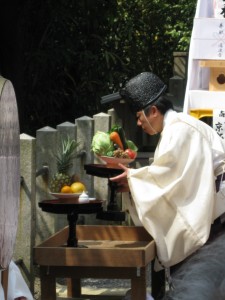
Making offerings to the kami

The kami make themselves “present” in living beings, in the dead, in organic and inorganic matter, and in actions beyond the control of man such as earthquakes, storms, droughts, and plagues. The concept of kami also includes great people who are venerated as kami after they die and who are worshipped by subsequent generations as protectors or ancestor kami. This is somewhat akin to the Christian concept of sainthood—though people enshrined as kami were more often agents of power rather than of good works. There are times too, as in the case of the emperor, where a living person can be venerated as a kami.

Like the gods of Mount Olympus, kami perform both good and bad deeds, causing both bountiful harvests and disasters (though preventing the latter is de-emphasized in modern-day Shinto it was once the prime motivation of kami ritual). To gain the blessings and avoid the destructive actions of kami, offerings and prayers are directed to them on a regular basis. Such offerings traditionally consisted of cloth, food, swords, horses, and other valuable objects. These days offerings by priests are primarily food and drink, or sprigs of the sacred sakaki tree, while those from worshippers are usually monetary.

From the eighth century, kami were given official ranks that could be raised as a reward for good behavior. In this and other ways, kami came to be treated as if human, with similar emotions, needs, and desires. On the other hand, they were rarely portrayed in art in an anthropomorphic way, except under the influence of Buddhism. There is, however, one category of imported kami for whom visual representation is common: the shichifukujin (Seven Lucky Gods).

Eight myriad kami being borne on sakaki branches at an Izumo festival held every autumn

Solar power

Who do you think might have written the following?

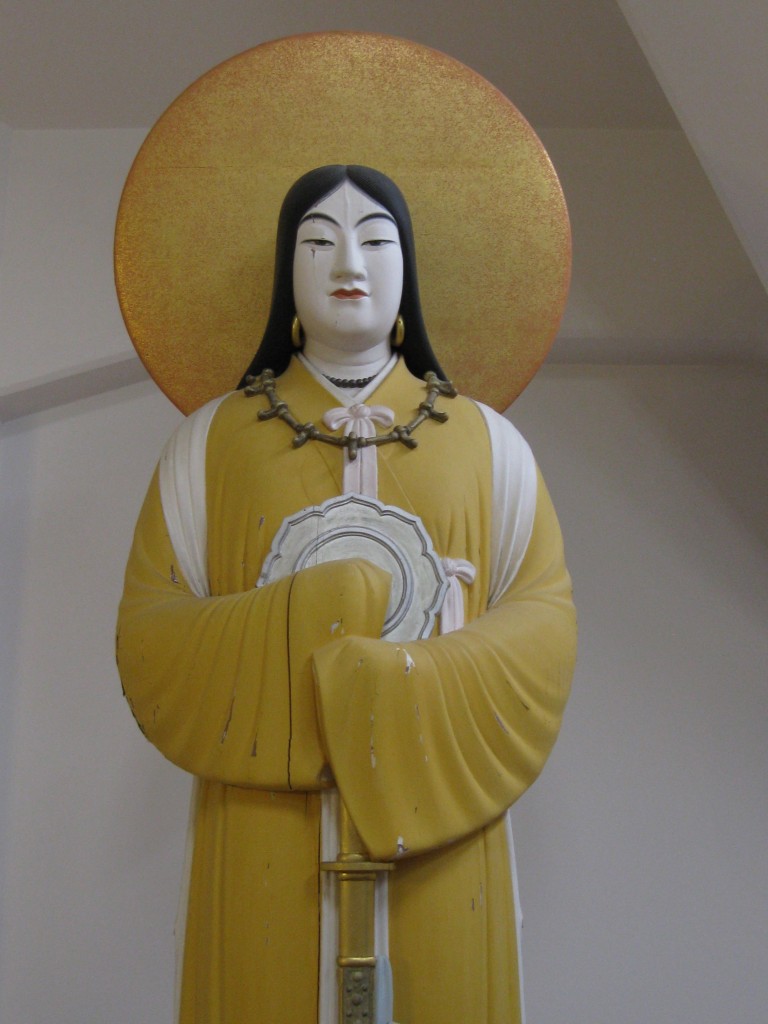
Amaterasu, sun goddess and primal deity in the Shinto pantheon

‘”The Sun is god!” cried J.M.W. Turner as he died, and plenty of other people have thought there was much in his analysis. The Aztecs agreed, and so did the pharaohs of Egypt. We are an arrogant lot these days, and we tend to underestimate the importance of our governor and creator.

We forget that we were once just a clod of cooled-down solar dust; we forget that without the Sun there would have been no photosynthesis, no hydrocarbons — and that it was the great celestial orb that effectively called life into being on Earth. In so far as we are able to heat our homes or turn on our computers or drive to work it is thanks to the unlocking of energy from the Sun.

As a species, we human beings have become so blind with conceit and self-love that we genuinely believe that the fate of the planet is in our hands — when the reality is that everything, or almost everything, depends on the behaviour and caprice of the gigantic thermonuclear fireball around which we revolve.’

************************************

Well, it’s not a Shinto apologist, nor is it a new-age religionist…   it’s a British politician by the name of Boris Johnson writing an article about the vagaries of the weather in Britain, which is currently suffering from a blanket of snow and feeling miserable for itself.

But in writing of the sun as ‘our governor and creator’ the maverick politician seems to be hitting on a similar theme to ancient humans.  In acknowledging the solar primacy, perhaps we may come to recognise that conditions on earth depend on activity up there.  By allying itself with the rising sun, the nascent Japanese state may have been unconsciously tapping into a scientific, as well as a higher, truth.

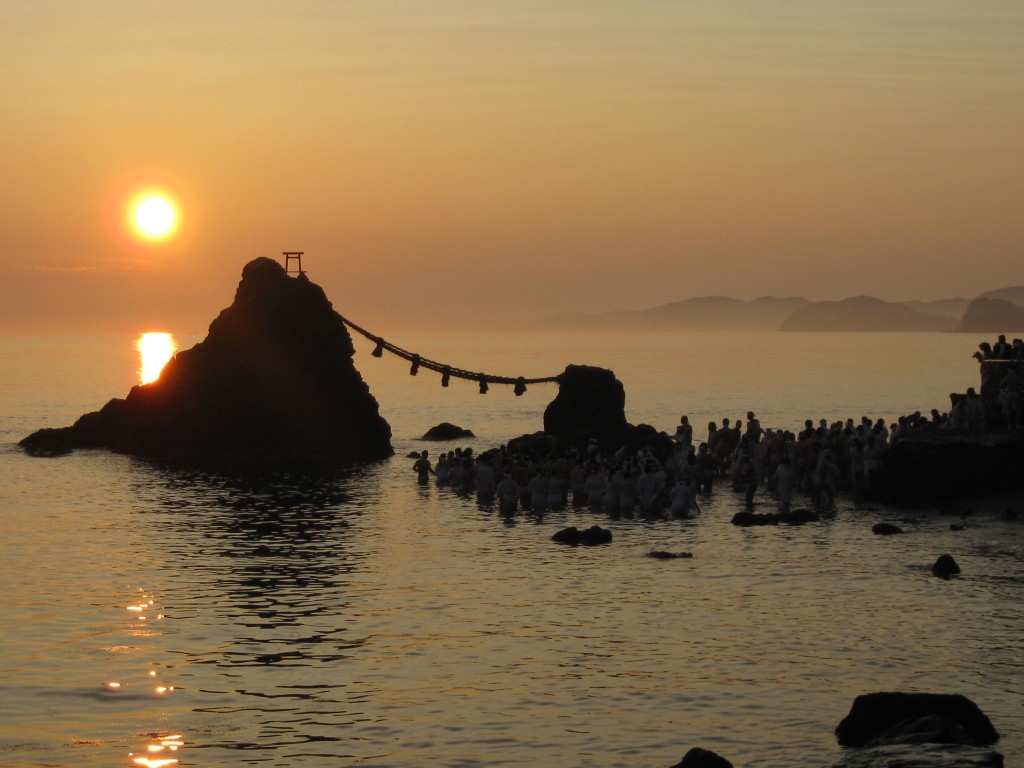
Ceremony to welcome the sun rise on the longest day of the year at the Meoto Rocks at Ise

Year of Renewal (Sengu)

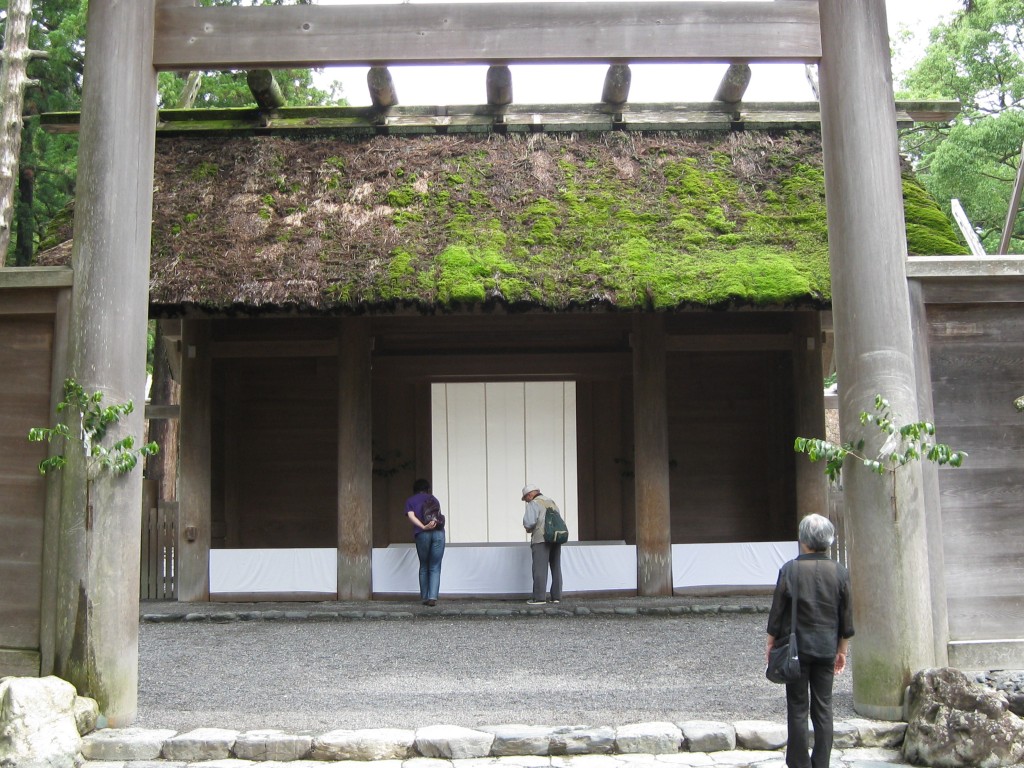
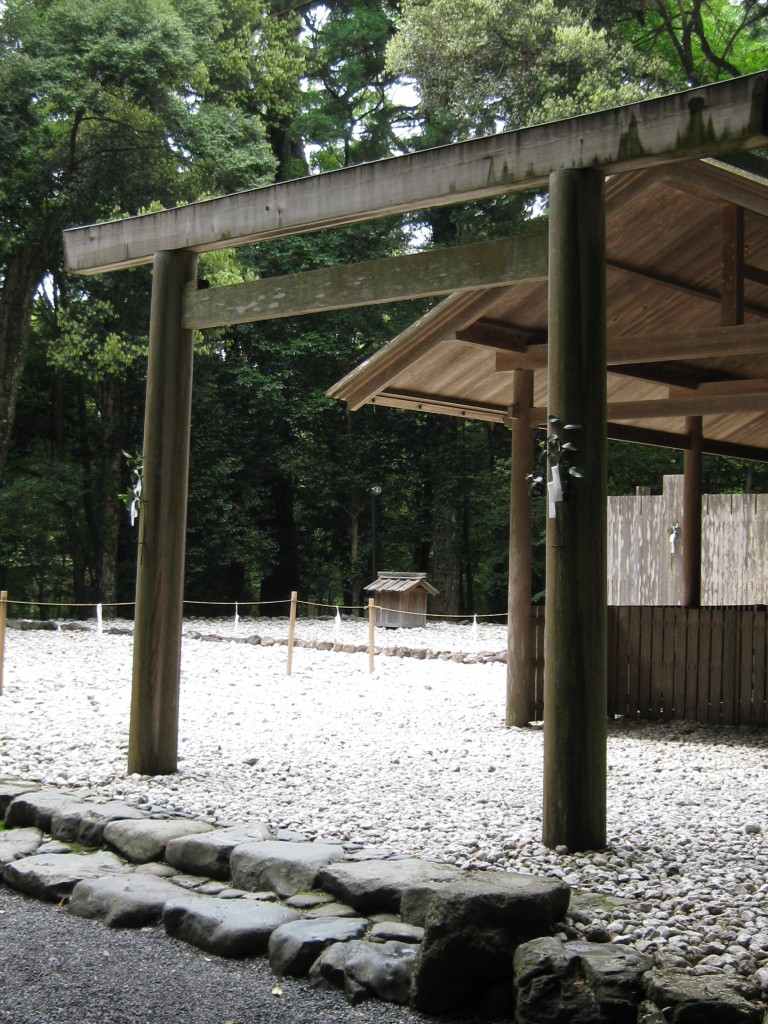
Outer gate at Naiku, one of the more than 100 buildings that are being renewed at Ise jingu


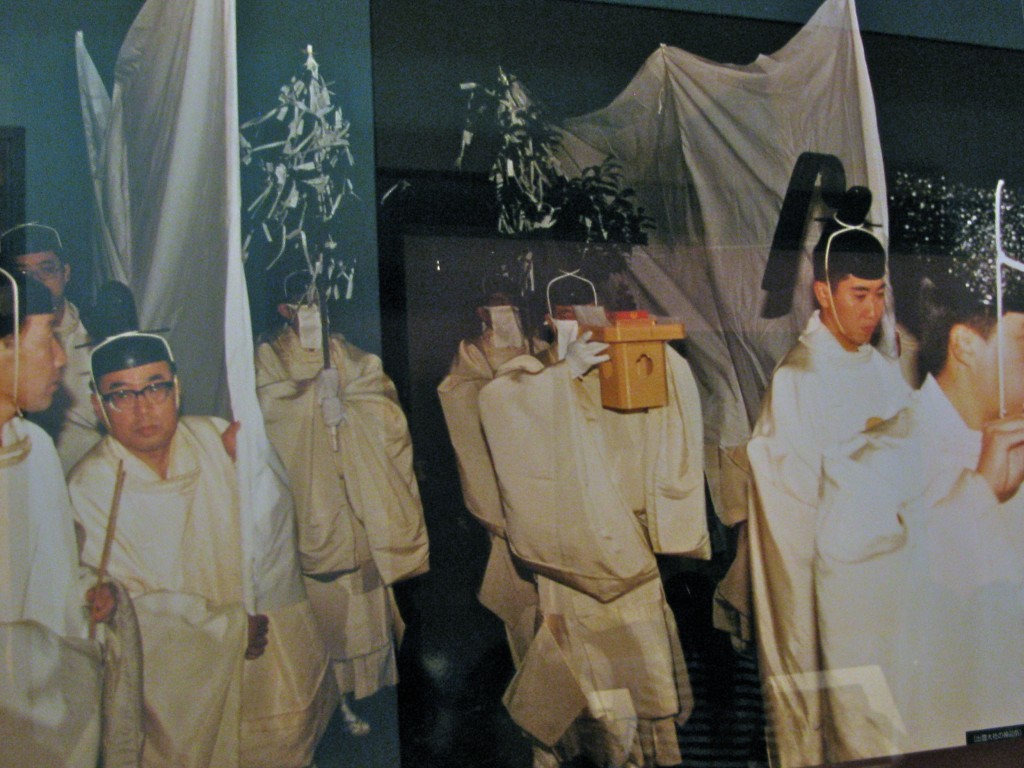
2013 is going to be the year of the Shikinen Sengu (rebuilding) at the country’s premier shrines of Ise and Izumo.  By coincidence, both major shrines are due to complete their rebuilding this year amidst rites and celebrations.  My local shrine of Shimogamo here in Kyoto is due to complete its renewal also.  Only ten shrines around the country still carry out the ancient practice apparently.  What a year it will be….

“Everybody storms to Ise Jingu in reverence for the Shikinen Sengu Ceremony.” – Matsuo Basho

But what on earth is it?  Here’s an explanation, courtesy of the Shimane website….

A shrine building at Ise with the allotted space next to it for the rebuilding

Sengu
The term sengu is used any time work is done on a shrine building, from simple roof repairs to a complete rebuilding of the shrine, or even a relocation of the shrine building. While work is being done on a shrine, the deity is moved to a temporary shrine. Then, once all work is finished, the deity is returned to the repaired, rebuilt, or relocated shrine. This is because a shrine is considered to be a holy place, and things like people standing on a shrine roof to work or noisy construction are thought to be offensive to the gods.

Practically, sengu are done for shrine upkeep, but there is a spiritual aspect to sengu as well. By making the shrine new again, a sengu symbolizes a renewal of power and vitality for the deity of that shrine. The most well-known example of a sengu is that of Ise Grand Shrine in Mie Prefecture, where all the shrine buildings on the ground are completely rebuilt every 20 years.

While most shrines only have a sengu when work is absolutely necessary, Izumo Taisha is one of the other few examples of a sengu being held on a regular schedule. Izumo Taisha’s sengu, however, is held every 60 years. At 24 meters tall, Izumo Taisha’s main hall is the tallest of its kind in Japan, and a complete reconstruction at its current size is infeasible. There are no longer any trees left in Japan of the height and width necessary to build a 24-meter high shrine building. So to preserve the current main hall as long as possible, Izumo Taisha’s main hall is reroofed every 60 years.

The current main hall was built in 1744, and has been designated as a national treasure. The roof of the shrine, which is made of bark from Japanese cypress trees (hinoki), is totally exposed to the elements.
After 60 years, the wind, rain, snow, and sun take their toll on the roof. Birds also pull out pieces of bark to make their nests in the roof, and large patches of moss grow near the eaves.

60 years is considered to be the general limit for a cypress bark roof to last, so it is removed, and any other necessary repairs on the building structure are performed. This is no small task. The thin strips of cypress bark that make up the roof are almost a meter thick in places, and it takes over 640,000 strips of bark, weighing nearly 47 tons, to roof the entire shrine.

The current sengu started in 2008 and is scheduled to finish in 2013, the same year as the sengu for Ise Grand Shrine will be completed.

*****************************************************

There’s an explanation of the Ise sengu here.  For a list of the asscociated ceremonies culminating in October, see here.

Inside one of the Izumo Taisha buildings... Imagine having to rebuild the whole of that, roof and all...

Kumano: shrines and springs

The Kumano stairway to heaven

Stairway to Heaven by Natalie Emmons
Kansai Scene (Dec. issue)

The serene beauty of the Kumano Kodo is as legendary as its history. For centuries, this network of mountainous pilgrimage routes has granted each traveller a stimulating physical and spiritual journey. The divine panoramas, the moss-covered shrines, and the ethereal stillness of the forest create an atmosphere of otherworldly transcendence. Regrettably, there is nothing like sore calves to yank you back to reality.

For Kumano Kodo novices, the Nakahechi section of the pilgrimage is a great place to start. Stretching across the southern tip of the Kii Peninsula, this popular trail connects three renowned Shinto shrines known as the Kumano Sanzan. Originally used by the Japanese aristocracy, the Nakahechi route has existed for over 1,000 years. Judging by the trail’s terrain, the imperial family must have been in great shape. Don’t let nomenclature fool you.

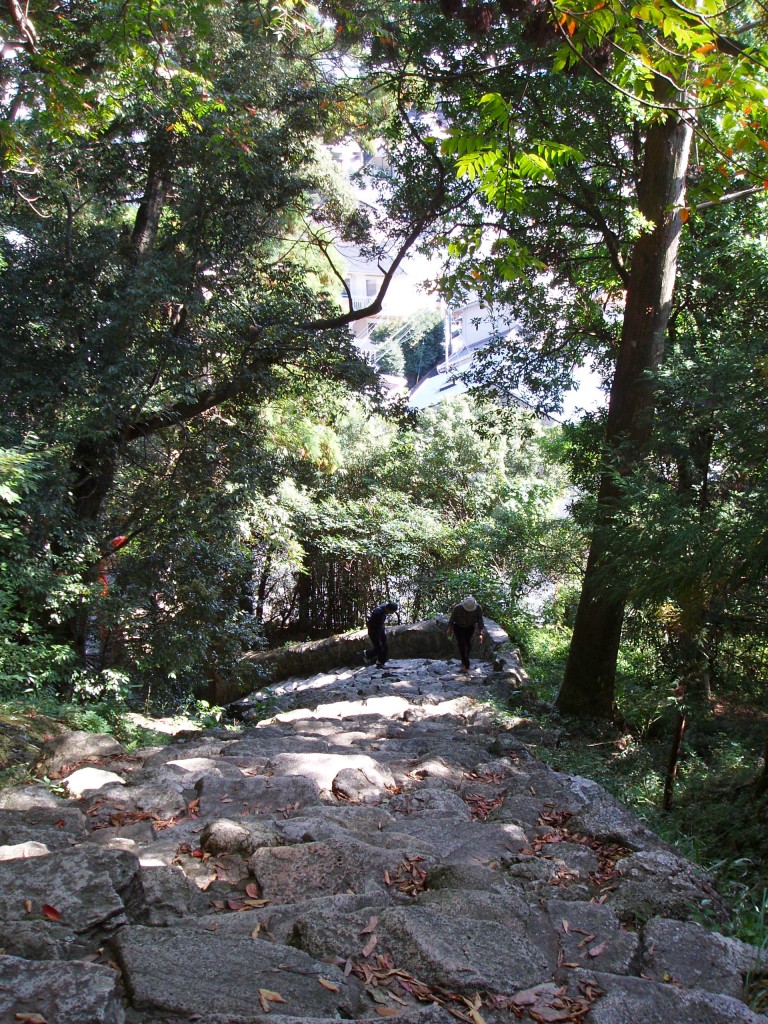
From towering cobblestone steps to slippery muddy slopes, it’s hard to imagine how the ancestors did the entire pilgrimage in straw sandals. No wonder the ancient resting places called out “We have tofu and hot baths!” to passing travellers. Even in the midst of idyllic landscapes, you will soon be yearning for a different sort of paradise, the kind that involves a long, hot soak and a hearty meal.

Luckily, there are magnificent onsen along the trail, several of which are clustered around Hongu Grand Shrine. Located roughly at the center of the Nakahechi trail, Hongu Shrine is the head of over 3,000 affiliated shrines and the ultimate goal of the Kumano Kodo. No trophy awaits you at the finish line, but a visit to the nearby hot springs is an excellent way to reward your efforts and revive your strength.

Hongu, one of the three famous Kumano Shrines to which pilgrim trails lead

A few kilometers uphill from Hongu Shrine is the charming village of Yunomine Onsen. Discovered approximately 1,800 years ago, Yunomine is one of the oldest onsens in Western Japan. In the past, pilgrims carried out purification rituals with water from the town’s bubbling springs. According to legend, the waters of this spiritual onsen have strong healing properties.

Yunomine is also the home of Tsuboyu, the only onsen that appears on UNESCO’s prestigious list of World Heritage Sites. [Green Shinto: there is also a hot spring at Yunotsu, part of the World Heritage listed Iwami Silver Mine, but for an explanation about this please see the Comment below.]

Located in the middle of the village, this tiny bath is housed in a cabin and available for private use. A nearby stall sells tickets for 30-minutes access to the shack. Tsuboyu is more like a rocky pit than a spacious tub and has barely enough space for two bathers. (Don’t be surprised if the water is scalding; just mix in cold water from the tap to adjust the temperature. The ancestors won’t judge you for it.) After you finish your turn, there is a 90-degree hot spring where you can cook eggs and vegetables.

A short hike south from Yunomine is Wataze Onsen, another rural hot spring village worth noting. Also referred to as Watarase Onsen, this town is known for having the largest open-air bath in Western Japan. Paved with stone and surrounded by mountains, this giant onsen is a magical place to recuperate. If you prefer something more isolated, the private open-air baths are perfect for couples or small groups.

Kawayu hot spring (courtesy of Wakayama tourist board)


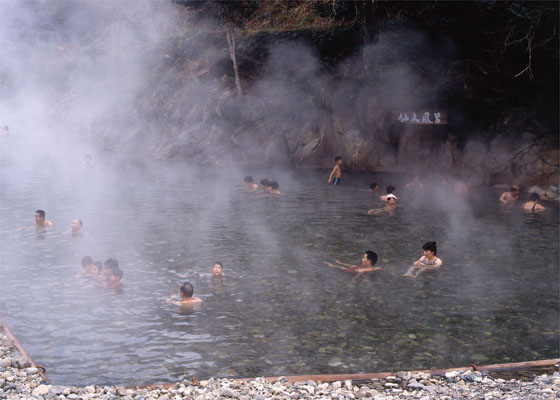
Each Kumano onsen has something unique to offer, but Kawayu Onsen is the most magical. Its bubbling springs run parallel with the Oto River allowing the two water temperatures to mingle. By digging into the riverbanks and letting hot spring water seep through the rocks, you can create your own personal hot tub. Even the ducks appreciate this natural wonder by darting back and forth between the two temperatures, their feathers quivering at the sensation.

In the winter season, a giant bath is sculpted to accommodate more people and eliminate the task of digging. This Sennin-buro, (literally, “1,000-person bath”), is free of charge and open 16 hours per day. On special occasions the bath is lit with bamboo lamps. Once you step into the soothing water and watch the steam rising into the night sky, you won’t ever want to leave.

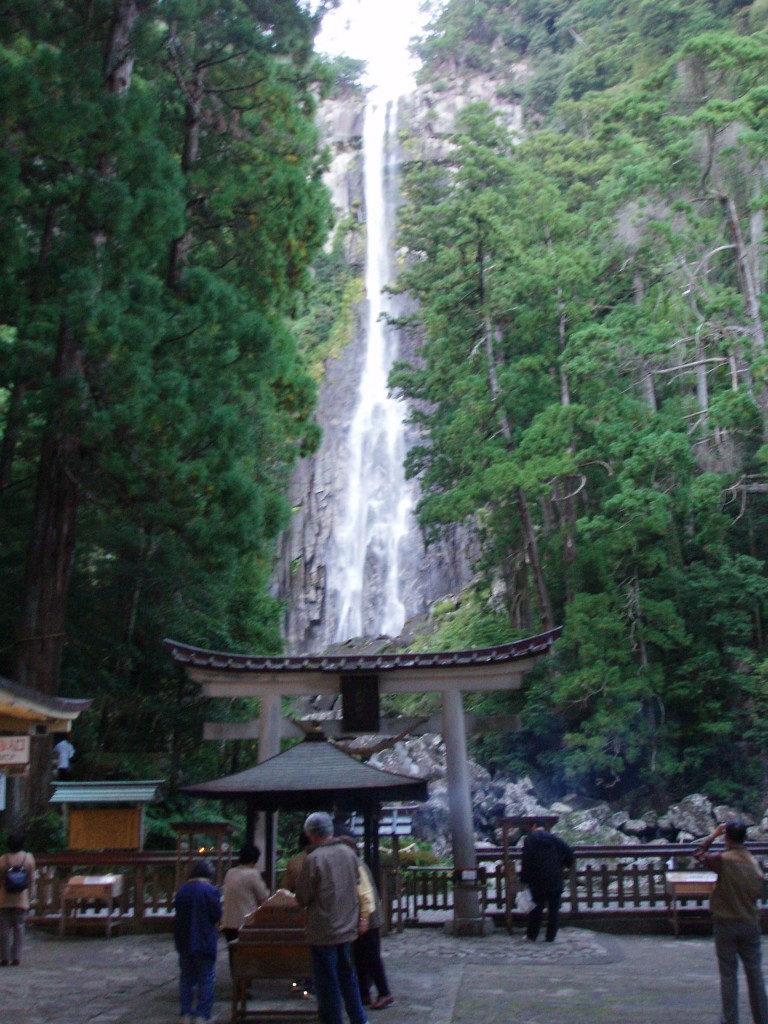
The ultimate water experience: Kumano's Nachi Shrine

Shrine types

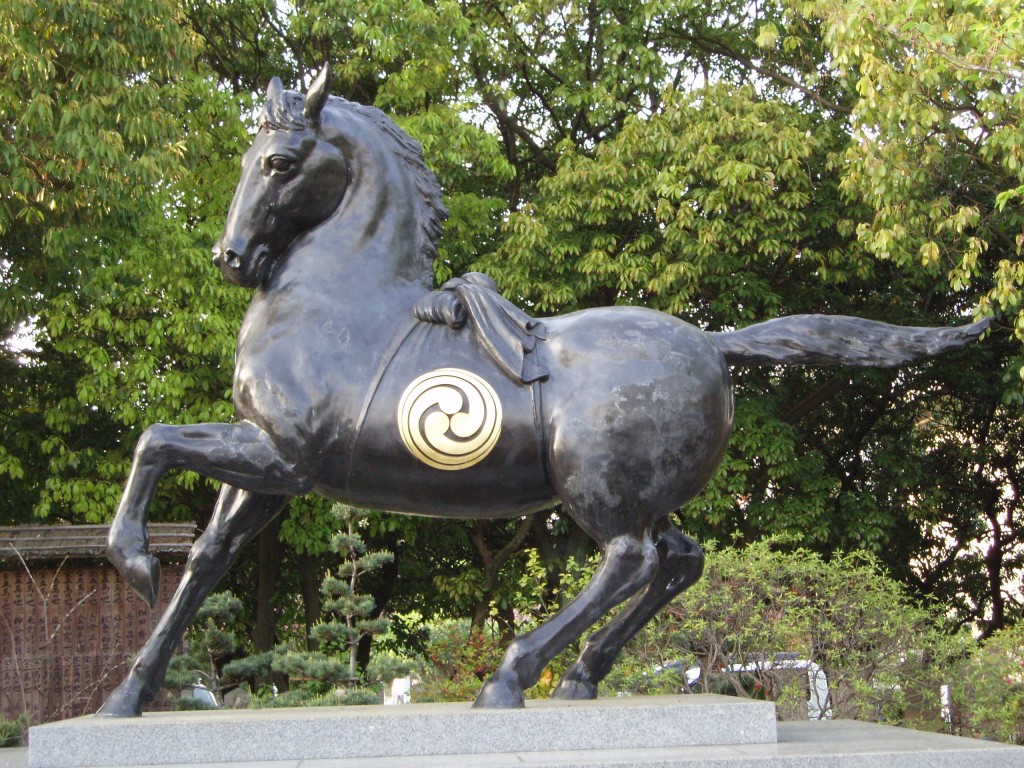
A horse statue, characteristic of Hachiman shrines


japan-guide.com is an excellent resource, which I often use when making travelling plans.  I happened to come across a useful page while looking through the site, which gives a simple overview of some shrine types for visitors to Japan.  There are several others that could be added to the list, such as Konpira, but this is a good introduction to the subject.

******************************************************************

There are tens of thousands of shrines across Japan, some of which can be categorized into a few major groups of shrines. Some of these groups are:

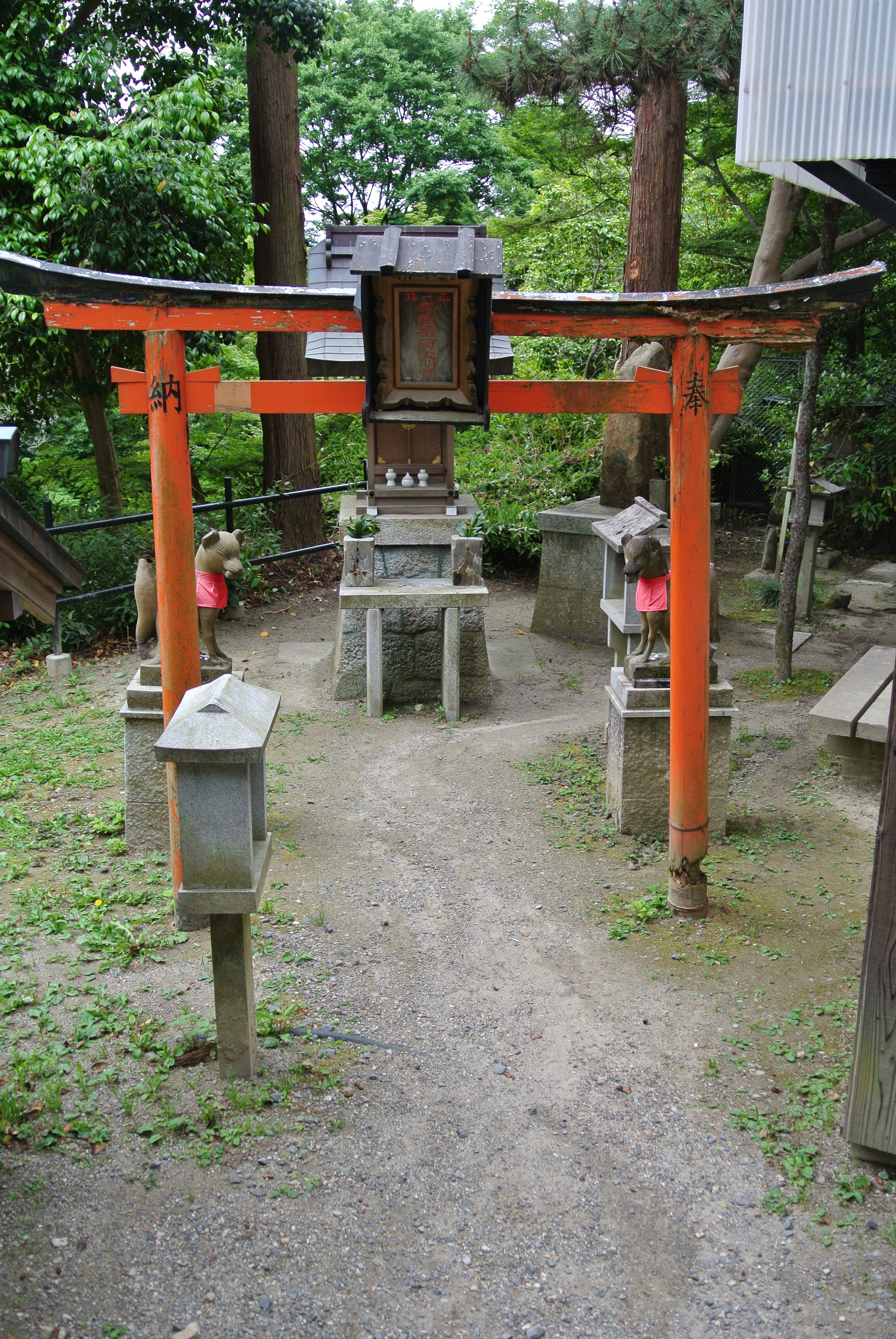
Inari Shrine within Kyoto's Kiyomizu Temple

Imperial Shrines
These are the shrines which were directly funded and administered by the government during the era of State Shinto. They include many of Shinto’s most important shrines such as the Ise Shrines, Izumo Shrine and Atsuta Shrine, and a number of shrines newly built during the Meiji Period, such as Tokyo’s Meiji Shrine and Kyoto’s Heian Shrine. Imperial shrines can be recognized by the imperial family’s chrysanthemum crest and by the fact that they are often called “jingu” rather than “jinja”.

Inari Shrines
Inari Shrines are dedicated to Inari, the kami of rice. They can be recognized by fox statues, as the fox is considered the messenger of Inari. There are thousands of Inari Shrines across Japan, among which Kyoto’s Fushimi Inari Shrine is most famous.

Hachiman Shrines
Hachiman Shrines are dedicated to Hachiman, the kami of war, which used to be particularly popular among the leading military clans of the past. Of Japan’s thousands of Hachiman Shrines, the most famous is probably Kamakura’s Tsurugaoka Hachimangu.

Tenjin Shrines
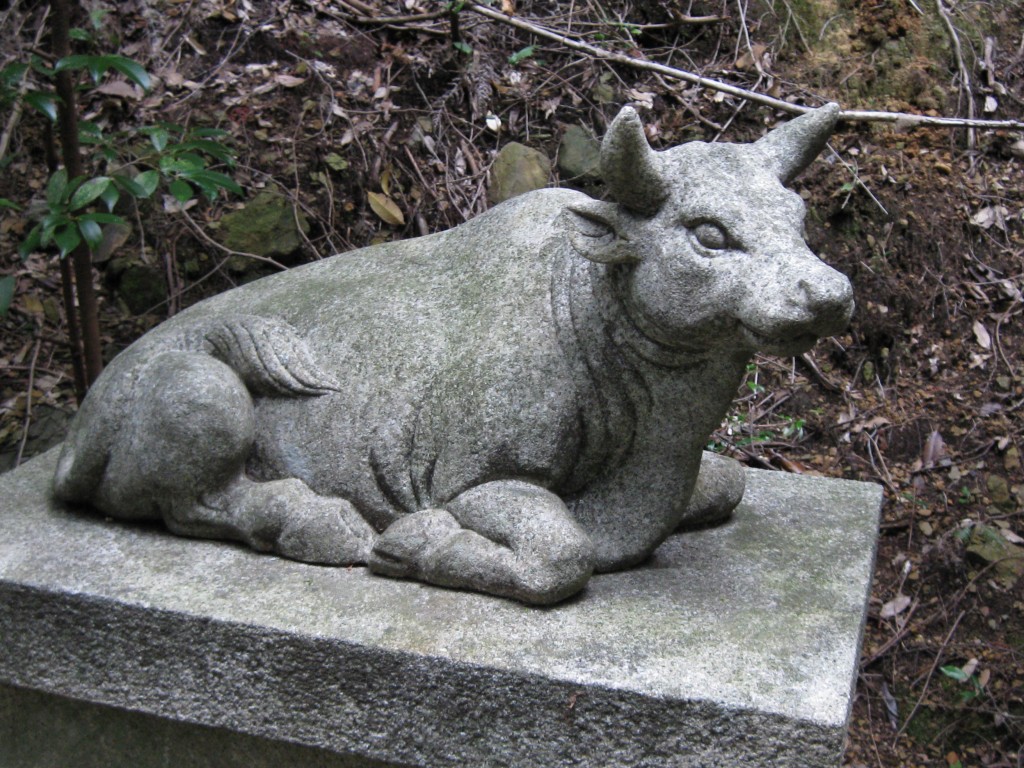
Tenjin Shrines are dedicated to the kami of Sugawara Michizane, a Heian Period scholar and politician. They are particularly popular among students preparing for entrance exams. Tenjin Shrines can be recognized by ox statues and plum trees, Michizane’s favorite trees. The first and most famous Tenjin Shrine is Dazaifu Tenmangu near Fukuoka.

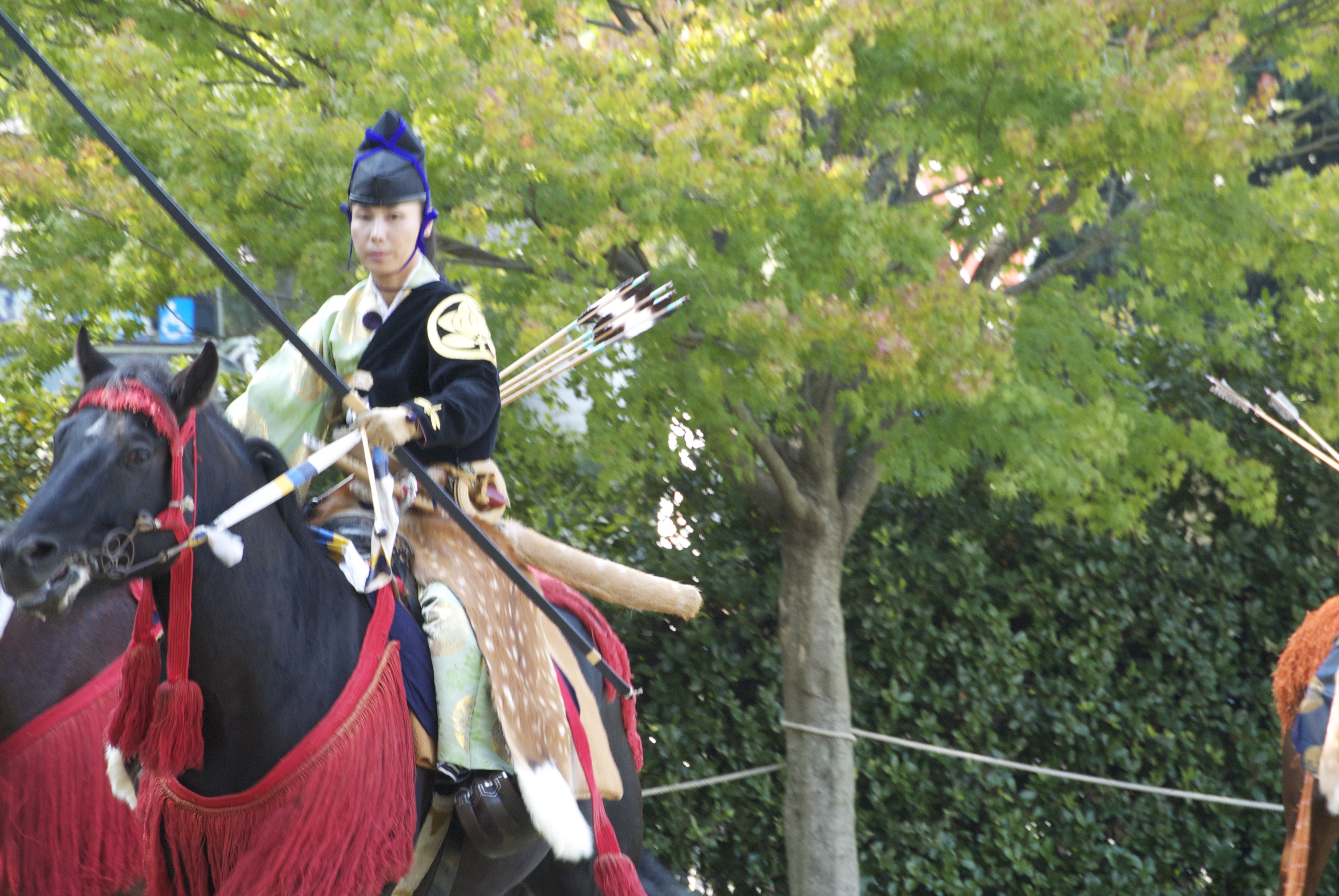
Horse archery at Kamigamo Shrine, dedicated to the founding father of the Kamo clan

Sengen Shrines
Sengen Shrines are dedicated to Princess Konohanasakuya, the Shinto deity of Mount Fuji. More than one thousand Sengen Shrines exist across Japan, with the head shrines standing at the foot and the summit of Mount Fuji itself.

Shrines dedicated to the founders of powerful clans
Some powerful clans in Japanese history established and dedicated shrines to the their clans’ founders. The most famous example are the several dozens of Toshogu Shrines dedicated to Tokugawa Ieyasu, including the famous Toshogu Shrine at Nikko. Another example is Kanazawa’s Oyama Shrine which is dedicated to Maeda Toshiie, the founder of the powerful, local Maeda clan.

Local Shrines
Many shrines are dedicated to local kami without association to other shrines.

If you see this, you can be pretty sure it's a Tenmangu Shrine dedicated to the spirit of Sugawara Michizane aka Tenjin

« Older posts Newer posts »

© 2026 Green Shinto

Theme by Anders NorénUp ↑