Author: John D. (Page 158 of 202)

The curious case of the sacred tree

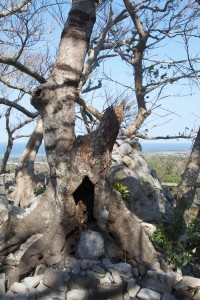
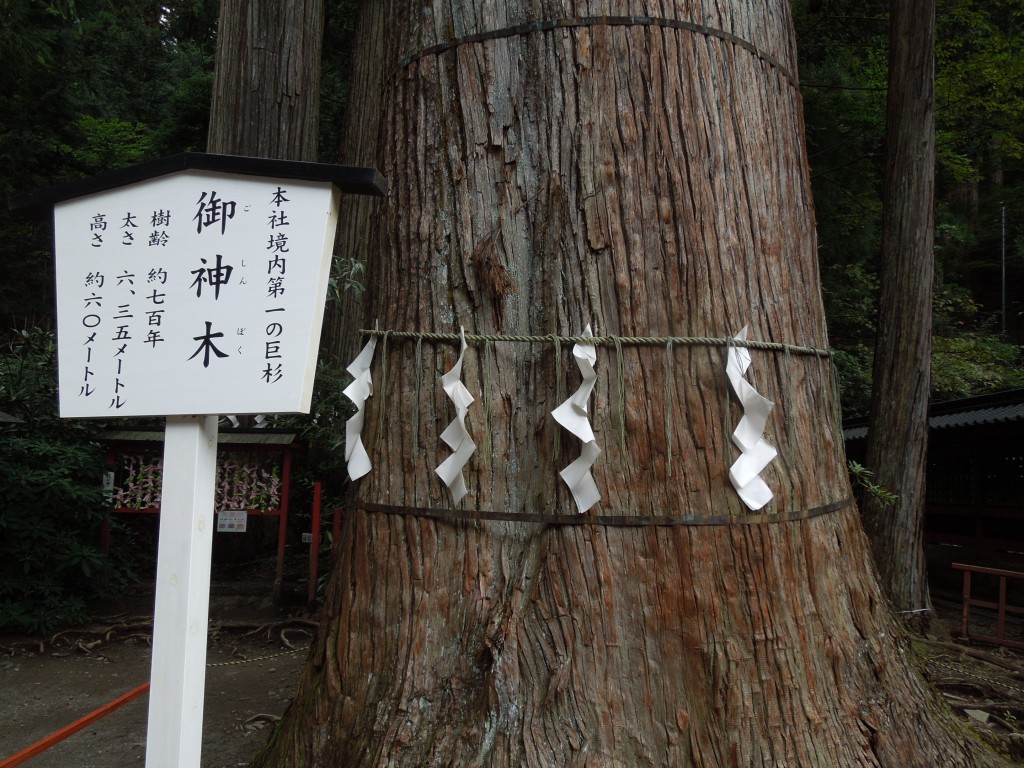
An Okinawan sacred tree

One of the items in the morning’s news on television concerned the death of a sacred tree in Ehime prefecture in Shikoku.  Because it had withered, it was due to be cut down at considerable expense to the shrine.  However, mysterious holes were found near the base of the trunk, and upon investigation it was found the openings had been used to inject poison into the tree.

Killing a tree is sacrilege enough, but the intentional poisoning of a sacred tree would seem particularly heinous.  Who on earth would do such a thing, unless they held an unusually strong grudge against a shrine or its kami?  Well, it seems that criminal proceedings are being focussed in a different direction altogether.  They’re centering on people in the timber business.

Because of over-foresting in the past, trees that are broad and strong are in short supply.  Sacred trees on the other hand have been protected down the centuries, and they may well have been chosen because of their robustness and distinctiveness.  Such trees are now rare and worth a lot of money.  They play a vital part in the rebuilding of historical buildings such as temples, a recent example being that of Kofuku-ji in Nara which had to import wood from Africa because nothing suitable was available in Japan.

The tree poisoner evidently knew what they were doing, for the poison used kills the tree without damaging the wood.  Moreover, it turns out that there was a similar case recently in Ehime, in which another sacred tree was also found to have been poisoned.  Police are now also looking at the death over the past ten years of other sacred trees in Kyushu.

Having just visited Yakushima, I dread to think what the materialist criminals would make of the wonderful and special trees that enrich the environment there.  In today’s secular world, one is tempted to ask whether nothing is sacred any more!
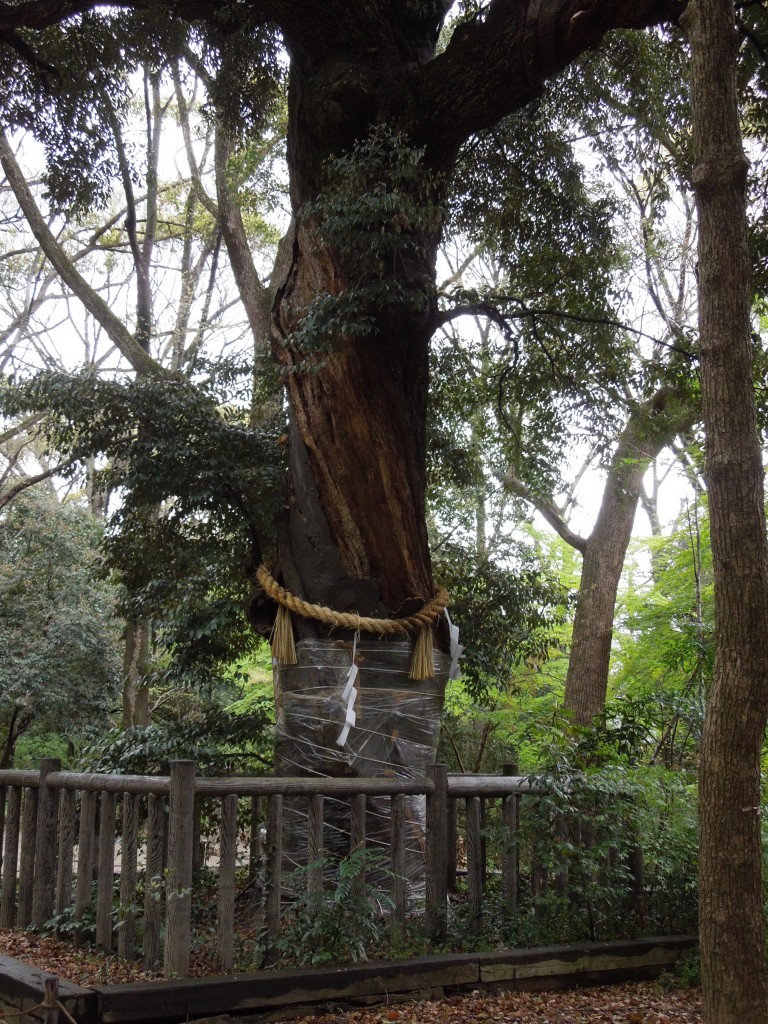
Sacred tree at Shimogamo Shrine in Kyoto, wrapped in plastic to protect it from disease - and poison!


Quiz answers

Here are the quiz questions again, followed by the answers:

1) What is the correct way to pass through a torii at the entrance to a shrine?
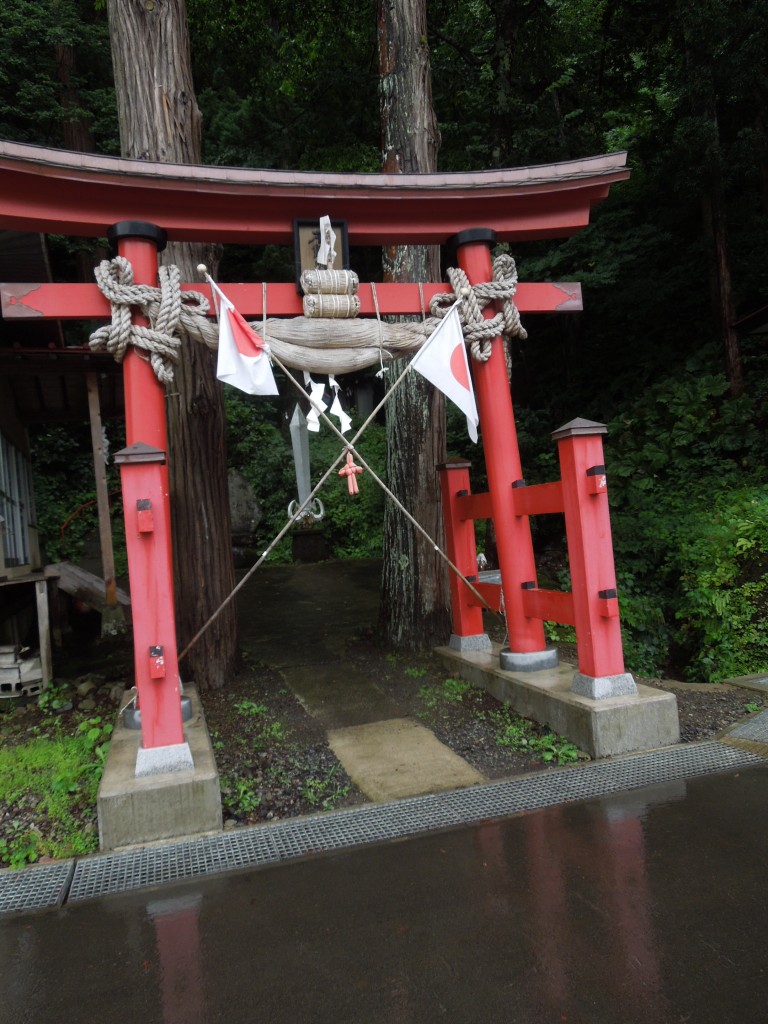
Before passing through the torii, one should bow towards the shrine in respect to the kami.

2) What should you be careful about when walking down the sando (entrance path to the shrine)?

Not to walk down the middle, as that is where the kami passes.

3) When you wash your hands at the wash-basin, which is the correct order to wash them?

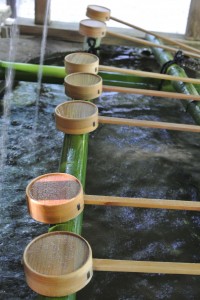
Left hand, right hand, then rinse your mouth by cupping water in your left hand

4) When you throw your money into the offering box, should you throw more according to whether you have a lot of things to ask the kami?

This was a surprise to me, but according to the programme it is not necessary to add any extra money for multiple requests, so a ten-yen coin would suffice for whatever you may want to ask.

5) When putting your hands together to clap, should they be exactly the same height or should one extend beyond the other?

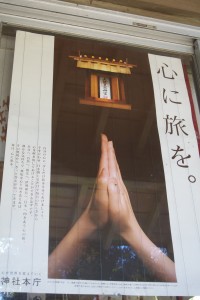
The left hand should slightly extend beyond the right, as in the illustrative poster above by Jinja Honcho…

6) When praying, what should you tell the kami apart from your name and what you want?

You should give your address so that the kami knows which particular person it is, otherwise a different Suzuki Masao might be blessed with your request.

7) Finally, what does a shimenawa rope around a tree indicate?

It indicates the place where a kami may reside, in other words a sacred area.

Quiz

I don’t usually watch Japanese tv but I happened to turn it on the other night, and lo and behold there was a quiz about shrine etiquette.  A curious coincidence.

The quiz was intended to prepare people for Hatsumode (New Year), and in true Japanese fashion it was all about the correct form.  Belief in the kami was never mentioned or considered: it was irrelevant.  Nor was the word ‘Shinto’ ever used; the ideology was irrelevant also.  It was simply about how to behave correctly when you visit a shrine.  Situational ethics, not faith, is the guiding principle.
Here’s the quiz that was put to the studio guests (who didn’t get them all correct, by the way).  I’ll post them here for people to mull over and put up the answers in a separate post.

1) What is the correct way to pass through a torii at the entrance to a shrine?

2) What should you be careful about when walking down the sando (entrance path to the shrine)?

3) When you wash your hands at the wash-basin, which is the correct order to wash them?

4) When you throw your money into the offering box, should you throw more according to whether you have a lot of things to ask the kami?

5) When putting your hands together to clap, should they be exactly the same height or should one extend beyond the other?

6) When praying, what should you tell the kami apart from your name and what you want?

7) Finally, what does a shimenawa rope around a tree indicate?


Yakushima

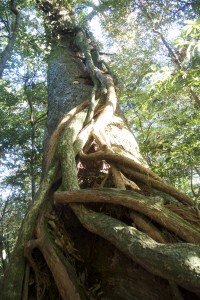
Yakusugi (cedars) are over 1000 years old


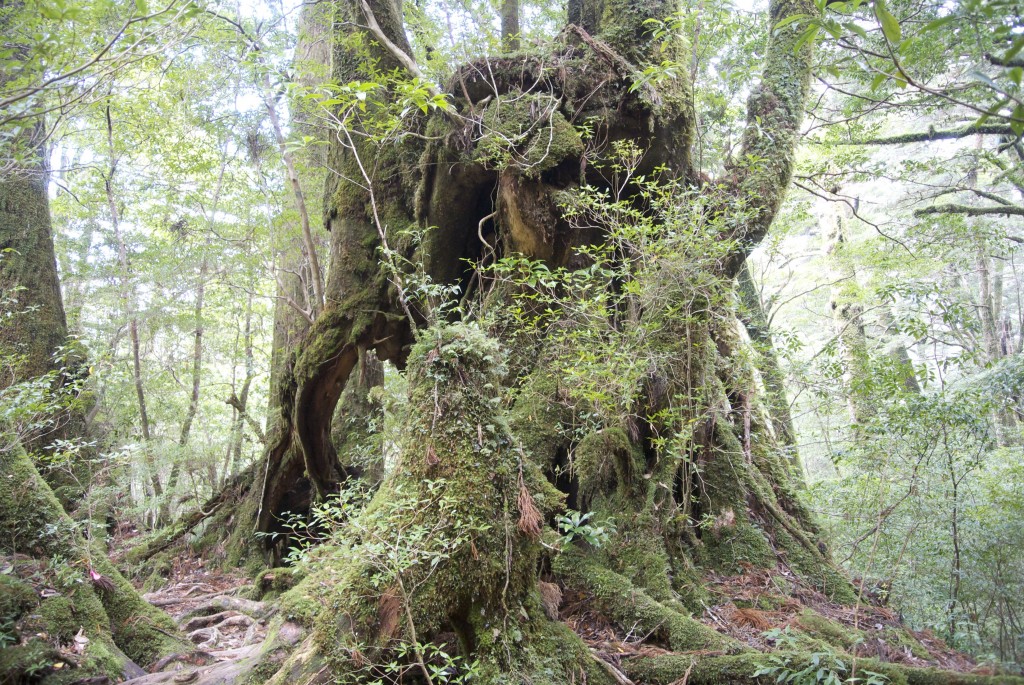
Yakushima is an island 60 kilometers south of Kyushu, most of which is registered as a World Heritage Site on account of its primeval forest featuring giant cedars, known as Yakusugi.  These magnificent giants are literally thousands of years old; the acknowledged star – the Jomon sugi – is thought to be roughly 7000 years old.

With its mountains and flourishing greenery, Yakushima is just the kind of place you’d imagine to be prime Shinto territory.  Nowhere else is the gift of fresh flowing water so readily apparent, for it’s said to rain here 35 days a month.  Water cascades down the unusually steep mountainsides with an energising life force.

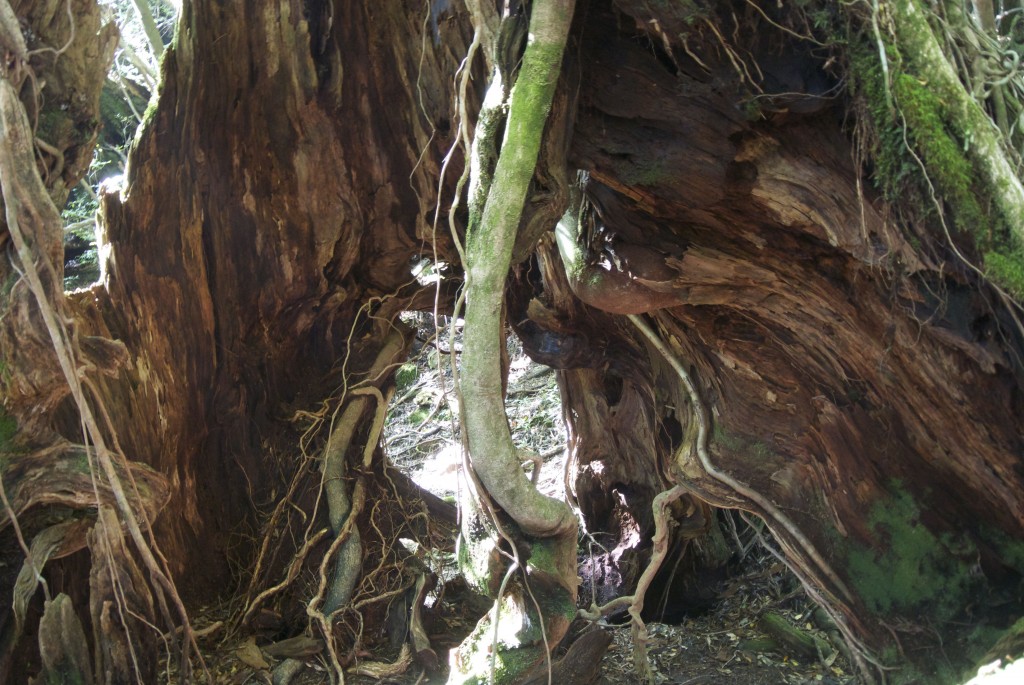
Gnarled, twisted, magnificent

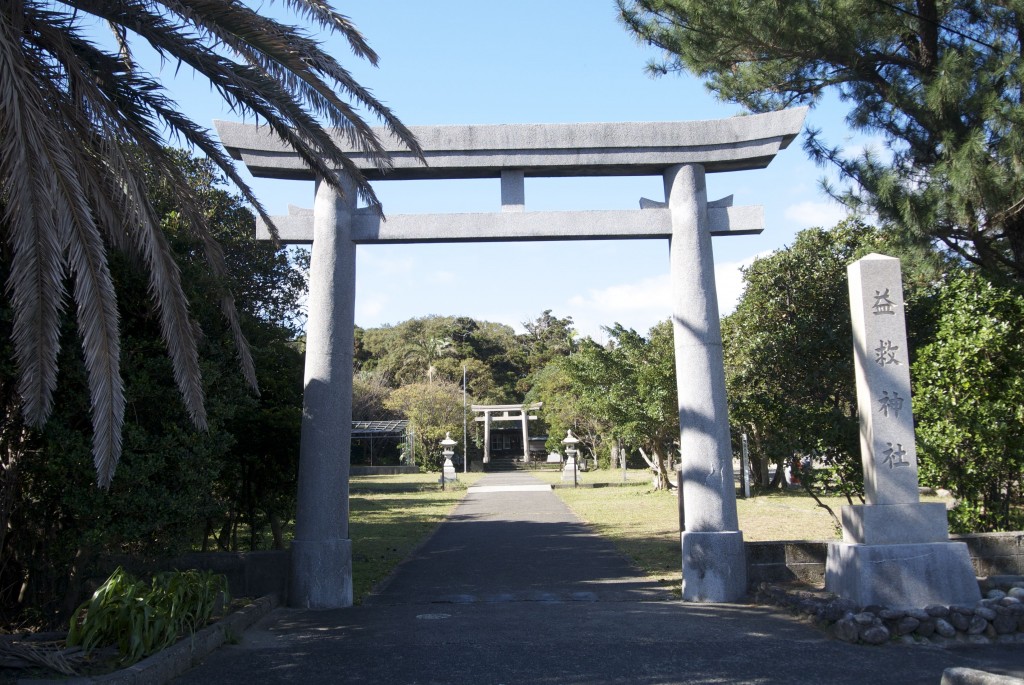
As in Niigata and Nagano, I’d expected to find shrines round every corner, celebrating each copse and sacred rock.  Yet on a bus ride round most of the island, all I could see were three or four humdrum shrines.  Even Yaku Jinja, the island’s premier shrine, has a desolate air with no one in attendance.

Puzzled, I asked someone at the Environmental Culture Village Center about the apparent lack of interest, and they gave me to understand that the island had for long been dominated by Buddhism.  When it came to Meiji times and the promotion of Shinto by the state, the authorities were hard pressed to enforce the new religion.

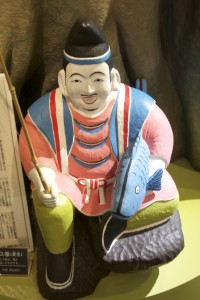
Interwoven with the island’s Buddhism was an age-old folklore.  Like other mountain-islands, the mist-covered peaks must have been viewed as a sacred abode of the kami, and pilgrimages are still made twice a year to give homage to the deity of the island’s highest mountain, Miyanoura.  Ebisu, guardian of fishermen, played a vital role in the life of the coast-hugging villages.

Ebisu, guardian of fishermen

Yakushima’s ancient cedars, gnarled, twisted and magnificent, are awe-inspiring monsters which have a brooding sense of presence, and the idea of them being spirits was brilliantly visualised in Miyazaki’s animated film Princess Mononoke.  Host to numerous parasites, they often support different types of tree which spring improbably out of their sides or from their very top,

That Buddhism should have flourished on an island of such striking natural phenomena should come as no surprise, for in its way it’s as much a nature religion as Shinto.  Curiously enough, I was reminded of this during my journey to Yakushima by reading Journey in Ladakh, by Andrew Harvey.  The book is as much an exploration of Tibetan Buddhism as of a geographical space, and the writing is superb.

Some of the most enthralling passages have to do with becoming one with nature – and with one’s buddha-nature.  Harvey manages to wax poetic about the spiritual beauty of Ladakh’s bare mountains; I couldn’t help wonder what the author would have done with the breath-taking contortions of Yakushima’s phantasmogoria!

Yakushima's forests throw up intriguing shapes and anomalies


Yaku Jinja, the island's premier shrine, with no one in attendance and the shrine office shut


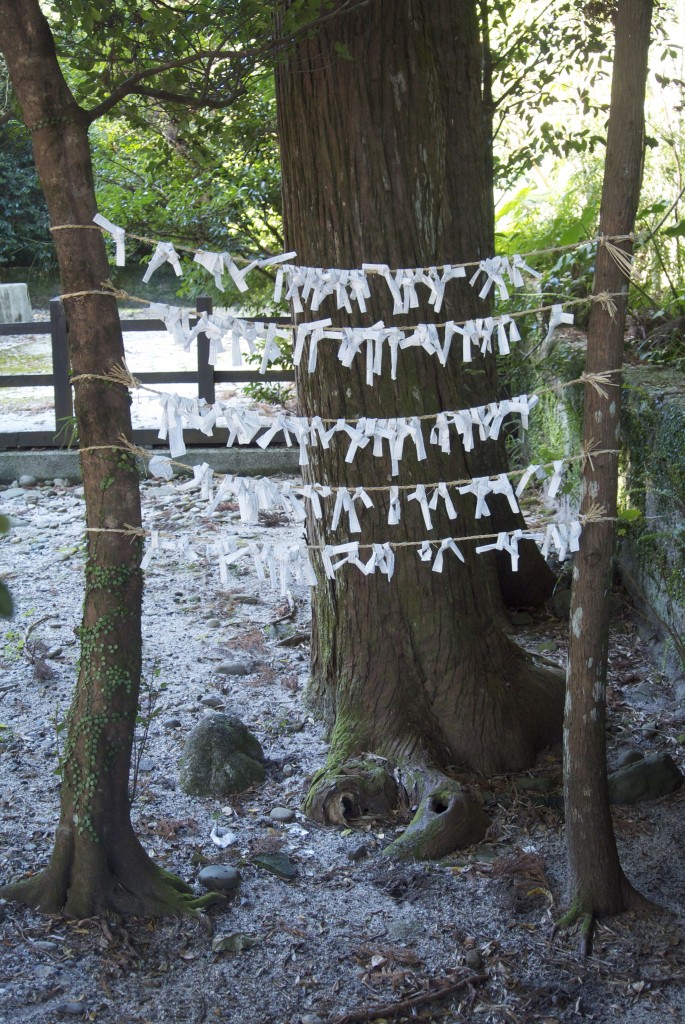
Fortune slips at Yaku Jinja tied between two trees - how they were done originally?


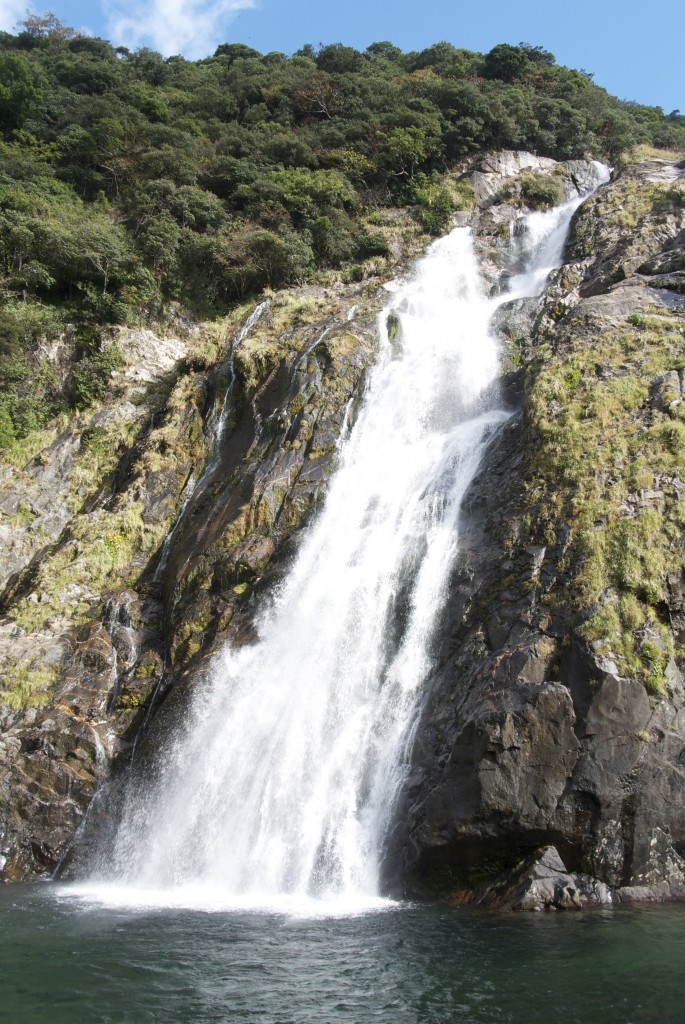
Senpiro waterfall, in the south of the island. Water seems to flow everywhere in Yakushima, fostering the luxuriant vegetation


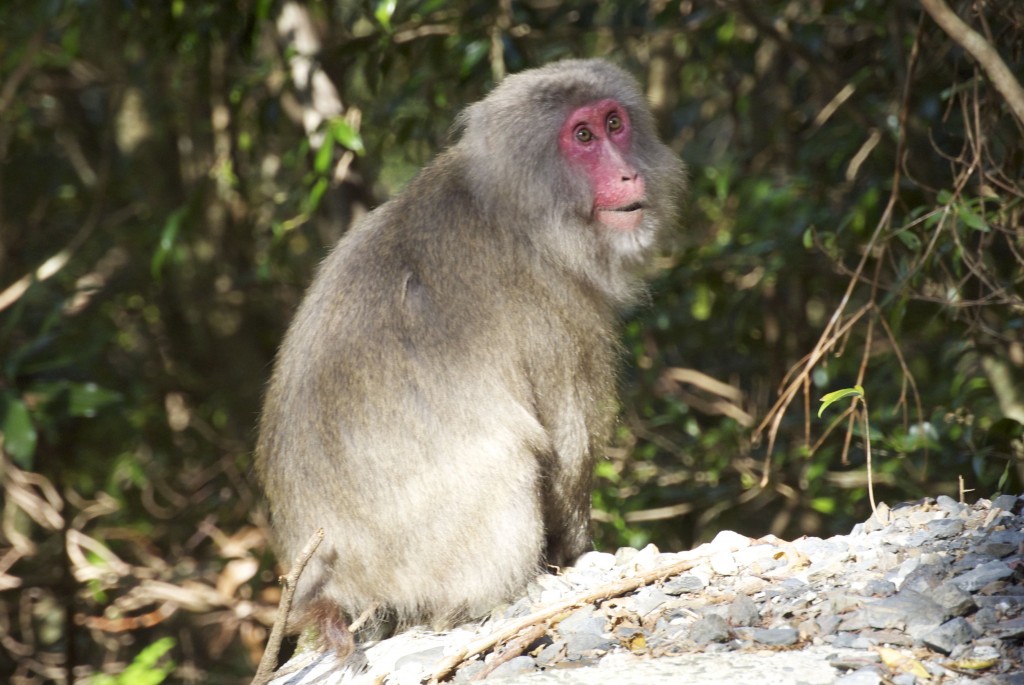
The hiking on Yakushima can be pretty tough, but the Yaku monkeys seem to take it in their stride

Itsukushima

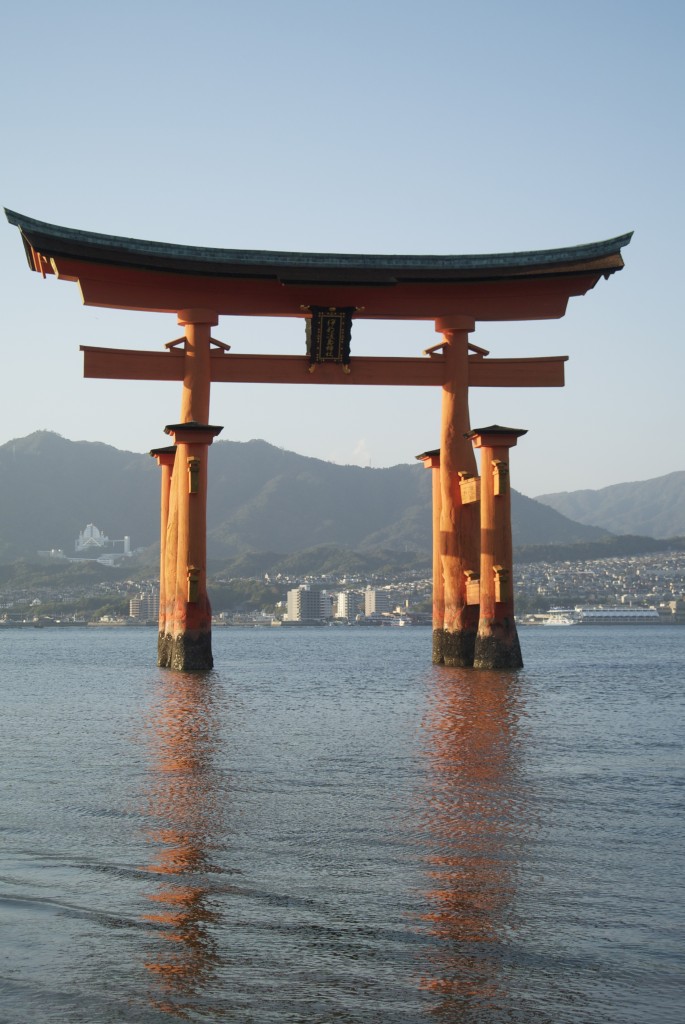
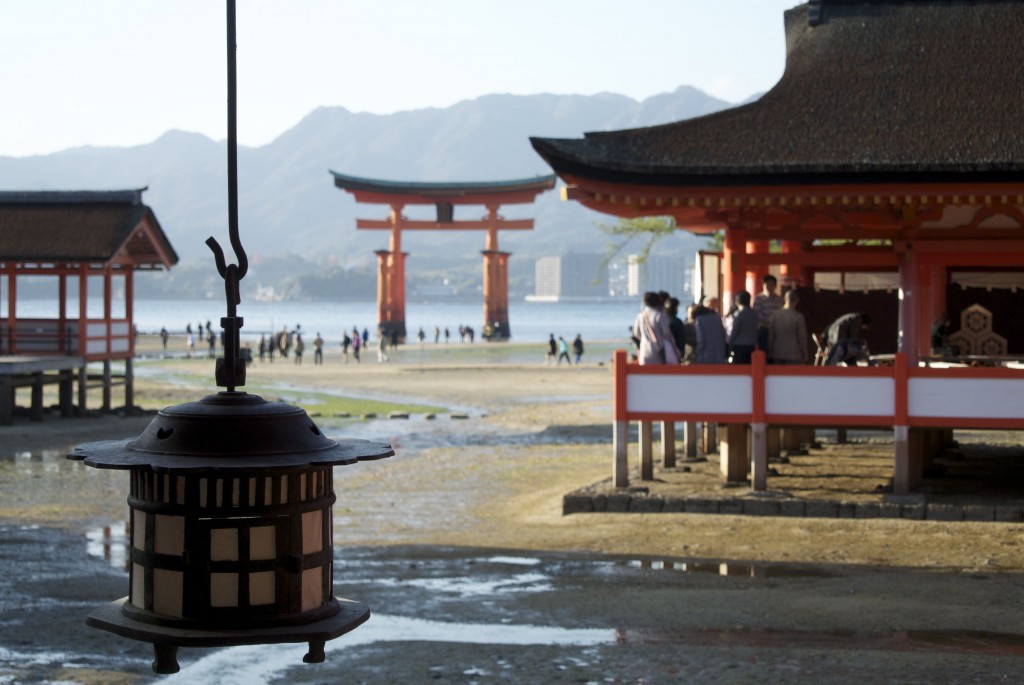
Otorii at low tide, taken from just a few meters away with the shallow water reflecting its giant vermilion pillars. (All photos by John Dougill)

Itsukushima Jinja is Japan’s premier World Heritage shrine.  Inscribed by Unesco in 1996, it was cited for ‘setting traditional architecture of great artistic and technical merit against a dramatic natural background and thereby creating a work of art of incomparable physical beauty’.

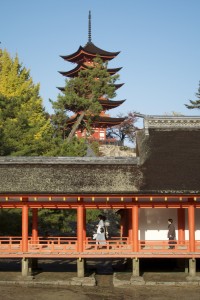
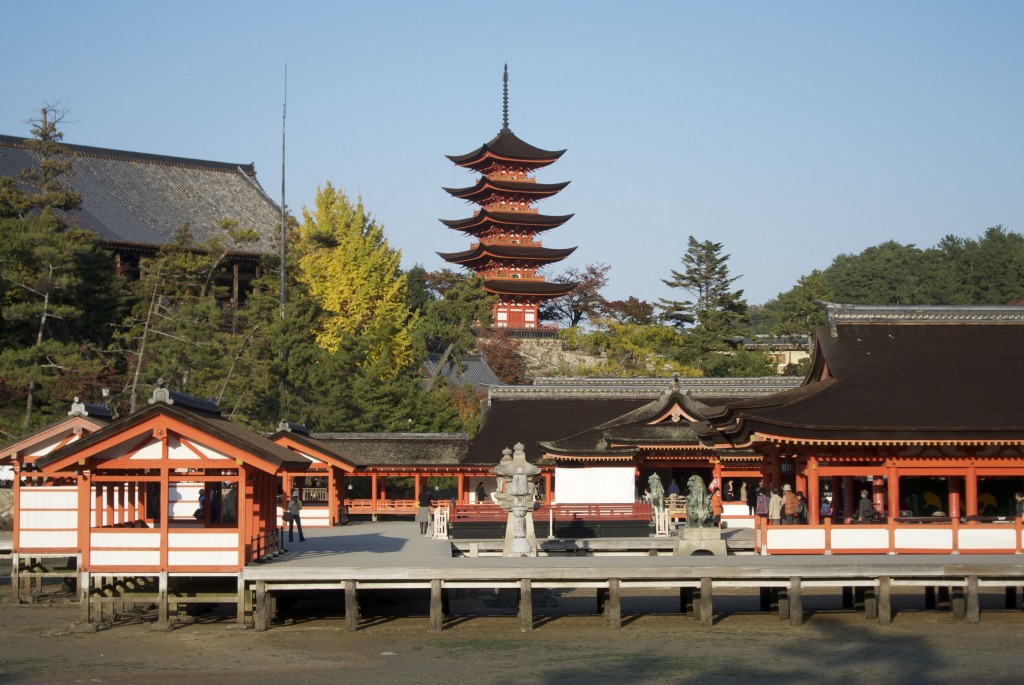
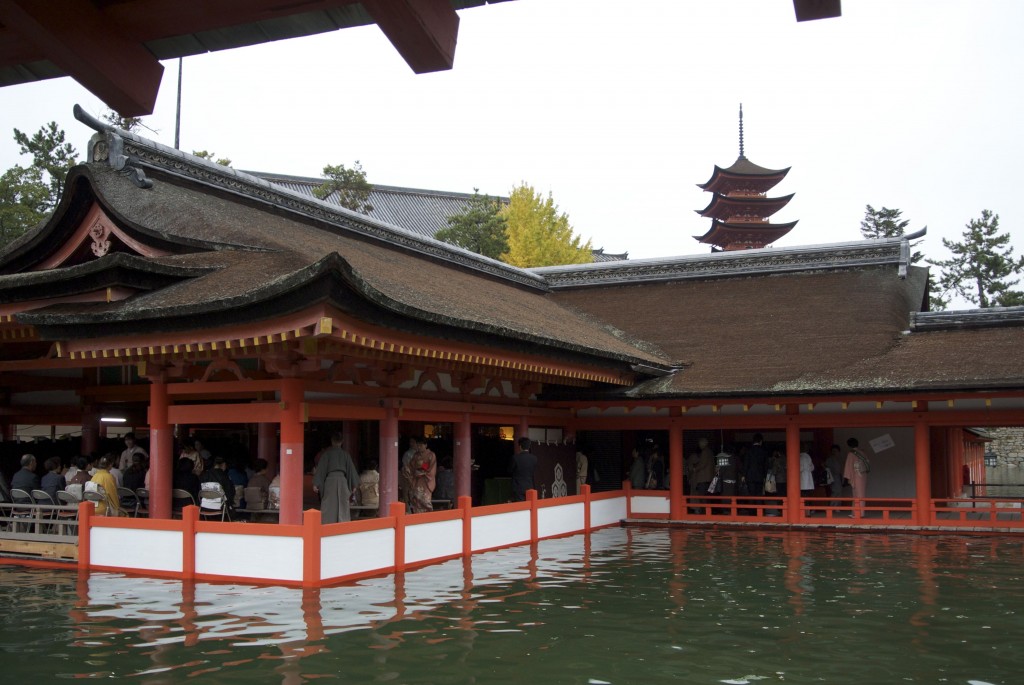
The Shinto shrine’s villa-style corridor, with the tide out and Buddhist pagoda behind

According to shrine tradition it was founded in 583, though there’s no evidence for its existence until the early ninth century.  But as far as the present layout is concerned, it dates back to 1168 when the samurai leader Taira no Kiyomori invested in a prestigious complex styled after the aristocratic villas of Kyoto.  The reason?  Well, guidebooks suggest that Kiyomori ascribed his military victories to the kami of Itsukushima, but Joseph Cali in Shinto Shrines goes a bit further…

It’s said that after Taira no Kiyomori was placed in charge of Aki Province (part of present-day Hiroshima), he often visited the existing shrine and he had a dream of an old monk who told him that if he established a shrine here himself, he would achieve control of the country.  He ordered buildings to be constructed and Itsukushima was considered the family shrine of the Taira from around that time.

Kiyomori also donated thirty-three scrolls of Buddhist sutra to the shrine, some of which can be seen in the shrine’s treasury.  The huge complex was a typical Buddhist-Shinto mélange run by Buddhist priests, which the Meiji ideologues of the late nineteenth century found difficult to separate.  Though they destroyed some structures and moved others, the World Heritage citation is not limited to the Shinto shrine but includes neighbouring Buddhist features such as a five-storey and a two-storey pagoda.

There are plenty of websites with good information about Itsukushima, including this Unesco one which explains the reasons for the World Heritage status.  Meanwhile, here are some other key points:

*  Miyajima – the island on which Itsukushima stands – was a divine island in ancient times, with a sacred mountain (Mt Misen) and lush forest suggestive of the abode of the kami.  Still today Mt Misen primeval forest covers 14% of the island, and taboos exist about birth and burials on the island.

*  The shrine is brilliantly located so as to appear on land at low tide while floating on the sea at high tide.  It really needs to be visited twice, because it’s tantamount to two different shrines, or one shrine in two guises.

*  The great torii set in the sea is 16 meters high, weighs about 60 tons, and its two big pillars were made of camphor trees between 500 and 600 hundred years old.  It was intended as the entranceway for pilgrims coming by boat.  The vermilion, taken from China, not only protects the wood but was thought to drive away evil.

*  There are three theories I’ve come across as to why the shrine was built on the sea.  One is an attempt to recreate the mythical Dragon Palace, because the enshrined kami (the three Munakata sisters) are goddesses of the sea.  Another theory has to with the Buddhist paradise, which is separated by a stretch of water from this world (Kiyomori’s design was done at a time when there was a fashion for Pure Land recreations, such as Byodo-in).  Yet a third idea is that it was taboo for anyone to set foot on the divine island of Miyajima so as not to pollute it, so the shrine was set on the sea to act as a liminal space between the profane and the sacred.

*  The shrine’s location in the sea created some unique problems for the designers, and some unique solutions, such as gaps in the corridor floor so as to relieve the pressure from the rising water beneath.

*  The shrine has the only Noh stage in the world to stand in the sea.   Noh stages usually have a pot for acoustic effect below the stage, but here the floorboards have to carry the acoustic resonance themselves.

*  The deer make the ones at Nara look positively wild.  I’ve never seen deer so domesticated, almost as if they’re begging to be petted.

Shinto shrine with Buddhist pagoda behind

The shrine at low tide

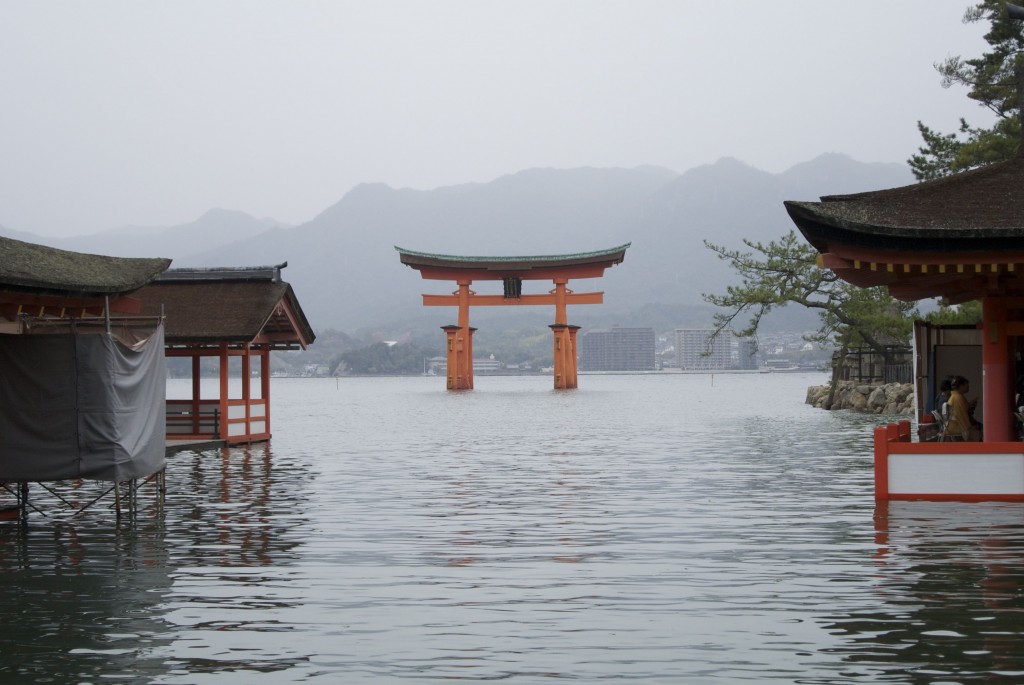
The shrine at full tide presents a quite different picture

The full tide seems as if it’s about to flood the shrine; brinkmanship architecture at its best.

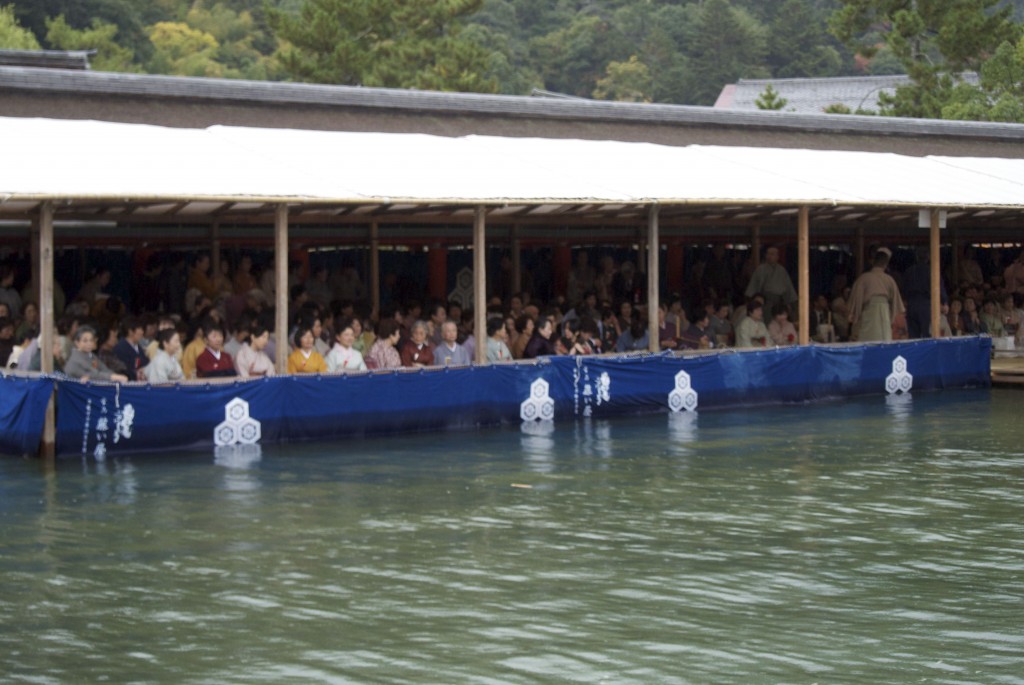
The shrine packed for a celebration of tea by the Urasenke school, and the audience look as if they are afloat as they await eagerly the offering of sacramental tea to the kami.

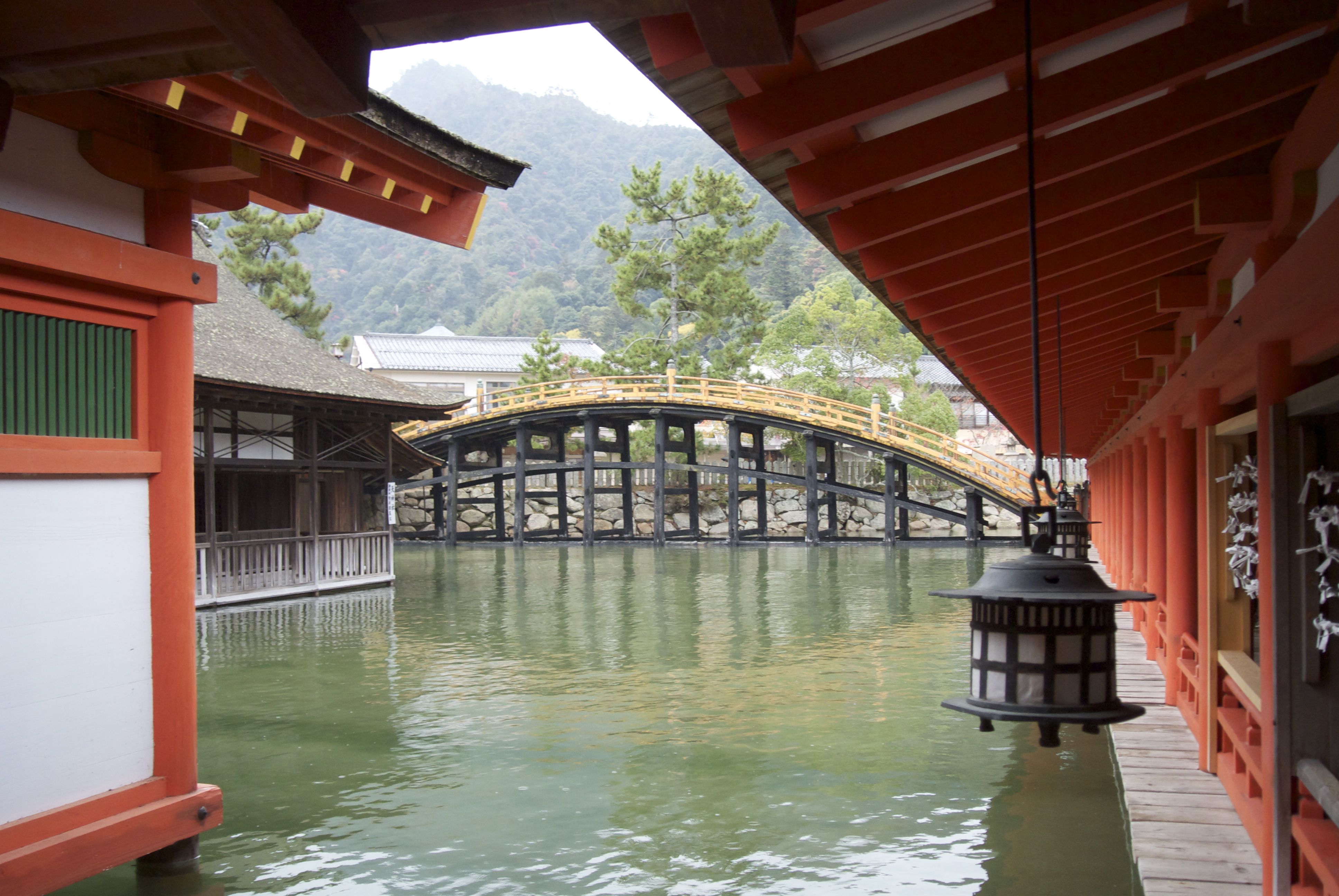
Imperial Messengers Bridge, untrod by any but the emperor’s special envoys

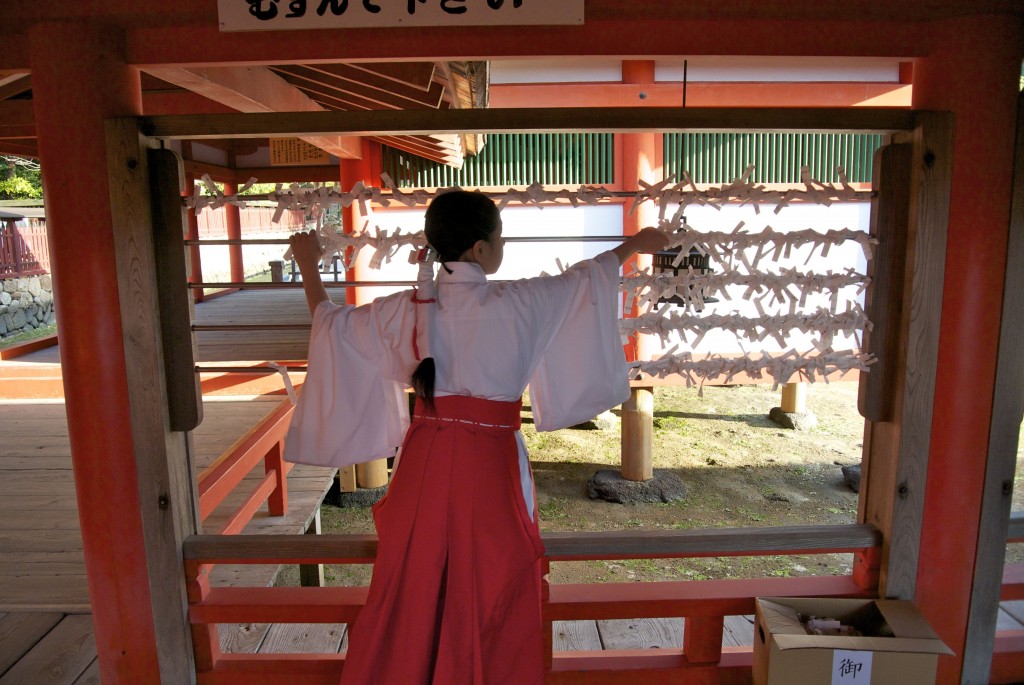
A miko arranges the fortune slips, aesthetically displayed as if in a window onto a different world.  Look carefully and you can tell that the tide is out.

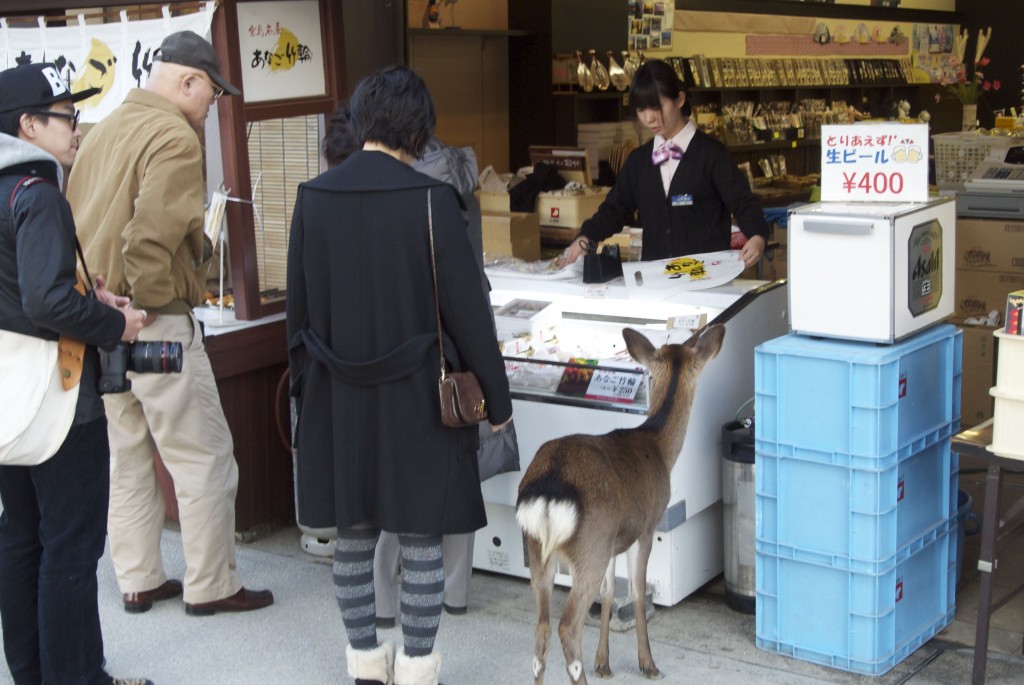
The deer at Miyajima are so civilised that they even queue up at shops. It’s said they live a salaryman lifestyle, retreating to the woods at night and commuting by day to eke out a liviing from the tourists.

Teeuwen on Shinto

The Dutch scholar Mark Teeuwen, currently professor at the University of Oslo

‘What Used to be Called Shinto’ runs the provocative title of a paper by academic Mark Teeuwen (in Japan Emerging, ed. Karl Friday, 2012).  In clear and systematic fashion, he questions the notion of Shinto as ‘Japan’s indigenous religion’ by arguing that Amaterasu’s prominence not only owes itself to continental influences, but was the product of seventh-century manipulation by a usurping emperor.  In these terms Amaterasu herself, and the religion which champions her, can neither be called ‘indigenous’ nor said to exhibit continuity from early times.

After emphasising Japan’s ancient links with the Korean peninsula, Teeuwen points out the diversity of pre-Buddhist Japan, rendering the idea of a single belief system ‘unthinkable’.  He also demonstrates the unreliable nature of the mythology in the Kojiki (712) and Nihon shoki (720).  One example is the famous story of tenson korin (descent from heaven), when Amaterasu sends off her grandson to rule over earth.  In the Nihon shoki, it’s Takami-musubi, Ninigi’s maternal grandfather, who performs this function.

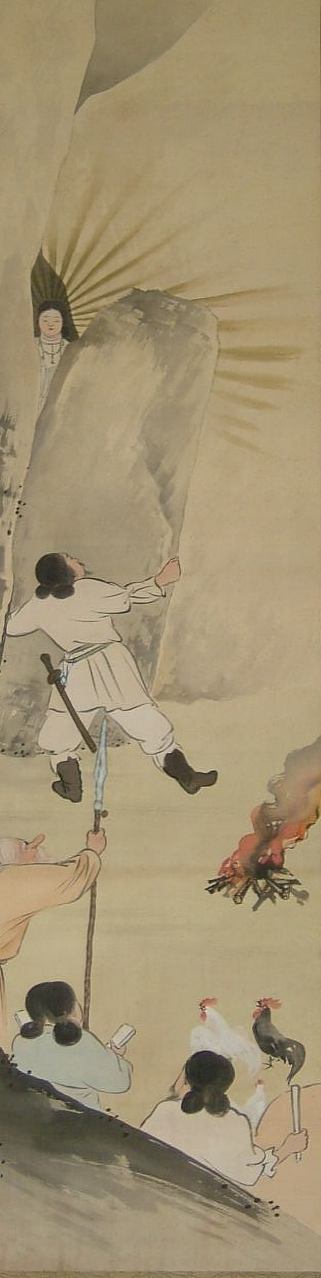
The opening of the rock door covering the cave in which Amaterasu hides herself. Following this, she largely fades from the mythology.

Amaterasu plays little part in the subsequent mythology, until it’s mentioned that the Yamato leader, Sujin, was troubled by the presence of two competing kami in his palace – Amaterasu and Yamato Okunitama (Great Spirit of the land of Yamato).  History tells how one was eclipsed by the other, and Teeuwen ascribes this to the later championing of the sun-goddess by Emperor Tenmu (c.631-686).

The Japanese leader only came to power by beating his nephew in the Jinshin War (673), having prayed to Amaterasu for victory beforehand.  Since she was associated with metalwork as well as weaving, her role in the production of weapons made her a war goddess as well as one of creativity (not unlike the Greek goddess, Athena).

A key point made by Teeuwen is that Emperor Tenmu was fostered by the Owari clan, whose ancestor was Ame no Kaguyama, in charge of mirror-making and metalwork.  In the championing of Amaterasu, Tenmu could have been acting in alliance with and out of allegiance to his adopted clan. It was in his reign, and that of his widow-successor Empress Jito, that the cult of Ise was initiated, and it was under Tenmu too that orders were given for the compilation of a ‘correct’ mythology.

Rather than Shinto as such, Teeuwen suggests that the resulting collection of myths belonged to a court cult known as jingi (heavenly and earthly deities).  This had nothing to do with the beliefs of ordinary folk, but was aimed at boosting the prestige of the emperor and his allies.  The central idea was that the emperor as heavenly descendant of Amaterasu would patronise all the earthly kami of the realm by sending them gifts, thereby confirming his authority over them.

The final part of Teeuwen’s analysis – for me, the weakest part – is a claim that Amaterasu underwent a gender change at the time of Empress Jito.  However, there is no evidence to back up the argument, which is based upon the assumption that Empress Jito needed a divine role model for her intention to pass authority onto her grandson.  This goes along with Teeuwen’s assertion that the sun is ‘obviously yang and therefore male’.  However, it seems unlikely yin and yang would have played a part in the personifications of nature prior to the sixth and seventh centuries.  Moreover, the sun is female in many cultures, notably in Mongolian shamanism which may have played a vital part in  Japan’s religious development.

There are in fact good reasons for supposing Amaterasu to be indelibly female.  For one thing, she is associated with weaving, which was the preserve of aristocratic women.  For another it’s known that shamaness-rulers like Himiko played a leading part in ancient Japan and were seen as imbued with magical powers. Perhaps in ancient times a miko shamaness was revered as being as radiant as the sun, not unlike Louis XIV, and with death and the passage of time she became conflated with the very sun itself.

“The Shinto view of a purely indigenous Japanese antiquity is a myth,’ concludes Teeuwen decisively.  One has the feeling that he’s here trying to bury the whole Nativist notion of an ancient and purely Japanese religion in order to get on with the question that is vexing him: why did the Japanese court not copy Chinese models, but invent a ritual and mythology of its own?

This is by far the clearest account I’ve read yet of the argument in academia about whether Shinto as such existed in ancient times. It surely places Teeuwen in the very forefront of a debate which is certain to rumble on for years. This short paper (11 pages) is intellectually stimulating, refreshingly clear of jargon, and is much to be recommended.


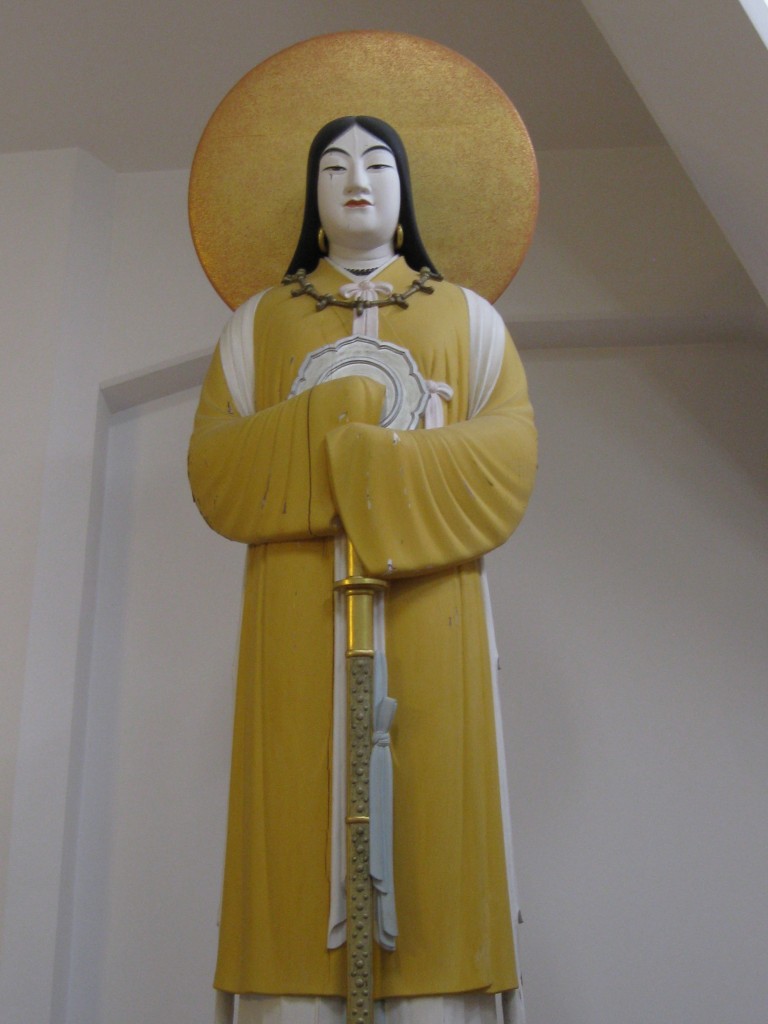
A modern image of Amaterasu. Did she undergo a gender change at some time?

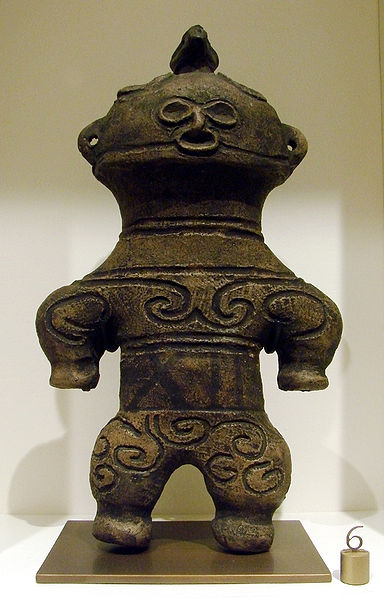
Dogu exhibition (Miho Museum)


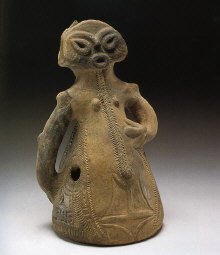
Ensui Dogu, from late-middle Jomon, in Yamanashi Prefecture (taken from Jomon Ceramics Now website)


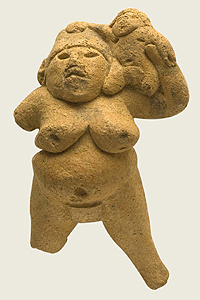
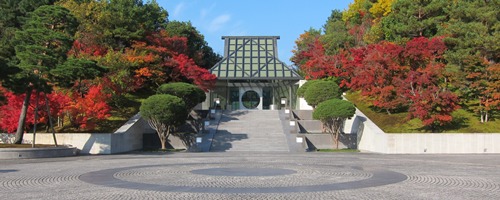
Miho Museum near Lake Biwa is holding a special exhibition of ancient clay figurines known as Dogu, dating from literally thousands of years ago.  They’re weird and fascinating, possibly early fertility figures.  The maple colours at this time of year, together with I.M. Pei’s stunning architecture, mean that the museum is worth a visit in its own right anyway: the exhibition is a plus.

The museum is run by people from the little known Shinji Shumeikai sect, who grow organic vegetables, practice a form of healing, and follow an aesthetic form of spirituality as conceived by their founder, Mihoko Koyama (1910-2003).  Part  of her philosophy was that exposure to works of beauty helps better one’s character and well-being.  (They’ve got a British operation, and I was able to visit their small organic farm near Avebury this summer, together with video-maker Robert MacNaughton who is working on a documentary about Japan’s Creation Myth.)

*******************************************************.

Dogu in the Musée Guimet

Autumn Special Exhibition: Saturday, September 1 to Sunday, December 9
” Dogū, a Cosmos of Ancient Clay Figurines ” (North Wing)

Where did the strange forms of dogū,or the day figurines from Japan’s prehistoric Jōmon period (14,000 BCE-300 BCE), come from? Some have three fingers, raised arms, amazing physiques, strange expressions, traces of red pigment, or no face. Who or what were they?

If we today could travel in time and meet the people of Jōmon period, we would likely be amazed by their great skill and energy. Making even one Jōmon (cord-patterned) earthenware was not merely a matter of kneading and firing clay. First, the clay had to be found, tempered with sand or other materials, wedged, decorated with amazing patterns, dried, and finally fired.

In addition, these were not fired in kilns but out in the field so the larger the piece, the more ingenurity was required to maintain uniform overall temperature. Such earthenware pieces are rarely found in large quantities.

Figure in the Nagoya City Museum

The Jōmon people also made lacquerware. These objects included sake bottles and cups, earrings, bracelets, and combs that skillfully incorporated red and black lacquer, and beautiful accessories made of decorative beads strung together with red-lacquered string. The upper echelons of Jōmon society were quite fashionable, indeed!

Dogū figurines played a major role in Jōmon festivals. This autumn, many important examples of dogū from all over Japan, including National Treasure-designated Jōmon Venus and the earliest dogū found in Shiga Prefecture, will be assembled at Miho Museum. Please look forward to discovering who they were.

****************************************************************************

Miho Museum, (0748) 82-3411, 300 Momodani, Shigaraki-cho, Koka-shi, Shiga-ken; 10 a.m.-5 p.m. ¥1,000. Closed Mon.

It’s a 20-min. taxi ride from Shigaraki Station, (Shigaraki Kogen Railway Line).  It takes about 80 mins from Kyoto, and there are details about how to get there on this website.

There’s a good article about the museum, its philosophy and the Shumei sect at this website.

Autumn colours at Miho Museum (from the Miho website)

« Older posts Newer posts »

© 2026 Green Shinto

Theme by Anders NorénUp ↑