Author: John D. (Page 160 of 202)

Shimogamo art display

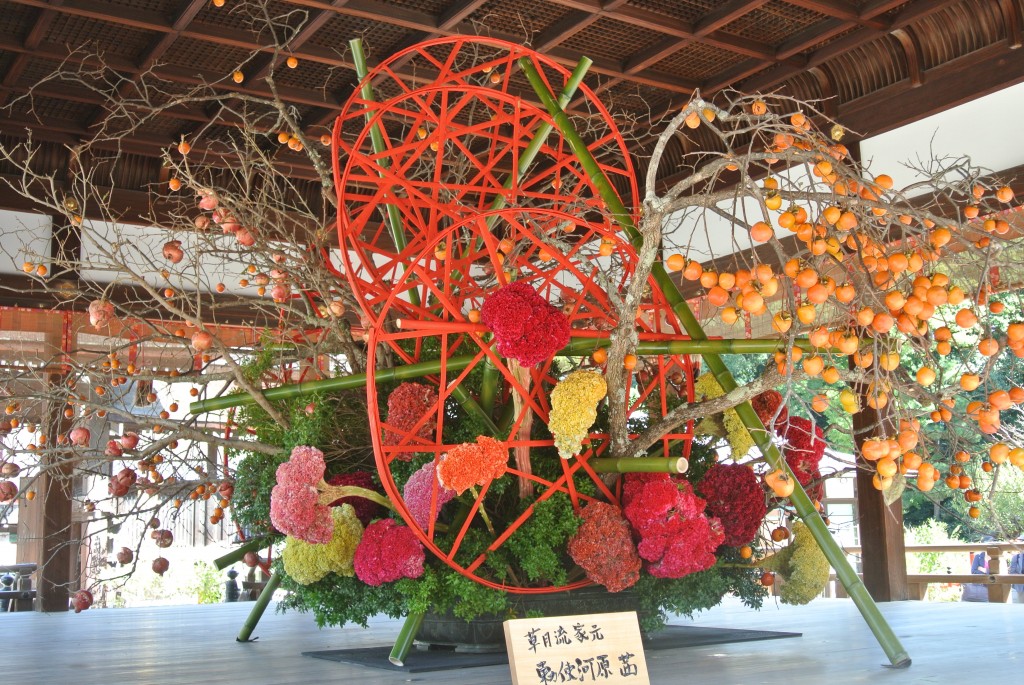
The main display at the heart of Shimogamo by the head of the Sougetsuryu school of ikebana


Tradtional art, modern style

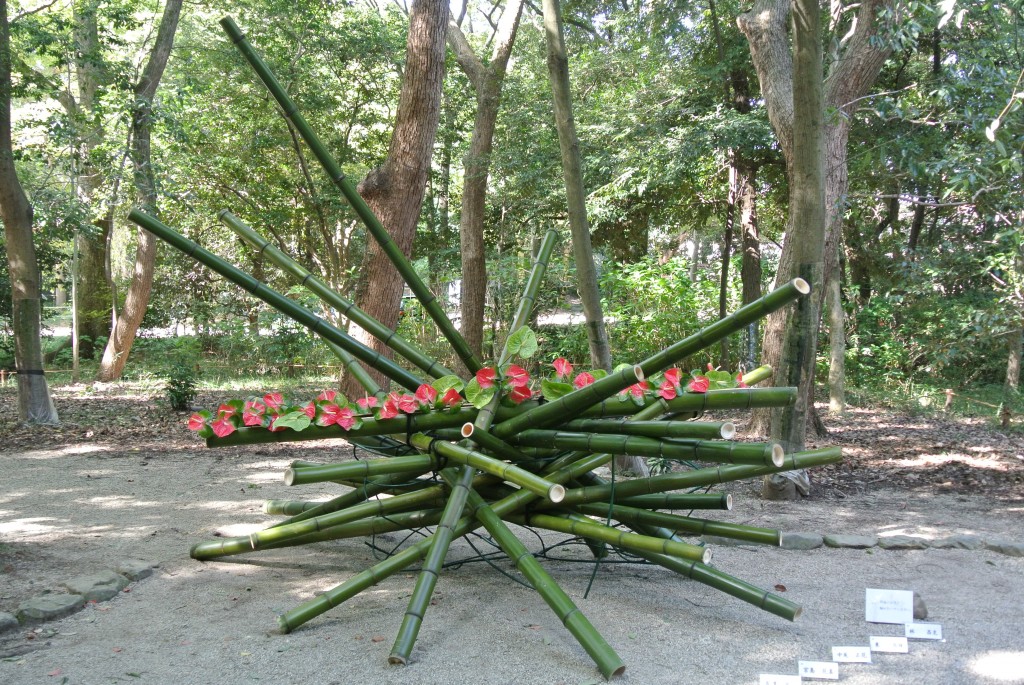
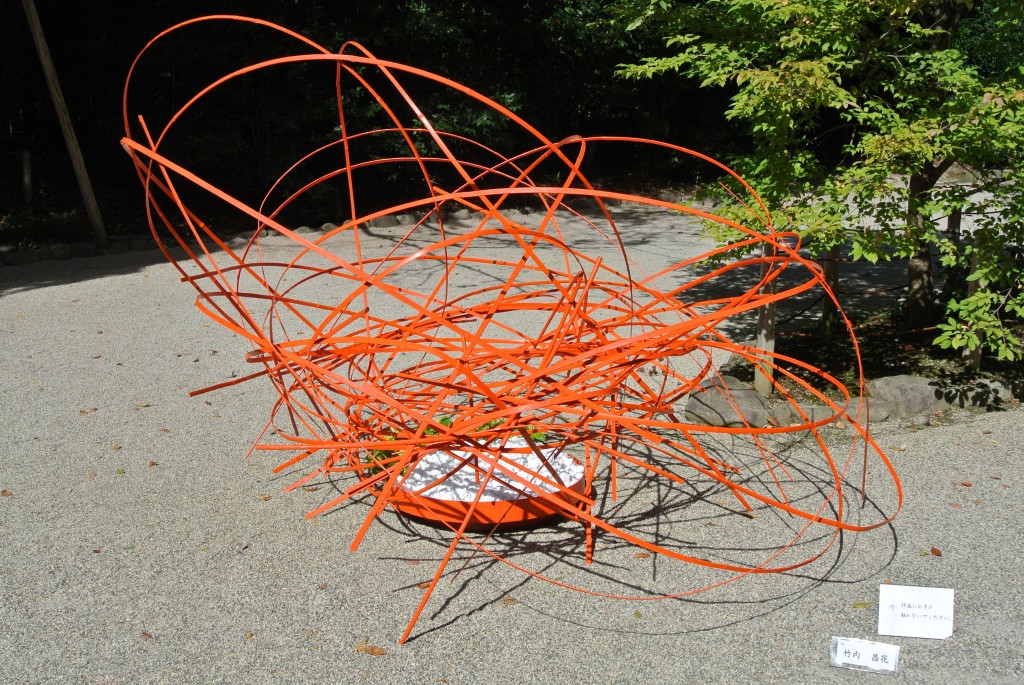
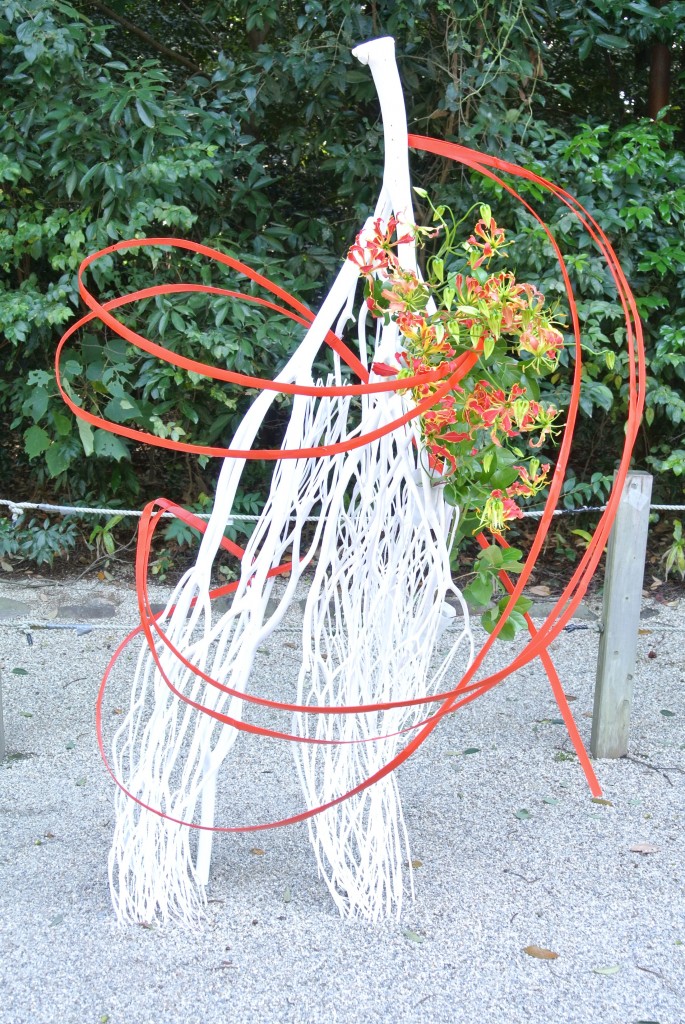
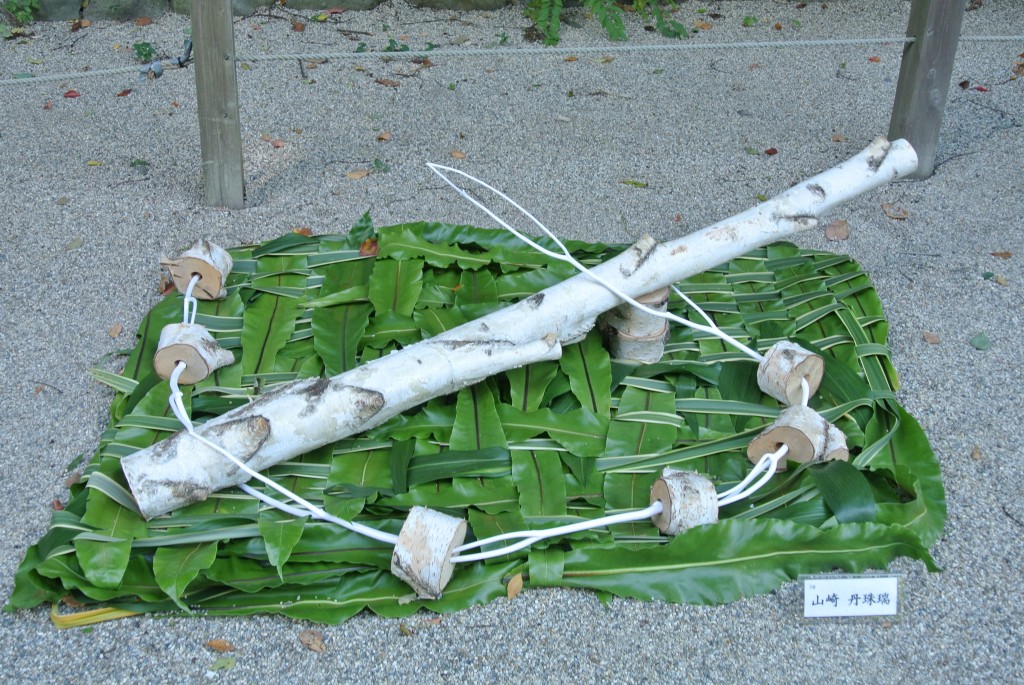
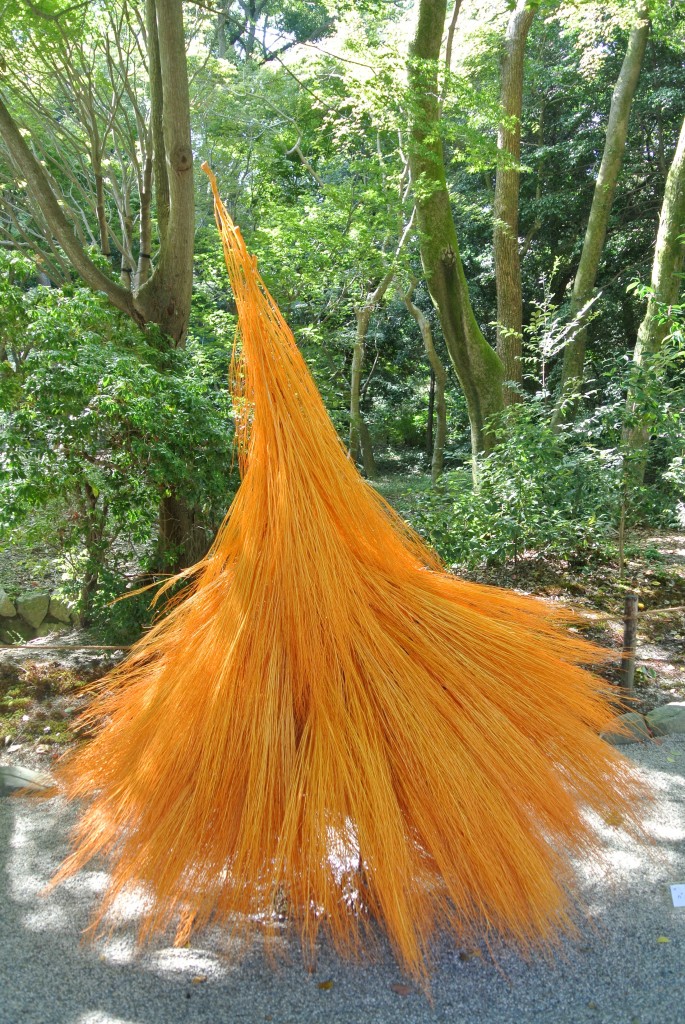
My local shrine, Shimogamo Jinja in Kyoto, is presently putting on an art exhibition of ikebana.  The displays line the entrance to the shrine, with some set against a backdrop of woods and others framed by the vermilion of the World Heritage buildings.

You often find exhibitions of art and martial arts at shrines.  Sumo, dance, horse-riding events too are put on for the pleasure of the kami.  What unites them all is that they’re all traditional.  You’re not likely to see an exhibit of hip-hop dancing at a shrine, because the ancestral kami housed there wouldn’t appreciate it.  On the other hand, ethereal gagaku (court music) and stately kagura ( ritual dance) are just what the kami like.

It can be seen as part of the shamanistic heritage of Shinto, in that the religion is not just spiritual but cultural.  In ancient times shamans were wise men or women who transmitted the cultural and historical essence of their tribe to the next generation.  Shinto plays a similar role, which is why for some it is ‘a religion of Japaneseness.’


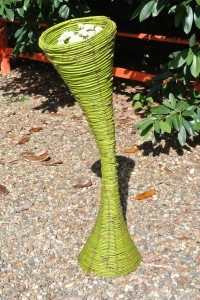
Blending in - or sticking out?


All tied up and nowhere to go


White wonder with a splash of red

A study in contrasts


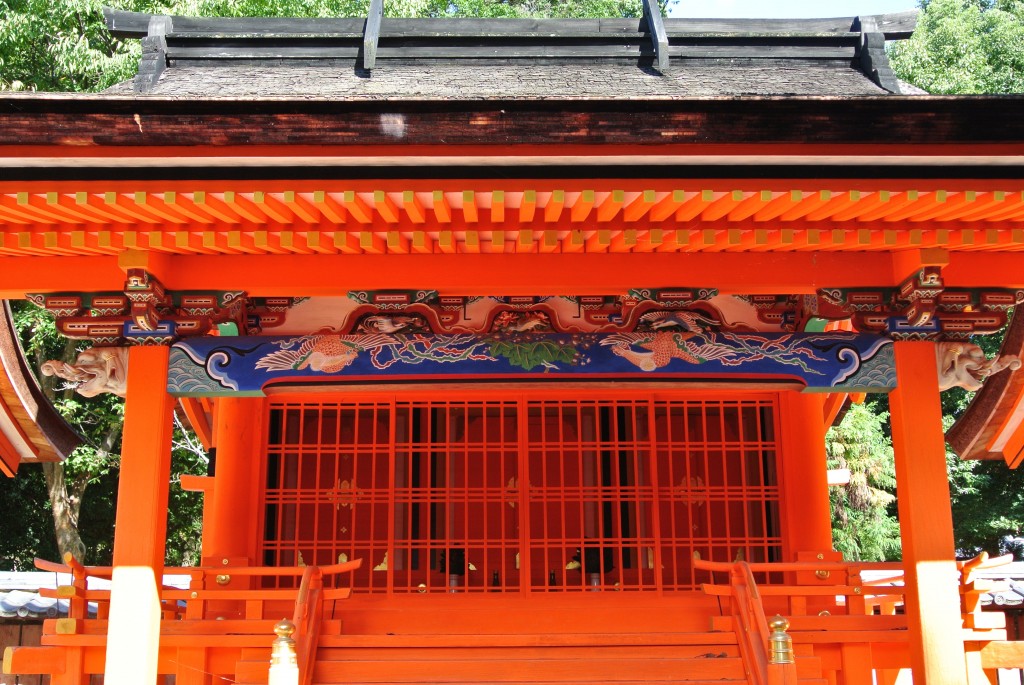
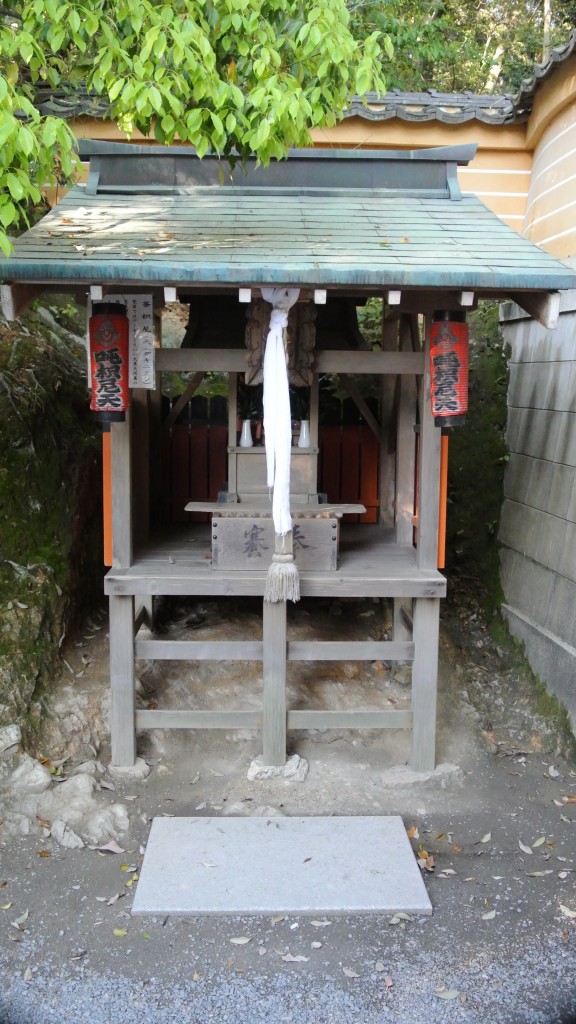
Orange fantasy in a green woodland

Yasukuni politics

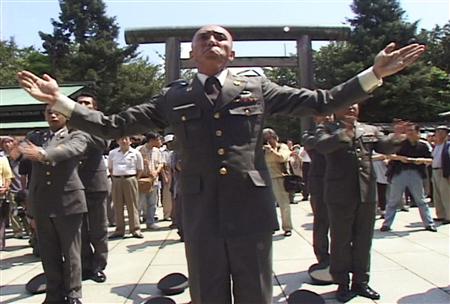
War glorification at Yasukuni (picture from K. Onodera blog)


The unfortunate alliance of Shinto with right-wing nationalism is nowhere more evident than in the cult of Yasukuni Shrine, established in the nineteenth century to honour those who died on behalf of the emperor.  Defenders of the shrine like to pretend worshippers are simply honouring Japan’s war dead, as is the custom in other countries.  But anyone familiar with the shrine will know that it is a symbolic space championed by the far right and those who uphold Japan’s role in WW2 and deny its atrocities.  Personally I find the shrine’s museum absolutely repellent, and I say that as someone who normally loves Japan and the Japanese.

Yasukuni has been much in the news in the past few days because of visits by Japanese politicians to the shrine, which honours Class A war criminals.  It’s a deliberate and unnecessary act of provocation by nationalists at a time when relations with China and Korea hardly need fuel adding to the flames.  If Japan had any kind of government that wasn’t leaning over itself to prove its nationalist appeal, then it would have long ago instigated visits to honour the war dead at the equivalent of Arlington Cemetery rather than a nationalist shrine that stood (and still stands) at the heart of its war ideology.

*********************************************************************************

Article from yesterday’s Guardian by Justin McCurry  (18, Oct, 2012)
http://www.guardian.co.uk/world/2012/oct/18/japanese-mps-war-shrine-china-korea

A cross-party group of more than 60 politicians took part in an autumn festival at Yasukuni shrine on Thursday, following a similar visit on Wednesday by Shinzo Abe, the new leader of the Liberal Democratic party, who is widely tipped to become Japan’s next prime minister.

Hong Lei, a Chinese foreign ministry spokesman, told reporters in Beijing: “Yasukuni shrine is a spiritual pillar used by Japanese militarism for its overseas aggression. It still enshrines class-A war criminals who owe victimised people heavy bloody debts.

“We urge the Japanese side to face squarely and reflect upon history and strictly abide by its solemn statements and pledges regarding historical issues, and face the international community in a responsible manner.”

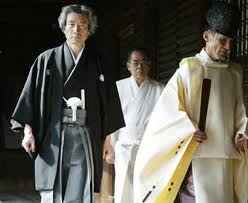
Former prime minister Koizumi, who made a deliberate point of visiting Yasukuni and thereby riled Japan's neighbours

The pilgrimages, made to coincide with the shrine’s autumn festival, are expected to increase tensions between Japan and China, which are already embroiled in a dispute over territorial claims to the Senkakus, a group of islands in the East China Sea known as the Diaoyu in China.

The Yasukuni visit also drew an angry response from South Korea amid friction over ownership of the Takeshima – or Dokdo – islands, and renewed pressure on Japan to issue an official apology for its use of Korean women as sex slaves in frontline brothels during the war.

Cho Tai-young, a South Korean foreign ministry spokesman, said the visit was “an irresponsible act that ignores the sentiment of the peoples in neighbouring countries who suffered due to Japan’s past imperialism”, according to Kyodo News.

“The South Korean government calls on Japan’s political leaders in a responsible position to look squarely at history with a humble attitude.”

Japan’s chief cabinet secretary, Osamu Fujimura, refused to condemn or support the lawmakers, who included the transport and postal reform ministers. “A visit in a private capacity is a matter of the personal belief of individuals,” Fujimura said.

Yasukuni honours the 2.5 million Japanese to have died in wars since the second half of the 19th century. Among them are 14 class-A war criminals convicted by the Allies after the war, including Japan’s wartime prime minister, Hideki Tojo, who was executed for war crimes in 1948.

Many Koreans and Chinese view the shrine as a symbol of Japanese militarism, and visits by politicians as proof that Japan has yet to atone for its wartime conduct in parts of China and on the Korean peninsula.

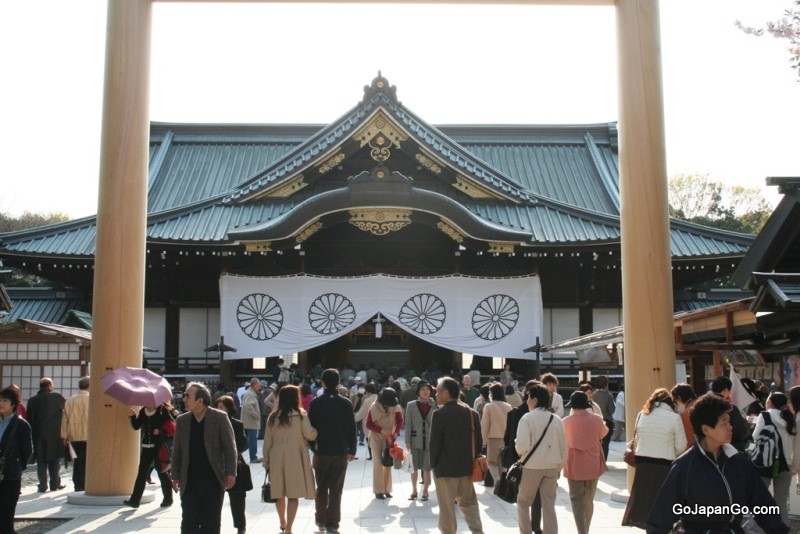
Yasukuni on a normal day, without nationalists or politicians (photo from GoJapanGo.com)

A Kyoto threesome

The gorgeous Shinto shrine at the Buddhist temple of Ninna-ji

Yesterday I happened to explore the north-west corner of Kyoto, in which are located three World Heritage Sites, all of which are Buddhist temples in one form or another.  The Golden Pavilion is world famous for its exquisite beauty and for its portrayal in the novel by Mishima Yukio.  Ryoan-ji contains the most celebrated ‘dry stone garden’ in the world.  And Ninna-ji, the least well-known of the trio, combines aristocratic aesthetics with a Buddhist sensibility through the conversion of a retired emperor’s villa.

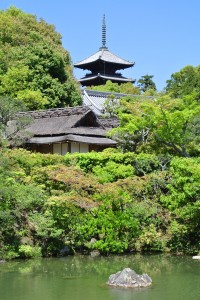
A Buddhist pagoda rises behind the aesthetics of a converted aristocratic villa at Ninna-ji

Readers of this blog will not be surprised to learn that each of the three Buddhist complexes contains a small Shinto shrine.  In the case of Ninna-ji this is to be expected, since it belongs to the Shingon sect of Buddhism which has integrated kami worship since its very foundation in the eighth century.  But both the Golden Pavilion and Ryoan-ji belong to the Zen school of Buddhism, traditionally held to be more sceptical in terms of other-worldly deities.

The most magnificent and biggest of the Buddhist-Shinto shrines (see above) is that at Ninna-ji, which has a Momoyama-era ostentation (1573-1598).  ‘Kusho Myojin is a building which protects Ninna-ji’s most important Garan,’ says a noticeboard (Garan is a sanctified place where Buddhist monks perform ascetic trainings).

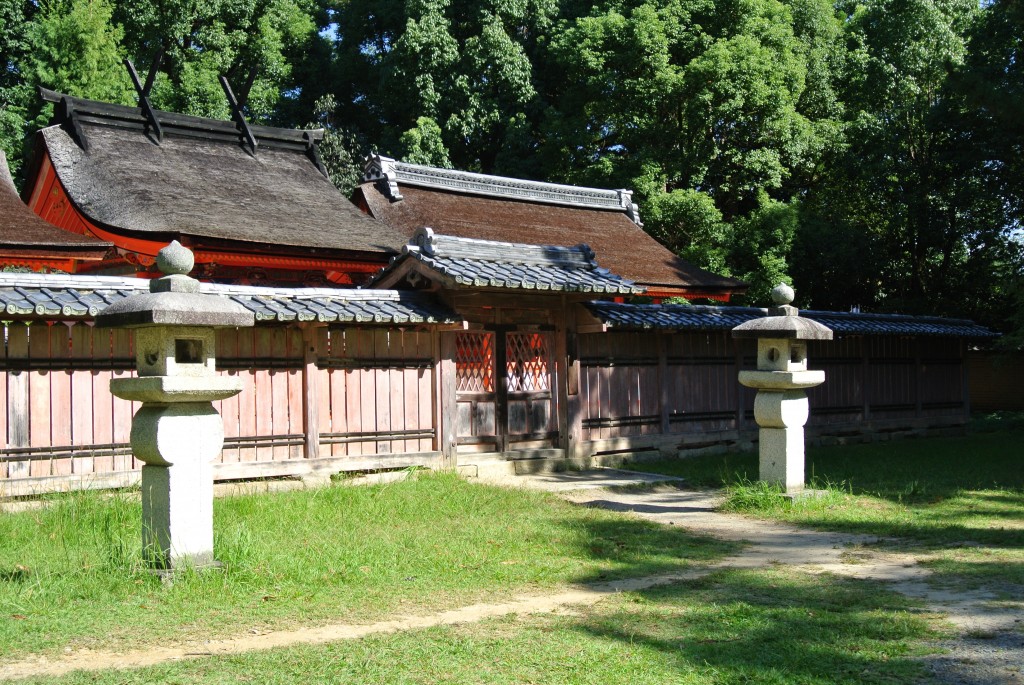
The shrine consists of three small buildings, erected between 1641-44, enshrining nine Myojin or syncretic kami.  In front of them stand three stone lanterns carved in a distinctive style by the tea ceremony master, Oribe Furuta (1544-1615).  The overall effect is striking, standing as the complex does in the shadow of the pagoda at the heart of the temple.  Put it together with the other treasures of the temple, such as the magnificent converted palace of a retired emperor, and you can see why Ninna-ji is worthy of World Heritage status.

View of the Kusho Myojin shrine at Ninna-ji with stone lanterns carved by Oribe Furuta


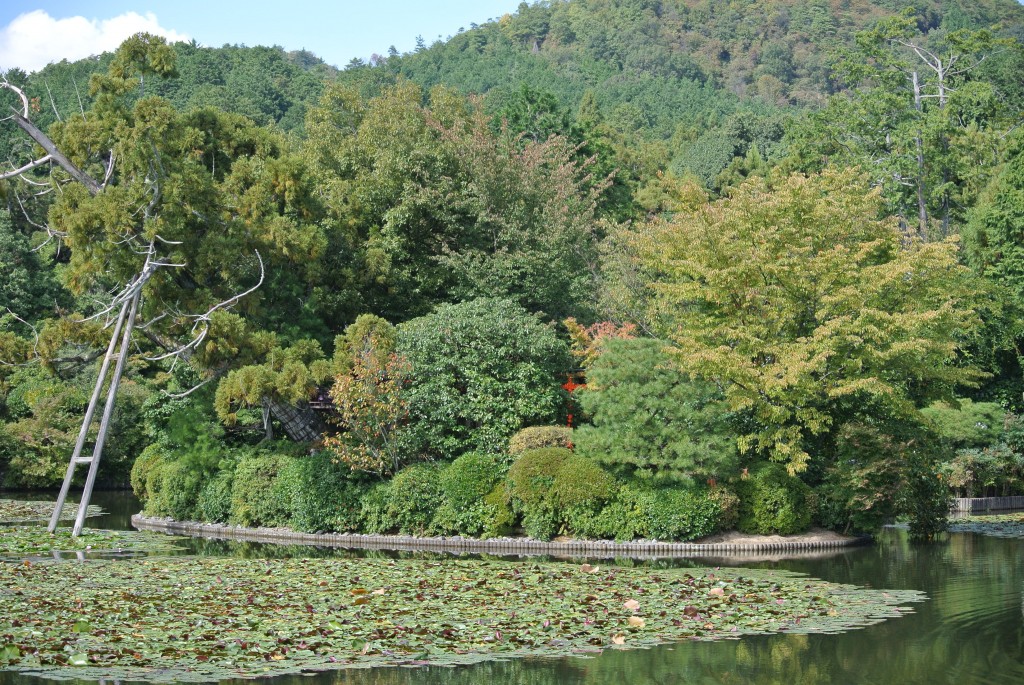
At Ryoan-ji is an alluring Benten Island, which lies in a most attractive lake.  We tend to think of Ryoan-ji only in terms of its famous rock garden, but the grounds are superb too with moss-strewn rocks set amongst gnarled roots beneath a green canopy.  The lake is covered with lotus, and its tree-lined shore set against a ‘borrowed landscape’ of the mountains behind.

The lake at Ryoanji with just a glimpse of the red torii of the Benten shrine


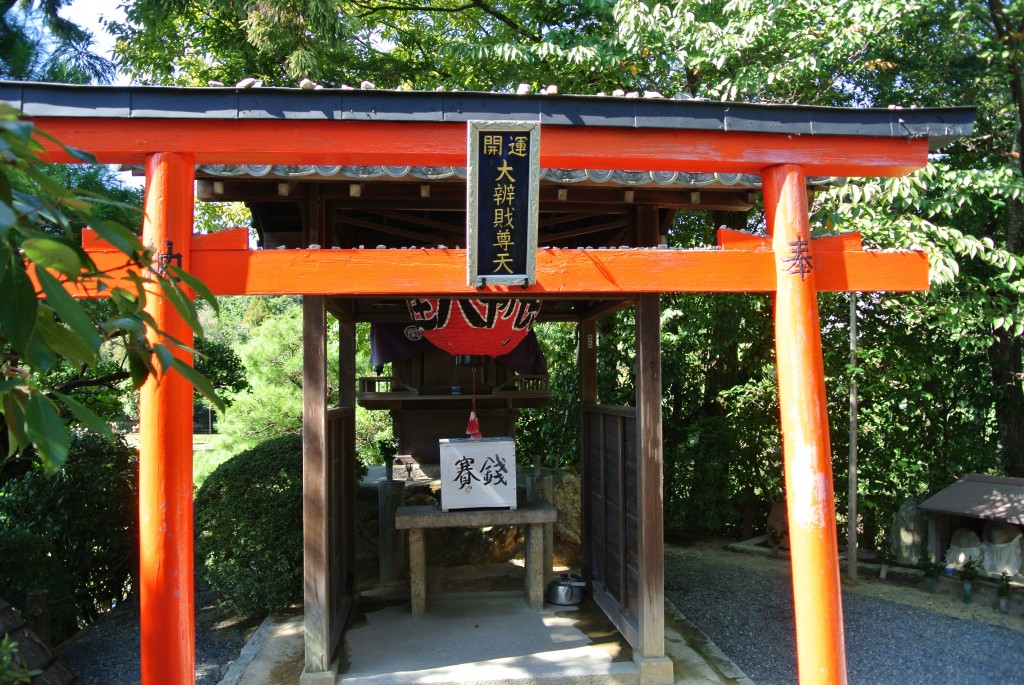
Benten shrine in Ryoanji’s garden. Notice the small stones put on the crossbeams of the torii by visitors hoping they will help to make their wishes come true.


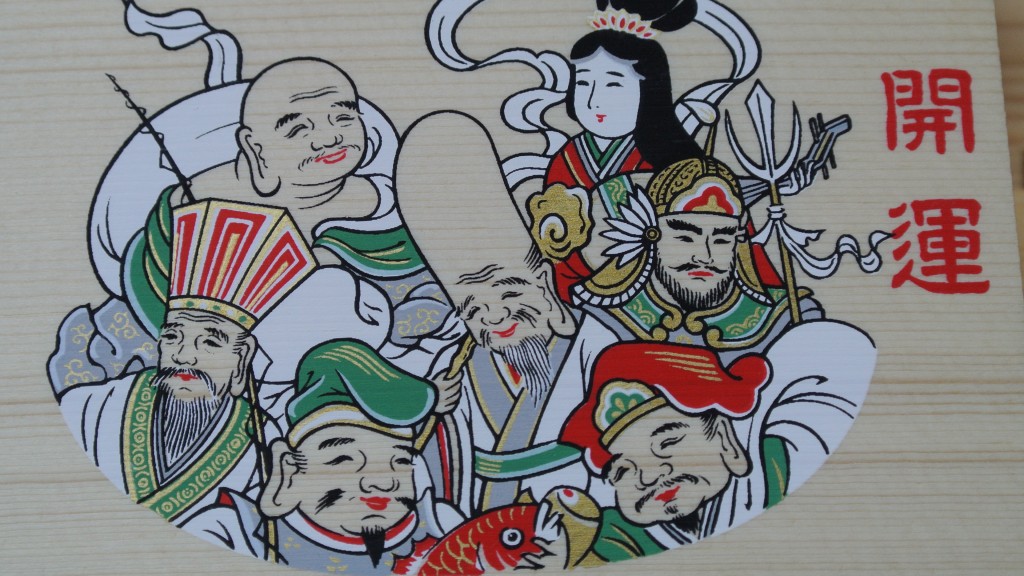
The only female among the Lucky Seven Gods, Benten is a syncretic goddess associated with watery depths and creative artistry. White snakes coil themselves around her, ready to act at her bidding.  A lute-playing Muse, she strums seductively at the water’s edge and is often found, as here, on small islands and inlets. No doubt she inspires disturbing visions in the meditative minds of the Zen monks over whom she presides, like the rocks that protrude in the oceans of eternity in the dry stone garden at the heart of the temple.

Seven Lucky Gods featuring Benten at the back as the sole female


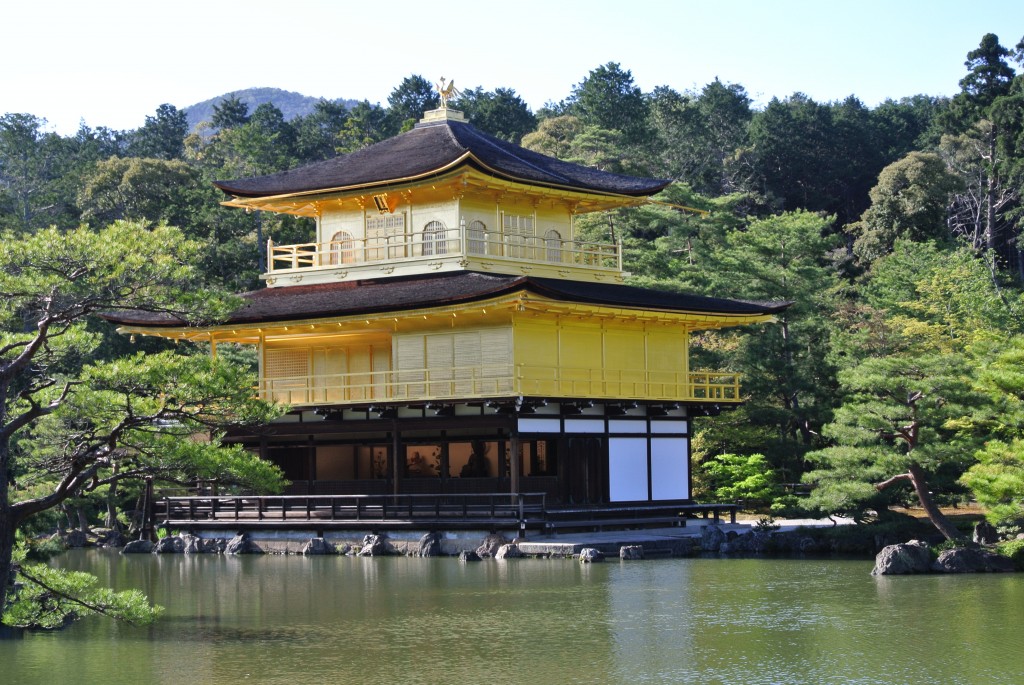
The Temple of the Golden Pavilion (known in Japanese as Kinkaku-ji) has the smallest shrine of the three World Heritage Sites. Most visitors are so dazzled by the brilliance of the main building as it glistens reflectively in the pond before it that they overlook altogether the little shrine by the exit gate.  A notice explains that it’s dedicated to Dakiniten, which since the Medieval Period has been conflated with the popular figure of Inari (here described as an omnipotent god of prosperity).

The noticeboard gives the Sanskrit name for Daikini, for the deity is said to have Hindu and Buddhist origins in India.  The most famous case of Daikini worship is a Soto Zen temple called Toyokawa Inari in Aichi Prefecture.  It’s said that one of its head priests had a vision in 1267 of a figure on a white fox, named as Daikiniten but conflated in the popular imagination with Inari.  At least that’s what the temple claims, for in her book The Fox and the Jewel Karen Smyers shows how Meiji-era Buddhists worshipping Inari had to adopt complicated strategies and invented traditions in order to justify worship of a kami in a buddhist complex.

By claiming Daikini as a boddhisattva and an imported deity, in contrast to the native Inari, the priests were able to maintain their status as Buddhists rather than being forced by government ideologues into becoming Shinto. It may explain why here at the Golden Pavilion what appears to be an Inari shrine is treated as a Buddhist deity and a notice put up to explain its Indian origins.


A dazzling Golden Pavilion, part of a Zen Buddhist temple


The overlooked small shrine at the Kinkakuji exit

Youtube videos

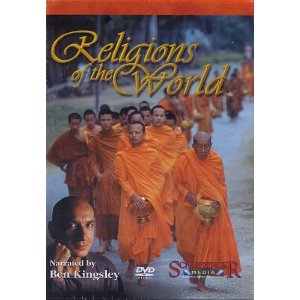
Youtube has a substantial four-part video programme on Shinto as part of the Religions of the World series.  It’s narrated by Ben Kingsley, who gets one or two pronunciations wrong but on the whole does a credible job.   One irksome point was a tendency to talk of shrines while showing a Buddhist pagoda, but otherwise the programmes do a good job in presentation and there is some interesting early footage as well as vivid shots of festival fervour.

The featured expert is John Nelson, author of A Year in the Life of a Shinto Shrine, who picks his way through the minefield of defining what is Shinto and how it originated.  One point he emphasises is the practical aspect and that custom is more essential to the religion than belief, which comes later if it comes at all.  The progamme’s take on Shinto is that it is synonymous with Japanese culture and has existed virtually since its very origins – not sure if that controversial claim emanates from Nelson or not, though.

Some of the most interesting moments come in the discussion of kami.  It’s pointed out that they are not necessarily benevolent, as some Westerners like to think, but can be destructive and evil.  The point is made too that they are not resident the whole time in the material world, but have a transcendent nature so that they are able to come and go at will between worlds.  It explains for example why they are summoned at the beginning of rituals.

Another interesting point is the discussion of purity and pollution.  The concerns are compared with those of ancient Israel, and the goal of life for Shinto described as ‘to maximise purity’.  Life in the material world is prone to impurity, decay and disease, so ritual exorcism of the pollution plays a prime part in Shinto beliefs.

Part One is 10.35 mins long.  Introduces the setting and historical context, while contrasting the syncretism with the exclusivity of Christianity.  it also stresses that social etiquette and folk customs are integral to Shinto.

Part Two is 10.05 mins long.  Starts by looking at shrines and festivals, then at the mythology which is described as imaginative writings, rather than scriptures.  The Chinese influence is noted, and the later blending with Buddhism.

Part Three is 10.05 mins long.  Reference is made to the thought of 18th century Motoori Norinaga and consideration of kami, pollution and the difference with sin.  Shinto ritual is discussed, as well as the role of priests.

Part Four is 14.55 mins long.  Discussion moves from kamidana to developments in modern times, including Shinto’s role in nation-building following the Meiji Restoration and the later State Shinto in WW2.

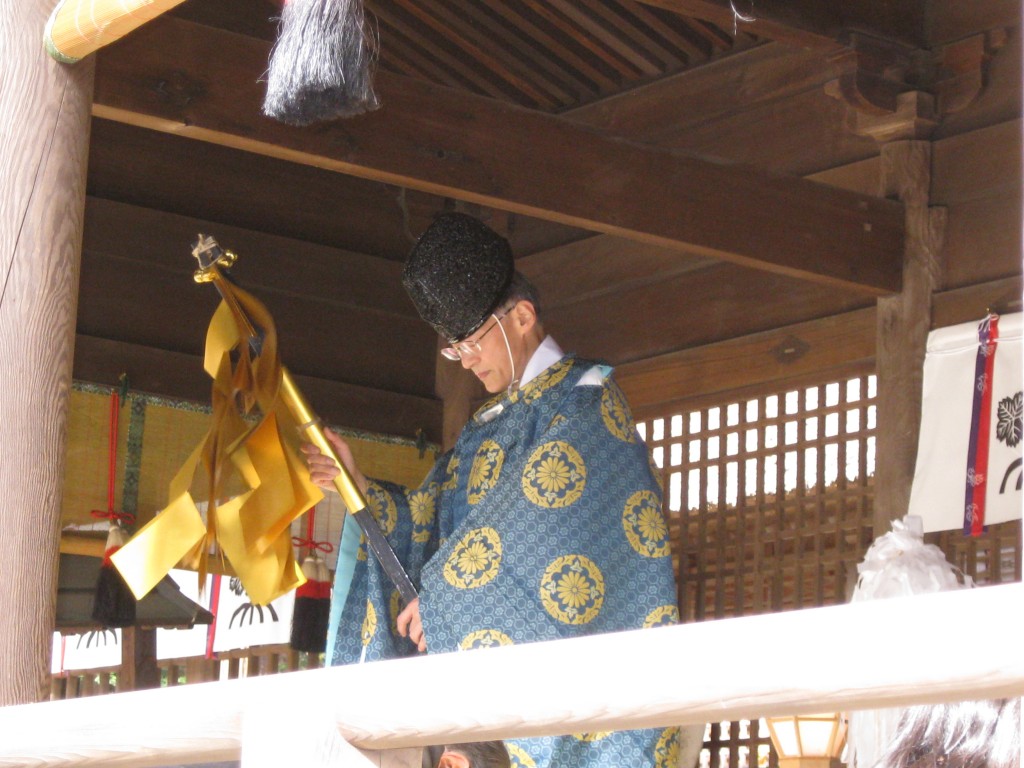
Purification with a golden 'haraigushi' (purification stick)

Ashikaga

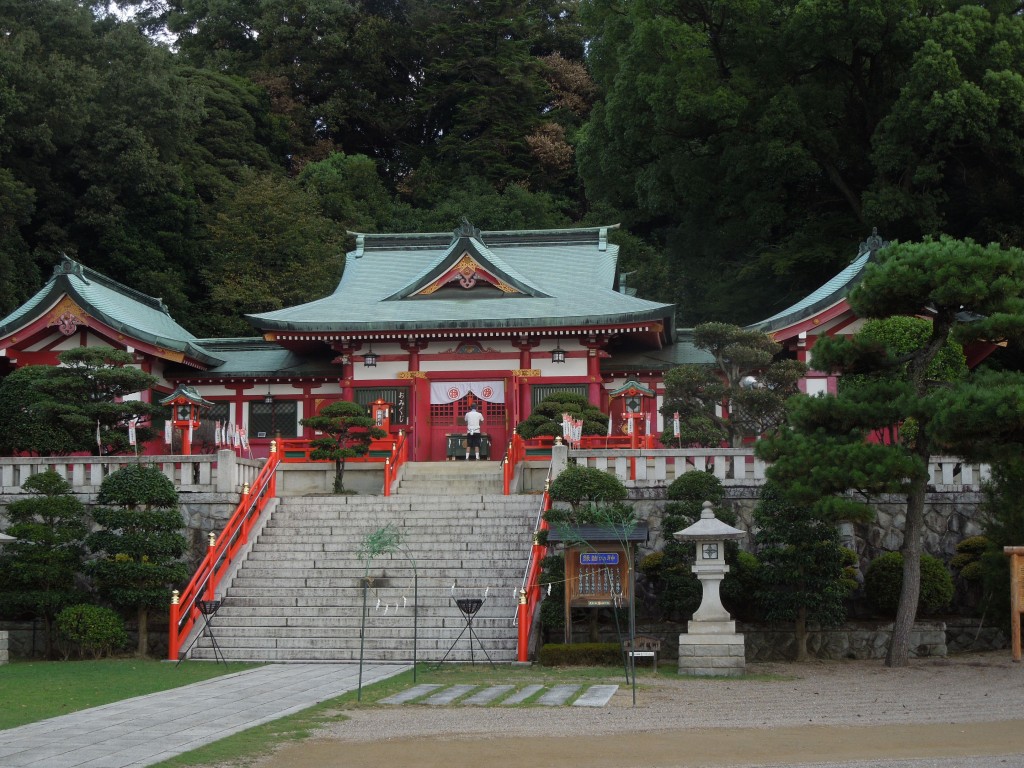
The pristine Orihime Shrine, overlooking the town of Ashikaga


Shogunate hometown
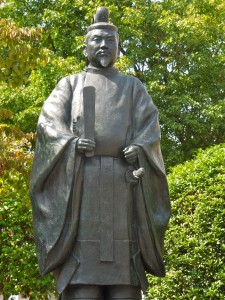
I found myself recently in the small town of Ashikaga in Tochigi Prefecture.  The name is famous in Japanese history as being the family name of the Muromachi shoguns, and sure enough this is where they came from – one more connection with Kyoto in the Deep North.  Near the city centre is a statue of the man who started the shogunate dynasty, Ashikaga Takauji (1305-1358).

Ashikaga Takauji, founder of the shogunate dynasty

On the site of an early Ashikaga residence now stands a spacious Shingon temple called Banna-ji, founded in the early thirteenth century.  Like the Tendai temples of Tohoku, it retains strong syncretic aspects.  Indeed, it’s often said that of all the Buddhist sects, Shingon is the closest in spirit to Shinto.

Many of the temple’s features echo those of a shrine.  There’s a temizuya water basin for washing one’s hands.  There’s a sacred tree with a shimenawa rice rope.  And there are ema and omikuji fortune slips.

The temple also hosts a small Inari shrine, a Daikoku hall and a place for praying for easy childbirth.  Indeed, if it wasn’t for the statue of Kukai (Kobo Daishi), you might forget while strolling the grounds that you’re in a temple at all.

Orihime Shrine

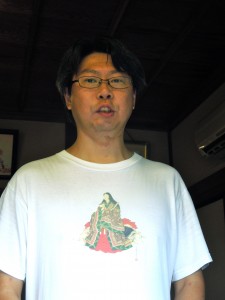
An off-duty priest with Orihime, the Weaver Princess, displayed on his T-shirt

The main shrine in Ashikaga is surprisingly recent.  It was built in 1879 to guard over the town’s once vibrant textile industry – which is why it’s known as the Weaver Princess Shrine.  The current buildings only date from 1937, after a fire devastated the original shrine, and as one might expect from a modern shrine the atmosphere is pristine yet lacking the allure of antiquity.

Since the shrine is the departure point for hiking in nearby Orihime Park, many of the people crossing the precincts are intent on their daily exercise.  There are several young females too, for the shrine’s kami include a male and female couple, Yachichihime and Amenomihoko no mikoto, which means there is a llvely trade in ‘enmusubi‘ (good connections).

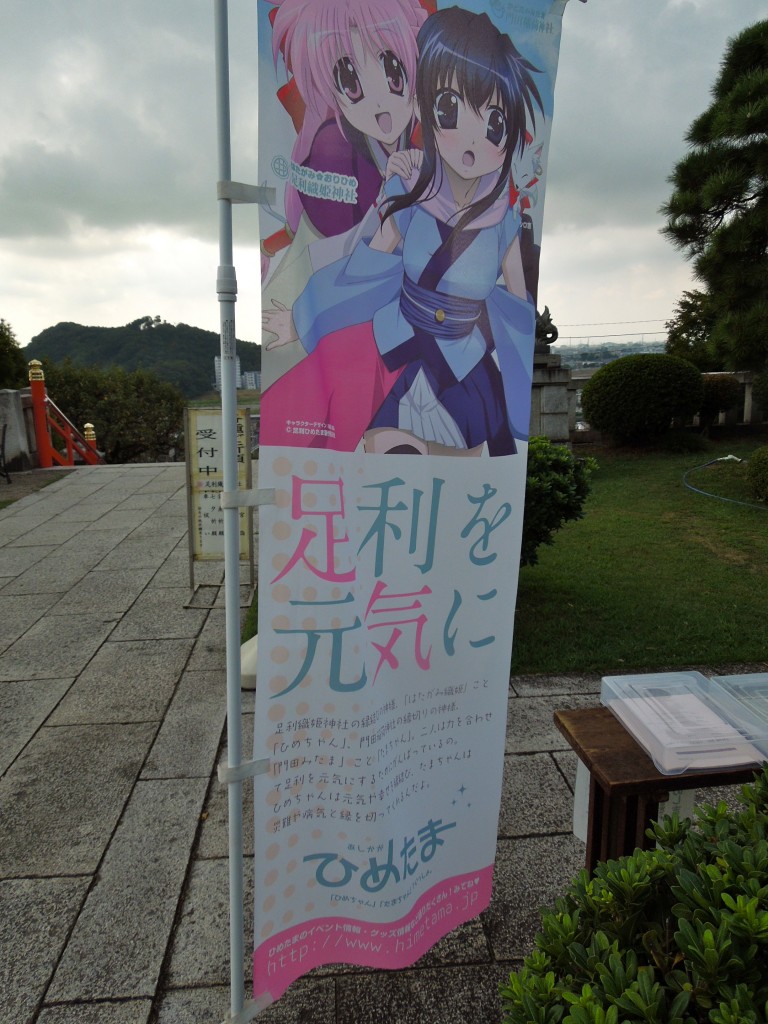
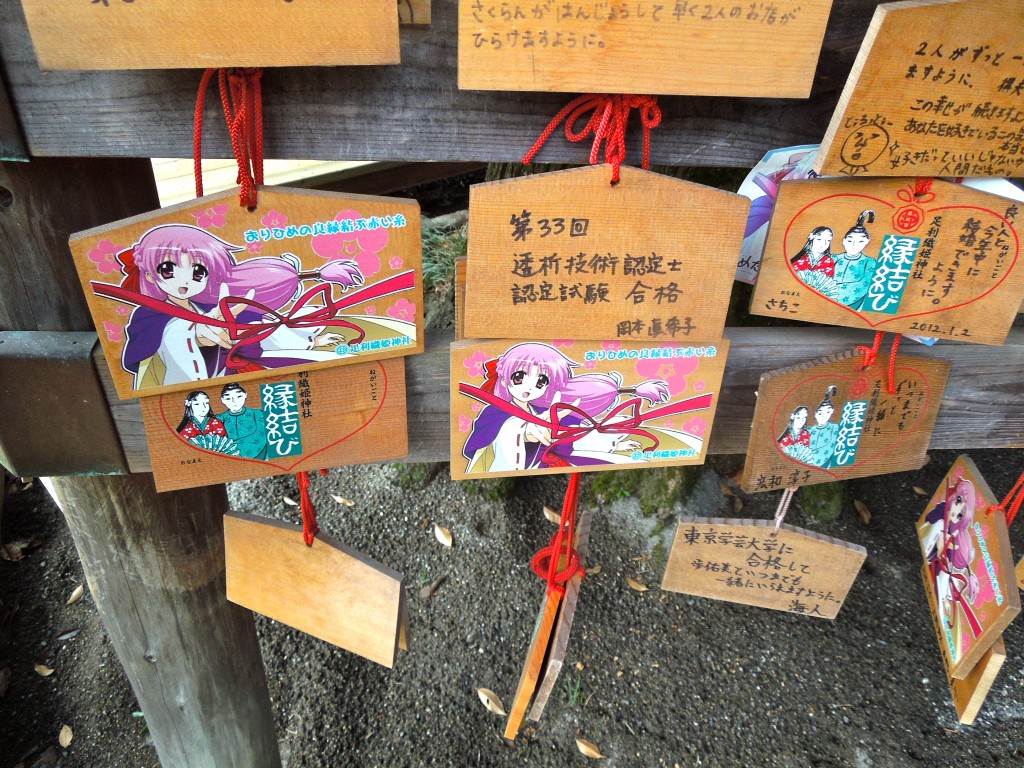
Some of the young are also drawn by the fame of a popular manga and anime character called Orihime, and the shrine has seized on the opportunity to produce ema votive tablets designed for fans.  I noticed that one of the priests however boasted a T-shirt, which displayed the ancestral kami in more traditional manner.

Weaving and early religion had a close connection, and it’s worth noting that Amaterasu herself is a weaver when we first meet her in Kojiki.  Michael Como, professor of Shinto at Columbia University, has written interestingly of the parallels with the silkworm in her story (see below), and it ‘ties in’ with the threads and knots in ancient religions that bind humans with the divine.  Here at Ashikaga the Weaver Princess continues to spin her web and to capture the imagination of a new generation.

**********************************************************************

Wikipedia writes that “Orihime Inoue is a fictional character in the anime and manga series Bleach created by Tite Kubo. She is a classmate and friend of Ichigo Kurosaki, the main character of the series. Like many other friends of Ichigo, she quickly develops spiritual powers of her own after Ichigo becomes a Soul Reaper. Through the series, Orihime learns about Ichigo’s duties as a Soul Reaper and decides to accompany him when he goes to Soul Society to save Rukia Kuchiki.”

Michael Como  Weaving and Binding: Immigrant Gods and Female Immortals in Ancient Japan (University of Hawaii Press, 2009)

*********************************************************************

A banner advertising the shrine's connection with the anime and manga character

Prayer tablets displaying an anime character with the name of Orihime


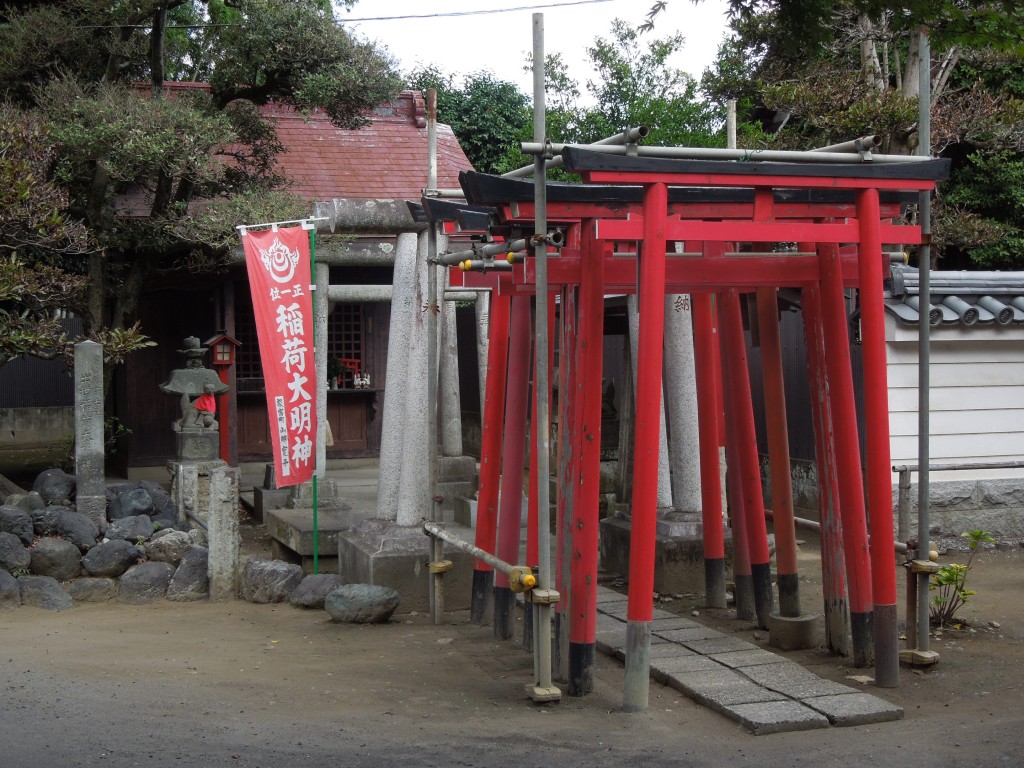
Inari Shrine in the Shingon Temple of Banna-ji


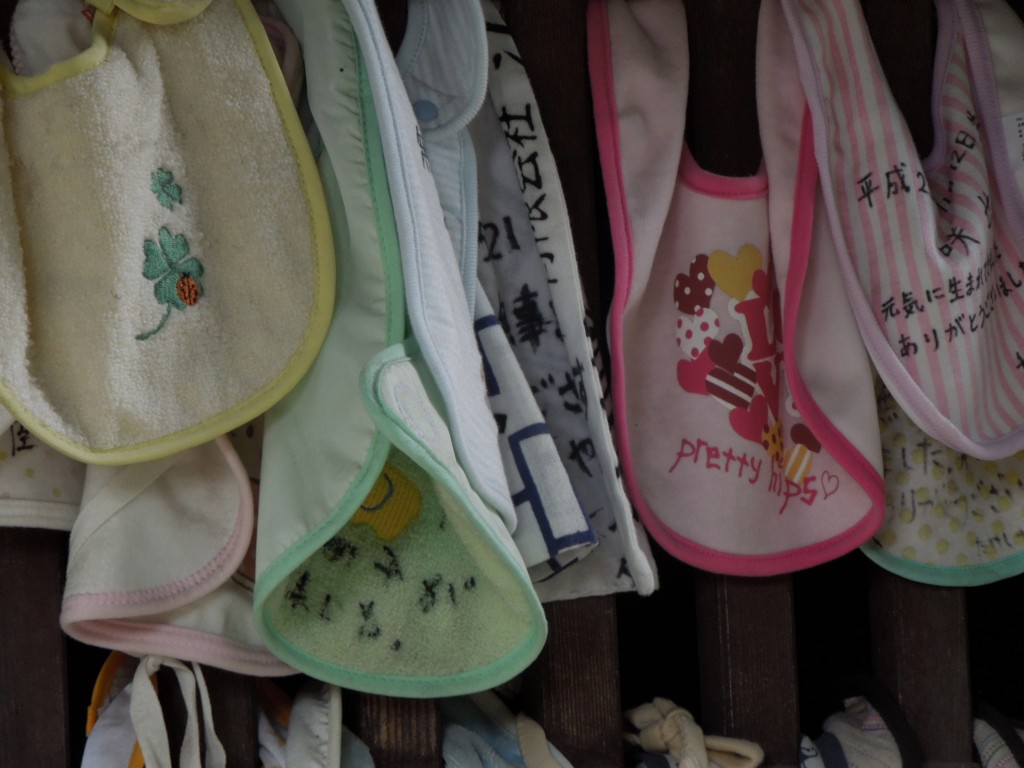
The Shingon temple of Banna-ji seems to have taken on many of the traditional aspects of Shinto, such as a sacred tree, ema tablets, a shrine to Daikoku, and here prayers for a good birth. Bib offerings are placed in gratitude for prayers answered – including one in English proclaiming saucily 'Pretty hips'.

The allure of rock

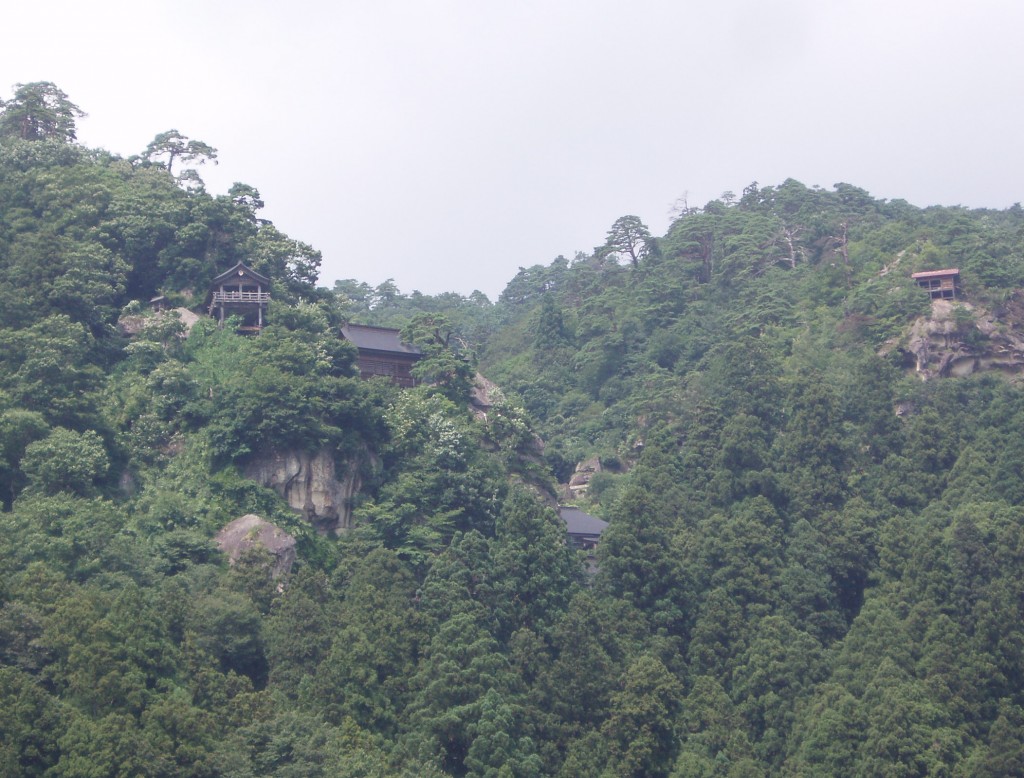
The cliff-hugging Yamadera in Yamagata Prefecture


What is it about rock temples?  Some of the most stunning spiritual sites are those that perch on cliffsides in China and Burma.  Tohoku too boasts the wonderful Yamadera.  And on my recent World Heritage trip to the Deep North,  I was delighted to come across two more little treasures set in rock.

One of the discoveries was the Takkoku no Iwaya, outside Hiraizumi in Iwate Prefecture.  The other was Oya Temple, near Utsunomiya which is the gateway to Nikko.  Both reflect the mountain yearnings of esoteric Buddhism; both are embedded in the spirit of rock; and both are deeply syncretic.

Shinto of course has a close connection with rock.  Its gods arrive by rock-boats; kami manifest in large boulders; and Amaterasu withdrew into a cave when she fell out with her sibling Susanoo.  Some of my favourite shrines are set near cliffsides and honour large rocks as the ‘body-spirit’ (goshintai) of their kami.  You could say indeed that Japanese religions are no less built upon rock than Judaism and Christianity!

A Tendai temple

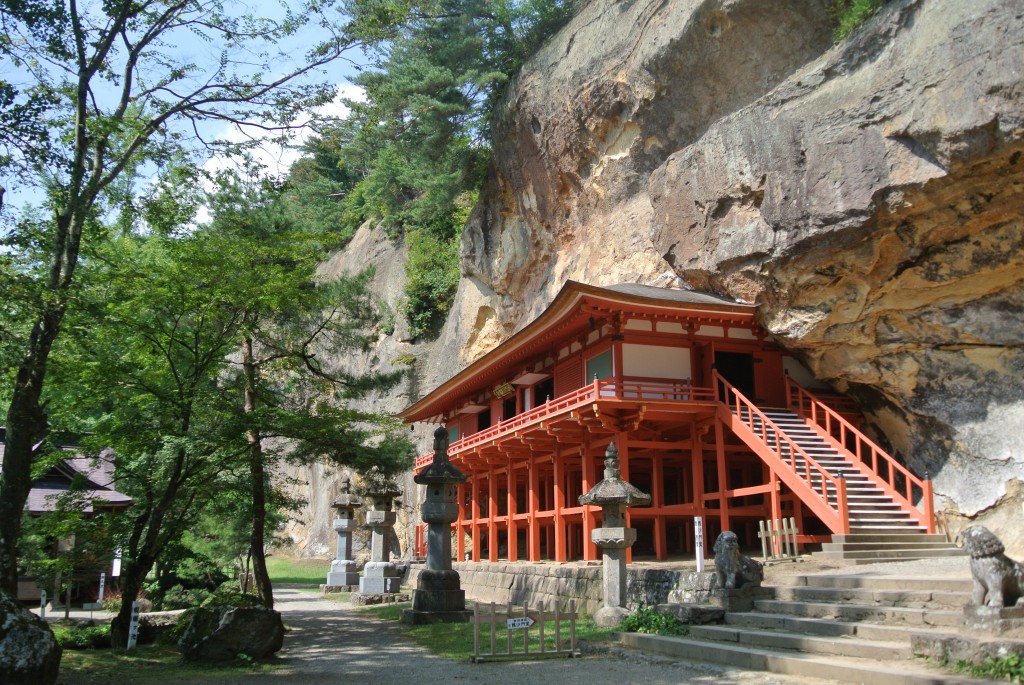
Rock-cliff temple near Hiraizumi, Iwate Prefecture


Cliff face at Takkoku

The Tendai temple of Takkoku no Iwaya (pictured above) was established after the military leader Sakanoue no Tamuramaro claimed the area in 801 on the orders of Emperor Kammu to subdue the ‘northern barbarians’.  He gave thanks by having a hall dedicated to Bishamonten (deity of conflicts).  It was modeled on Kiyomizu-dera Temple in Kyoto, and being a long-term citizen of the ancient capital I’m always pleased to find echoes of the city in far-flung parts of the country.

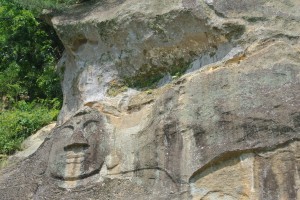
A Buddhist image (see left) was carved on the rock beside the hall, as if the cliff itself has grown a face.  Temple and mountain, human and nature, seem here perfectly complementary.  In the main hall stands the imposing figure of Bishamonten.  As one of the Seven Lucky Gods, the deity is a well-known figure in Shinto shrines where he and his colleagues often show up in a Lucky Treasure Boat.  Buddha or kami?  For Tamuramaro, perhaps it spanned the divide.

A Shingon Temple

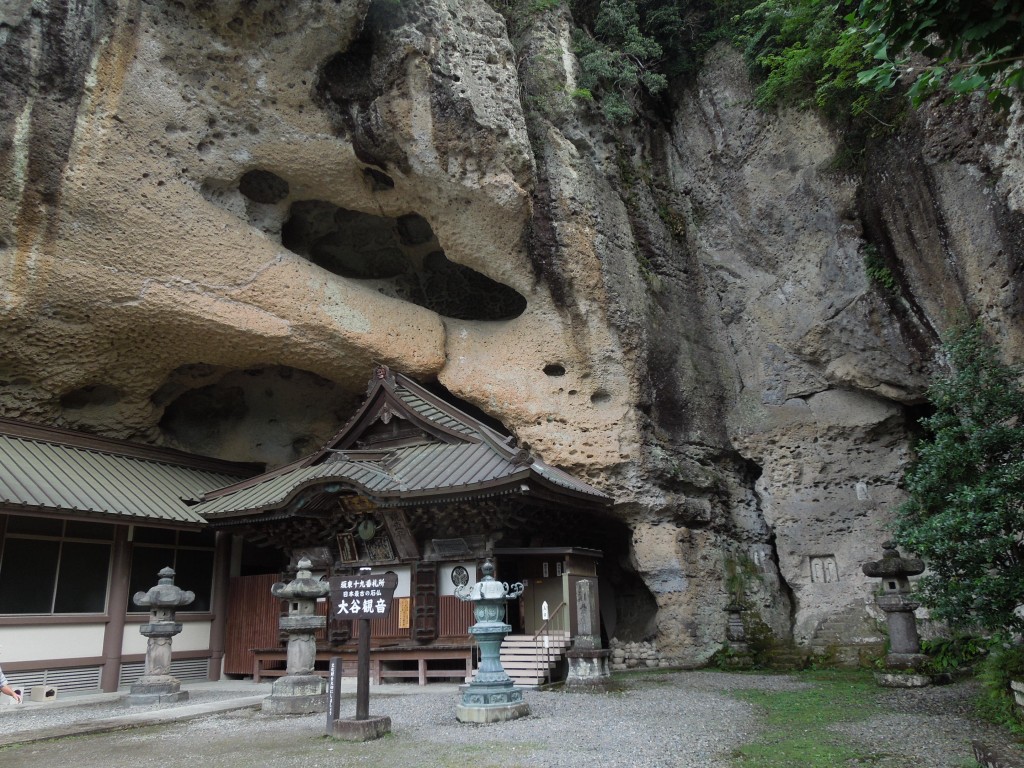
Oya Temple, outside Utsunomiya


Oya Temple also claims a ninth-century foundation, in this case by the legendary Kukai (also known as Kobo Daishi).  That shows it belongs to the Shingon sect, said to be the closest in Japan to tantric Buddhism.  Its cosmos is filled with numerous Buddhas, some of which are carved out of the cliff-face in which the temple is set.  Recent work has shown the site to have Jomon remains, dating back as far as 10,000 years.

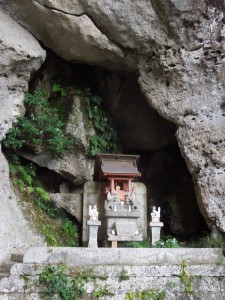
Inari shrine guards over Oya Temple

The cliff setting has resulted in a closeness to nature and awareness of its numinous power, made manifest in a protective shrine to Inari which guards over the temple.  Shinto is said to be a religion of awe, and there is definitely something awe-inspiring about the surrounding setting and sculpted artwork at Oya.

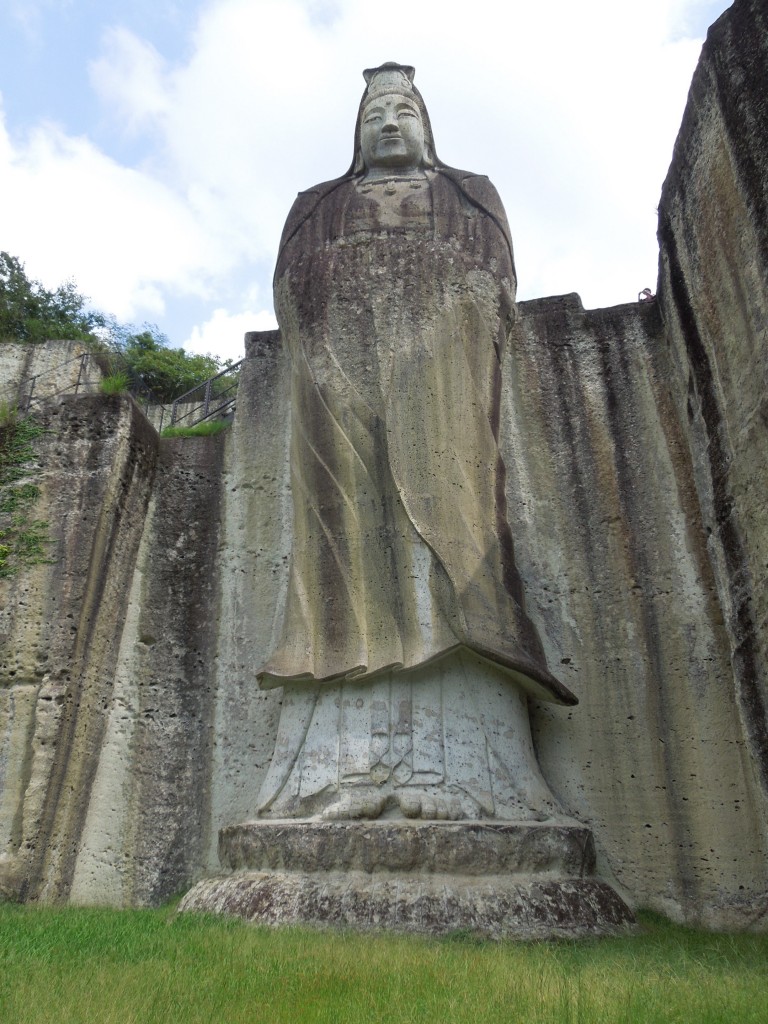
The awesomeness is nowhere more apparent than in the massive Heiwa Kannon which was carved by hand out of the nearby rocks from 1948-54.  It remains the largest stone Buddha in Japan. Dedicated to the war dead, it also serves to draw visitors to the area, as the nearby coach park attests.

Religious devotion or tourist attraction?  The two have long gone hand-in-hand in Japan, since the erection of the Great Buddha of Nara in 751 if not before.  Hachiman was brought from Usa in Kyushu to act as protective guardian at Nara.  Here at Oya, Inari fulfills a similar function.

One type of deity (buddha) is represented in rock; the other (kami) is invisible but manifest in rock.  Despite the best endeavours of the Meiji ideologues to separate Shinto and Buddhism for nationalist ends, the interconnectedness of the two faiths is set in the rock of ages.  Complementary and symbiotic, the natural syncretism of Japan continues to find its greatest expression in the rhythms of rock.


The Heiwa Kannon, largest stone buddha in Japan at 27 meters tall


Imperial Household Law

The peculiarities of the Imperial Household Law are highlighted in the article below, which explains the latest developments concerning the lack of males in the emperor’s family. The present laws are nothing to do with antiquity, but were drawn up after the Meiji Constitution and amended thereafter. With the heir to the throne only having a single female child, there had been discussions about what should happen to secure a male successor despite the historical precedent for reigning empresses.  Discussion stopped once the younger brother of the heir produced a son.  Yet bizarrely, the present Constitution guarantees equality under the law.
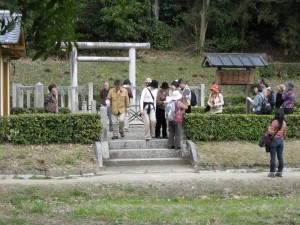
Hashihaka grave near Sakurai in Nara prefecture, possible burial site of the third-century Empress Himiko

What’s all this got to do with Shinto, one might ask? Well, it has little to do with groundroots activities, but the emperor is viewed as head priest of the religion as a whole because he is descended from Amaterasu, the sun goddess.  The country’s premier Shinto shrine at Ise enshrines the imperial family’s ancestral spirit.   “Shinto’s ideal form of state is one in which the emperor reigns while all kami, with Amaterasu at the center, are the object of ritual and worship,” states the Kokugakuin Encyclopedia of Shinto.

Although the emperor renounced his divinity at the end of WW2, he is still referred to as the 125th in line from Amaterasu and at his enthronement participates in a religious rite called the daijosai in which he communes with her spirit.

Given the rediscovery of the Goddess principle in the West, and the greater awareness in recent times of the role of the miko (female medium) in ancient Japan, one might have thought that if the imperial system was going to be retained, the time was long overdue for the return of a reigning empress.  Himiko is dead; long live Himiko!

**********************************************************************

Friday, Oct. 5, 2012 Japan Times

New concept of Imperial female branches mulled
Kyodo

The government proposed on Friday enabling female members of the Imperial family to establish their own Imperial branches after marriage to commoners, amid concern over the falling number of royal household members. The establishment of female Imperial branches “should be considered” only for daughters and granddaughters of emperors, the government proposal says.

The Imperial Household Law requires female members of the Imperial family to relinquish their Imperial status after marriage to commoners. Among the 21 Imperial family members under Emperor Akihito are eight unmarried females, including Princess Aiko, 10, the daughter of Crown Prince Naruhito and Crown Princess Masako, and Prince Akishino’s two daughters, Princess Mako, 20, and Princess Kako, 17. The three princesses would be subject to the new system if it is created.
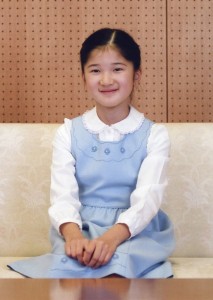
Princess Aiko, reportedly bullied at school, may have cause to smile at the prospect of starting her own branch of the imperial family (REUTERS/Imperial Household Agency of Japan)

The proposal, which clarifies points for upcoming discussions concerning the status of female Imperial family members, also lists both ideas to give and not to give Imperial status to the husband and children of a princess who establishes her own Imperial branch. It says the idea of retaining the title of princess after marriage to allow them to engage in Imperial activities “would be difficult to implement” in light of the Constitution, which guarantees equality under the law.

The proposal mentions an idea to give such female Imperial family members status as national public servants to remain involved in royal activities. In creating a new system, the proposal says the government would make sure that opinions of the female Imperial family members will be reflected and that the system would not be an obstacle for their marriage.

The government will take public comments on the proposal over a period of about two months with the aim of mapping out a draft amendment to the Imperial Household Law and submitting it to the Diet next year, Chief Cabinet Secretary Osamu Fujimura said. The matter has come into focus due to concern the Imperial family may not be able to maintain its activities in a stable manner given the large number of female compared with male members.

The proposal drew positive responses from the Imperial Household Agency. An agency official said it was “significant” that the government listed the points of discussion as a way to deal with the decreasing number of Imperial members. Another official expressed hope that discussions over the matter “would move forward” after the government gathers opinions from the public.

But some other officials pointed to the uncertain outlook over creation of the new system. “It may be difficult to decide on one direction concerning the Imperial Household Law as there are a variety of opinions,” one said.
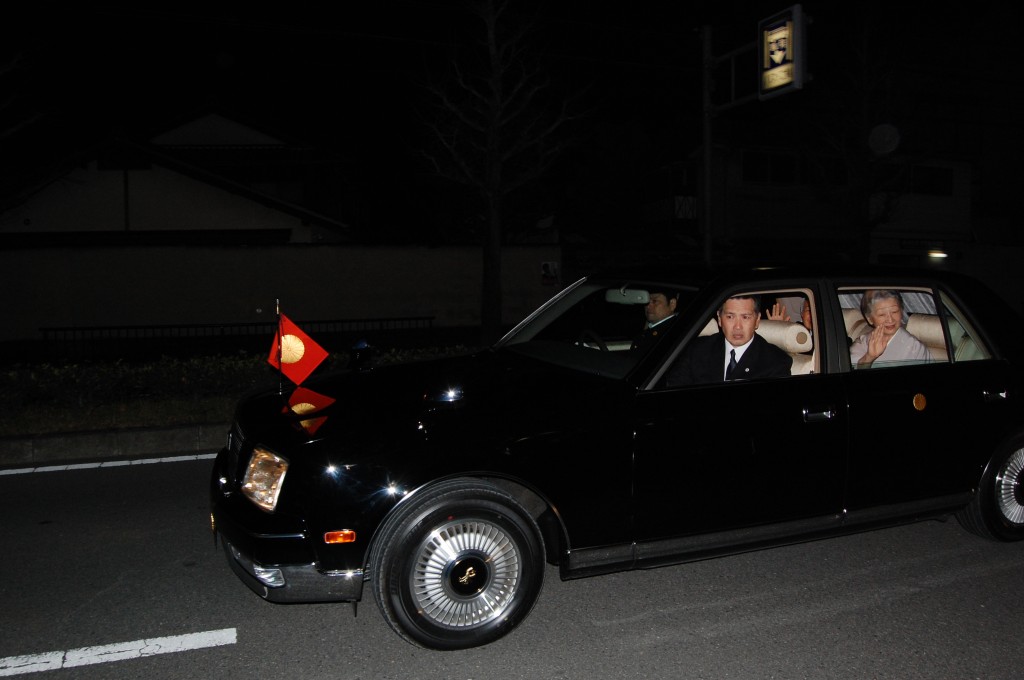
The present wife of the emperor, Empress Michiko, on a visit to Kyoto. She was from a Catholic family and became the first commoner in history to marry into the imperial family (prior to that Mishima apparently considered marrying her.)

« Older posts Newer posts »

© 2026 Green Shinto

Theme by Anders NorénUp ↑