Author: John D. (Page 161 of 202)

Spirituality on the rise

The Japan Times carries an editorial today suggesting that Japan’s postwar obsession with material prosperity may have passed over into a greater concern with spirituality….

(The full editorial can be seen here.)
 

*****************************************************************
Sunday, Sep. 30, 2012

Spirituality on the rise

Is Japan a spiritual-oriented or materialistic society? The answer is definitively spiritual, according to the most recent national livelihood survey by the Cabinet Office. The highest percentage of Japanese ever — 64 percent — said they are now placing priority on “spiritual fulfillment” rather than “material richness.”

The survey also found the lowest percentage ever, 30.1 percent, pursuing wealth as their main priority in life. The percentage of those pursuing spiritual matters has led the annual survey since 1979. However, the relative difference between spiritual and material values reached its highest gap this year.

Watching the tragic destruction caused by the Great East Japan Earthquake in 2011 surely changed many people’s life priorities. The sustained economic downturn has also shown many people, whether they wanted to see it or not, that they can enjoy their lives with less money than they once imagined.

The turn away from affluence showed up in another result of the survey. According to 66.5 percent of people, what is most in need of improvement in Japan is the economy. That doesn’t necessarily mean they seek affluence. The ideal of the Japanese economic miracle is receding even further into the past, replaced by the realities of the current economic situation. People do not want to get rich; they want the economy to function.

The ongoing trend in Japanese life also involves a revaluation of lifestyle issues. More of those surveyed, 37.7 percent, said they preferred pursuing leisure and recreational activities, rather than a higher income (33.3 percent). Personal fulfillment and human relations have begun to receive greater attention and concern.

Unfortunately, government policy and foreign relations do not always reflect this national mood. It is not that the government should interfere in spiritual matters, much less promote them, but the economic engines should not be repaired simply to pump up the level of affluence, but to allow people to get on with their other interests.

The survey indicates that people now have concerns that go past the limits of material acquisitiveness.


Kyudo and Shinto

Ted Taylor has kindly written in to point out an exceptional video made available by Empty Mind films, who produce high-quality films of Asian spirituality.  Their stunning youtube video is just 3.38 minutes long.  Here is the company’s introduction to the subject:

**********************************************************************************

Text by Empty Mind (The Martial Arts of China, Japan and India)

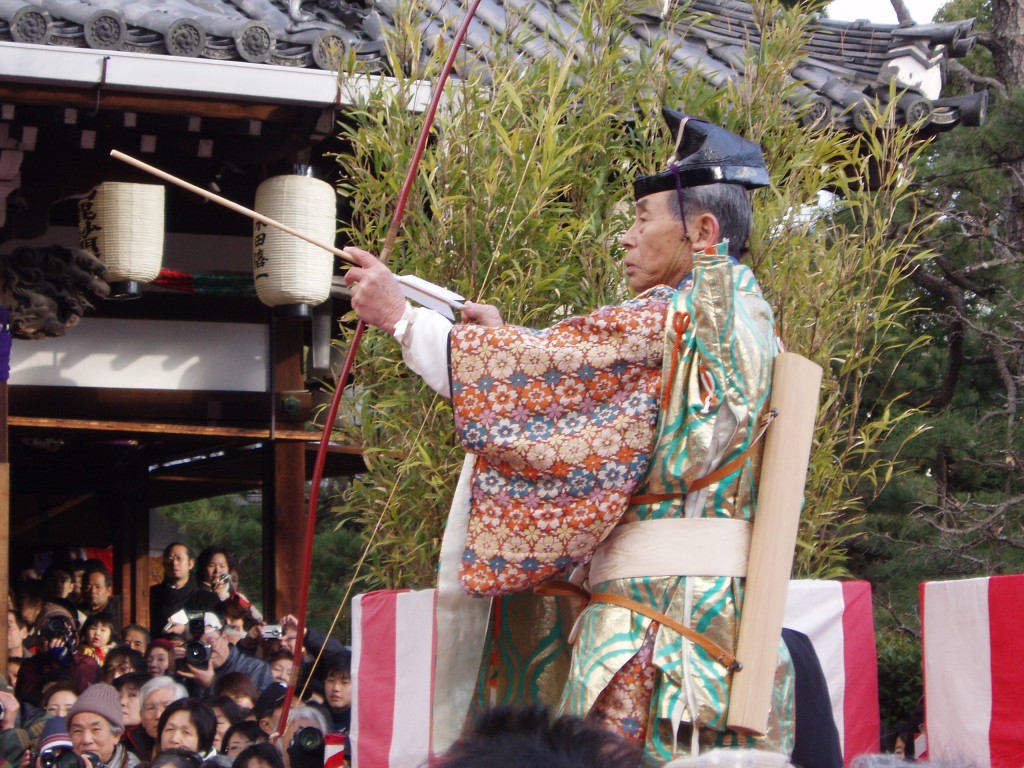
We have just uploaded a new video on Youtube featuring the use of Kyudo or Japanese archery in a Shinto ritual Since ancient times the bow has been revered as a sacred instrument. It is believed to have the power to destroy evil, cleanse the spirit and to bestow magical powers. The bow has been used by shamans throughout the world as an instrument of power and weapon against the forces of evil. In Japan the bow has also long been considered to be the ultimate weapon of warriorship and its mastery was the highest achievement of the Samurai warrior. In the Shinto and Buddhist traditions the bow is used to protect, purify, remove obstacles and attract good fortune.

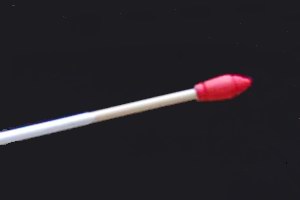
Whistling arrow (courtesy of K. Komatsu)

Kyudo has been used in Buddhist and Shinto rituals of purification. (For example- Shihobarai– the Purification of the Four Directions) and small bows have been placed in shrines and people’s homes for protection against the forces of evil and for purification. They are also believed to have the ability to attract vast good fortune. Hama-yumi replicas are scale versions of a Japanese Bow coated with urushi, wrapped in fine rattan and accented in gold leaf. They are displayed in a stand along with two arrows tipped with traditional warrior tips, one representing male and the other female.

The bow and arrow is used in a number of ceremonies that are dedicated to the Shinto gods of the heavens, the Amatsukami, and the gods of the land, Kunitsukami. This video is the Kabura-ya or whistling arrow, where a Shinto priest shoots the arrow over the entrance roof of the temple. The arrow makes a high pitch whistle sound as it flies through the air to ward off evil spirits. The entire ceremony lasts more than one hour.

Purifying the four directions at Setsubun

Sumo at Meiji Shrine

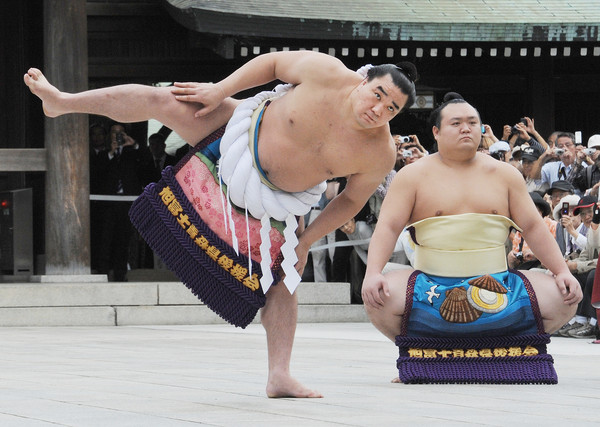
( AFP/Getty Images / September 28, 2012 ) Accompanied by sumo wrestler Takarafuji (R), new yokozuna, or grand champion, Harumafuji performs the ceremonial entrance into the ring at Meiji Shrine in Tokyo, Japan. The Mongolian sumo wrestler was promoted to the highest rank 'yokozuna.'


Yesterday there was a sumo ceremony at Meiji Shrine in Tokyo watched by 3000 people to celebrate the award of the top rank of yokozuna to the Mongolian wrestler, Harumafuji.  The award means that the two top-ranking sumo wrestlers are now both Mongolian. Considering the links of sumo and Shinto, and of continental influences on early Shinto. this is a most interesting development.

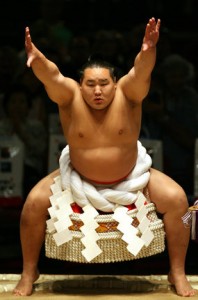
Asashoryu (courtesy of lami japan)

Sumo and Shinto have a long and close history. The wrestling started as an entertainment put on before the kami, or ‘august dignitaries’.  Many of the customs, such as purifying the ring with salt, attest to traditional Shinto practice.  A rice rope and shide paper strips adorn the Mongolian wrestler in the picture above.

Since its foundation, Meiji Shrine has been associated with sumo ceremonies.  The shrine was started in 1915 and completed in 1920 for Emperor Meiji and Empress Shoken (who died respectively in 1912 and 1914). The highest ranked sumo wrestlers dedicate the shrine every January.

Concerning the origins of sumo, the Kokugakuin encyclopedia has this to say…

In China, there existed from before the Former Han dynasty (202 B.C.E.–8 C.E.) a kind of wrestling resembling sumō that belonged to the miscellaneous arts of sangaku. Some of these arts entered Japan … That competitions were decided through sumō wrestling in ancient Japan can be inferred from the existence of Kofun-period haniwa clay figures representing wrestlers, as well as from myths and legends, such as that of the test of strength between the kami Takemikazuchi and Takeminakata, recorded in the Kojiki (712), or the wrestling match between Taima-no-Kuehaya of Yamato and Nomi-no-Sukune of Izumo on the seventh day of the seventh month in the seventh year of the reign of Emperor Suinin, as recorded in the Nihon shoki (720).

Sumō wrestling bouts were also held as divination rites at New Year’s to predict the outcome of the coming agricultural season. The Nihon shoki records that in the seventh month of 642, “strongman wrestling” was held on the occasion of a visit to Japan by an envoy from the Paekche kingdom. This is the first piece of historical evidence available for sumō. During the Nara period (710-784), sumō established itself as a court event.

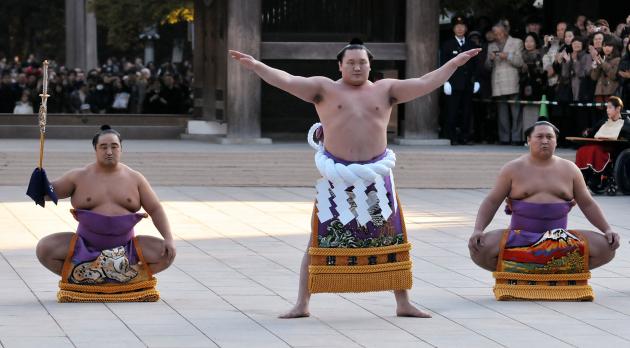
Mongolian grand sumo champion Yokozuna Hakuho performs the “ring entering ceremony” during a dedication at Meiji Shrine, Tokyo, Japan, on January 6, 2012.  {Photo UPI/Keizo Mori}

*****************************************************************************************************

For a full report of the ring-entering ceremony at Meiji Shrine by Harumafuji, please see here.

Nikko: Futarasan Shrine

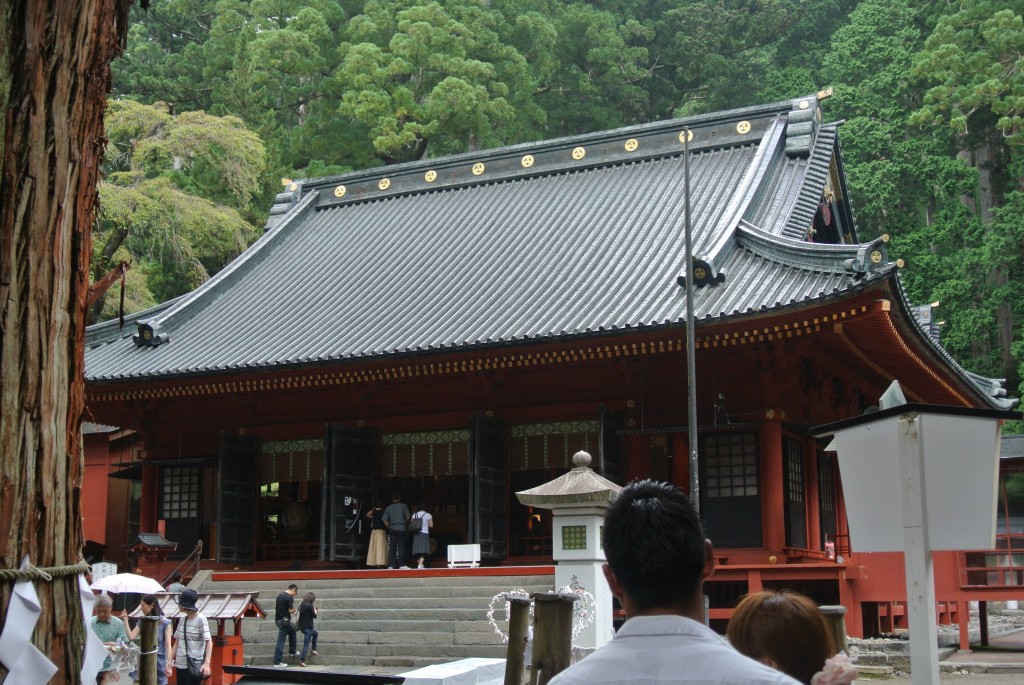
View of the Futarasan honden, built in 1619


Futarasan Shrine is part of the complex, along with Toshogu shrine and Rinno-ji temple, that makes up the World Heritage Site of Nikko. it was founded in 767 by a monk called Shodo Shonin and dedicated to three Izumo kami, principally Okuninushi (also known as Onamuchi).

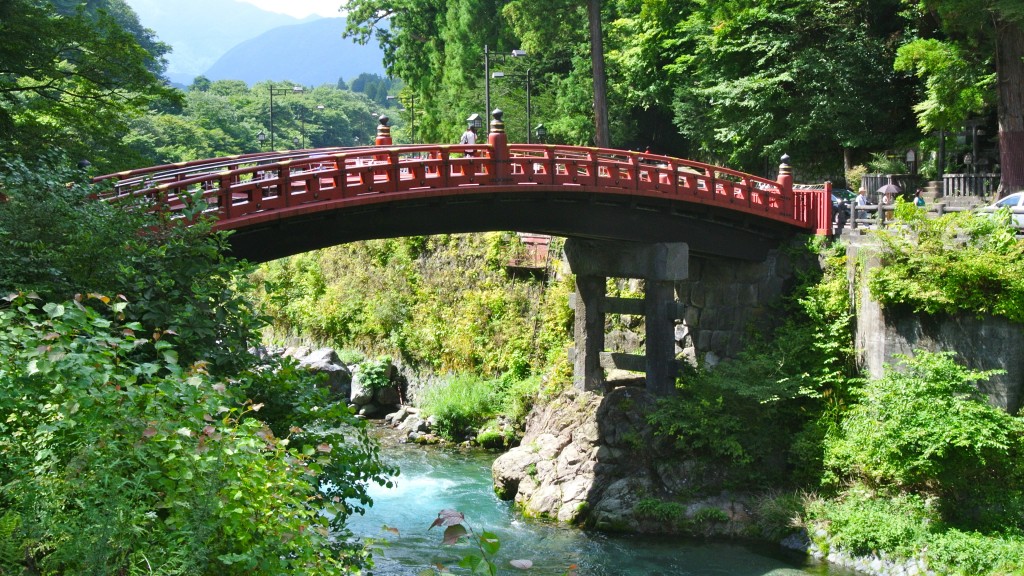
The traditional approach to the shrine was over the Shinkyo Bridge, to which an interesting legend is attached. According to Joseph Cali in his book Shinto Shrines, when Shodo Shonin prayed for help to cross the River Daiya, the water god Jinja Daio appeared and tossed two great snakes across the water, forming a bridge over which the monk was able to pass.

A bridge formed by two snakes, according to legend


Mount Nantai constitutes Futarasan Shrine’s main go-shintai (sacred body), with two other mountains playing a similar role for the two other enshrined kami. Interestingly, Nantai (男体?) means “man’s body”, as if to suggest that it is the physical manifestation of a spirit. Wikipedia notes that “The mountain not only provides water to the rice paddies below, but has the shape of the phallic stone rods found in pre-agricultural Jōmon sites.”

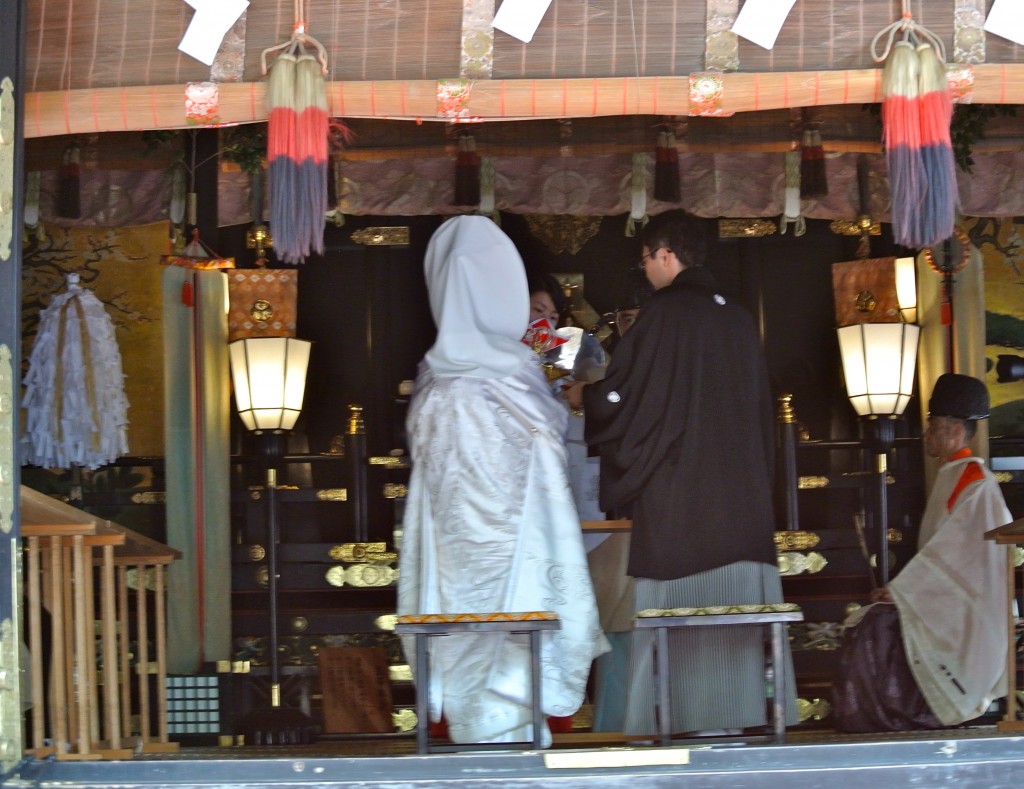
The main building is the Honden, built in 1619. ‘It is a magnificent structure,’ comments Cali, noting ‘the complex roof of black-lacquered copper tiles and lots of gold trim’. There happened to be a wedding there when I visited, and the open-sided aspect allowed visitors to share in the joyful occasion.

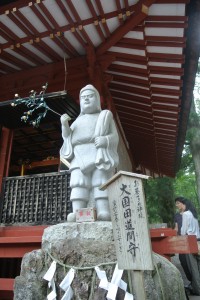
Because the Chinese characters for Okuni can also be read as Daikoku, one of the Seven Lucky Gods, there is a Daikoku hall at the shrine full of sculptures of the colourful character.

Daikoku in front of the Daikoku Hall

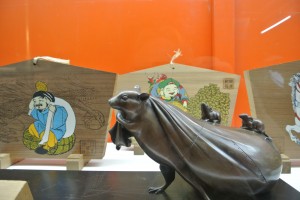
Okuninushi's familiar is a mouse, hence also Daikoku's

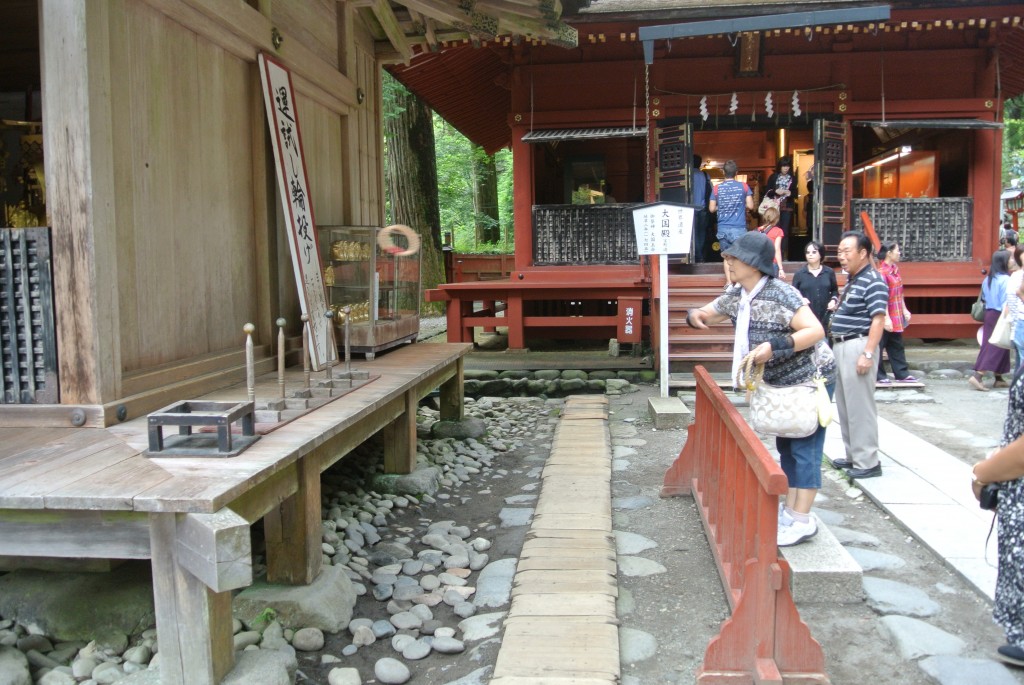
There are also some unique fortune-telling features outside. One consists of throwing a ring onto a row of sticks. ‘Just one successful throw will predict good luck,’ says the accompanying sign. One woman I saw got all three rings onto the sticks, so she sure is going to have a lucky year. Another fortune telling device consisted of plastic sushi in a circular drum, which was spun round. One’s fortune depended on which sushi piece ended up closest to the line.

Ring-throwing for good fortune


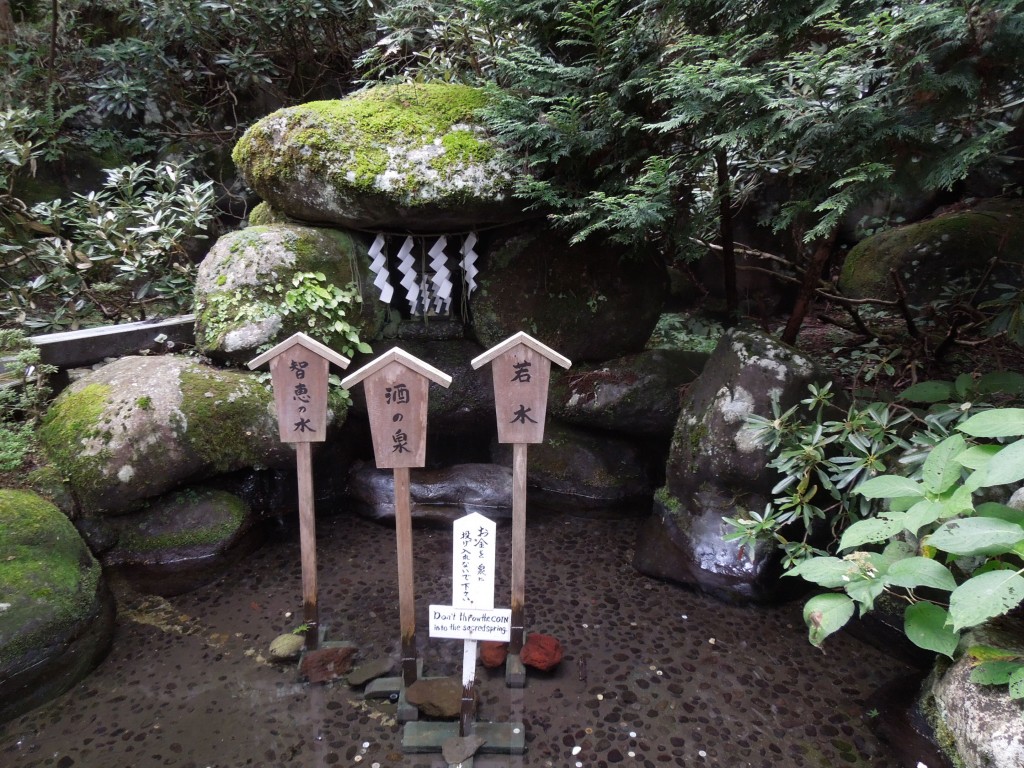
In the precincts was a pleasant pool of spring water, with a sign asking people not to throw coins into it. No doubt the custom stems from European wishing-wells, though I wondered why the shrine authorities should object so much. Perhaps it stemmed from the polluting nature of money being tossed into clear spring water, though in ancient Japan it was common practice to make offerings of mirrors and other objects in sacred pools. Later in the afternoon, watching a miko going around collecting money offerings from all the prayer spots at the various shrines (about a dozen in all), it occurred to me there may be a more practical reason. It simply wasn’t convenient to collect the money from the pool.

No coins, please, in the sacred spring

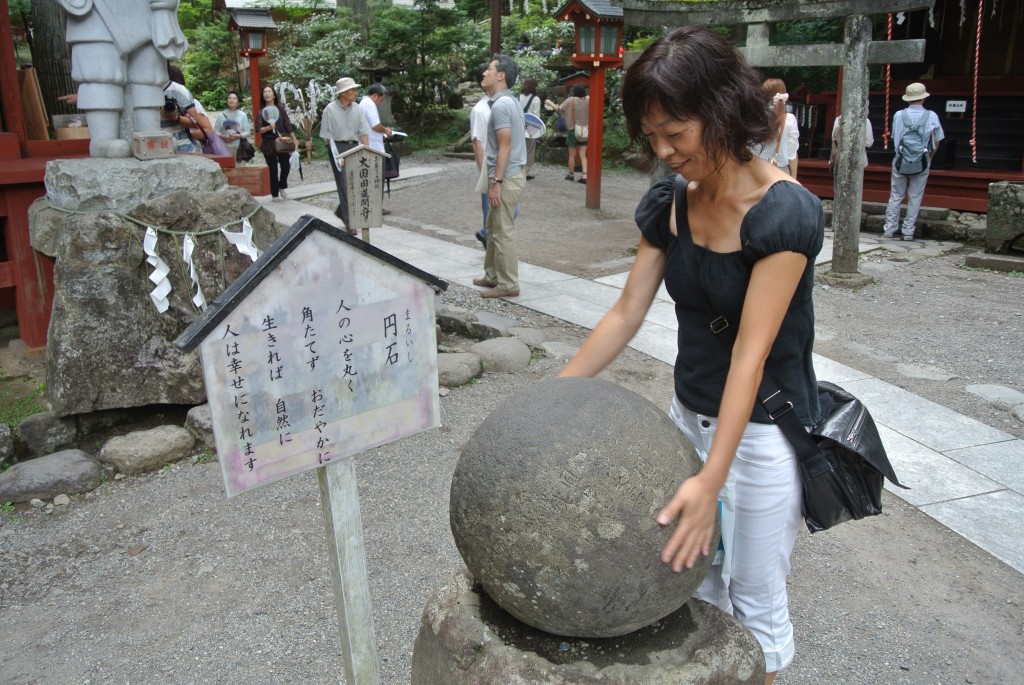
If your heart is as smooth and round as this stone, you will have a good life

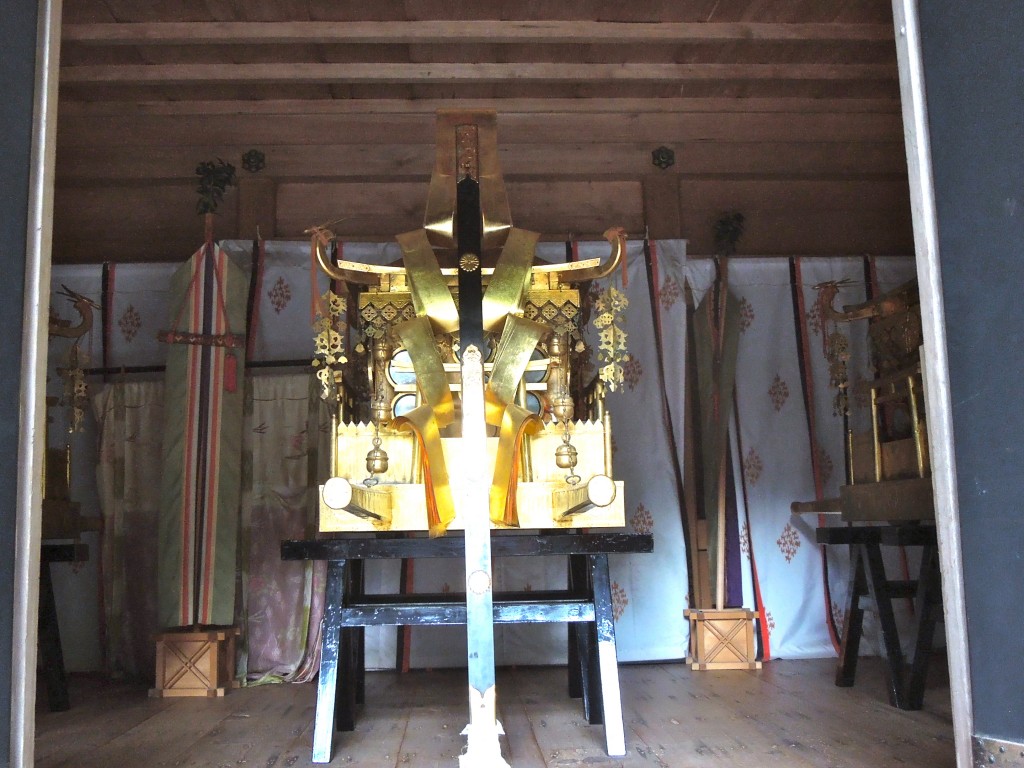
A golden mikoshi for Okuninushi

Futarayama Shrine, Utsunomiya

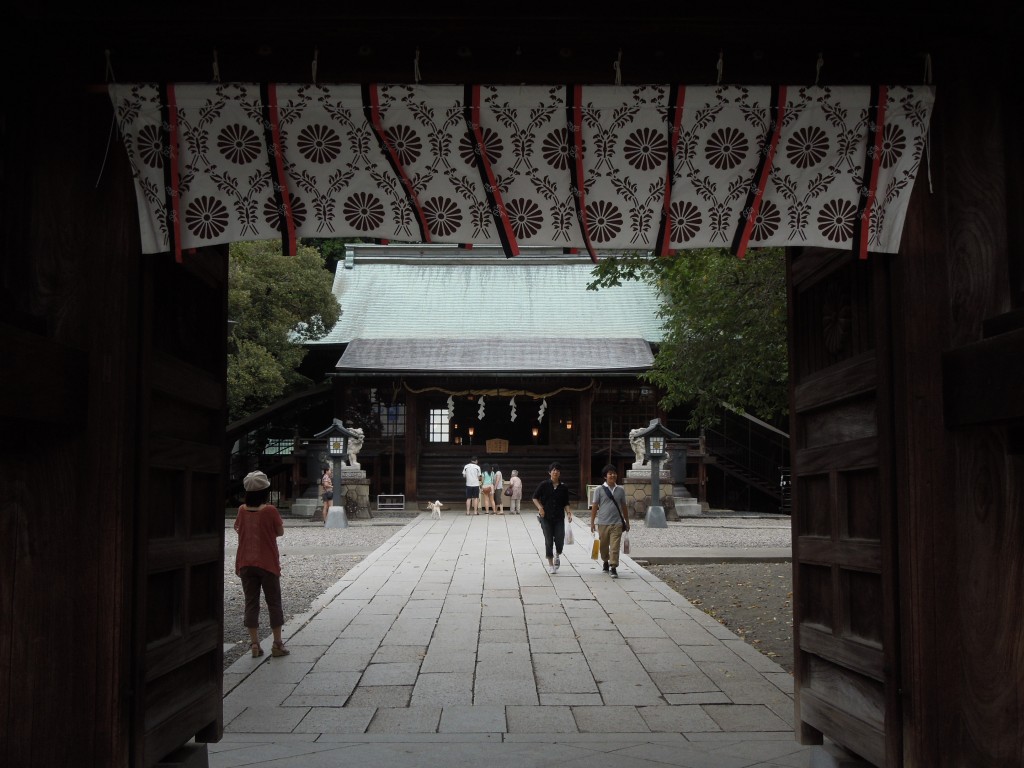
Entrance to Futarayama Shrine

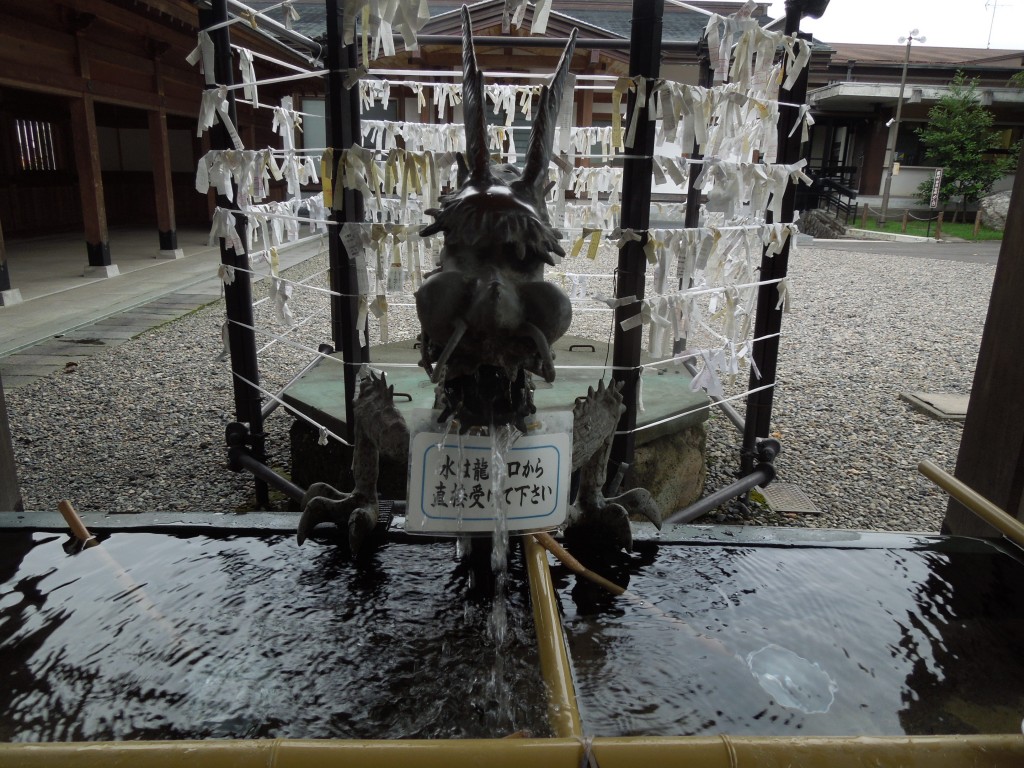
Water basin and fortune slips - two staples of the Shinto shrine


Perhaps the first thing to say about Futaryama Shrine is that it’s not related to its more famous neighbour Futarasan Shrine in nearby Nikko.  One is written 二荒山; the other is written 二荒山.  Spot the difference?

My immediate thought was that there must be some odd connection between them.  ‘There are some theories about that,’ the miko told me.  ‘But the shrines are quite separate.  Futarayama is called Two Hills because there were two hills here.’  One might presume Futarasan was named for just the same reason, though in his book Shinto Shrines Joseph Cali speculates that the name derives from Fudarakusan, Japanese for the earthly paradise of the thousand-armed Kannon.

Shrine within a shrine: torii tunnel for the Inari subshrine

The shrine is associated with Prince Toyokiiri, a son of the legendary Emperor Sujin (possibly third or fourth century).  He was ordered by his father to the region to pacify the Ezo tribe (presumably Ainu), so like several other ancestral shrines in the Tohoku area, it owes its existence to the imperialising tendencies of the Yamato tribe.

Banner proclaiming the virtues of the ofuda - for Japanese


After the initial foundation, worship of Prince Toyokiiri was relocated to the present site in 828, and a commemorative ceremony is held every year in December and January.

The shrine has a number of treasures, including an iron-cast Komainu guardian dog. The present buildings only date from 1877, after the shrine burnt down for the fourth time in its history.  Nonetheless the grounds have a patina of age, though it’s by no means a must-see shrine – unless, like me, you happen to be stuck in Utsunomiya on the way to the World Heritage Site at Nikko…

One disconcerting thing from an internationalist perspective was a banner proudly proclaiming the virtues of the ‘ofuda‘ or talisman – for Japanese. ‘The ofuda is the heart and soul of a Japanese, and the mark of one’s hometown,’ it said. Despite being the ‘gateway to the World Heritage of Nikko’, Utsunomiya it seems prefers to keep a decidedly insular view of the transcendental.

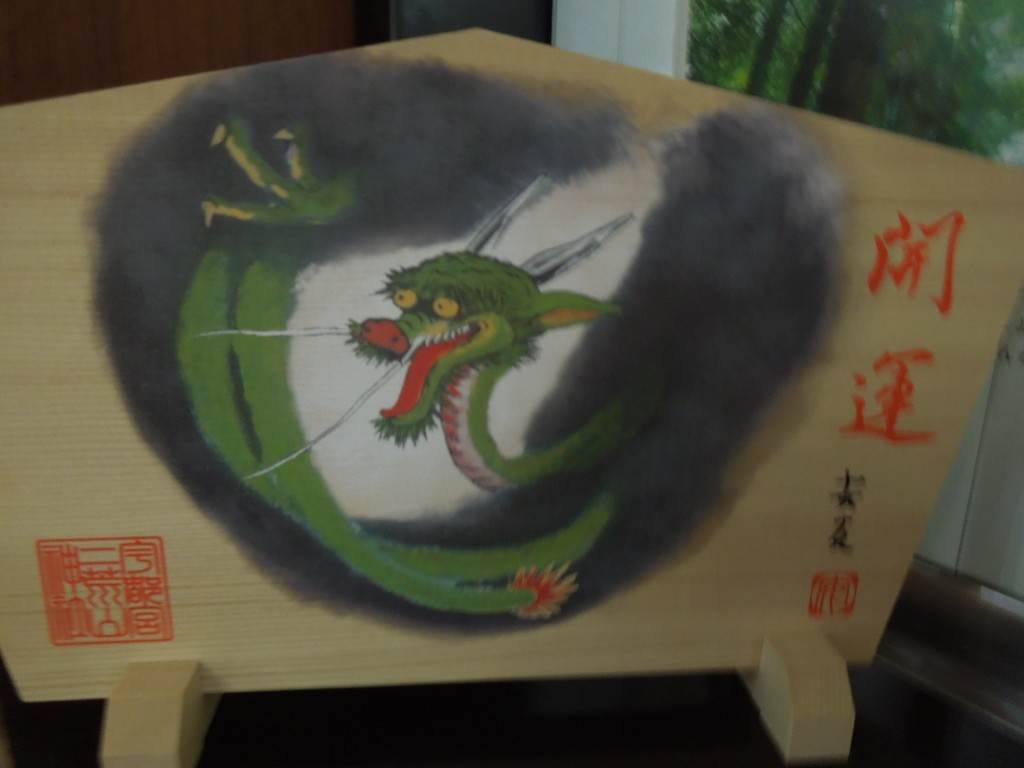
The shrine's ema bears a dragon, symbol for Japanese and non-Japanese alike

Nikko: Toshogu

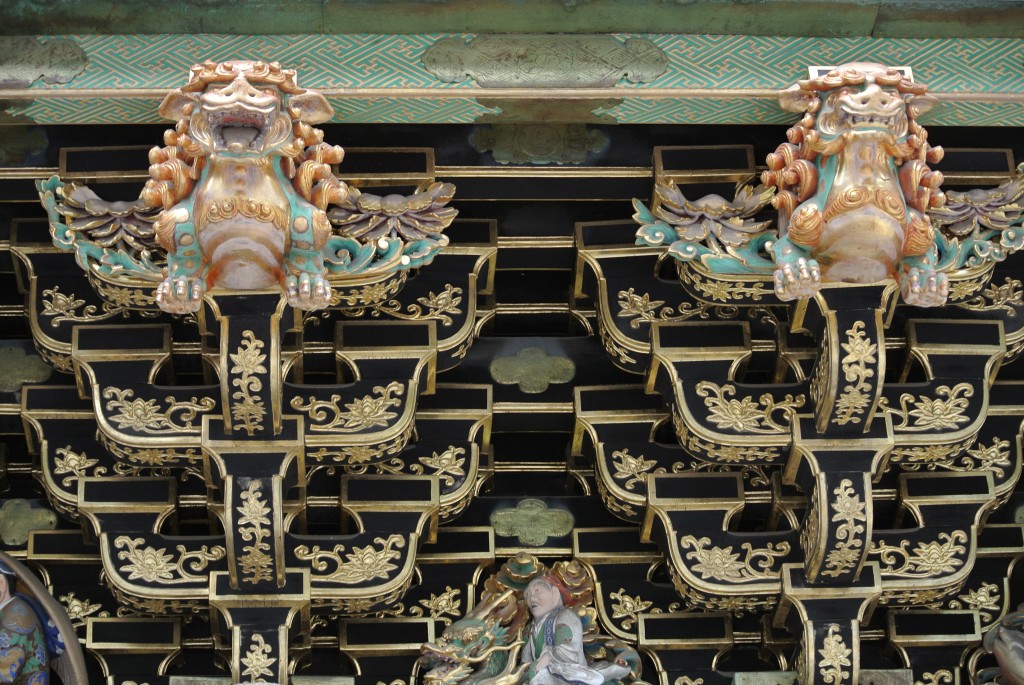
Polychromed detail at Toshogu Shrine


A syncretic mausoleum
As the centrepiece of Nikko, Toshogu is one of the most famed destinations in Japan. Ornate, colourful, elaborate, it acts as mausoleum for Tokugawa Ieyasu (1543-1616), founder of Japan’s most successful shogunate dynasty,.

Unfortunately for me, my visit happened to coincide with a holiday weekend, so that the shrine was overrun with daytrippers. On the other hand, I was fortunate to have with me the entry from Joseph Cali’s forthcoming book on Shinto Shrines. It not only provides a guide to the physical features, but explains the historical and spiritual background.

“The area is rightly famous for its natural beauty, and long before Ieyasu was enshrined at Toshogu, Nikko was an important center of shugendo mountain asceticism. The origin of the shrine-and-temple complex is the area around Mount Nantai. Together with Mounts Nyoho and Taro, it became one of the three holy mountains of Nikko.”

The original shrine and temple, founded in the eighth century, have evolved into the present-day Futarasan Jinja and Rinno-ji, which stand just next to Toshogu in the woods. Together the three institutions make up the World Heritage Site of Nikko. It’s a must-see for anyone visiting Japan.
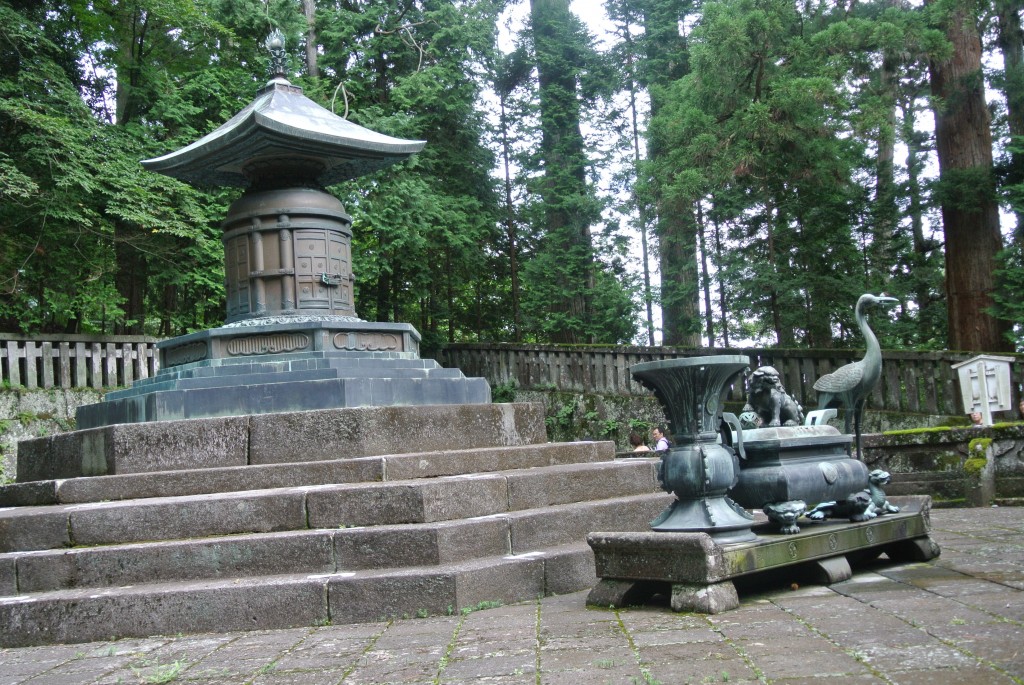
Ieyasu's grave, visited by climbing a few hundred steps


Deification of a shogun
Ieyasu’s wish to be enshrined here came at an interesting time in Japan’s religious development, as Cali makes clear. Yoshida Shinto was making an attempt at primacy by denigrating Buddhism as a foreign religion. But Tendai Buddhism based on Mt Hiei came up with a strong counter-theory….
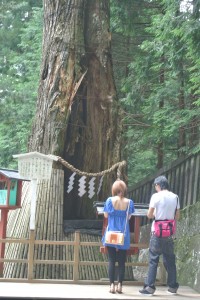
A wish-fulfilling tree at Ieyasu's grave

‘Around the time of Ieyasu’s death,’ writes Cali, ‘the monk Tenkai (1536-1643) devised the doctrine of Ichiijitsu Shinto…. According to this doctrine, Ieyasu is a manifestation of the Buddha in the form of Tosho Daigongen.’ [Gongen is an avatar, in this case a Shinto avatar of a deeper Buddhist reality.]

The first Japanese leader to be posthumously apotheosised was Toyotomi Hideyoshi (1536-98), at his own command. But with the defeat of his Toyotomi clan at the battle of Sekigahara in 1600, his cult soon fell into desuetude.  It was supplanted by the Great Avatar, Illumination of the East, as Ieyasu was posthumously titled ~ Toshu Daigongen.

Work started in earnest in 1634, with a small army of 15,000 people. Two years later, in time for the twentieth anniversary of Ieyasu’s death, the project was completed. Toshogu alone has 42 buildings, while Futarasan Jinja has 23 and Rinno-ji 16 (with a further 22 at the mausoleum of Ieyasu’s grandson, Iemitsu). ‘It represents the greatest expression of power and wealth of any group of structures in Japan,’ comments Cali.
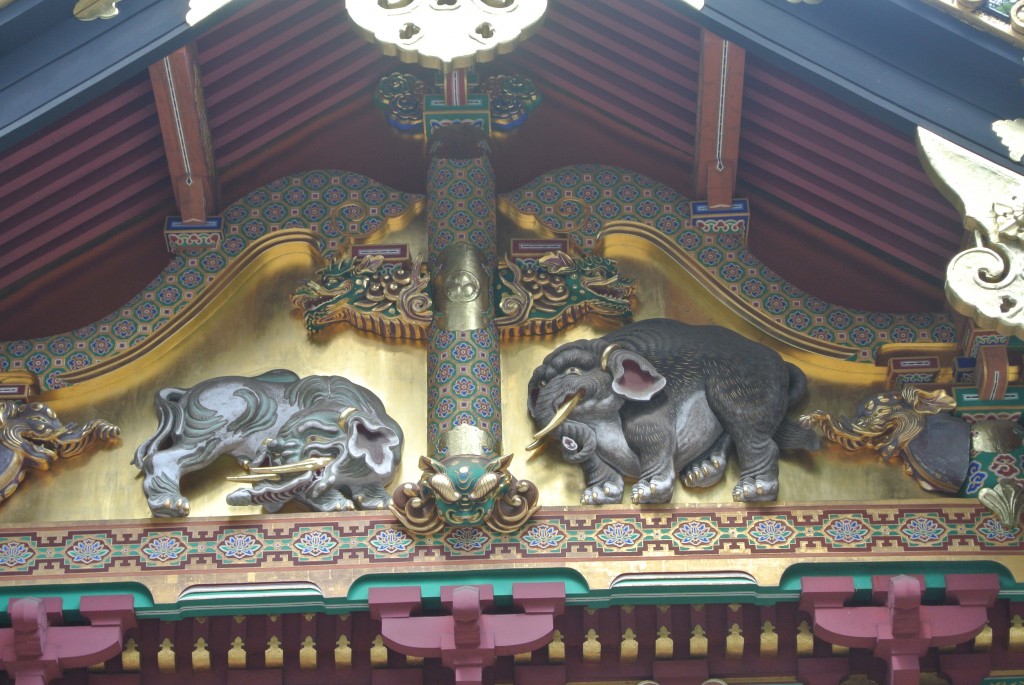
Real elephants or imaginary animals?


Meiji separation
In its desire to differentiate itself from Tokugawa Buddhism, the Meiji government of 1868 decided to artificially make Shinto into a distinct religion. At the syncretic complex of Nikko, they faced a hard task. The temple of Rinno-ji was physically relocated to enforce its separateness, but nonetheless some striking examples of syncretism remain, as Cali’s guide makes clear.

Inside the Shinto torii marking the approach to Toshogu stands a five-storey Buddhist pagoda. Both represent examples of Edo engineering skills. The torii has joints in its crossbeams to allow for movement in case of earthquakes, while the pagoda has a central pillar to provide stability (a feature deployed in the recently constructed Tokyo Skytree, tallest tower in the world and second only in height to Dubai’s Burj Khalifa).
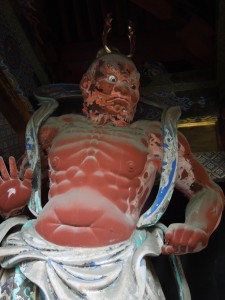
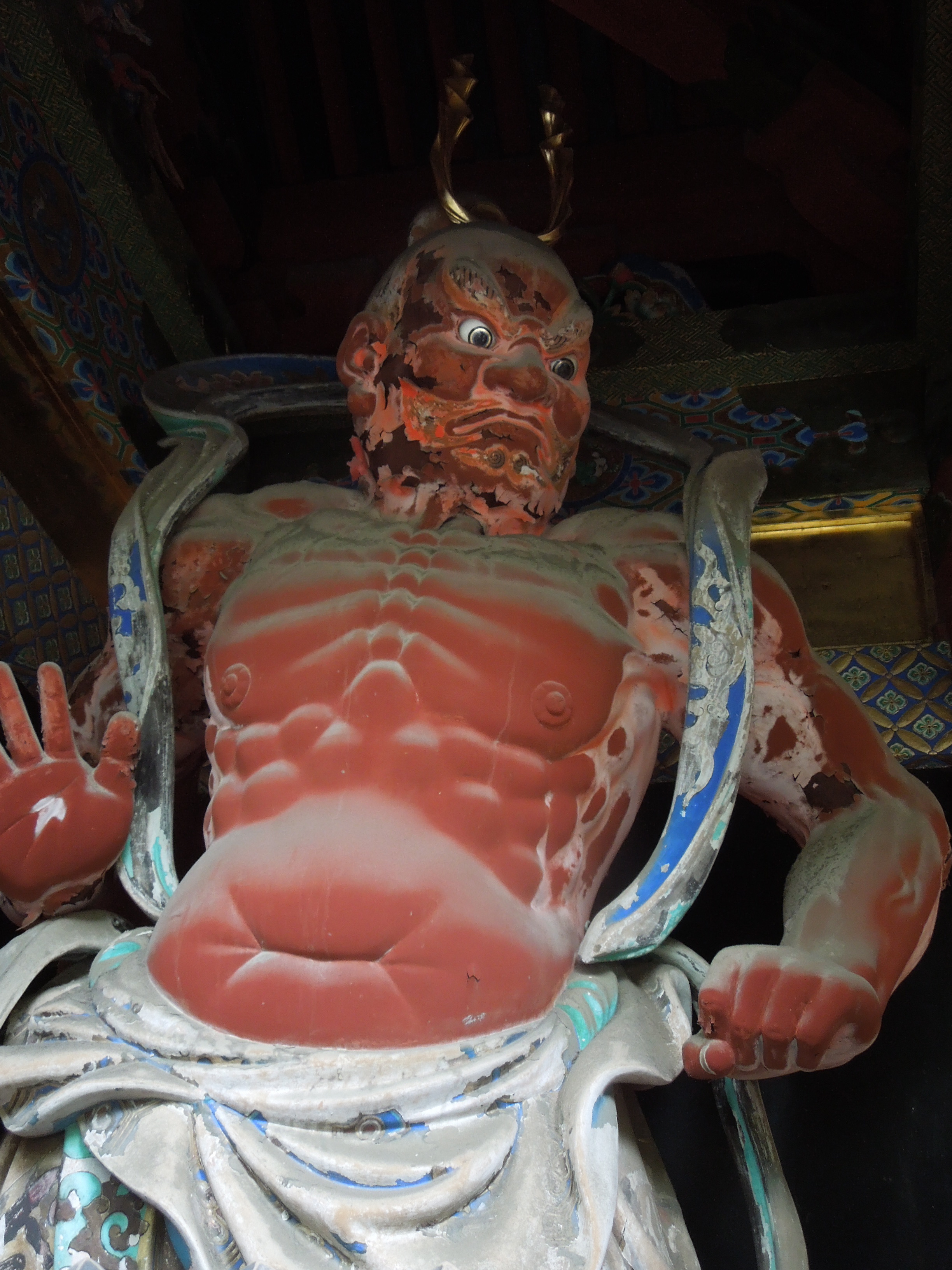
A fearsome Nio guards the gateway

At the entrance to Toshogu is another striking example of syncretism.  In place of the usual guardians is a Niomon gate housing the two terrifying figures that guard Buddhist temples. Cali tells us that these were removed to Rinno-ji by the Meiji government, but intriguingly made their way back here in 1897.

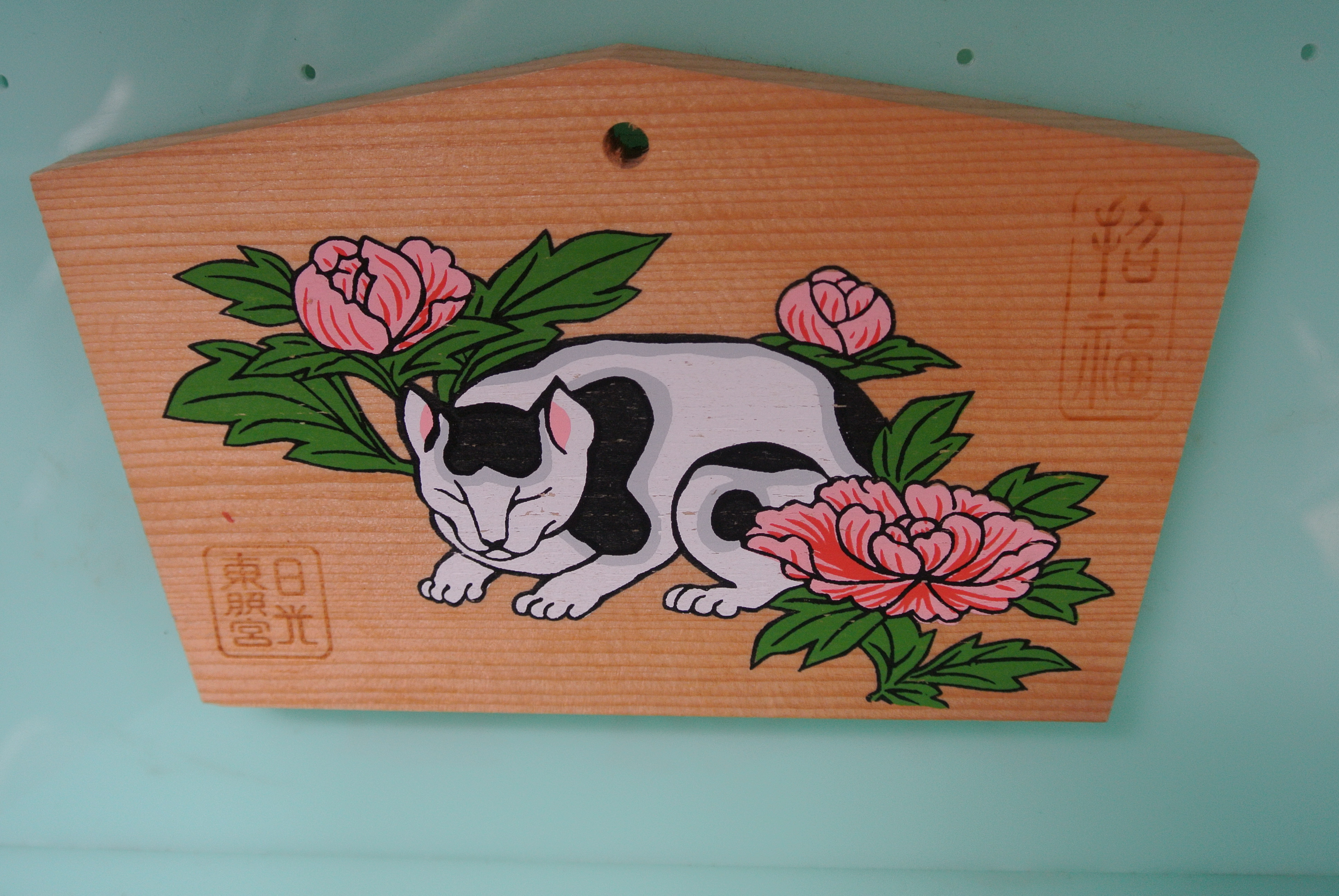
Inside is a veritable treasure house of imagery and polychromed patterns. One single gate – the Yomeimon – has more than 500 statues. Taken overall, the shrine has an interesting menagerie of real and imaginary creatures. There’s an elephant done by someone who had clearly never seen a real one.  There’s the life cycle of a monkey, which includes the trio of ‘see no evil, hear no evil, speak no evil’.  And there’s a cat sleeping near some sparrows, which famously symbolises the peace and harmony Ieyasu brought to the realm.

The Tokugawa legacy is exemplified in the sumptuous display of arts that even today continues to draw gasps of astonishment from those who come to visit. Shinto could be said to centre around the ancestral cult of the imperial family, founded by Amaterasu the sun-goddess. Here however is an alternative vision, raised to the founding figure of a shogunate dynasty. Nothing could be further removed from the simplicity of the wooden structures at Ise!

As the saying goes, ‘Never say kekko (wonderful) until you’ve been to Nikko.’
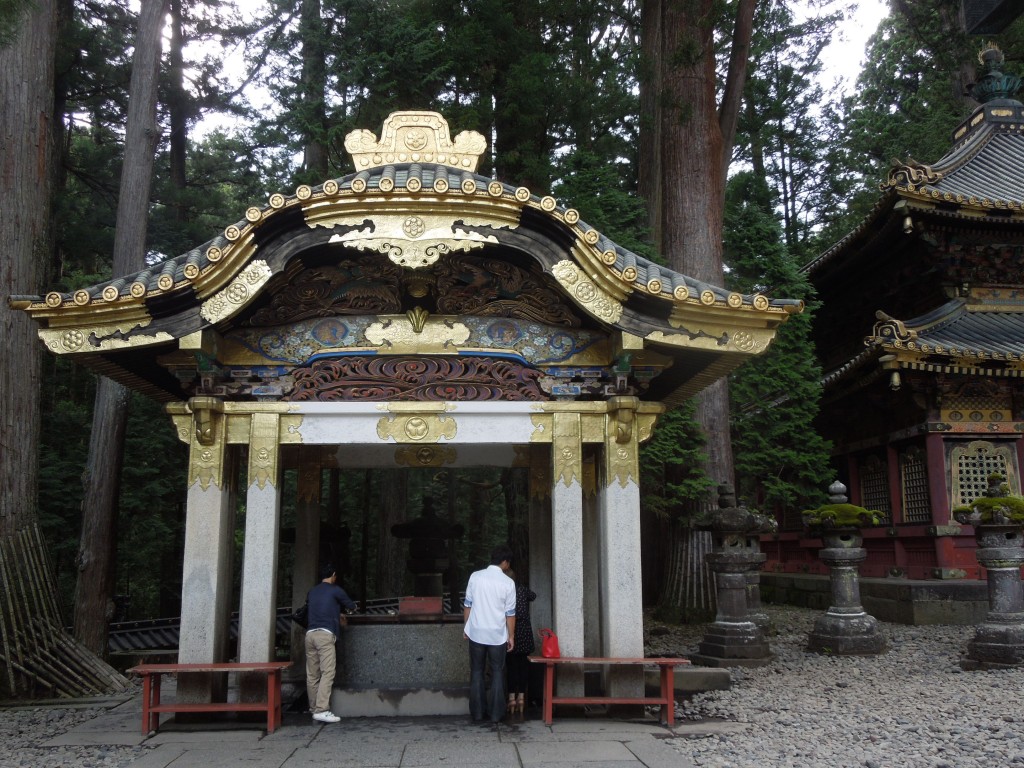
One of the grandest hand-washing basins you're ever likely to see!
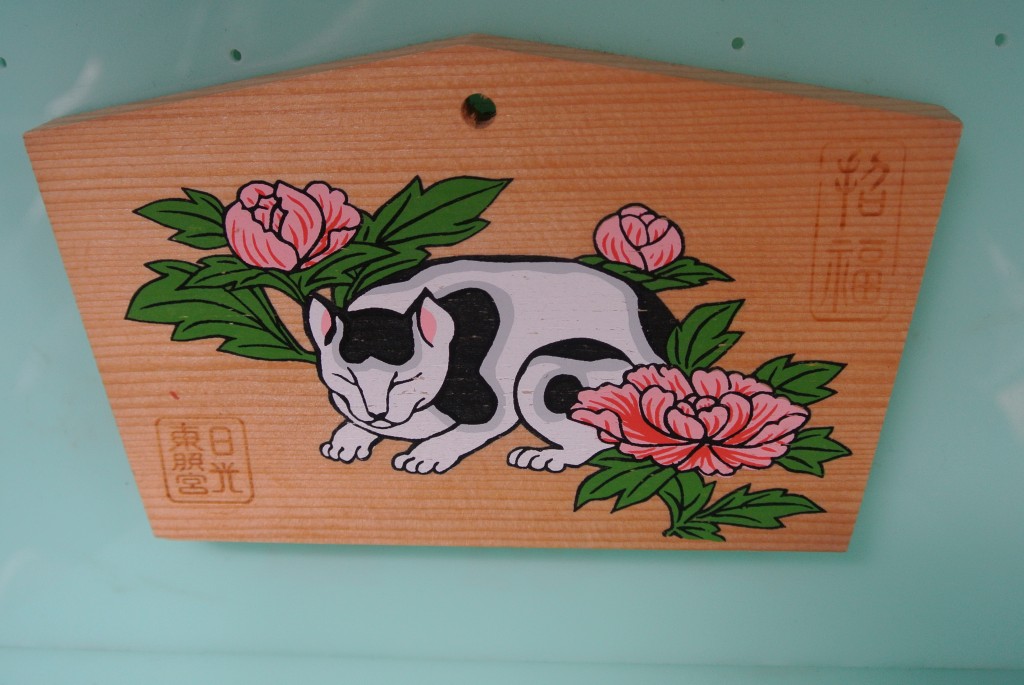
Sleeping cat, one of the shrine's famous symbols
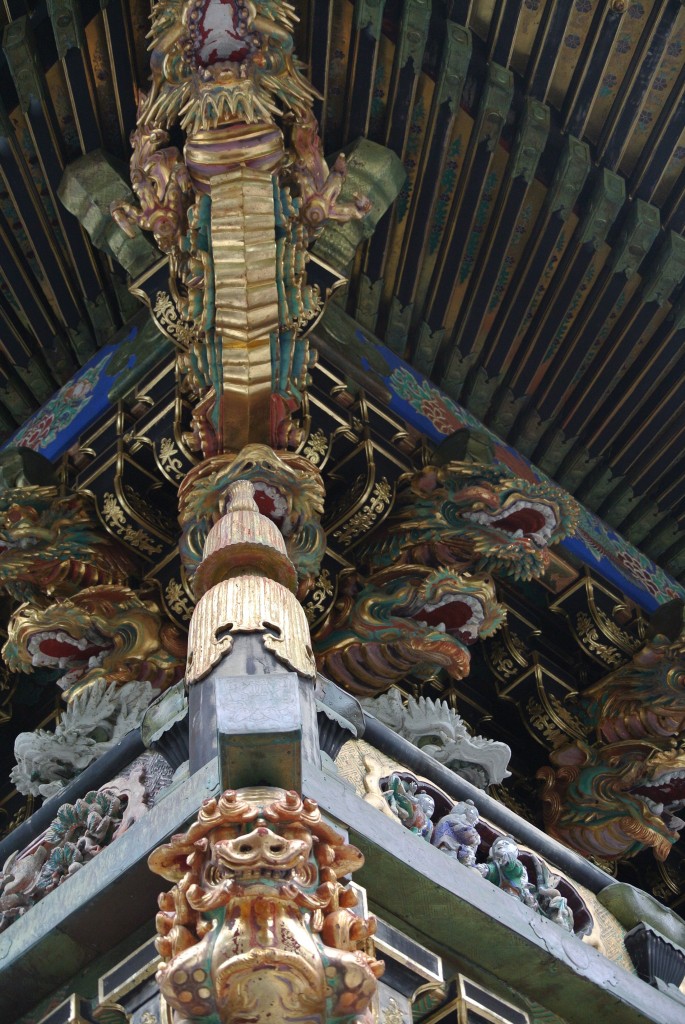
Tokugawa splendour: you can't get more sumptuous than that!


*******************************************************************************************
For Cali and Dougill’s guide to Shinto Shrines, see http://www.uhpress.hawaii.edu/p-8926-9780824837136.aspx

Eto (Chinese zodiac)

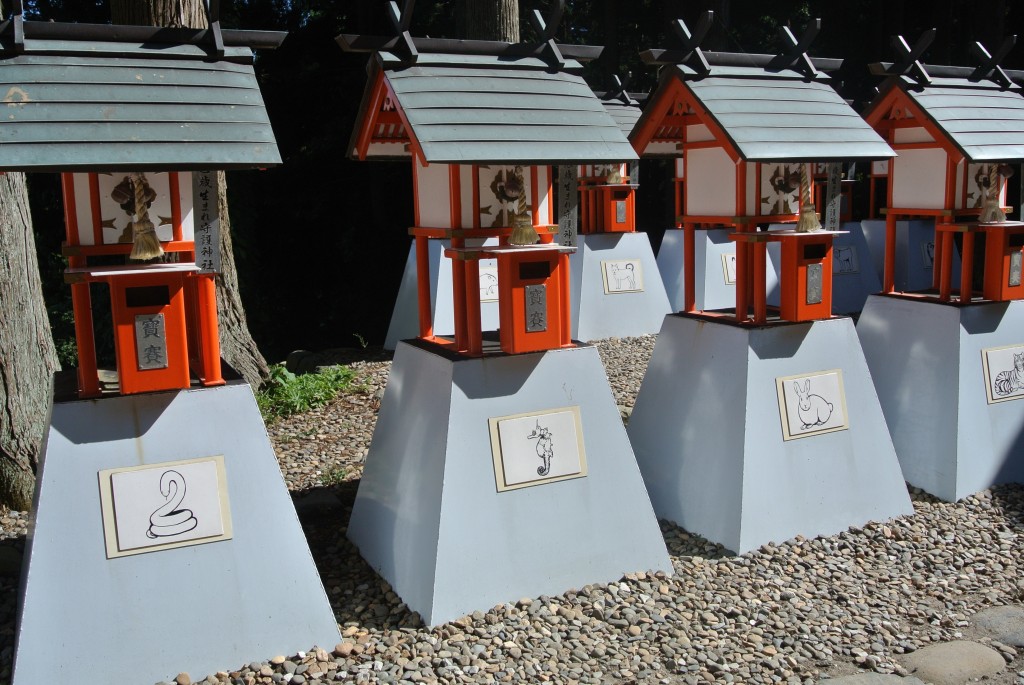
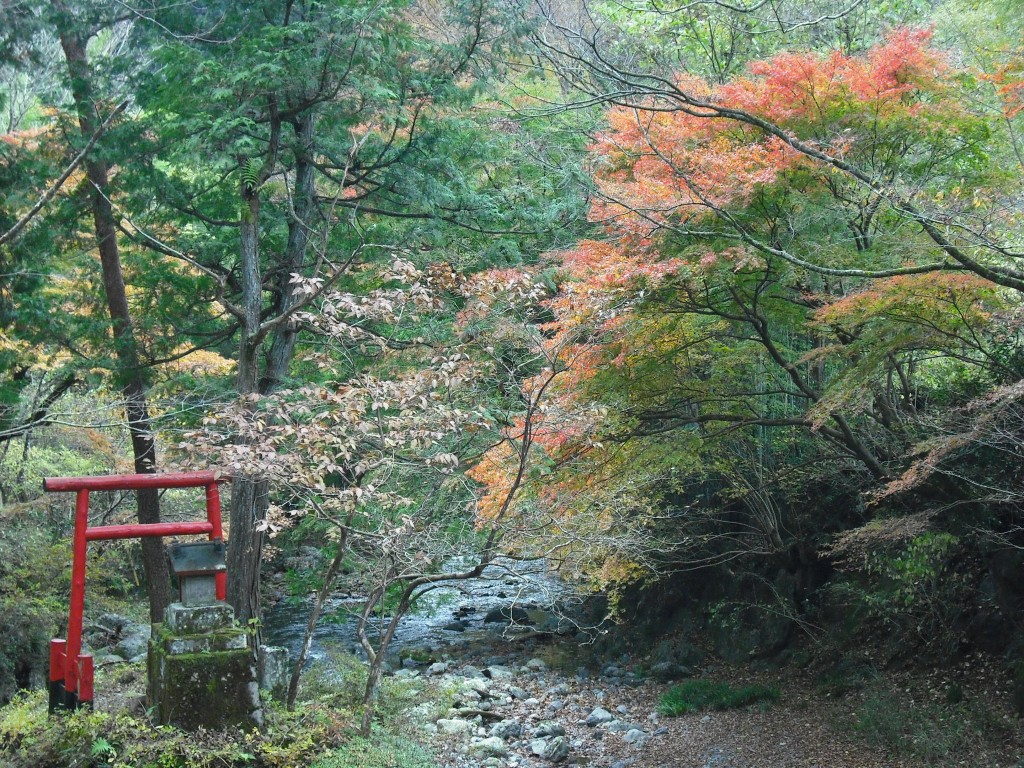
Shrines for the Chinese zodiac at Hakusan Jinja, Hiraizumi


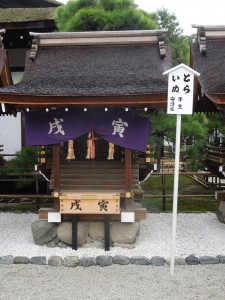
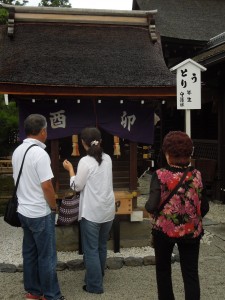
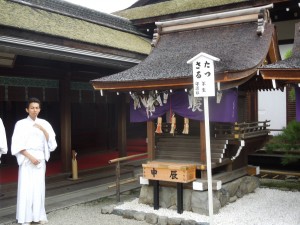
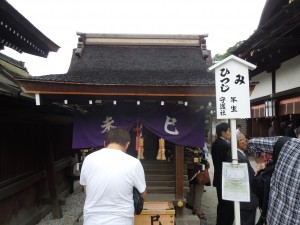
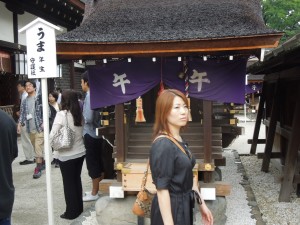
Over the past fortnight I happen to have come across the Chinese zodiac in various guises.  A set of 12 small shrines (hokora) for each zodiac year at Hakusan Jinja in Hiraizumi.  A full set of 12 zodiac ema (votive tablets) at Toshugu Shrine in Nikko.  A set of eight protective Buddhas for the 12 zodiac years at a temple near Utsunomiya.  And now back in Kyoto, seven protective kami at my local shrine of Shimogamo.

Now here’s an odd thing: why do the Buddhists have eight protectors, whereas Shimogamo Shrine has seven protective kami?  Eight is a number which traditionally signifies limitlessness (as in ‘eight myriad kami’).  Seven on the other hand is a magical number, much treasured in Daoism (as in the 7-5-3 festival).  Could the numbers have something to do with it?

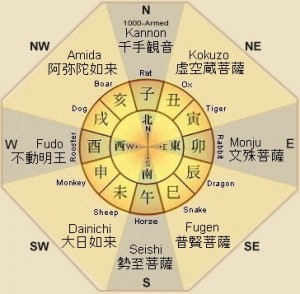
For an understanding of the Buddhist situation I turned to Mark Schumacher’s excellent onmark website.  “The Zodiac’s popularity in Japan peaked during the Edo Era (1600-1868 AD), by which time each of the 12 animals were commonly associated with one of eight Buddhist patron protector deities (four guarding the four cardinal directions and four guarding the four semi-directions; the latter four are each associated with two animals, thus covering all 12 animals). At many Japanese temples even today, visitors can purchase small protective amulets or carvings of their patron Buddhist-Zodiac deity.”

Buddhas for the four directions and four sub-directions cover the 12 different zodiac years (Illustration taken from the onmark website)


The Seven Shinto kami
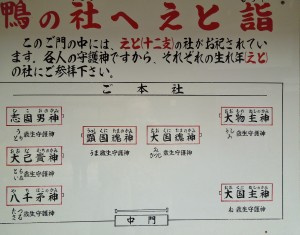
Given Japan’s syncretic tradition, one might assume that Shinto would simply have eight kami equivalents of the Buddhist deities. However, at Shimogamo that is not the case and the shrine boasts seven ‘hokora’ (small shrines) in front of the main shrine. I’ve been visiting mine (Ushidoshi) for the past fifteen years.  Recently I’ve noticed that, following major renovation at Shimogamo, the diagram below has been pinned up to guide worshippers to their relevant birth sign.

The chart tells us that the seven protective kami are as follows;

1) Shikoo no kami (Rabbit and Rooster)                             5) Ookunitama no kami (Snake and Sheep)
2) Oonamuchi no kami (Tiger and Dog)                              6) Oomononushi no kami (Ox and Wild Boar)
3) Yachihako no kami (Dragon and Monkey)                       7) Ookuninushi no kami (Rat)
4) Utsushikunitama no kami (Horse)

Layout of the seven guardian kami


Now it’s difficult to see much rhyme or reason to this. Why do the rat and horse get a kami to themselves? What joins the rabbit and rooster together? And what kind of kami are these figures anyway?

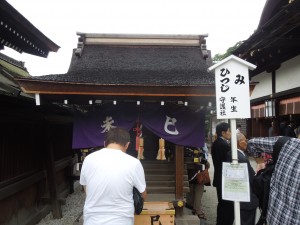
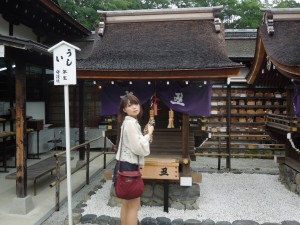
If one looks at the traditional order of the Chinese zodiac, it begins with the rat, followed by ox, tiger, rabbit, dragon, snake, horse, goat, monkey, rooster, dog and wild boar (pig in the original Chinese). Applying the order to the Shimogamo shrines, as I’ve done in the pictures below shows an interesting paired sequence that runs 2 – 12; 3 – 11; 4 – 10;  5 – 9; 6 – 8.  Number 1 and number 7 are singled out, perhaps because they mark the beginning of a half-cycle?  Intriguing…  or is this simply a red herring?

Puzzled, I made enquiries at the shrine where a miko shrine attendant told me that there were various theories, but no one knew for sure.  Later a priest told me over the telephone that the shrines were thought to date back to  Heian times, and that the division into seven guardians likely derived from Chinese yin-yang and the 5 elements.  The seven protectors were in fact seven different names for one and the same kami: Okuninushii.  Perhaps as guardian of the unseen world, he was seen as responsible for whatever spirits guide the zodiac.

Like much else in the Shinto tradition, the original rationale has been lost in the mists of time, but the custom of lives on regardless.  After all, only a foreigner would ever think to question it!


The year of the rat (traditionally No. 1)

Ox and Wild boar (nos. 2 + 12)

Tiger and dog (nos. 3 + 11)

Rabbit and rooster (nos. 4 + 11)

Dragon and monkey (nos. 5 + 9)

Snake and sheep (nos. 6 + 8)

Horse (no. 7)

« Older posts Newer posts »

© 2026 Green Shinto

Theme by Anders NorénUp ↑