Author: John D. (Page 175 of 202)

Fertility festival (Oh-agata/ Oagata Jinja)


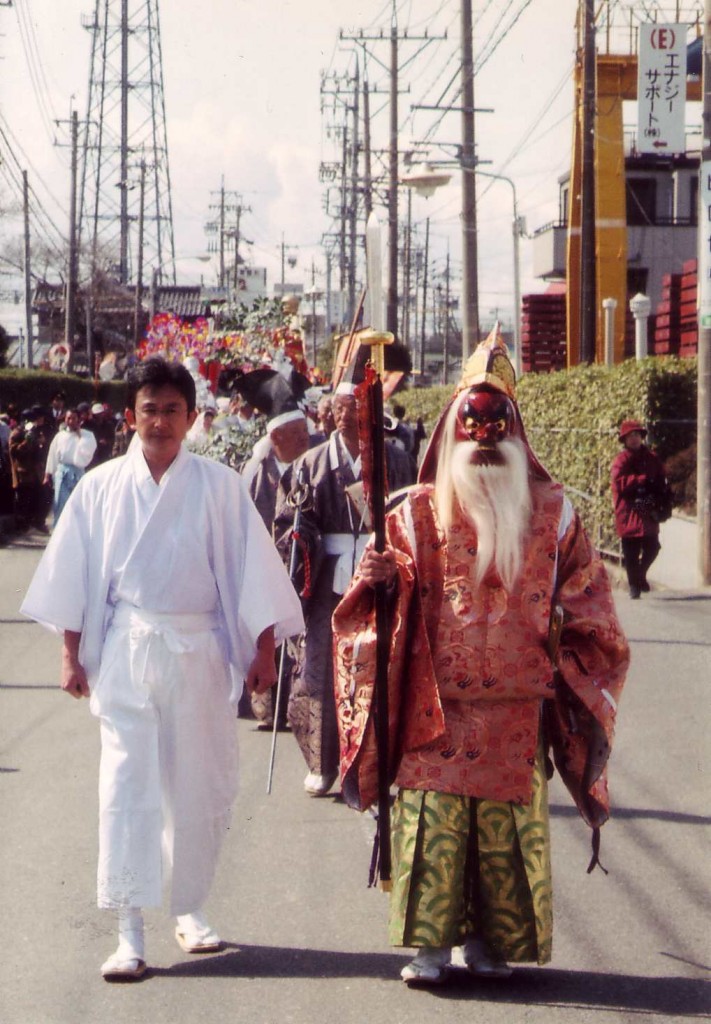
The phallic deity Sarutakhiko leads the way


Oh-agata Jinja is a shrine near Nagoya dedicated to Oh-Agata, a kami who is said to have founded the local area of Owari County.  It’s known for its female fertility symbols and attracts women seeking marriage or the birth of a child.  As such it’s paired with nearby Tagata Jinja, famed for its ‘big penis’ festival about which I wrote recently.

A central role is played by the Hime no miya subshrine, where the daughter of Oh-Agata is worshipped.  Known as Tamahime no mikoto, she is a goddess of marriage, pregnancy, safe birth and happy conjugal life.  ‘Above all,’ says the shrine brochure, ‘she is worshipped as the guardian goddess of women.’

The shrine’s Grand Festival takes place on the Sunday prior to March 15, when the Tagata festival is held.  Like similar fertility festivals, it is aimed at securing good harvests and prosperity.  The parade is led by Sarutahiko, kami of showing the way, and features unmarried women and a vaginal symbol made of pink rice.

Vaginal openings as the source of life were widely celebrated in the past, and a keen observer will still find many cleft rocks marked as sacred by a shimenawa or bottle of saké.  Following the Meiji clampdown on such ‘primitive’ and ’embarrassing’ features, many were withdrawn from public view or scrapped altogether, as a result of which some Japanese are completely unaware of this heritage.  There are even shrine priests who feign ignorance of the sexual connotations.

It’s curious that though Japan never became Christian, it absorbed Christian attitudes through the state-sponsored Westernisation of post-Meiji times.  Time for a pagan revival, methinks!
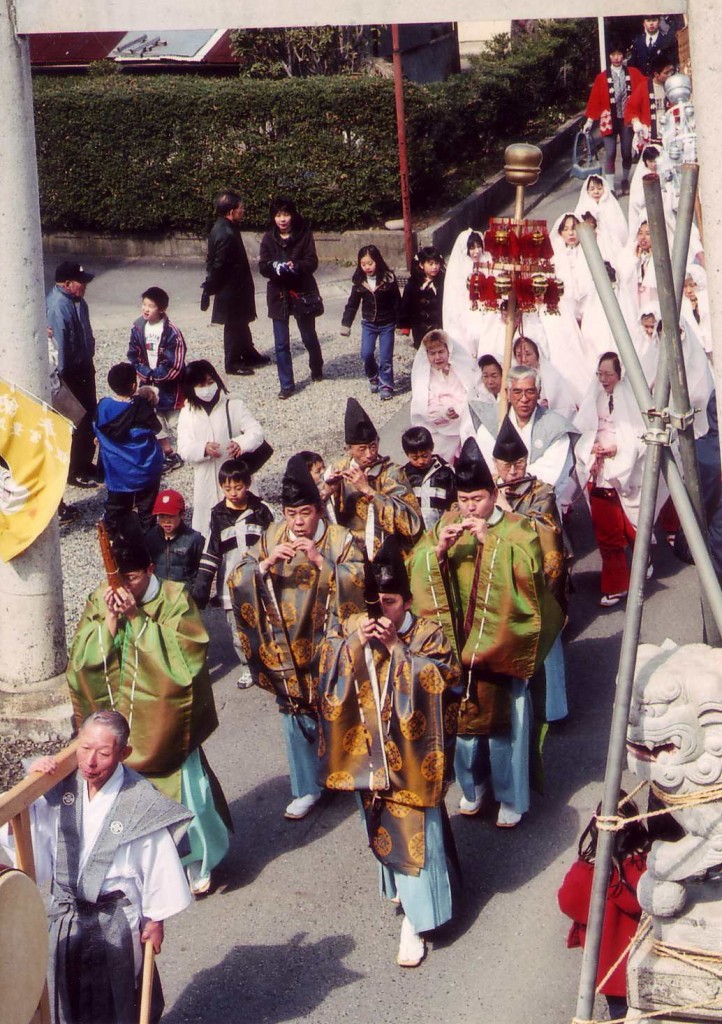
Procession with gagaku musicians followed by women in white
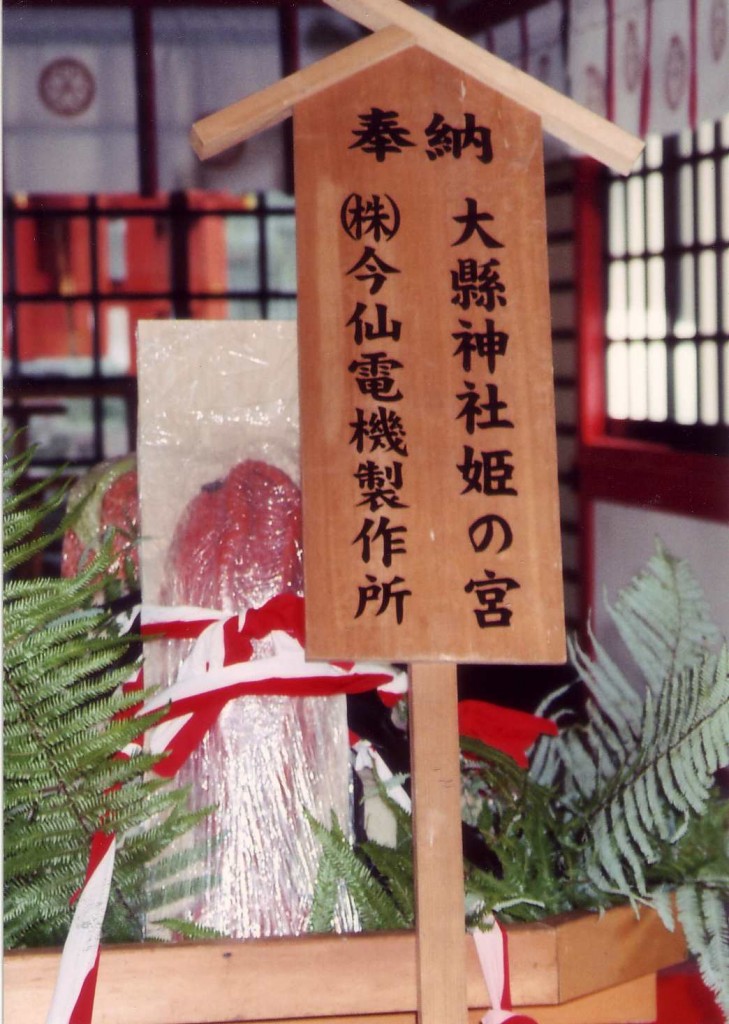
Female symbol made of pink rice cake attached to the front of the mikoshi in the festival parade
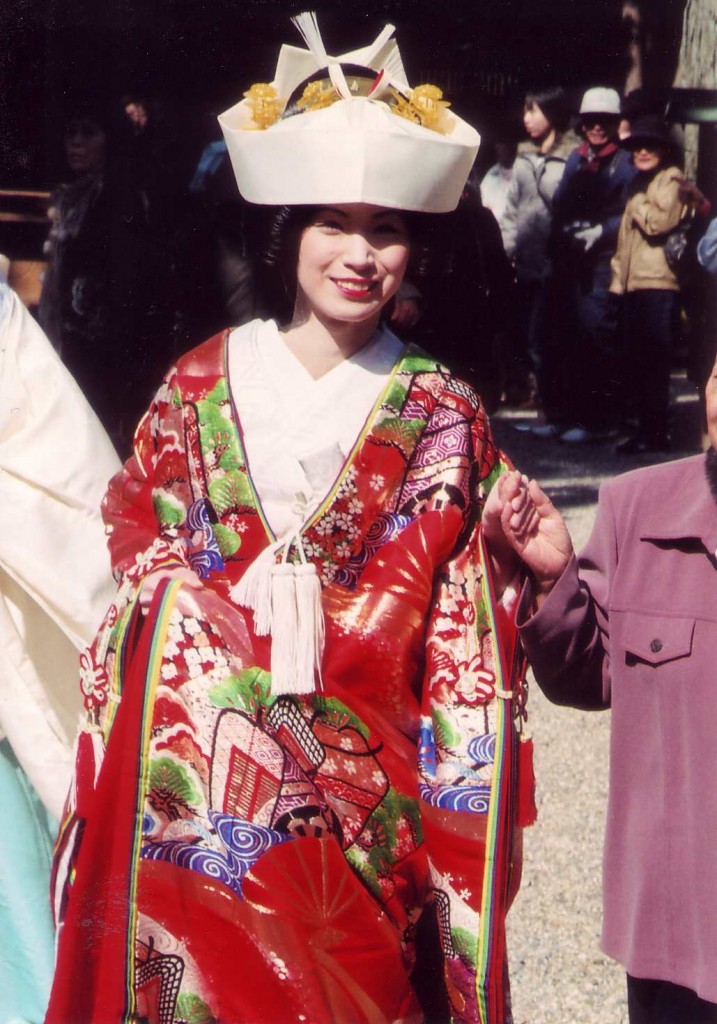
Queen for a day. Symbol of female pulchritude and fertility (rather like the May Queen)
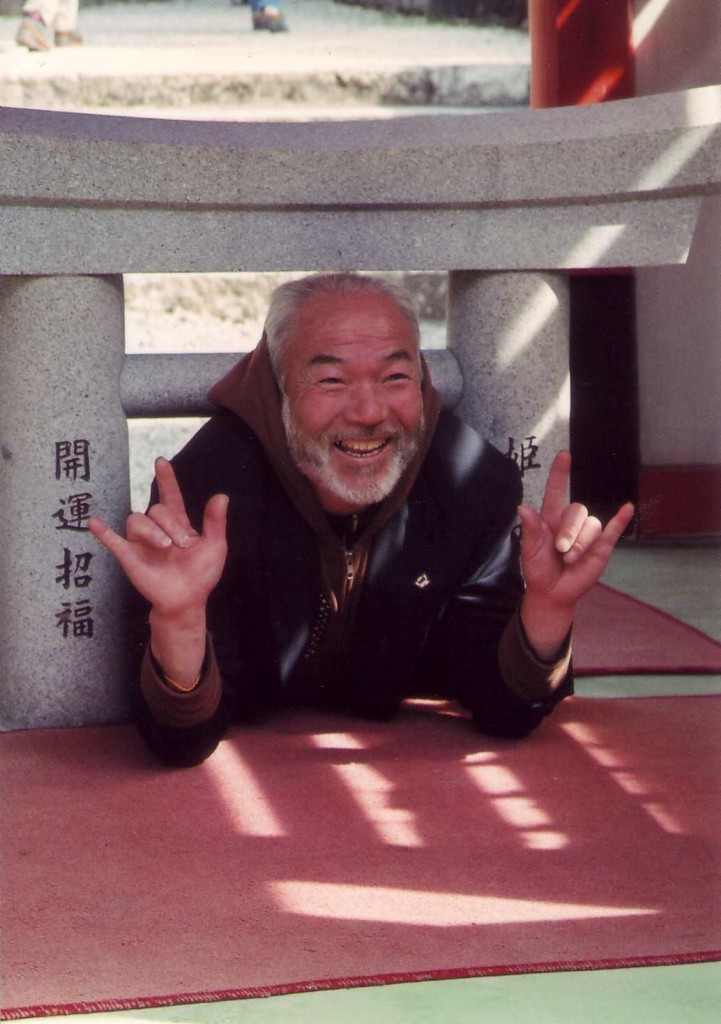
Back to the womb. Crawl through the hole in the torii for happiness!
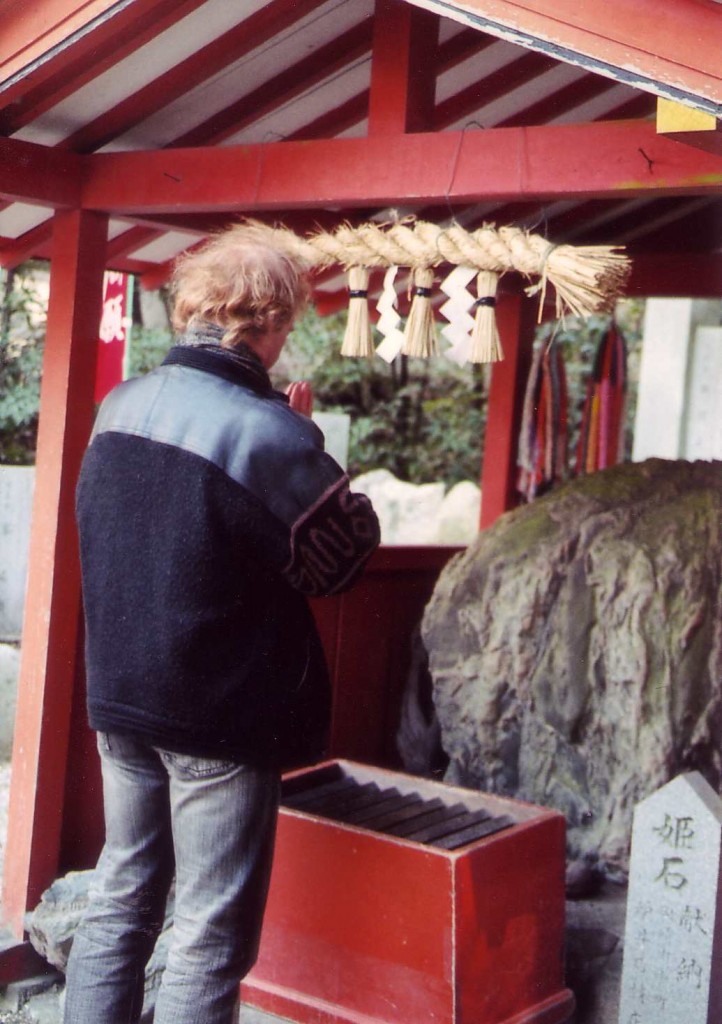
Worshipping the female divine

**********************************************************************************************

Oh-agata-jinja (Tel: 0568 67 1017) is a 15 minute walk east of Gakuden station on the Meitetsu Komaki line out of Nagoya.  For visits combining Tagata Jinja and Oh-agata Jinja, head for Inuyama, roughly thirty minutes from Nagoya or Gifu by Meitetsu.  There’s a tourist information booth at the station with maps and information (tel 0568/61-6000).
Shirakami-Sanchi Proclamation

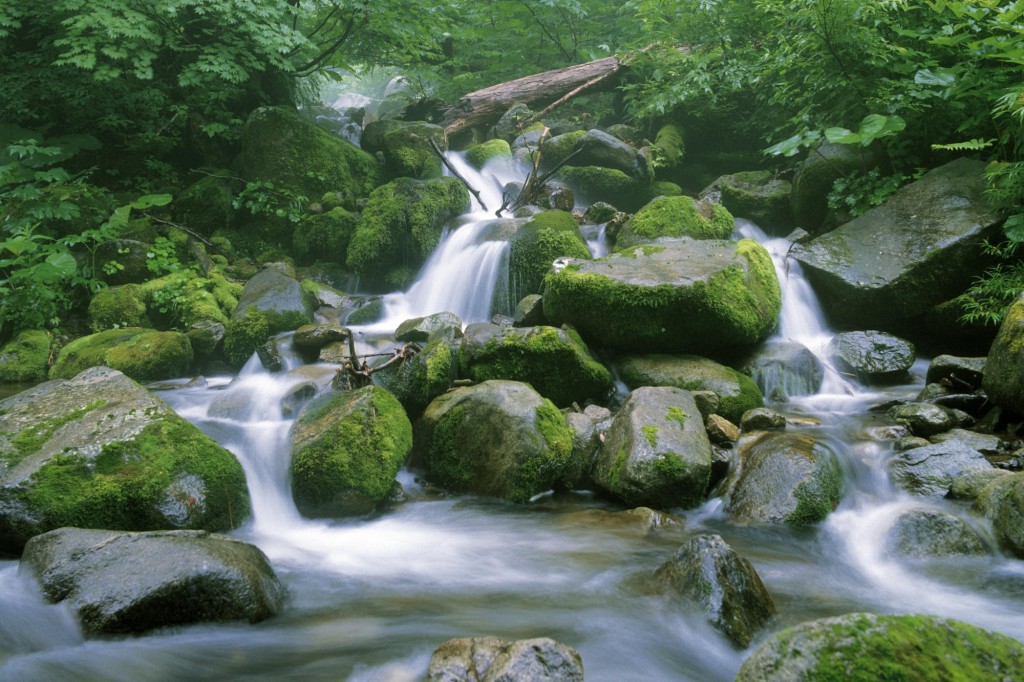
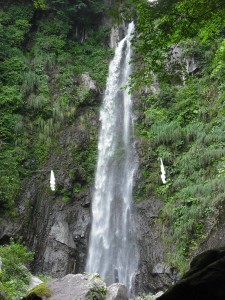
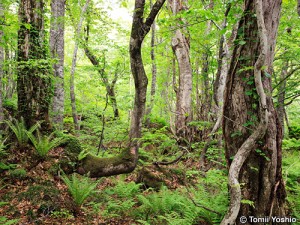
Recently I’ve been researching Japan’s sixteen World Heritage Sites.  One of them is the mountainous forest range in northern Honshu known as Shirakami-Sanchi.  it has one of the largest primeval beech forests in the world, and reading about it led me to an official proclamation issued by the Aomori and Akita Prefectures.

Here in the three simple points of the proclamation are summed up what lies (or should lie) at the heart of Shinto – nature as the source of spirituality.  In the gift of water, the blessings of woodland, the sheer wonder of the universe is cause for contemplation and appreciation.  “Let nature be your teacher,” as Wordsworth had it.

***************************************************************

1) The Shirakami-Sanchi is the nucleus of a natural world in which forests, rivers and the sea sprea in variegated circles of life.  We will never cease to admire the wonders of Nature that originate here.

2) The Shirakami-Sanchi is a place for meditation.  By allowing the peace of the natural beech forest to sink into us, we will be moved by new emotions and think more deeply about ourselves.

3) The Shirakami-Sanchi is a natural museum.  filled with gratitude that these venerable woods have been passed down to us, each of us will follow the rules so the beauty of the natural beech forest may be preserved.

7 October, 2001
Aomori and Akita Prefectures, Japan

Photo courtesy of Travel.Wallpapers.tc


Iseyama Kotai Jingu (Yokohama)

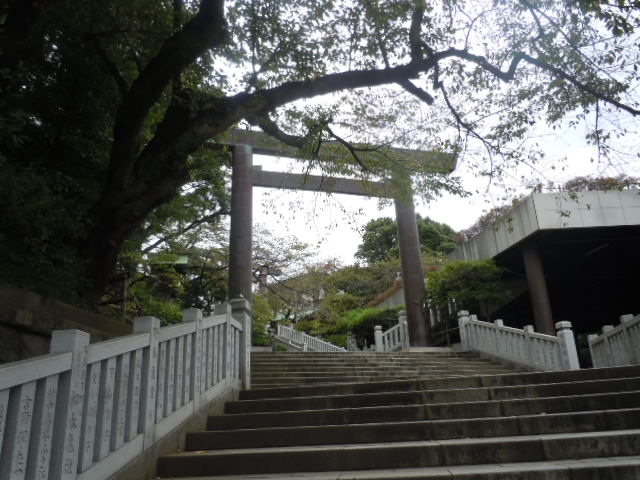
Entrance to Iseyama Kotai Jingu


Iseyama Kotai Jingu is Yokohama’s main shrine. I expected it to be an ancient affair, but found instead it was a nineteenth-century construction and one that typified the politics of early Meiji times. For someone who enjoys history, like myself, it’s of particular interest.

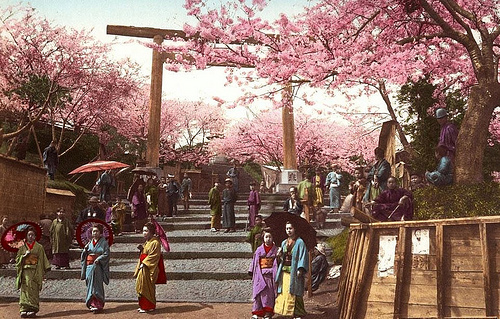
A view of the shrine in times past

The shrine was originally located elsewhere, but not much is known about it. In 1869 the Meiji government ordered its relocation to the present site. Why? It all had to do with the foreign settlement and that infectious “disease” – Christianity.

With the opening of the port of Yokohama in 1859, the foreign settlement there had started to grow and Christian priests were allowed to minister to them according to the treaties forced on the Japanese by the Foreign Powers. Ever since 1614, when Christianity had been banned, the Japanese had regarded the European religion as an evil ideology that sought to seduce and colonise them.

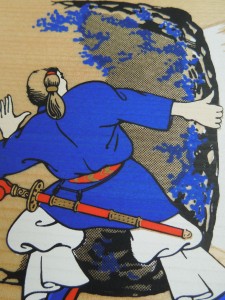
The shrine's ema features the opening of Amaterasu's door in the Rock Cave myth

To counteract the frightening power of Christianity, the Meiji government promoted an emperor-centred Shinto as its official religion. Accordingly Iseyama Kotai Jingu was set up on a hill overlooking the foreign settlement as a kind of defensive bulwark. And what did the new ideologues choose as the kami for the shrine? None other than Amaterasu, ancestor of the emperor and mightiest amongst the country’s kami. It was a political move, as the shrine’s own literature readily admits… [quote follows]

“In order to unify and stabilize the country, protect the nation from foreign influences and preserve national traditions and identities, prevent the spread of Christianity from the port area and encourage emperor-worship, it was necessary to build a state shrine in Yokohama.”

(‘necessary’ is an interesting choice of words!)

In 1871 a ceremony transferring the divided spirit (bunrei) of Amaterasu Omikami from Ise Jingu took place. The first chief priest had been head of Yokohama village, and his family became hereditary holders of the post thereafter. Odd, isn’t it, that the hereditary principle should have been introduced even as Japan was set on Westernising!

The shrine was completely destroyed in the Great Kanto Earthquake of 1923, but rebuilt in 1928.  It has an open style and, judging by my visit, it’s a popular place for hatsumiyamairi (first shrine visit to bless a baby). It also specialises in weddings, with a large wedding reception hall next door.

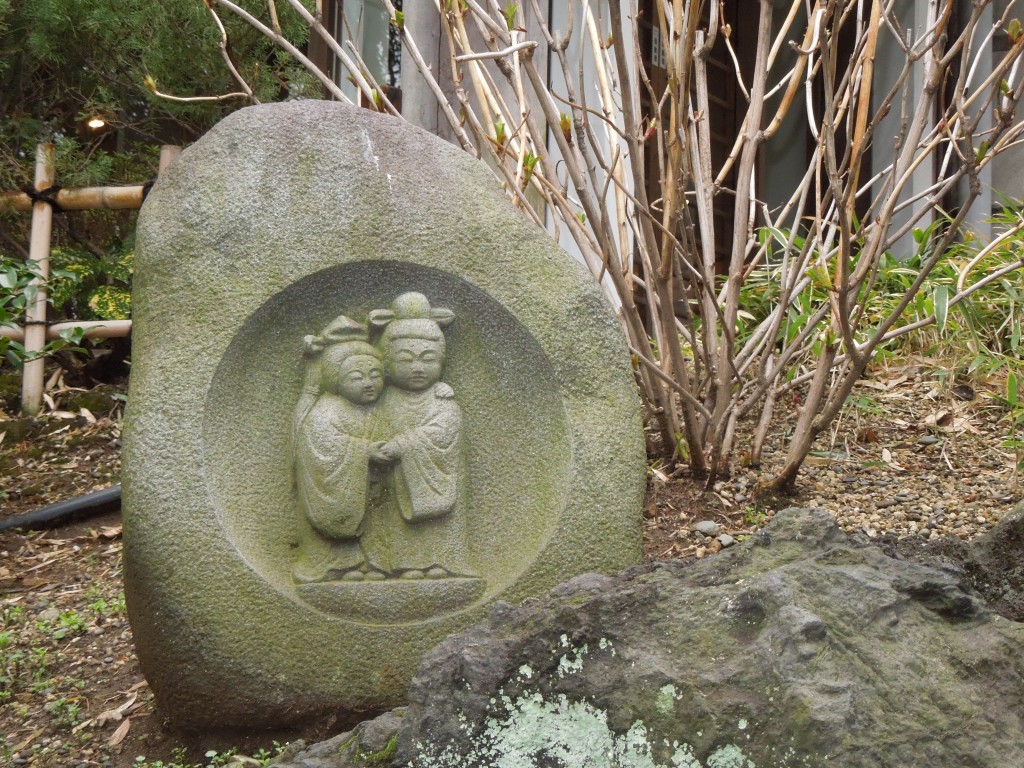
Modern-style dosojin (boundary markers), showing a happy couple and placed at the border of the shrine grounds and wedding hall

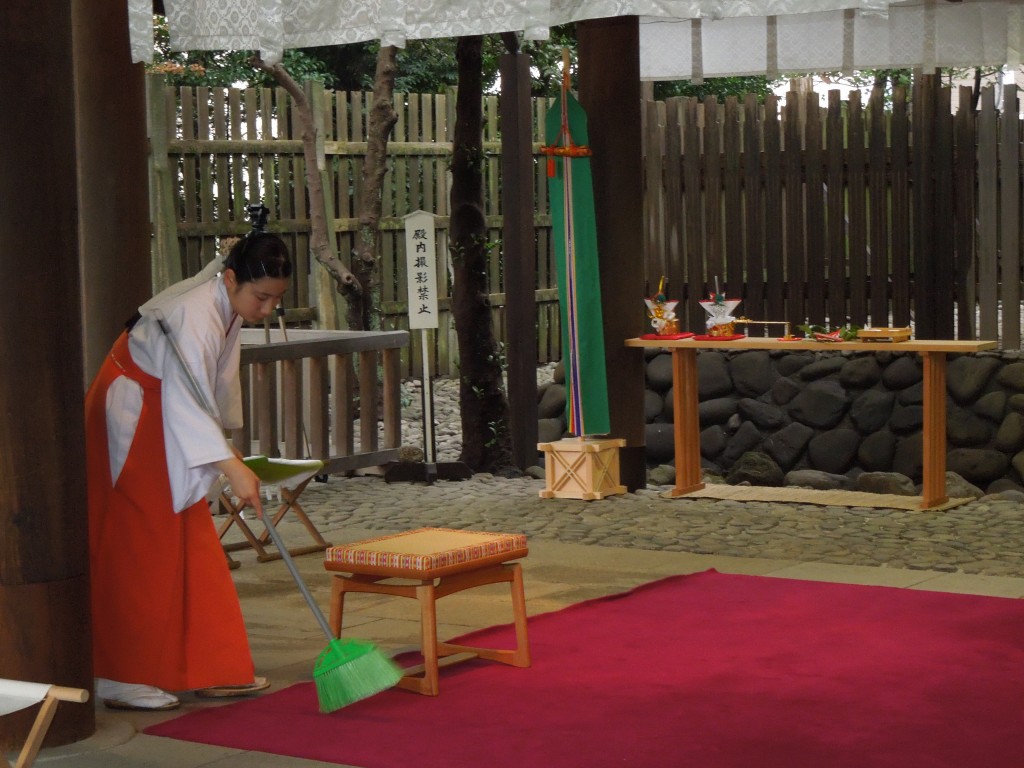
Miko clears up after a ceremony in the roofless area before the honden. Simplicity and closeness to nature are here mixed with political origins.

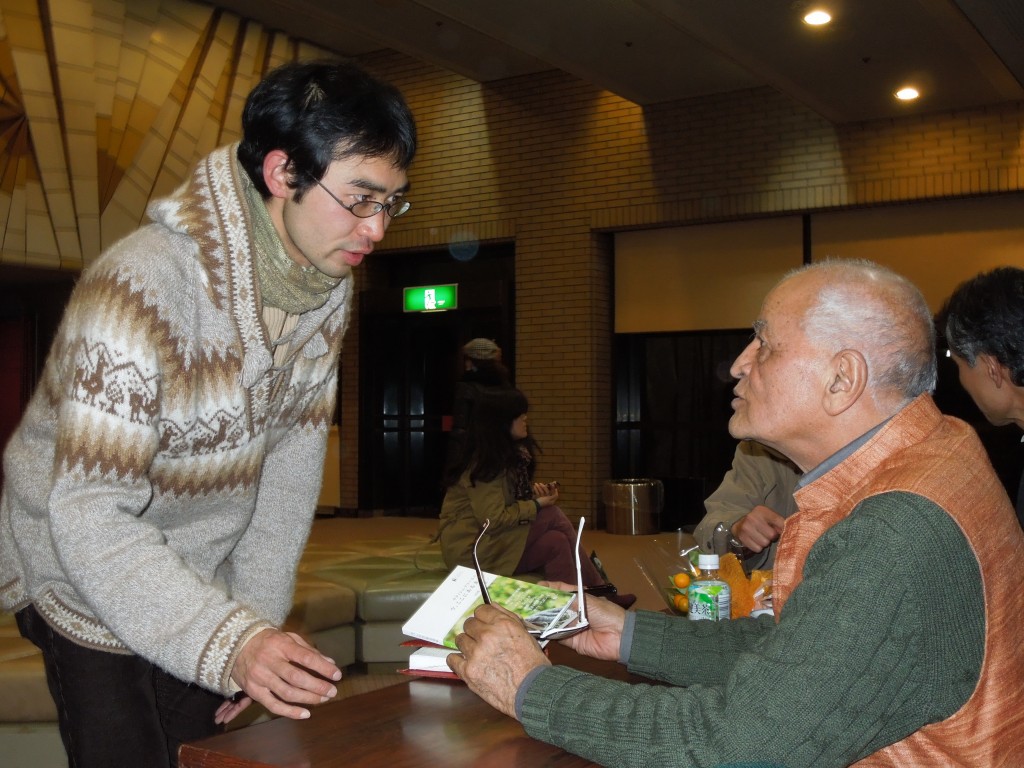
Kazuhiko Kiyono: trainee priest

Could you tell us about your background?
At Waseda University I studied the politics of forest conservation and did an internship in Kenya.  It made me think about the role of culture and how to make use of traditional ways.  How did Japanese ancestors look after the land, for example?  Then I worked for a private foundation in conserving nature and it led me to the traditional style of revering nature.

Now you want to become a priest.  How did that come about?

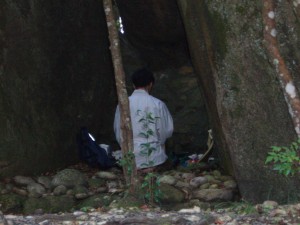
I wasn’t thinking about that really, but it happened by chance.  Fate, you could say.  When I was visiting a shrine called Kamikura Jinja in Wakayama, there was someone meditating and playing shinobue (a Japanese flute) there.  I got to talk to him and he found I was interested in spiritual things. It turned out he was head priest of a small shrine, and he thought our meeting must be meaningful because it happened at the time of the full moon.  In the end he invited me to work at his shrine as a kind of trainee.

You’re not from a priest’s household, are you?

No, I’m not.  It’s a bit unusual, perhaps.  But I hope to find my own way to combine my feeling for nature with worship of kami if I can.

Meditating and playing flute (shinobue) at Kamikura Jinja

What’s your plan for the future?

I’d like to be involved with an NPO or some foundation doing nature conservation.  And I’d like to remind people of our roots and how to live in harmony with nature.  We used to have lifestyles that embraced satoyama and okuyamaSatoyama was sustainable use of woodland. Okuyama was a place that was left untouched because it was the realm of the kami.

There was a hill I visited once with an iwakura (sacred rock), and everything beyond it was left just as it was, because it was a realm of the spirits.  We need to remember that kind of tradition, I think.

As someone drawn to the Schumacher College, which presents an alternative to conventional thinking, your environmental sympathies put you at odds with the Shinto establishment which tends to be rather right-wing.  Is that a problem, do you think?

No, I don’t think so.  People in Shinto are conservative, but they are open too.  And I think from now on people with my kind of thinking will become more common. Perhaps it’s a different kind of generation.

Thanks for your time, and here’s wishing you the very best for the future.  Shinto – and Japan – needs more young people like you !  

Exchanging ideas with environmentalist Satish Kumar of Schumacher College

Shingon syncretism

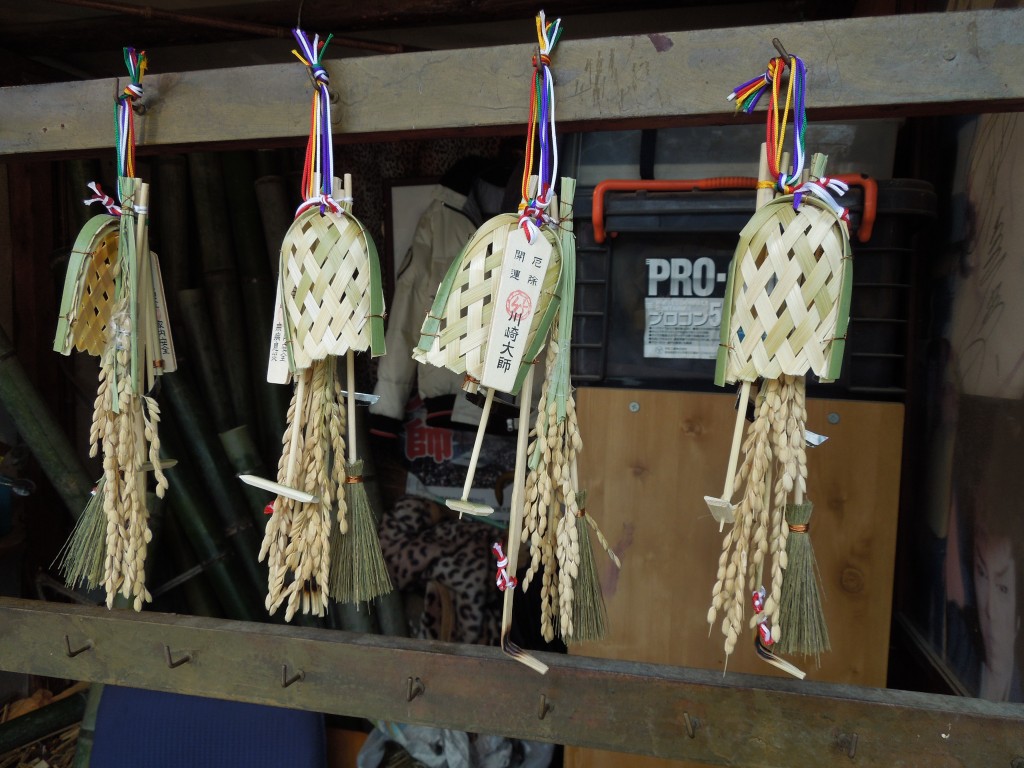
Rice grain is usually associated with Shinto (Inari is the kami of 'ine', rice), but here it's used as an emblem for the Shingon temple of Kawasaki Daishi


On a recent visit to Yokohama, I happened to visit the huge Shingon temple of Kawasaki Daishi and was struck by some of the syncretic elements on show.

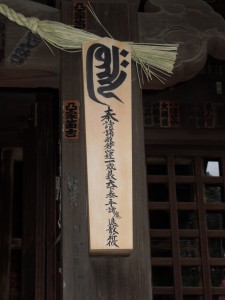
Sanskrit in a Shinto shrine? What's that all about? Only explicable through the Indian roots of Shingon Buddhism...

Shingon, it is often said, is the closest Buddhist sect to Shinto.  It shares a reverence for nature and sacred mountain tops.  Its supreme deity, Dainichi Nyorai, encapsulates a kind of pantheism through being the “Central Buddha of the Universe, the Cosmic Buddha, the supreme deity of Esoteric Buddhism” (see onmark).

Shingon syncretism started with its founder Kukai (aka Kobo Daishi, 774-835).  According to the founding legend of Mt Koya, the Shingon headquarters, a local kami disguised as a hunter told his black and white hunting dogs to lead the priest to the hidden valley in Wakayama where the monastery now stands. Thereafter Kukai made a point of honouring the mountain kami.

In the combinatory thought of honji suijaku (essence-trace) the two religions were joined at the hip, and for many believers Dainichi (literally Big Sun) was the universal essence of Amaterasu, the Japanese sun goddess.

With the Meiji Restoration in 1868, Ito Hirofumi and other politicians seized on Shinto as an ideological support for the emperor system.  Accordingly they artificially separated two faiths that for over 1200 years had become fused into one.

Though the separation caused confusion and conflict, it was forced through and Buddhist elements were removed from shrines. But in temples kami worship seems to have carried on to some extent. Syncretic elements are still strong in the Shingon, Tendai and Nichiren traditions, though not in the Pure Land sects where kami worship is seen as irrelevant.

With the passage of time, it seems that the Meiji construction of an emperor-centred Shinto may be losing force and that syncretism is on the way back.  It’s a welcome development.  There are an increasing number of joint projects, and interestingly the only Shinto shrine in France is in the grounds of a Shingon temple.  Who knows how things will be after another hundred years?

In the temple graveyard a stone torii can be seen, marking the divide between this world and the other - but which other? Shinto or Buddhist?

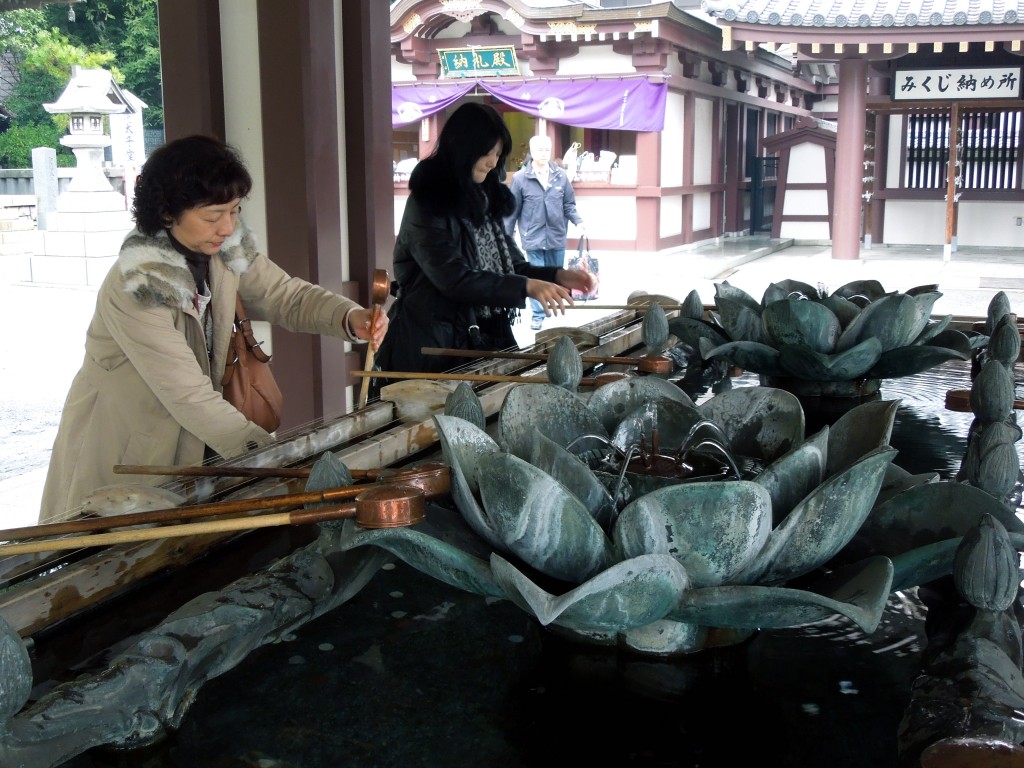
A syncretic water basin with lotus blossom, where worshippers purify themselves Shinto-style

Syncretic animal life in the temple's lotus pond too !

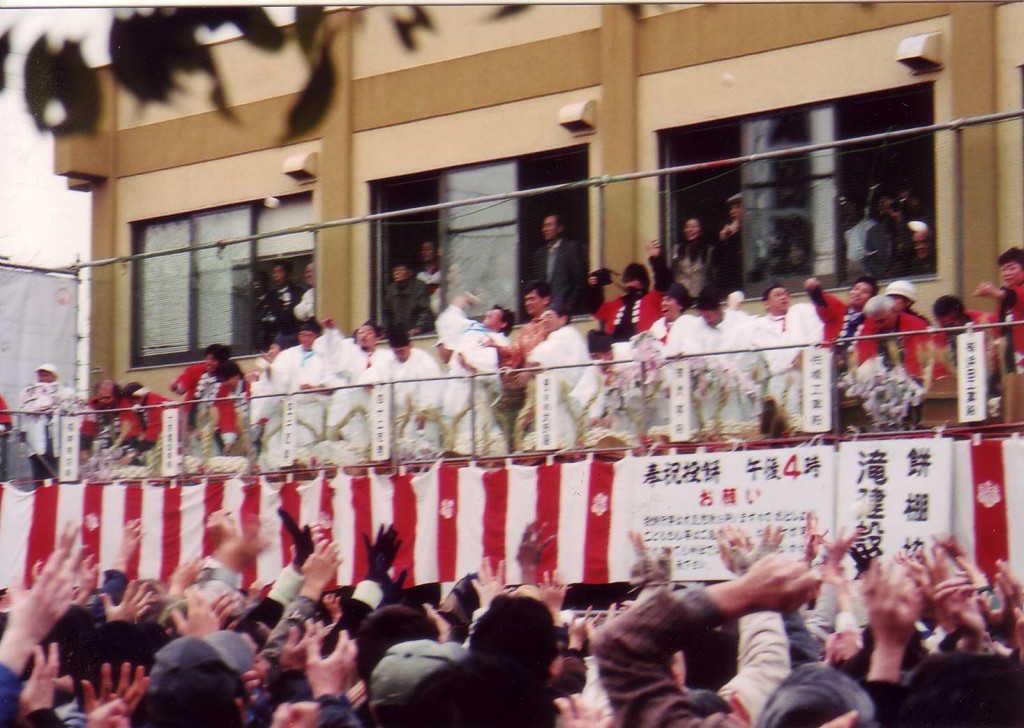
Fertility festival (Honen Matsuri)

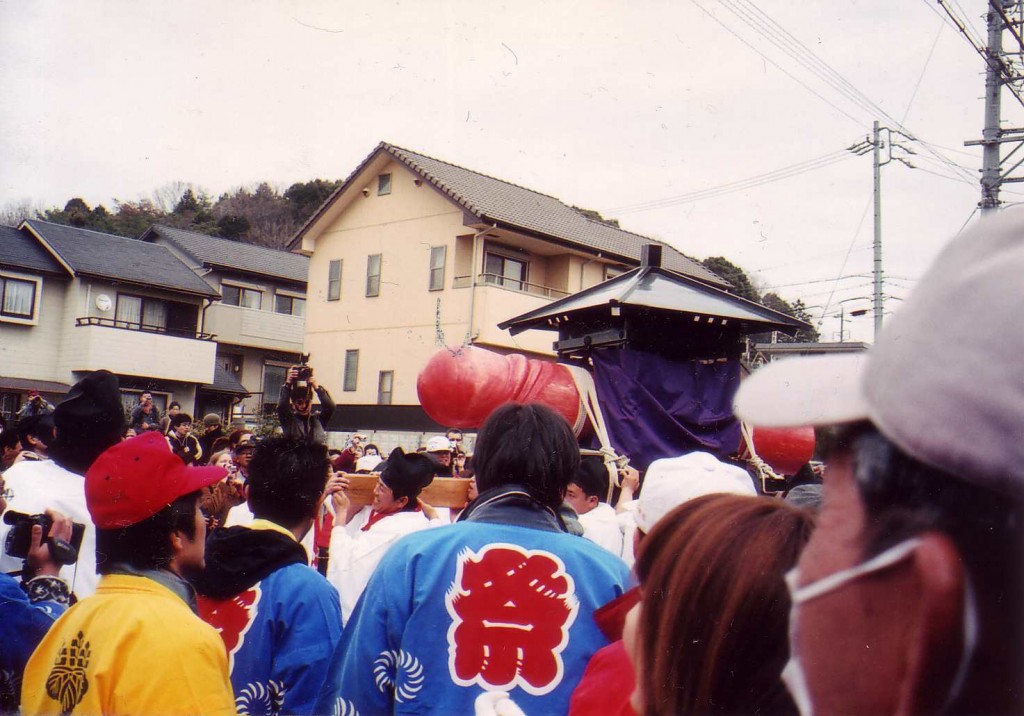
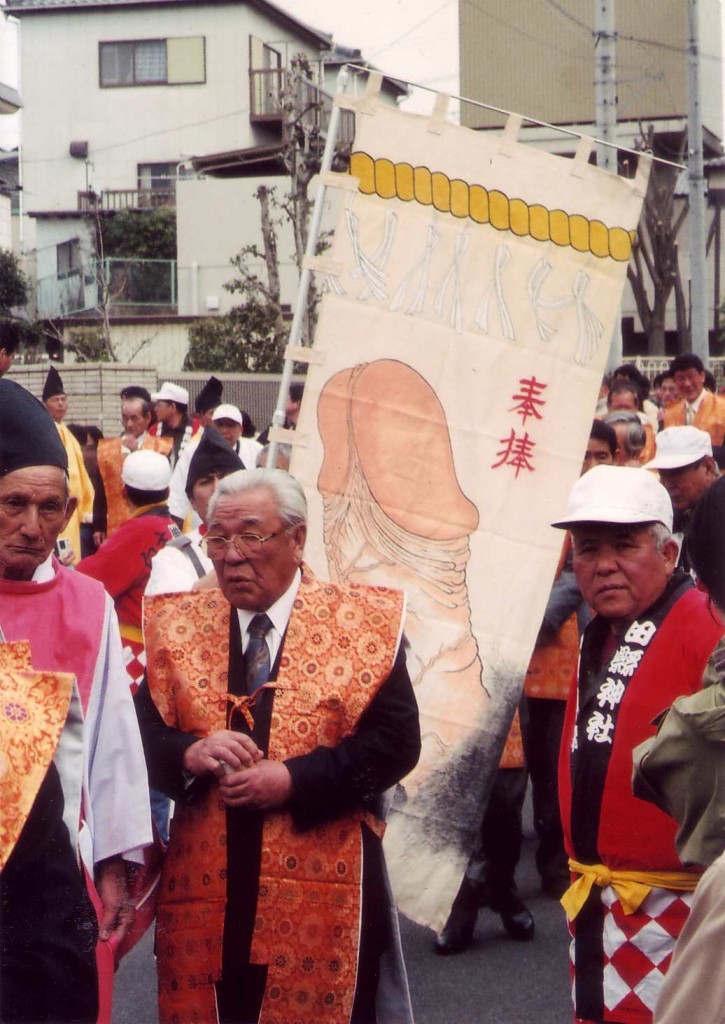
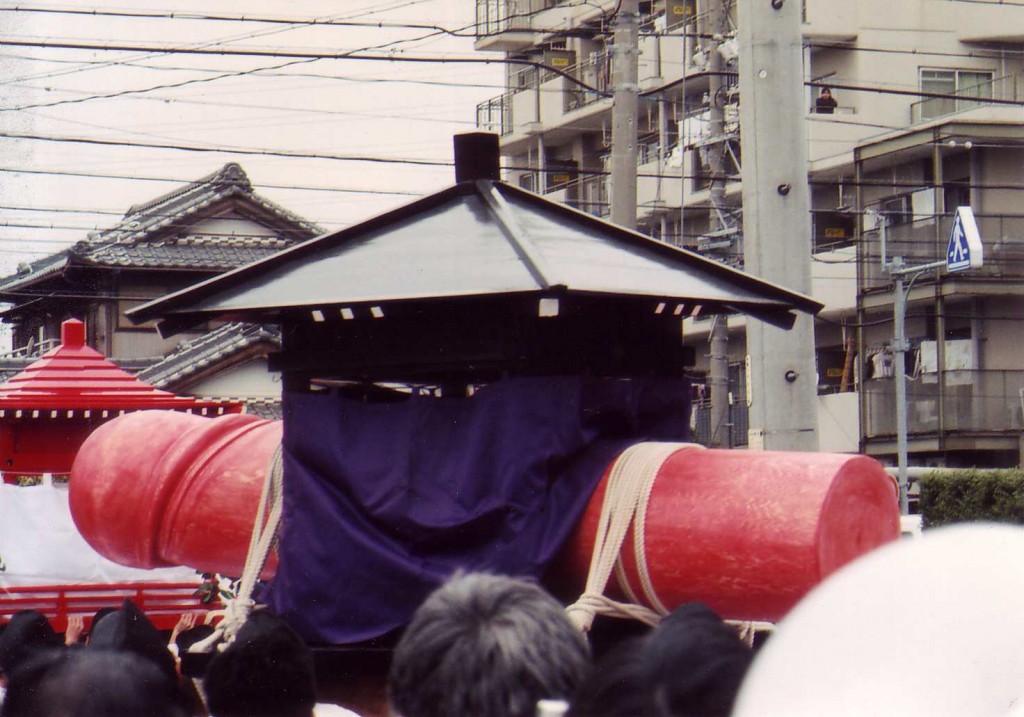
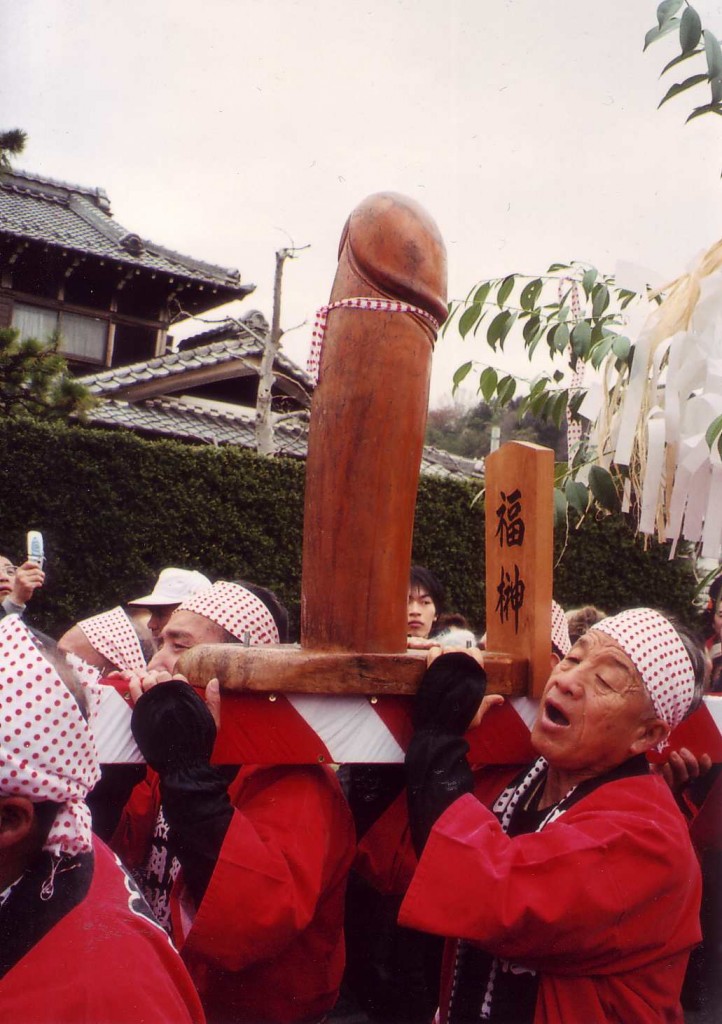
Today is Honen Matsuri at Tagata Jinja in the small town of Komaki, outside Nagoya, which attracts a lot of attention among Westerners because of its phallus-based rituals.  It says much about the repressions of a Christian-based culture.  The main feature here is a 280 kilogram, 2.5 meter long wooden phallus which protrudes from a mikoshi (as above) and is paraded through the area in traditional manner.  For some reason it begins from a certain shrine in odd-numbered years (Kumano-sha) and from another in even years (Shinmei-sha), but it always ends at the host shrine of Tagata.

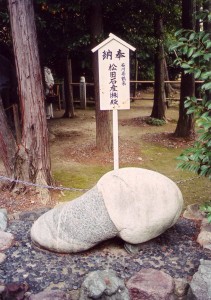
Sacred rock at Tagata Shrine

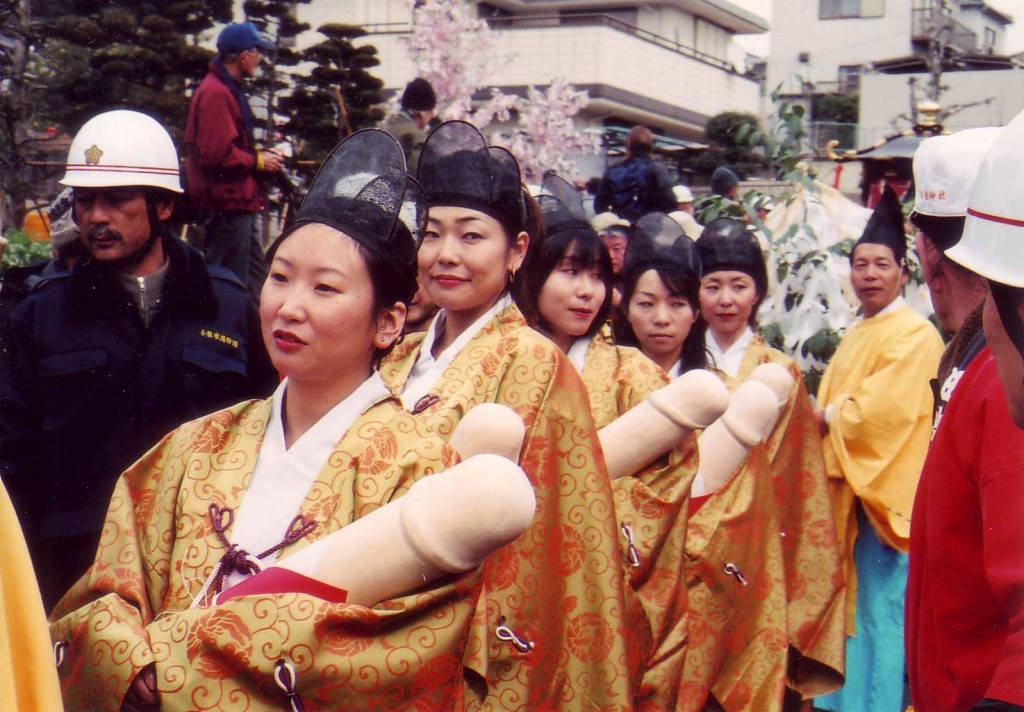
As one might suspect, the purpose of the festival is to ensure fertility for the coming year at a time when rice planting is about to begin.  But there’s an element too of requesting human fertility, for there’s a parade of 32-year old unmarried women who carry phalluses in the hope of acquiring a husband and children.  The shrine literature also says that prayers to phallic objects at the shrine will help prevent or cure sexual illness as well as infertility and other physical troubles between couples.

Prayers are said at the beginning and end of the procession, as well as during a break on the way after the mikoshi is spun round hectically.  At the finale, everyone gathers in the courtyard of Tagata Shrine and fights to get hold of one of the small rice cakes (mochi nage) thrown by the priests, which will bring good luck over the coming year.

A few years ago I attended the event and took some pre-digital photos, featured here, but there are a lot better images out there on the net.  This site has some pictures as well as a detailed firsthand account…   Incidentally the area has a female equivalent too, about which I’ll make a separate post.

Dignitaries with banner

Ritual procession of an unusual mikoshi

Parade of 32 year old childless women

Fertility symbol and source of life

The frenzied 'nagemochi' when people struggle to catch the rice cakes thrown by priests


Eco-Shinto or eco-nationalism? (Part Two)

Arne Kalland, professor of Social Anthropology at the University of Oslo, here responds to an article by Aike Rots on Shinto’s sacred forests (see Part One.)  For the full article, click here.

*******************************************************************************************************

Nature as Japaneseness

The Japanese national essence

Nihonjinron [the debate about Japaneseness] comes in many wrappings but a basic premise for our discussion is the notion that an aesthetic appreciation of nature can be ascribed to religion and that religious aestheticism is translated – at least before the dawn of westernization – into behaviour. Hence there is a widely held notion that the Japanese both love and live in harmony with nature.

Another related premise is natural determination. The intellectual Shiga Shigetaka (1863-1927) tried already in the middle of the Meiji-era (1868-1912) to define the Japanese “national essence” (kokusui) as a product of climate, topography, soil, plant- and animal life and the interplay between these factors. The fundament was laid for ideas both about a unique Japanese nature and about a unique relationship between the Japanese and nature, ideas that played important roles in the ultra-nationalistic ideology that emerged in the interwar years.

One should, perhaps, expect that such nationalistic nature ideology would disappear with the war defeat. Eco-nationalism is no longer part of the state ideology, at least not officially, but there are still many voices claiming that there exists a unique harmony between the Japanese and nature, and that this relationship rests on particular qualities of nature in Japan.

It's good that I'm Japanese, says this Shinto poster.

The archaeologist Yasuda Yoshinori, professor at the Nichibunken (the International Research Center for Japanese Studies) claims that the special Japanese relation with nature goes back to a 12,500 years old “forest civilization”. Since then the Japanese “have kept cultural and social traditions that excel in letting nature live and thus letting ourselves live in it”.

Moreover, he believes that cultures based on human exploitation of nature – as Christianity allows – destroy forests, and he blames Christianity for being responsible for the expansion of the “civilization of deforestation” and for invading and ruining primitive and peaceful civilisations based on harmony between human beings and nature.

Only Japan avoided this destruction thanks to her insular isolation, and animism consequently survived in the form of Shinto almost to the present. However, after 1970, if we are to believe Yasuda, the Japanese have deserted animism and its forest deities for computer deities, with serious environmental degradation as a result.

It is within such a context we must understand the emergent ecological awareness of Jinja Honchō and other Shinto organizations. They have discovered the legitimacy implied in the religious environmentalist paradigm. Rather than being associated with a discredited imperial system of pre-war years, Shinto ideologues and scholars can now attach themselves to an honourable global environmental discourse. But, as stated by Rots, the importance of shrine forests is symbolic and ideological rather than merely ecological, and by expressing their environmental messages in the rhetoric of nihonjinron, they may once more be accused of nationalism.


Rising sun: nature worship or patriotic symbol?


« Older posts Newer posts »

© 2026 Green Shinto

Theme by Anders NorénUp ↑