Author: John D. (Page 176 of 202)

Eco-Shinto or eco-nationalism? (Part One)

Our friend Aike Rots is carrying out research on Shinto’s environmental policies.   Here is an extract from a piece he has written entitled “Shinto’s sacred forests”.  (The full article can be found here.)

*********************************************************************

Interestingly, in Japan, Jinja Honchō has a conservative profile; until recently, it mainly devoted its attention to controversial issues such as the reestablishment of imperial rituals and symbols, the revision of the constitutional separation of Church (i.e., shrine) and State, and the opposition against equal rights for women and migrants. Accordingly, whereas it has been using environmentalist vocabulary for its English-language PR publications for a while, until recently environmental issues did not figure prominently in its Japanese publications, let alone policies.

However, in the past two decades or so there has been increasing interest in the notion of Shinto as a so-called ancient tradition of nature worship, and within Japan a sizeable academic discourse has emerged surrounding the concept of chinju no mori (sacred shrine forest), in which Shinto ideologues, philosophers, ecologists and forestry scientists participate. This development seems to have exercised some influence on Jinja Honchō as well; there seems to be a movement within the organisation towards an increasing awareness of environmental issues, if only for pragmatic reasons.
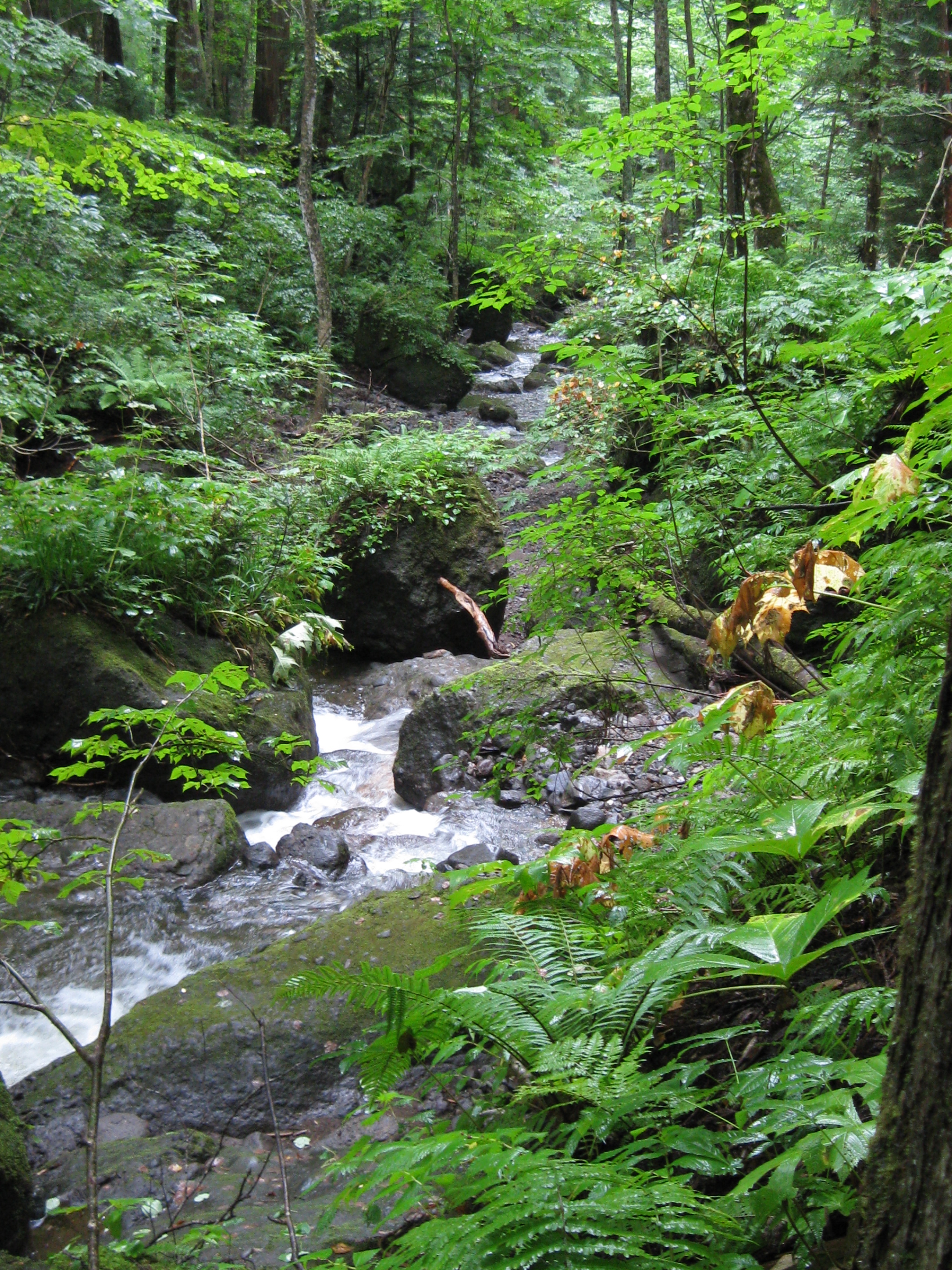
Shinto may have originated as a nature religion....

The question is whether Shinto really is a tradition of nature worship that is compatible with contemporary conservationist concerns, or not; and whether notions of ‘nature’ and the ‘environment’ within Shinto discourse correspond to uses of the terms by ecologists and conservationists.

Shinto and nature

When studying the relationship between Shinto and nature, one must bear in mind that both concepts are, to a certain extent, historical constructions, the meaning of which is subject to change. The concept ‘Shinto’ is complicated, and carries a variety of meanings. It is intertwined with normative notions regarding the nation, its origins, and its relationship to the imperial family.

Different definitions correspond to different historical narratives and, accordingly, political positions. In other words, ‘Shinto’ is an ideal typical construction, that may be based on actual ritual practices and shrine traditions, but does not equal them.

In any case, there is a fundamental difference between essentialist interpretations of Shinto, which typically assert that Shinto is the ‘indigenous’, ‘ancient’ tradition of ‘the’ Japanese people; and historical constructivist approaches, which see the modern, institutionalised religion Shinto as the product of a variety of historical and ideological developments, that emerged within the context (institutional as well as theological) of Buddhism and Confucianism, and did not become an ‘independent tradition’ until the second half of the nineteenth century. The ahistorical essentialist interpretation continues to be told in popular-scientific introductions to ‘world religions’, travel guidebooks, online encyclopedias and some academic publications.
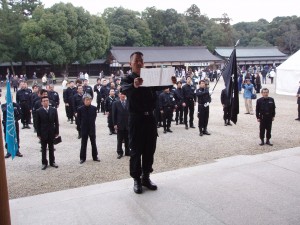
...... but it's not always clear what ends it serves

In recent years, primordialist and essentialist notions of Shinto have been combined with environmentalist rhetoric, giving rise to something we may tentatively call a ‘Shinto environmentalist paradigm’. Shinto has been redefined as, fundamentally, an ancient animistic tradition primarily concerned with worshipping ‘nature’ and preserving the harmony between human beings and their natural environment. Several foreign scholars have written essays in which they advocated the idea that traditional ‘Shinto’ worldviews could serve as blueprints for environmental ethics. In Japan, a number of actors have been instrumental in this development, including cultural theorists, Shinto ideologues, shrine organisations, ecologists and artists.

A famous example of the latter is the film maker Miyazaki Hayao, well-known internationally for animated films such as My Neighbor Totoro, Princess Mononoke and Spirited Away, in which environmentalist critique is combined with a creative reimagination of Shinto-esque deities.
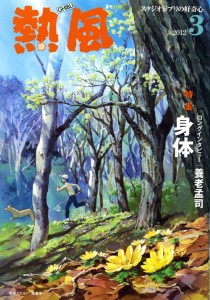
Within academia, the ‘Shinto environmentalist paradigm’ has been legitimated by means of a reimagination of prehistorical ‘Japanese’ as living in harmonious coexistence and correlation with their natural surroundings, supposedly expressed in animistic beliefs and practices. Scholars subscribing to this paradigm (such as Umehara Takeshi, Yasuda Yoshinori, Ueda Masaaki and Sonoda Minoru) generally assert that in the modern period, this traditional environmental awareness has been largely forgotten as a result of the import of ‘Western’ technology and ideology, which have caused widespread environmental, moral and cultural deterioration.

In their view, the solution to contemporary problems (social as well as ecological) therefore lies in the reestablishment of ancient modes of relating to nature; i.e., in the establishment of an ‘animism renaissance’, and the preservation and reconstruction of sacred forests, so-called chinju no mori. Much recent discourse has focused on the latter concept, and a movement has emerged which focuses on raising public awareness about these forests, assisting shrines in forestry practices, and, in the process, redefining the role of Shinto in Japanese society.

****************************************************

An interesting response to the above has been made by Arne Kalland, professor of Social Anthropology at the University of Oslo, which will follow in Part Two.
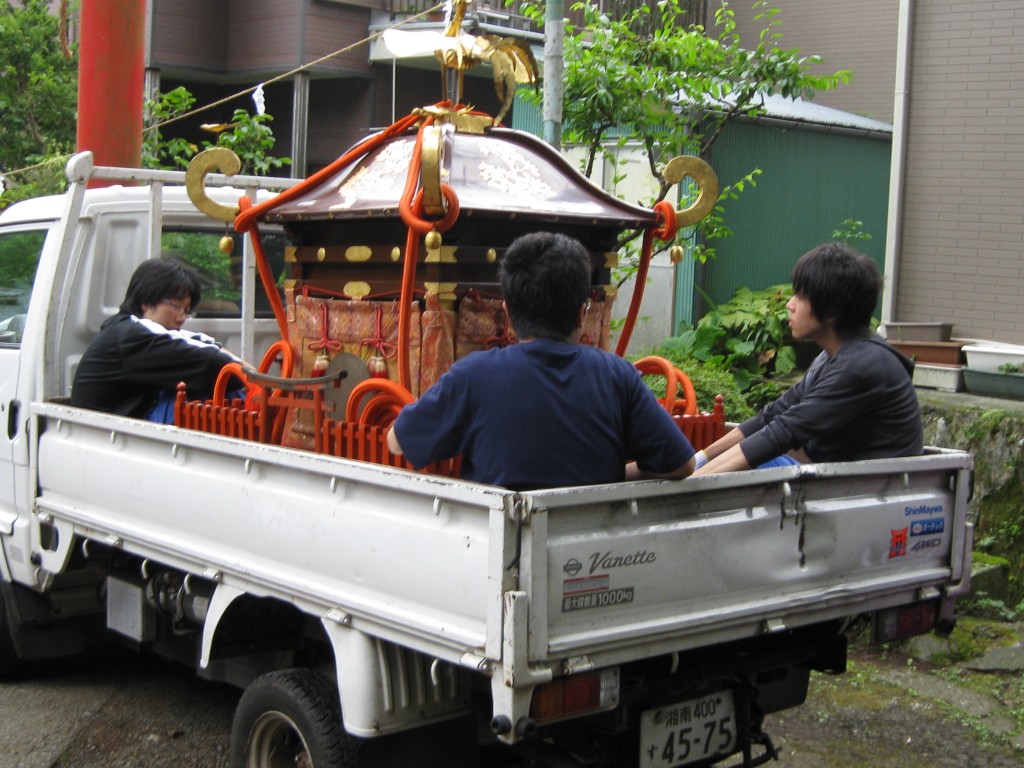
Shinto's commitment to environmentalism remains far from clear
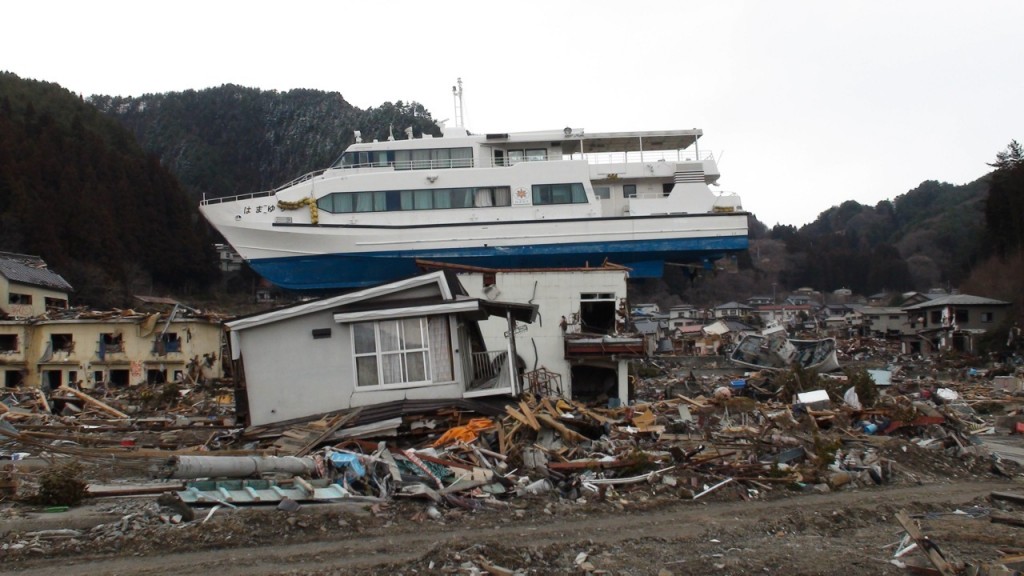
Thoughts on 3/11

 
An article in the Huffington Post below has some interesting things to say about the response to the tsunami and earthquake on 3/11 last year.  The paradox of Japanese declaring themselves to be not religious yet behaving in a religious manner has often struck observers as puzzling.  Katherine Marshall touches on the subject below with some thoughtful insights and notes that “Places of worship in Japan are said to outnumber convenience stores by a factor of four and community centers by a factor of nine.” (For the full article, see here. )

*****************************************************************************************************

Senior Fellow, Berkley Center for Religion, Peace, and World Affairs at Georgetown University

3/11 Japanese Earthquake – The Untold Stories of Spiritual Response

Japanese religion today defies simple descriptions and it is often ignored. Some 70 percent of Japanese say they belong to no religion. But after 3/11 the spiritual beliefs that are deeply embedded in Japanese culture came into play. The religious response to the 3/11 catastrophe is an important part of the story of recovery.

In the tsunami’s immediate aftermath, people prayed, looking to their core beliefs and values for courage and understanding. Then the practical sides of religion came into play. Places of worship in Japan are said to outnumber convenience stores by a factor of four and community centers by a factor of nine. Temples, shrines, churches and other entities are everywhere and they often served as the centers where supplies were distributed and that welcomed people whose villages had disappeared and who were evacuated from the contaminated zones. Japan’s 80,000 temples and 85,000 shrines were logical sites for communities to gather, and, perhaps as evidence of historic wisdom, many were beyond the reach of the tsunami’s waves and thus survived.

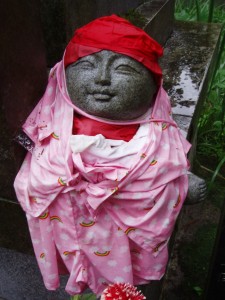
The ubiquitous Jizo, mediating between this world and the next

Monks and priests in the areas affected were present from the very first moments and today, on the first anniversary, they will lead prayers for those lost and for recovery. They offer comfort and a link between past and future.

But the response of religious institutions extends far beyond traditional prayer and community. Japan also has a vibrant and complex set of newer religious movements and organizations that sprang into action. They used ancient and modern techniques: from personal appeals to followers to skilled media campaigns. While bureaucracies and governments moved slowly, hampered by rules, political infighting, and inadequate preparation, these groups mobilized aid efforts. They displayed strong organization and an ability to mobilize both funds and volunteers, among young people especially, and across international borders.

Tenrikyo, an organization founded in 1838, established a disaster response center and built on a long history of volunteering rooted in its religious practice of hinokishin. Soka Gakkai, the largest movement of its kind, immediately turned its Tokyo headquarters into an emergency communication center. Their northeastern facilities became shelters and centers to ship food and supplies to the surrounding areas. Rissho Kosei-kai, another large movement, mobilized ambitious relief efforts and raised large charitable donations. Their efforts were profoundly practical but they also offered spiritual support, to their own members and far beyond.

Worldmate, a new religious movement, combines elements of Shinto and Buddhist traditions and is involved in a remarkable tapestry of philanthropic efforts (its leader, Haruhisa Handa, is a trustee of the World Faiths Development Dialogue, which I lead). They instantly refocused their complex charitable work on northeast Japan. Teams with trucks delivered supplies of food and emergency supplies within days of the tsunami and their information was far ahead of government bulletins (they had members inside the Fukushima plant). As the nuclear disaster unfolded, the group looked far and wide for Geiger counters, and succeeded in borrowing them from a UK university. They called themselves the Godzilla squads, after the legendary monster created by nuclear radiation. They trucked supplies as far as the Geiger counters showed them to be safe, reaching many who felt abandoned and alone.

Tohoku: dawn of a new day

The active and constructive religious response to Japan’s 3/11 catastrophe caught some by surprise and it has received fairly scant attention. But what happened may well stand as an important landmark. It shows what one leader calls the unconscious religiosity of the Japanese: an amorphous sense of being connected to something transcending the self, a gratitude to the ancestors, divine beings, and people in general. It is alive, he says, even within those who say that they have no religion.

While the traditional shrines and temples served as havens that helped to rebuild communities, the newer religious movements played different roles. Appealing especially to young people, they showed that religion in Japan has dimensions that are modern and focused, combining traditional appeals to solidarity and spirituality with modern capacities to mobilize and direct energies to productive ends.

This religious story shows an important if often obscured face of Japan. It is part of Japan’s remarkable response to the disaster, part of the fortitude, community solidarity, and determination to rebuild that we must admire and salute as we mark 3/11’s first anniversary.

Hidden Christians (Part Two)

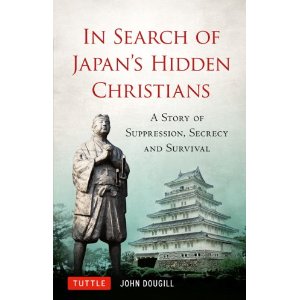
Extract from my book In Search of Japan’s Hidden Christians, published today in the US, the UK and Japan…. (For Part One of this article, see here.)

************************************************************

Cave on the Goto Islands where Hidden Christians hid from persecution

As my journey was nearing its end, I happened to talk to a Japanese woman who told me she prayed every evening before she went to bed to kamisama (a respectful name for god). Which kamisama, I asked, in the analytical manner that characterizes Westerners. “The kamisama in heaven,” she answered as if it was self-evident. But what heaven? I persisted, bluntly. Only when pressed did she even consider the matter. Her kamisama, it turned out, was a nameless composite embracing Jesus, all the buddhas and the whole multitude of Shinto kami. It was one in all, and all in one. No singular, no plural.

The underlying unity of “the masks of God” was detailed most famously by Joseph Campbell, who in an interview with Bill Moyers said that “Every god, every religion, every mythology is true in this sense. It is true as metaphorical of the human and cosmic mystery.” The Japanese long ago realized that the divine comes in multiple guises, and in consequence developed a natural inclination to syncretism. It is exemplified by the Hidden Christians of Hirado, who not only kept their closet gods but maintained a kamidana (kami shelf), butsudan (Buddhist altar) and worship of house spirits. In reverting to a combinatory belief, they were reverting to cultural type.

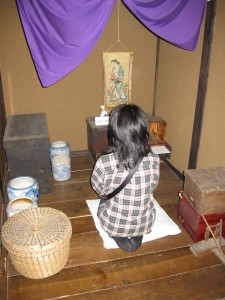
Recreation of a Hidden Christian altar from Edo times in Ikitsuki Museum

The worldview was formed in ancient times by customs and practices that have since come to be called Shinto, and I’d reached the conclusion that here lies the key to an understanding of Japanese culture. Not in Zen, as D. T. Suzuki had it, but Shinto. A Hidden Christian woman whom Christal Whelan interviewed in her research on the Goto Islands illustrates the point. In an attempt to convert her, a Catholic priest had been giving her Bible lessons. “What a strange book,” she said, “I understood nothing.” By contrast, Shinto which derived from the seasonal round of agrarian life, made perfect sense to her. It also provided communal continuity, for it was what the ancestors of her ancestors had practiced.

My journey had finished, but as T. S. Eliot memorably put it, “The end is where we start from.” A new journey beckoned, one that I hoped would take me to the country’s shrines and the circular mirror that stands at their core. In the magic mirror of the Hidden Christians was concealed a secret image of the crucifixion: within the mirror of Shinto lies the soul of Amaterasu. They are two images of the divine, one universal and one particularist. One speaks of a creator God, the other of an ancestral deity. One is transcendent, the other animist. They seem to have little in common, to epitomize an unbridgeable gap whose consequences were evident in the martyrdoms and persecution of Edo times. The genius of the Hidden Christians was to reconcile the two. As they pass into history, their legacy surely deserves to be cherished.

**************************************************************************

Today it’s estimated that there are fewer than 1000 practising Hidden Christians, concentrated on the island of Ikitsuki off Hirado and in Goto.  Most are elderly, there are no more baptisms being carried out, and no successors willing to take over hereditary duties. In all probability this is the end of the line for the tradition.

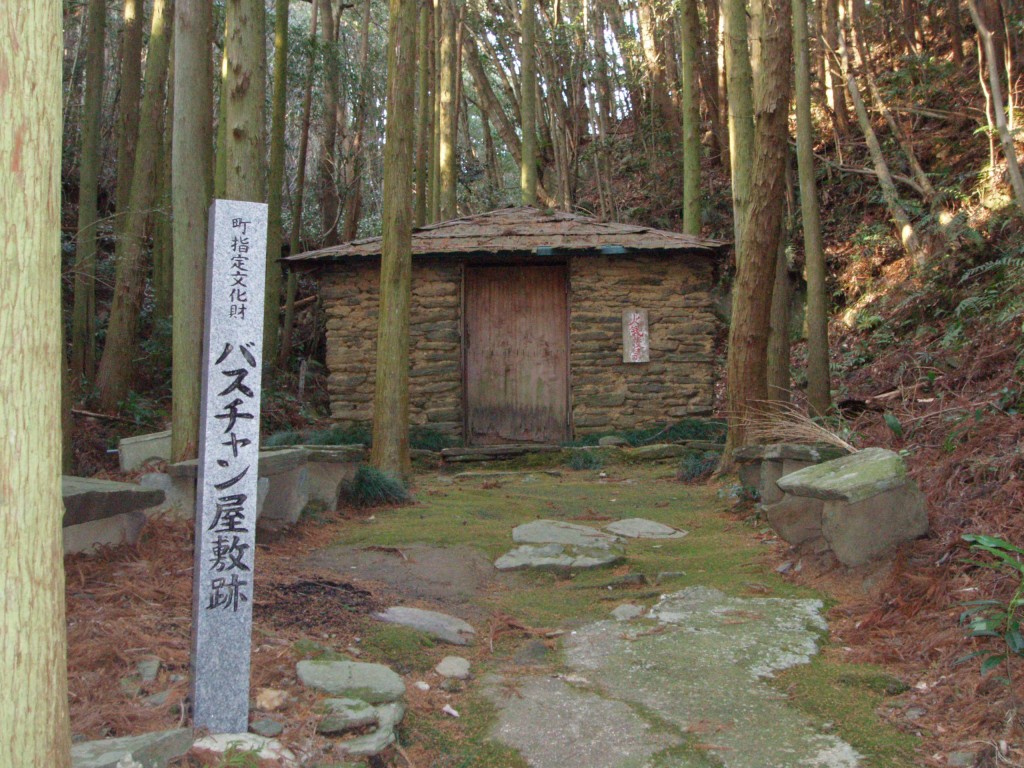
Bastian's hut at Sotome, where an influential Hidden Christian leader stayed in the woods in the 1640s

Hidden Christians (Part One)

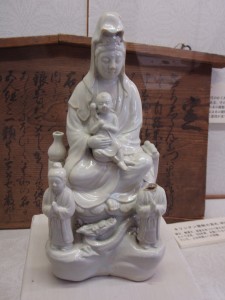
Today is the official launch of my new book, In Search of Japan’s Hidden Christians (Tuttle). In celebration I thought I’d write something of the Shinto connection. Some may be surprised to find that there is one, because the Hidden Christians are usually linked with Buddhism. They not only worshipped the Maria Kannon, but had to register with a Buddhist temple in accordance with Tokugawa law.  They underwent Buddhist funerals too.

But first of all, what are Hidden Christians? In 1614 Christianity was banned, out of fear that Catholicism would subvert the power of the shogun. It’s been estimated that by that time the European missionaries had managed over 300,000 converts. Torture and executions were used to eradicate the faith, and the policy of isolationism after 1639 was partly implemented with the same intent. By mid-century it was thought that not a single Christian remained.

Maria Kannon, symbol of the Hidden Christians. Kannon to the outside world, but Maria to believers.

In 1854 Japan was prised open by Perry’s Black Ships, and eleven years later came an astonishing revelation: groups of villagers, mostly illiterate, had continued to practice Christianity in secret despite all the preventative measures put in place. For seven generations they had passed the religion down to their children despite having no Bible, no priests, and no sacraments except for baptism. Isolated and imperiled, they clung to their faith, and the result was often unorthodox.

Remarkably, even after the toleration of Christianity in 1873, about half of the 60.000 Hidden Christians refused to join the Catholic Church. Instead they preferred to carry on with the rituals and prayers taught to them as children. Some of their descendants still do.

Shinto influences
In ‘camouflaging’ their religion, the Hidden Christians used many practices associated with Shinto. Obvious examples would be their use of shrines as cover for their prayers. The most famous instance is Karematsu Jinja at Sotome, where a Christian martyr called San Jiwan is buried.  It’s the area in which Endo Shusaku chose to set his novel on Hidden Christians, Silence (1966). Martin Scorsese was there a couple of years ago preparing for the adaptation of Endo’s novel, which is due to start shooting later this year.

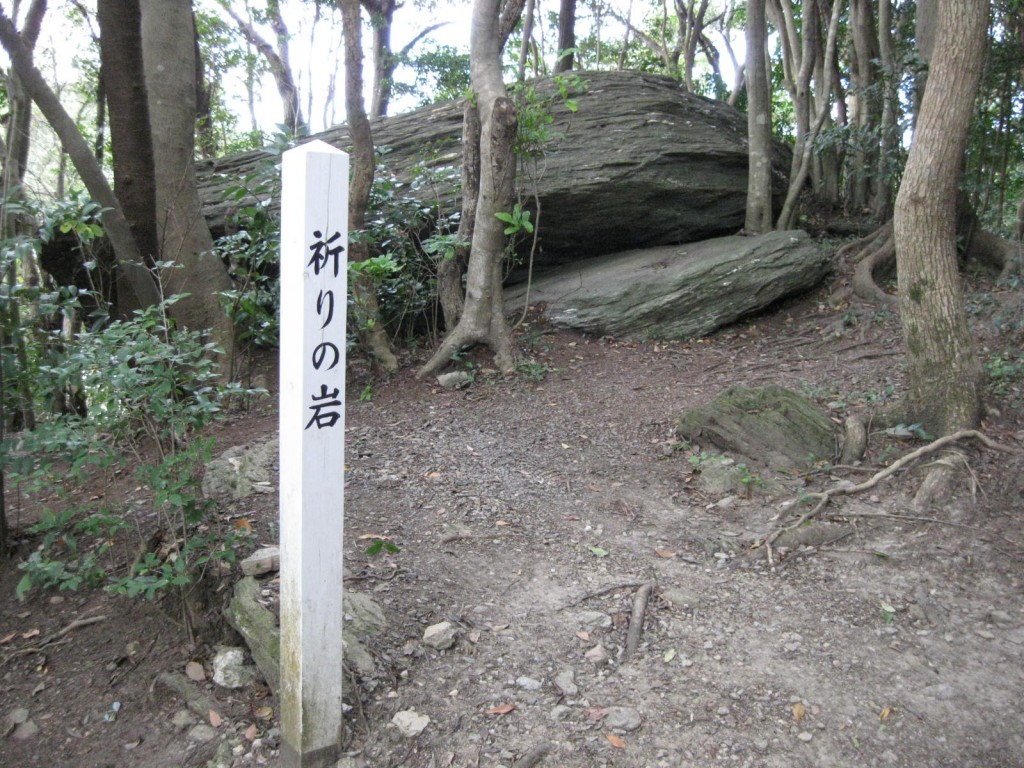
Sacred rock where villagers pretended to be offering Shinto prayers, but were in fact venerating the martyr San Jiwan


To avoid suspicion, veneration of San Jiwan was camouflaged as worship of a kami. It made good sense, since the hill is of the wooded type often celebrated in Shinto. Even in modern times, when the need for subterfuge had long passed, the honoring of San Jiwan continued in Shinto style as if entirely natural.

Until the 1930s there was a small shrine (hokora), where soldiers going off to war would pay respects, then in the late 1930s a building was erected (which was reconstructed in 2002). It is a rare instance of a Shinto-style shrine with no torii. Inside are pieces of the original pine trees, and a grave with an inscription to San Jiwan, pappa confesoru—a faux Latin tribute to the priest-confessor.

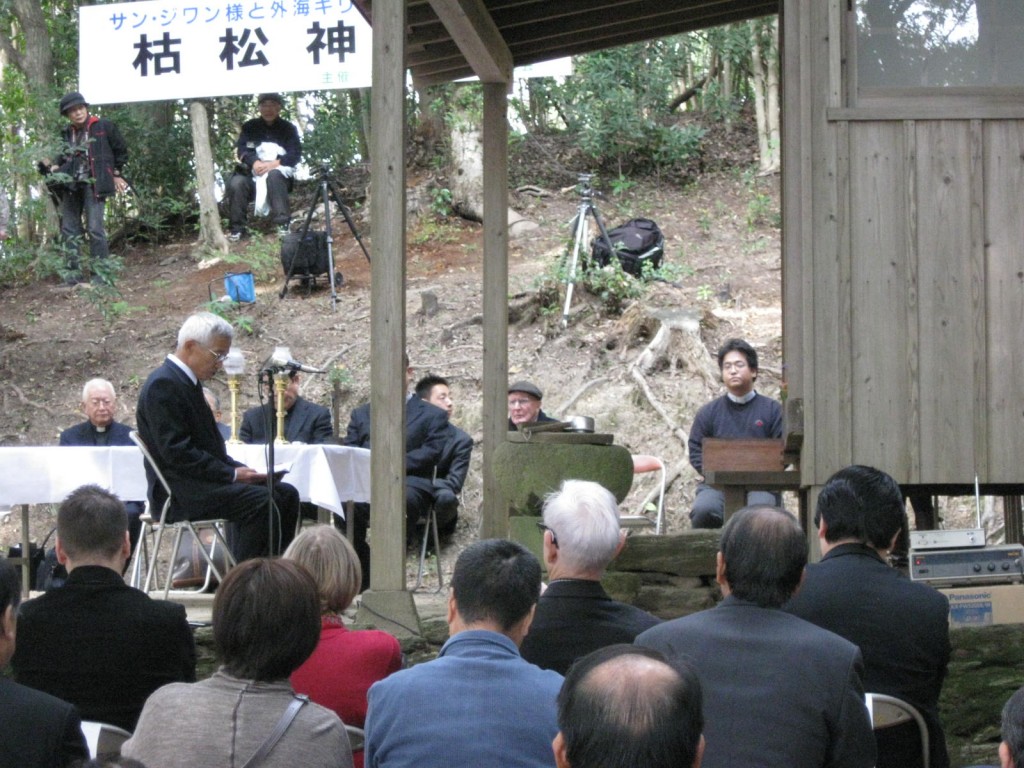
A present-day "Hidden Christian" reading orashio (prayers) at an interfaith ceremony at Karematsu in 2010. The prayers were handed down orally for seven generations and in many cases the original wording was badly corrupted as a result.

Hikaru Genji lived here

Site of the Heian-era palace of Minamoto no Toru (882-895)


One of the delights of Kyoto is coming unexpectedly across places of historical import.

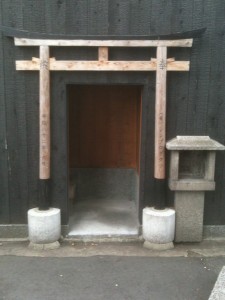
This evening on the way home I passed a torii affixed to a building with a small dark opening.  A nearby noticeboard announced that it was the site of a former palace that belonged to a nobleman called Minamoto no Toru, son of emperor Saga. He’s said to be the model for the hero of the world’s first novel, The Tale of Genji (c.1004).

The site on the banks of the Kamogawa by Gojo Bridge once hosted Toru’s retirement villa, called Kawara-no-in.  It was a huge affair befitting a former prime minister (sadaijin), with water from the river feeding a pond garden and villas of exquisite beauty amidst wooded surrounds. Here paraded the aristocratic aesthetes of Heian times.

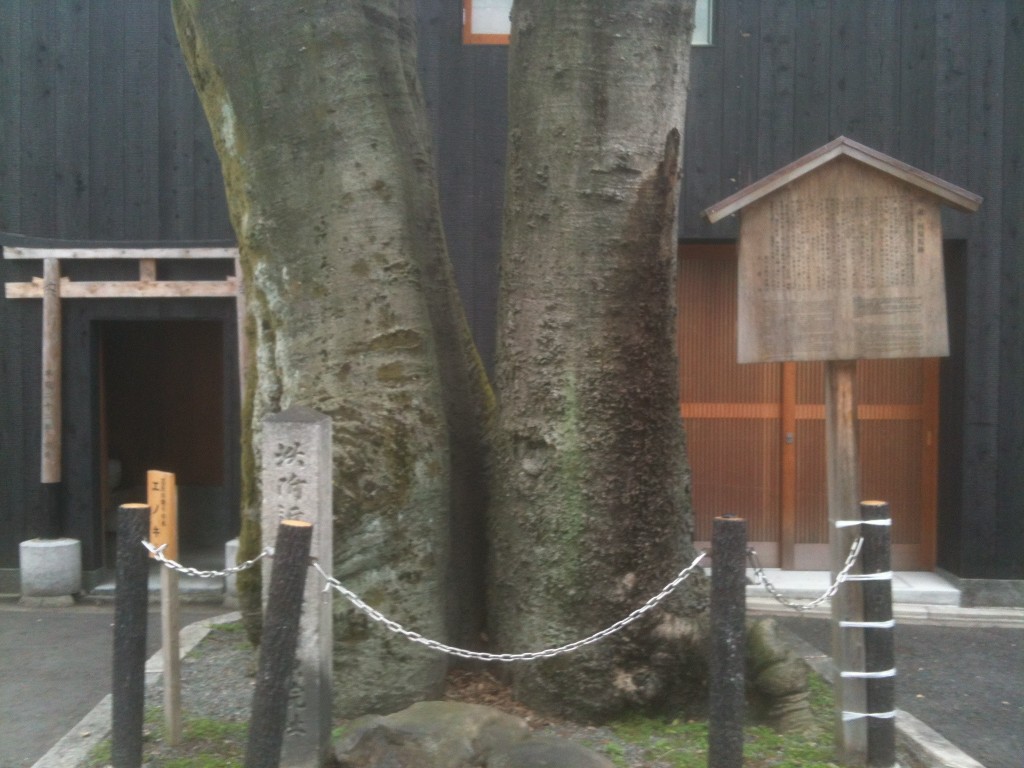
The hackleberry tree in the picture above is thought to be a sole survivor from the original woodland.  It was selected as ‘Tree of Honor of Shimogyo Ward’ in 2000 and serves now as the sacred tree of the small shrine established in the building behind, dedicated to Enoki Daimyojin (deity of hackleberry trees).

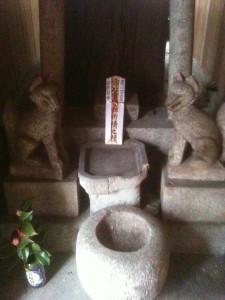
I took a peek inside and found a small shrine with guardian foxes and an ofuda as the central focus.  It’s relatively new as I used to live in the neighbourhood and don’t remember seeing it then.  So it’s interesting to think about how it came about, no doubt motivated by local pride in the historical association.

In other countries a memorial plaque would suffice to mark the place, but here a spiritual dimension is attached.  It’s a trait of Shinto to mark great events of the past, and you could say that it is history which is being sanctified here, or rather literary history.  For those like myself who love the romance of place, it invests the notion of being a literary pilgrim with real meaning. In paying respects to the hackleberry tree, one is expressing gratitude for Murasaki’s immortal creation.

Gohei

Basil Hall Chamberlain (1850-1935) was a fascinating person, who stands in opposition to his one-time friend Lafcadio Hearn. I’ve recently ordered his biography. Chamberlain was a scholar and a rationalist.  Hearn was a romantic, who sought escape from convention and industrialisation.

Both men wrote illuminatingly on matters to do with Shinto. Chamberlain displayed his astonishing knowledge in Things Japanese (1890-1936) and contributed a translation of Kojiki (1882) which is still in print and used today.  Hearn wrote seductively of Japanese folk religion in such books as An Attempt at Interpretation (1904), as well as writing specifically on Japanese Religions.

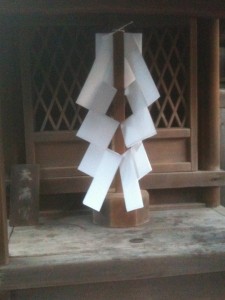
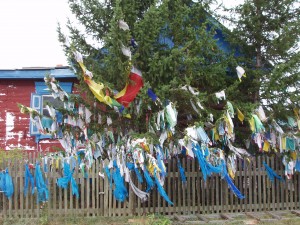
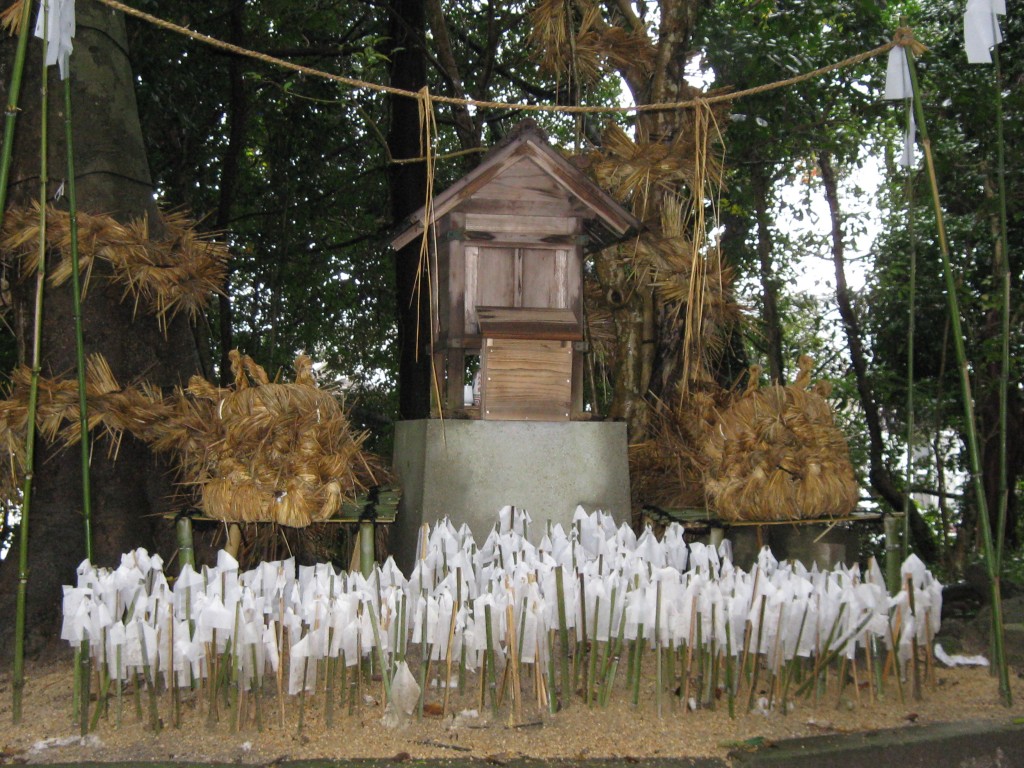
In a short paper entitled ‘Notes on the Japanese Gohei, or paper offerings to the Shinto Gods’, Chamberlain traced the history of these ubiquitous items.  Prior to the eighth century, he says, they were made of cloth.  There was a white kind made from paper-mulberry (brussonetia papyrifera) and a blue kind made of hemp.  In ancient times the cloth would have been a most precious product and therefore a worthy offering.  I couldn’t help but be reminded here of the cloth one finds in shamanistic cultures, fluttering evocatively in the wind.

Shaman offerings of the Buryat Mongols near Irkutsk

After the advent of new technologies and the arrival of Chinese silk, cloth was no longer regarded as so special as before.  As a result paper was substituted at some stage, also a treasured item in ancient Japan.  The move was partly through frugality, Chamberlain claims, and partly “in accordance with that law of progress from the actual to the symbolical which characterises all religions”.

There are different styles of gohei, with the Yoshida style having four folds and the Shirakawa style having eight folds.  Major shrines such as Ise, Izumo and Kashima have their own slight variations too, so it’s something to look out for when visiting shrines.  If I could be permitted to coin a Japanese-type slogan, “let’s go-hei watching” !

**********************************************************************

Basil Hall Chamberlain, “Note on the Japanese Go-Hei, or Paper Offerings to the Shinto Gods”, ‘The Journal of the Anthropological Institute of Great Britain and Ireland’, vol. 18 (1889), pp. 27-29.

For a gohei presented by Chamberlain to the British Museum, see here.

Gohei displayed at a sacred site at Iya Jinja in Shimane prefecture

3/11 Commemoration ceremonies

Today’s Huffington Post carries a news item on preparations for the one-year anniversary of the tsunami.  The number of shrines damaged in the disaster is quite startling: roughly 5% of the country’s total.

***************************************************************************************************

Shinto Priests Prepare To Hold Commemoration Ceremonies On March 11
By Debra Rubin

WASHINGTON (RNS/ENInews) Shinto priests throughout Japan are preparing to hold commemoration ceremonies on March 11 to mark the one-year anniversary of the earthquake and tsunami that killed an estimated 20,000 people.

The Association of Shinto Shrines has issued a suggested prayer to be read during the ceremonies. That prayer, according to the Rev. Masafumi Nakanishi, a Shinto priest, describes the calamity, pleads that there be no more disasters and asks that people live peacefully.

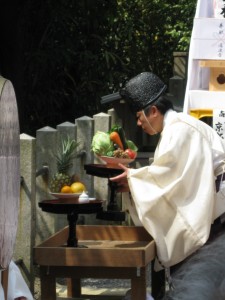
Nakanishi performed just such a ceremony on Wednesday (Feb. 29) at Georgetown University’s Berkley Center for Religion, Peace and World Affairs during a program on the “Shinto response” to the disaster.
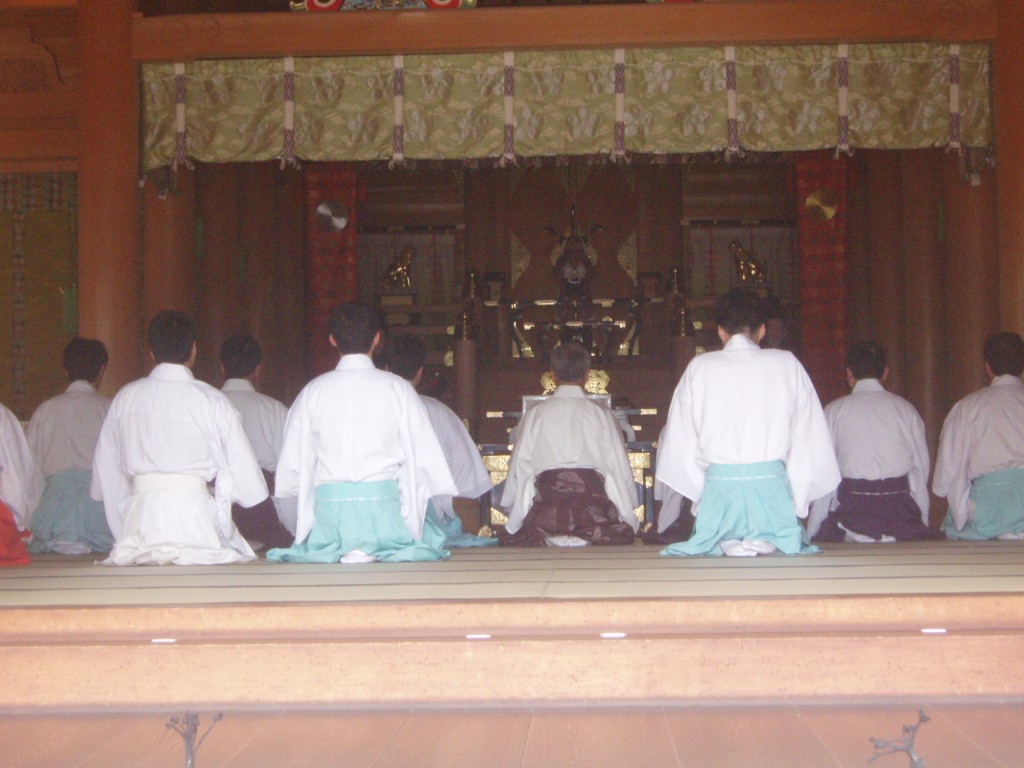
Dressed in a traditional robe with tall black hat, Nakanishi bowed, clapped and chanted before an altar, performing a four-part brief ceremony that included a purification ritual as well as an offering of sacred foods: fruits and vegetables, salt and water, sake (rice wine) and seaweed.

Of the approximately 80,000 to 100,000 shrines in Japan, about 4,500 were damaged; 309 were partially or totally destroyed; and 243 may not be used because of nuclear fallout from the Daiichi nuclear plant, Nakanishi said.

Nakanishi said many of the shrines that were spared last year were built just beyond the tsunami’s reach, crediting Shinto ancestors with their safe placement.

Many of the surviving shrines were used for disaster relief efforts, with some serving as shelters following the earthquake and tsunami and others serving as collection sites for donations to assist the victims.

“I have always found the Japanese people to be very quick to help others,” Georgetown professor Kevin M. Doak said. “The Japanese have a kind of innate, intuitive empathy” that he believes “may be due to Shinto as much as to anything else.”

« Older posts Newer posts »

© 2026 Green Shinto

Theme by Anders NorénUp ↑