Author: John D. (Page 152 of 202)

Ise’s logs for Tohoku

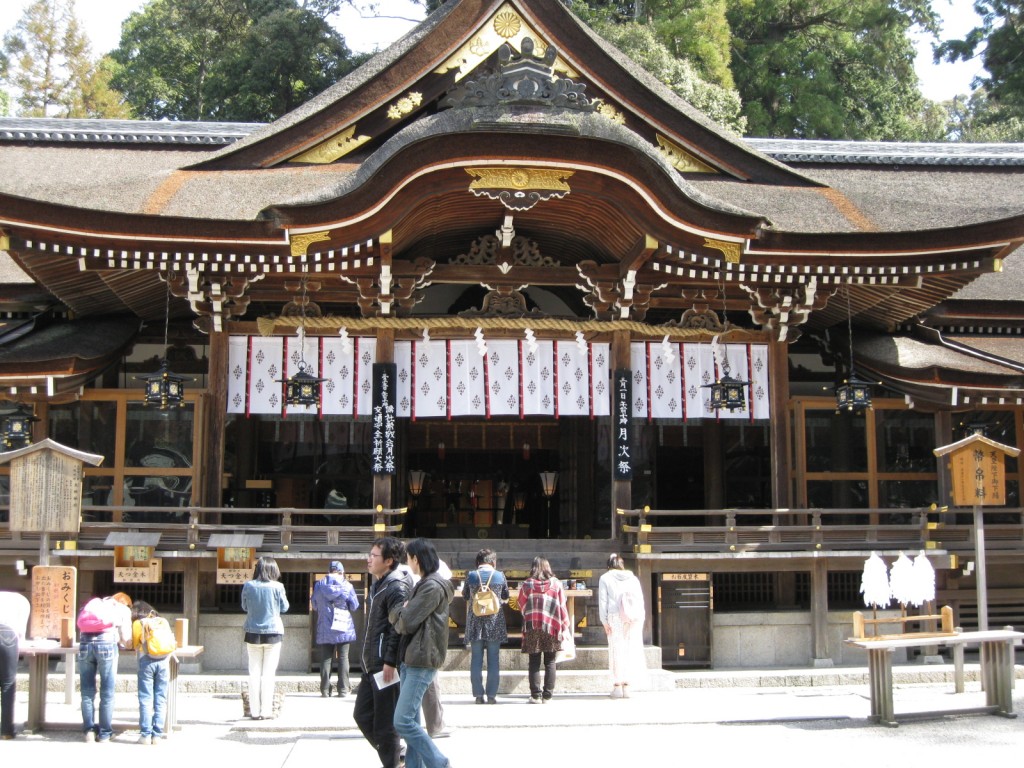
The steps to Naiku, Ise's main shrine building. About as arduous as the modern pilgrimage to Ise gets...

Ise donates cypress logs to fix Tohoku shrines (Japan Times, 1/12)
“Hinoki” cypress from Ise Shrine in Mie Prefecture will be used to rebuild Shinto shrines damaged during the deadly March 2011 Great East Japan Earthquake, whose monster tsunami devastated the Tohoku region.

The shrine conducts the Shikinen Sengu ceremony once every 20 years to transfer enshrined objects to newly constructed buildings.

This year, Ise Shrine will provide cypress logs from trees grown in the area to be used as construction material at shrines in areas affected by the earthquake. In addition, parts of defunct old buildings will also be donated when the 62nd Sengu ceremony ends this fall.

In this 1,300-year-old tradition, 65 wooden buildings, including the Inner Ise Shrine, which houses one of the three sacred treasures, the Yata no Kagami (Sacred Mirror), and the Outer Ise Shrine, are rebuilt and roughly 1,500 sacred treasures, including weapons and furnishings, are moved into the new buildings.
MORE

***************************

Matsuo Basho (1644-94). The great man got to see the crowds at the 20-year rebuilding ceremonies

Basho wrote of the Ise rebuilding on a previous occasion some three and half centuries ago… (courtesy of Gabi Greve’s Joys of Japan-Poetry)

尊さに皆おしあひぬ御遷宮
tootosa ni mina oshi-ainu gosenguu

For holiness,
Everyone has pushed others in the crowd.
The Shrine Removal !
Tr. Oseko

Written on the 13th day of the 9th lunar month in 1689
元禄2年9月13日

After finishing his travels in Oku, he went to see this ceremony at the Grand Shrine at Ise.  One ceremony of the Inner Shrine had already ended on the 10th day of the 9th lunar month, but he was able to see the one of the Outer Shrine on the 13th day.
.
Basho in Ise

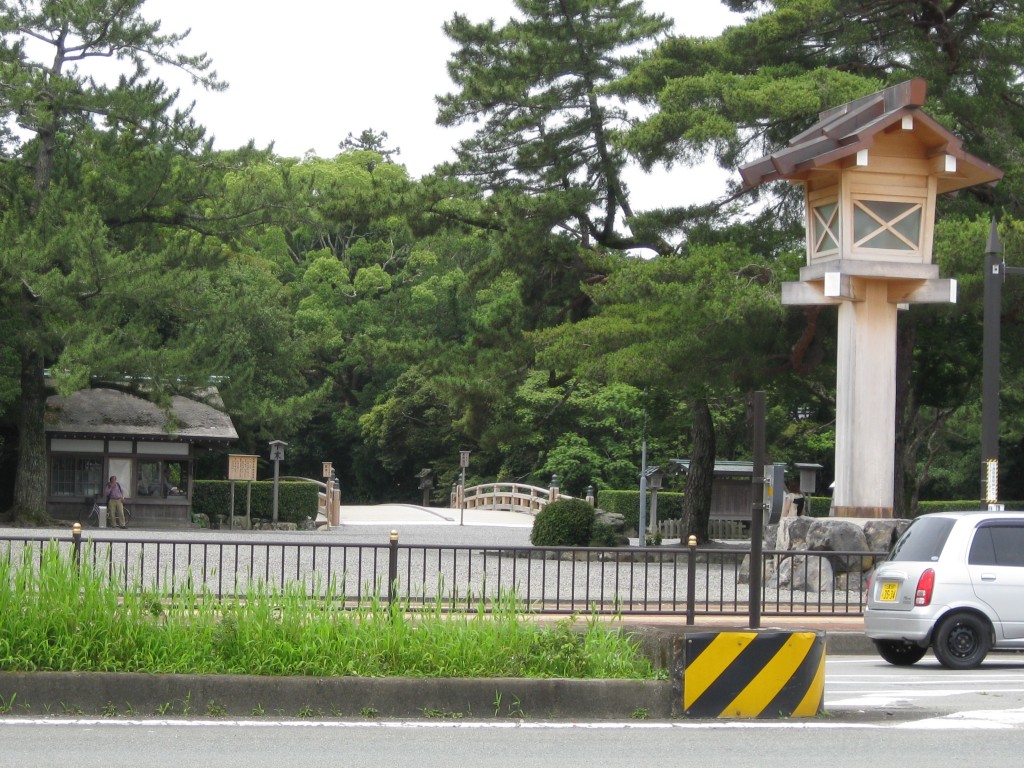
Entrance to Geku, Ise's outer shrine: Basho got to see it without the cars and railing...

Iwami Silver Mine (3)

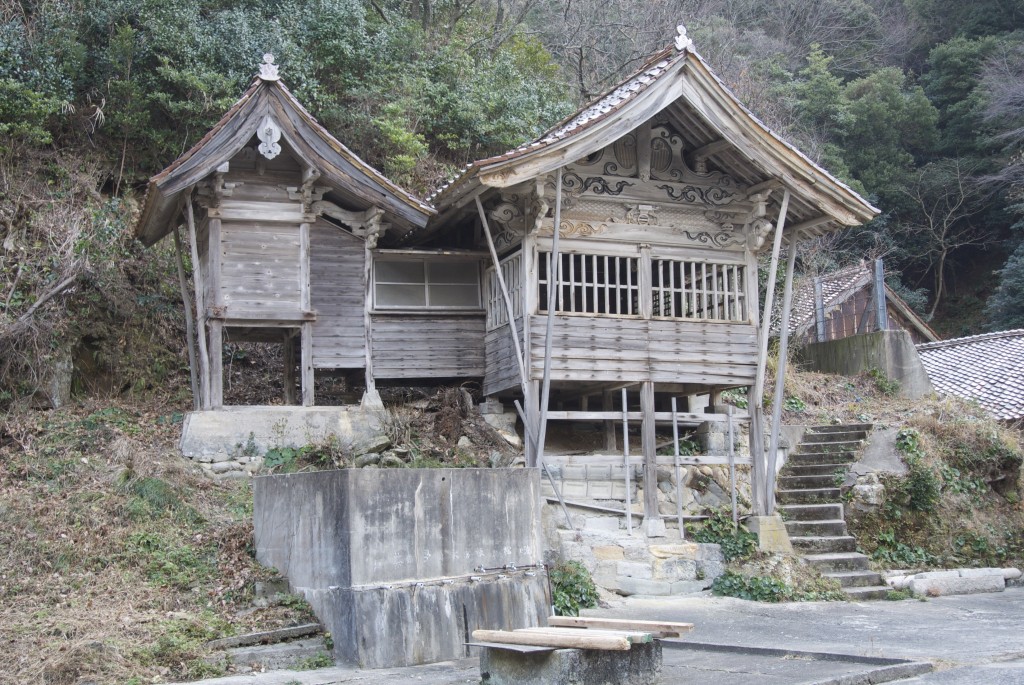
The delightful Ebisu Jinja at Okidomari, now boarded up


The third component of the World Heritage site at Iwami consists of two trading routes that led from the silver mines to small harbours on the Japan Sea coast.  The track to Okidomari is 7 kilometers long; the track to Tomogaura which superseded it in the seventeenth century is 12 kilometers.

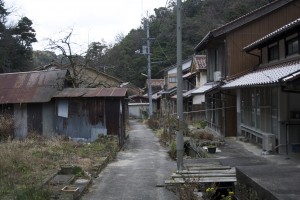
Along the tracks are memorials and protective shrines.  The harbour at Okidomari turned out to be much smaller and modest than I had imagined, with a terribly run-down village nearby.  The houses resembled abandoned shacks and many were  boarded up, with only the elderly left.  There’s a desolate and deserted air about the area, and the water was clogged up with rubbish.  If you want to see how depressed some remote rural regions have become in Japan, this is the place to head.  Not quite what you’d expect of a World Heritage site!

The little shrine at Okidomari looks quite a gem (see pic above), but is also sadly boarded up.  Inside it is empty.  Dedicated to Ebisu, guardian of fishermen and sailors, it once served to protect the vessels departing with their loads of silver.  Now it stands abandoned but under World Heritage protection – an ironic paradox, for a protective shrine is itself being protected.

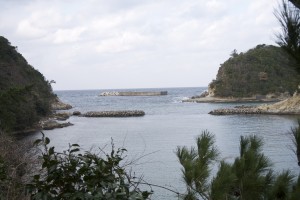
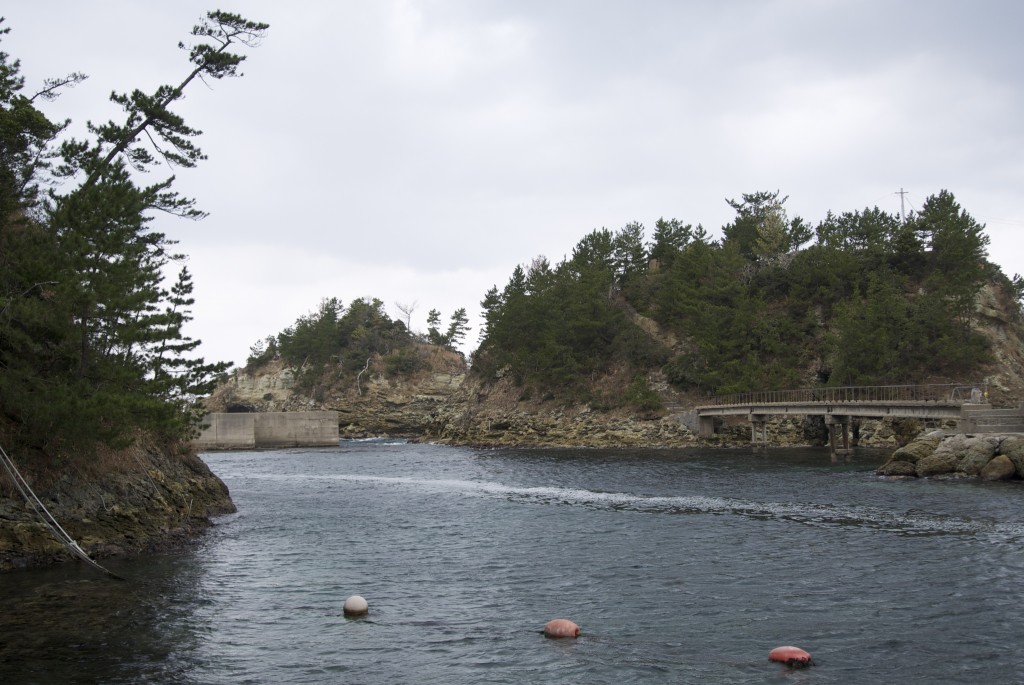
The small harbour at Okidomari

The run-down settlement at Okidomari


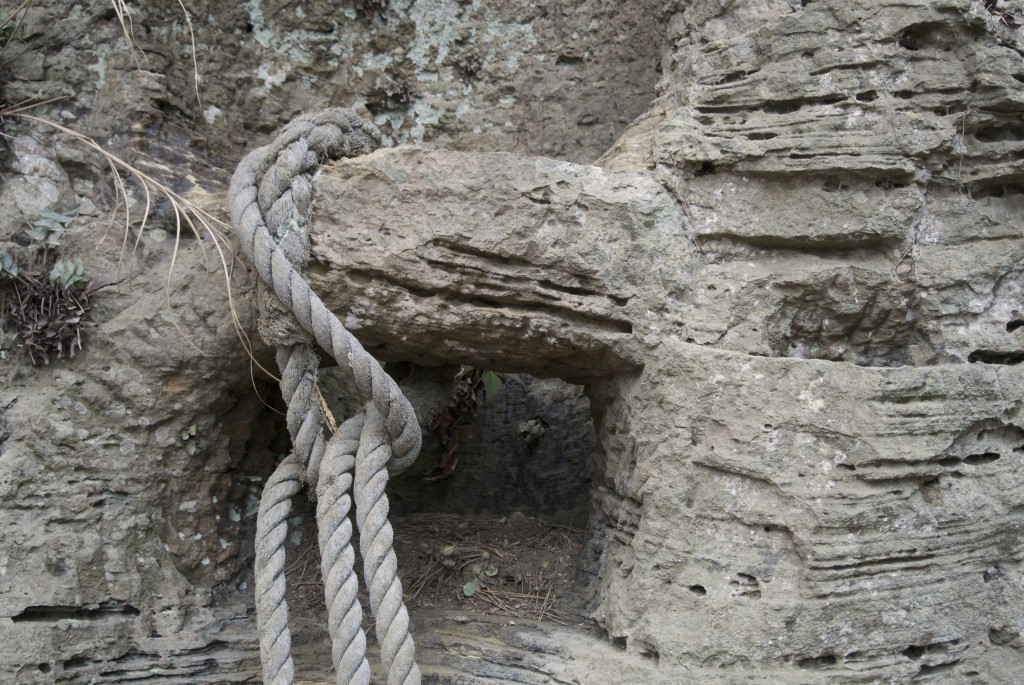
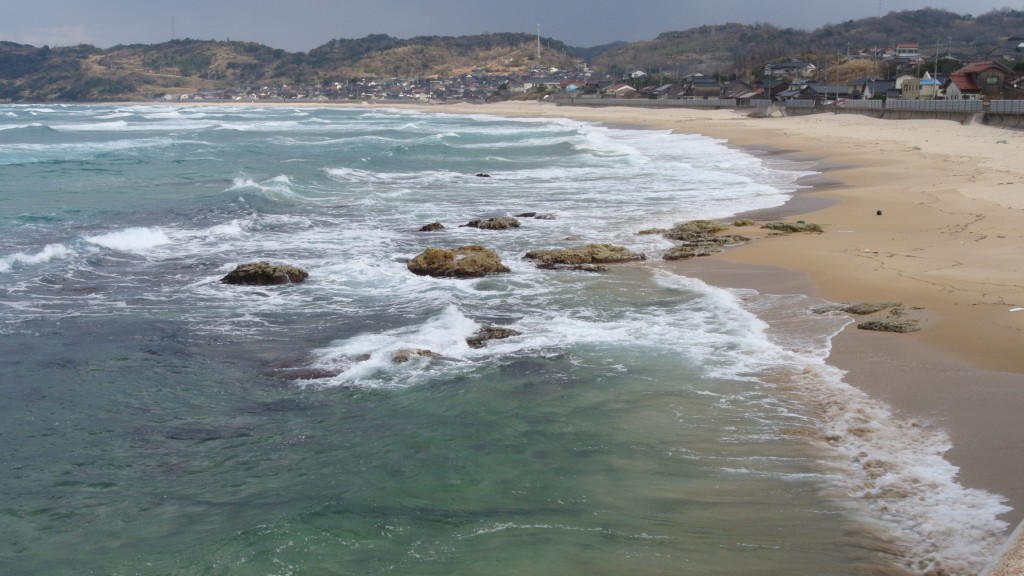
At Tomogaura further up the coast the guardian shrine is dedicated to Benten, and it stands on a small island beloved of the watery muse.  The harbour here is more substantial, and the ‘nose-ring rocks’ to which the trading vessels once moored are still clearly visible. The village here is in much better shape than at Okidomari, and there is even a new tourist facility which in season presents information and advice.  And around the corner is a wonderful stretch of sandy beach at Maji that looked like it would be full of surfers and sea-lovers in summer.

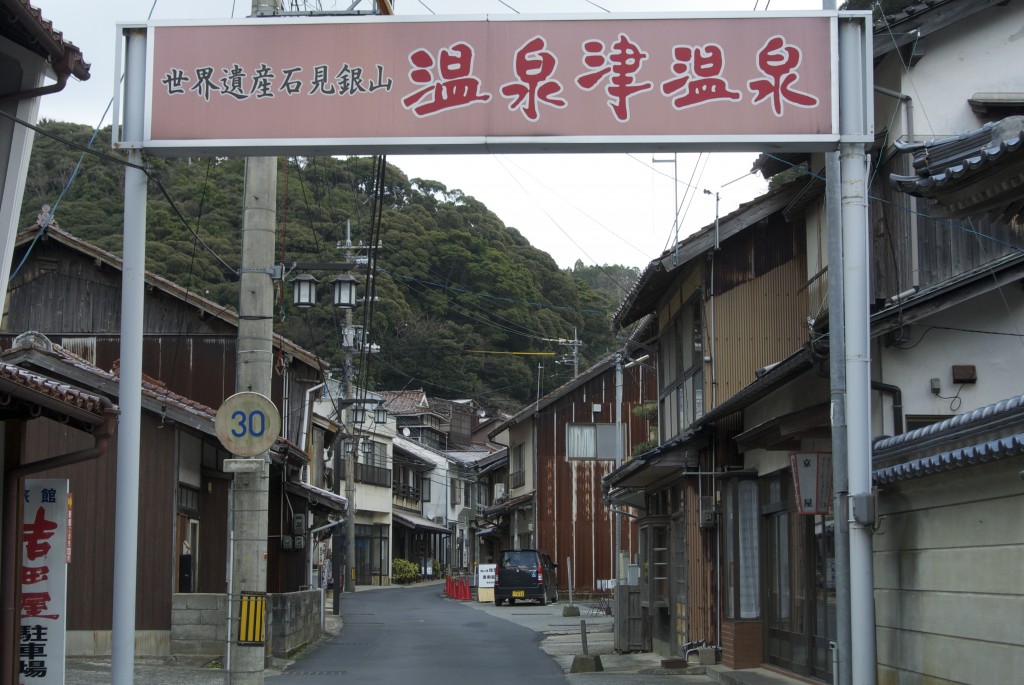
Because of the silver trade passing through the port of Tomogaura, the nearby hot spring resort of Yunotsu flourished as a place to ease the aching muscles.  The waters there are still enjoyed today by tourists in a single street of preserved hot spring buildings which contain a ‘retro feel’.  There are shrines too, including the Tatsu-no-gozen Shrine (Dragon Shrine) which stands in a cave looking out over the sea where sailors ask for protection.

Tomogaura harbour with the Benten island guarding the entrance

Nose-ring rock at Tomogaura to which the trading vessels carrying silver once used to moor

The hot spring resort of Yunotsu which once provided relief for the aching muscles of the silver mine workers

The main shrine at Yunotsu with the 'okunomiya' up on the hill behind


The wonderful beach at Maji – not part of the World Heritage site at all !

Iwami Silver Mine (2)

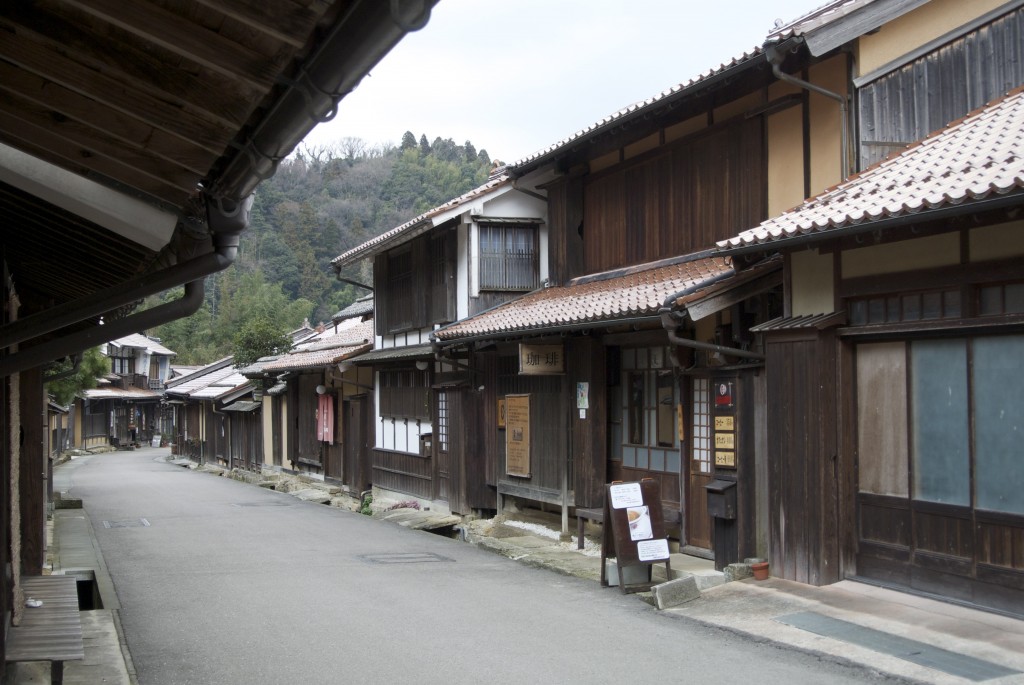
The district of Omori in Oda City, once the head town of the Silver Mine


Part of the World Heritage site at Iwami is the small district of Omori, once the main town of the mineworks.  It is here that the administrators, merchants and craftsmen lived, and it still retains an Edo-era atmosphere.  Some of the houses have been tastefully converted into cafes and souvenir shops.  There’s a well-preserved samurai house, but its modest proportions are dwarfed by the thirty-room Kumagai merchant house, which shows just how profitable the mining was for some.

Ido Shrine, dedicated to the benefactor Ido Heizaemon

There are a couple of interesting shrines in Omori, one being the Ido Jinja which was built to honour a great benefactor of the region.  Ido Heiazemon (1672-1733) was appointed Intendant of the mine in 1731, at a time when famine was plaguing the region.  He had arrived from Edo to run the mine, but was so shocked by conditions that he used up his personal fortune in trying to help local people.

Heiazemon also opened up the rice stores to distribute to the populace, at personal risk since he did not have permission of the Tokugawa, and subsequently promoted the growing of sweet potato as an alternative source of food more suited to the terrain.

Because he had acted unilaterally, the Tokugawa shogunate arrested him but could not execute him because of his popularity.  Conveniently for the shogunate, Heizaemon died at this time – the shogunate said he died of a disease, but some think he committed hara-kiri.

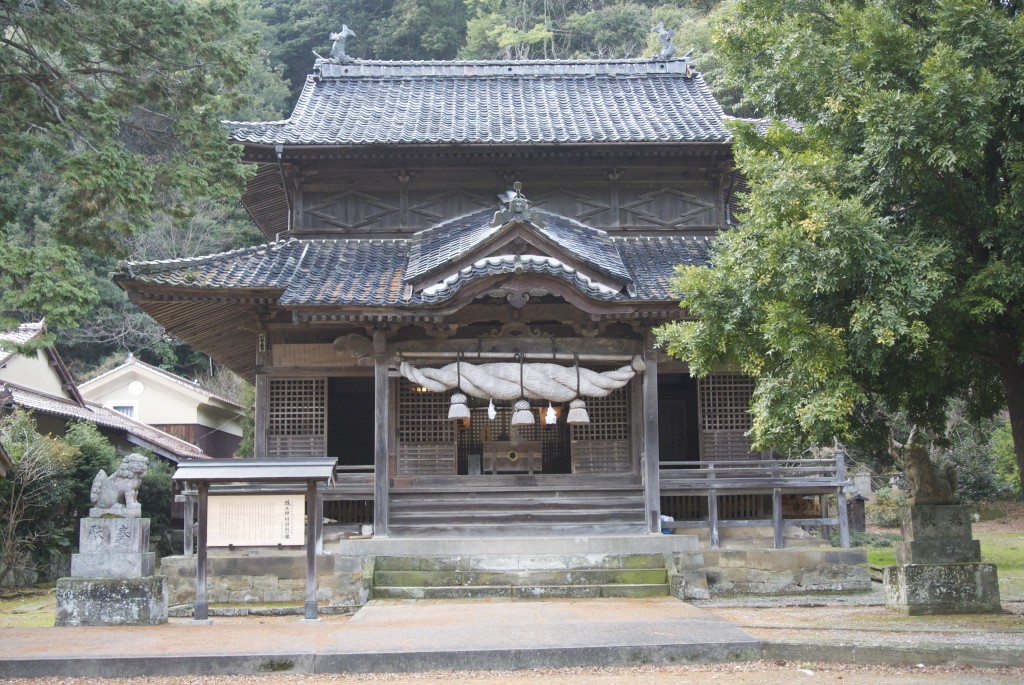
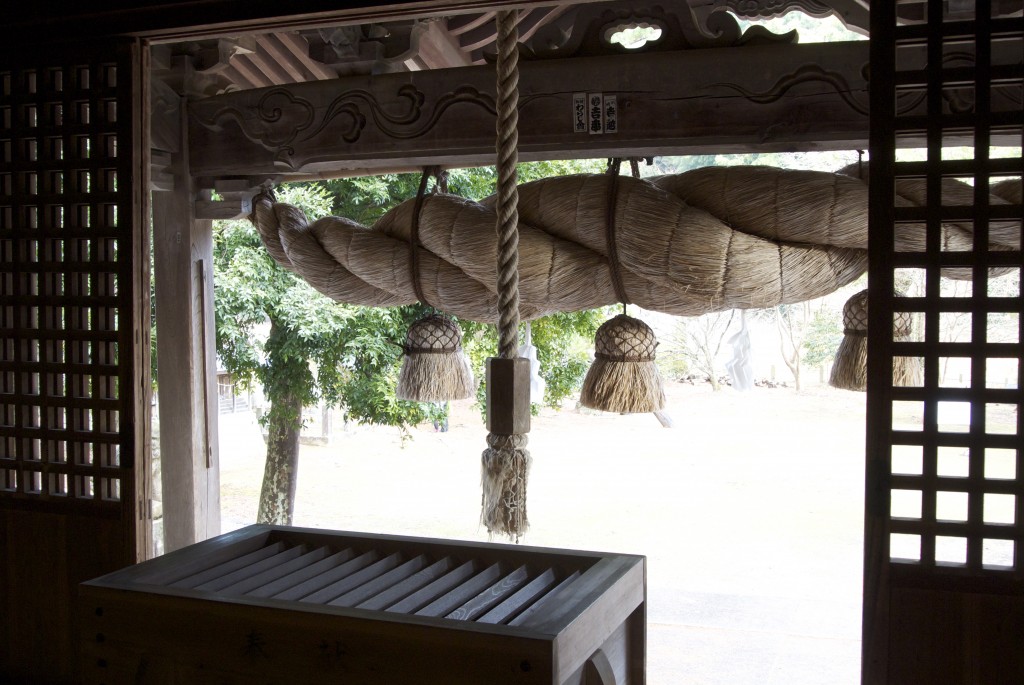
Another of the shrines in Omori is the Kigami Jinja, the current buildings of which date back to 1812.  It’s the largest shrine in the district, housing the guardian deity of Omori which is Oomononushi (aka Okuninushi).  You can tell it’s an Izumo deity by the large shimenawa rice rope hung before the worship hall.  There’s also a nineteenth-century meditation hall with a multil-layered roof designed to emulate the Kamedo Tenmangu Shrine in Tokyo.

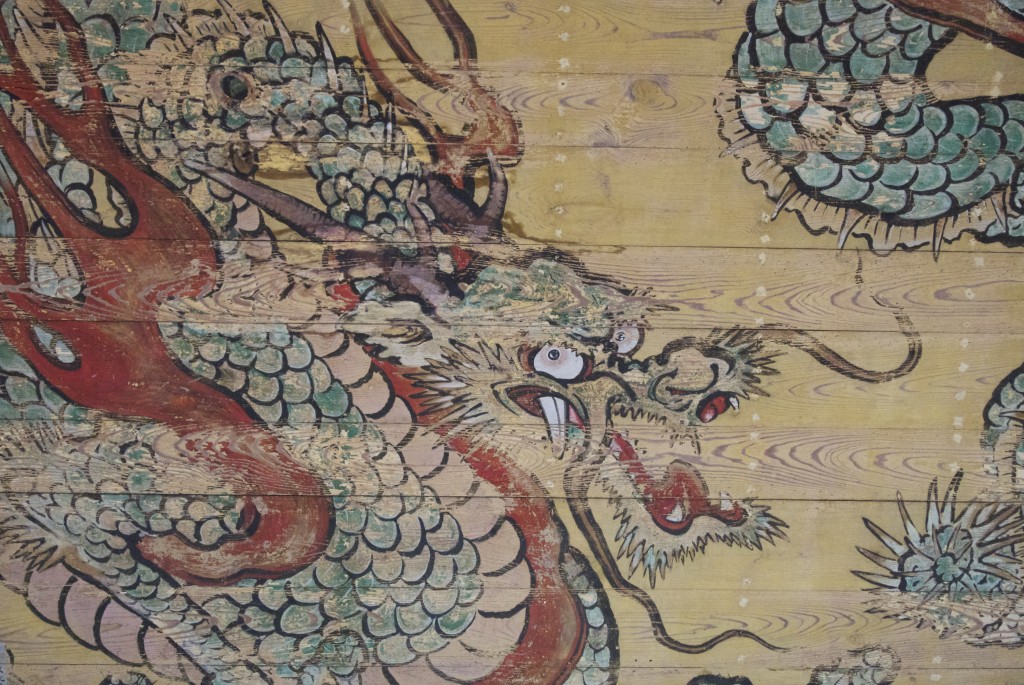
Inside the shrine is unusually colourful, with paintings on the walls and ceiling.  The latter features a dragon which is said to roar when you clap your hands, though I couldn’t hear it myself.  Perhaps it was sleeping.

The roaring dragon of Kigami Jinja

The main building with its characteristic thick Izumo-style rice rope

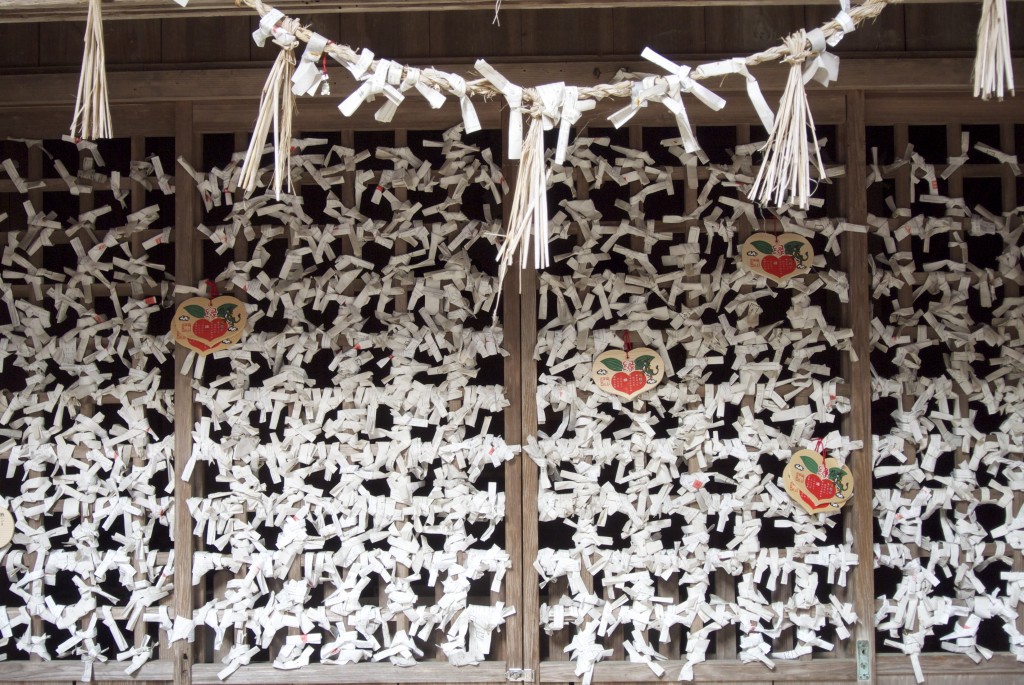
Fortune slips tied on the lattice doors of a building to house the mikoshi

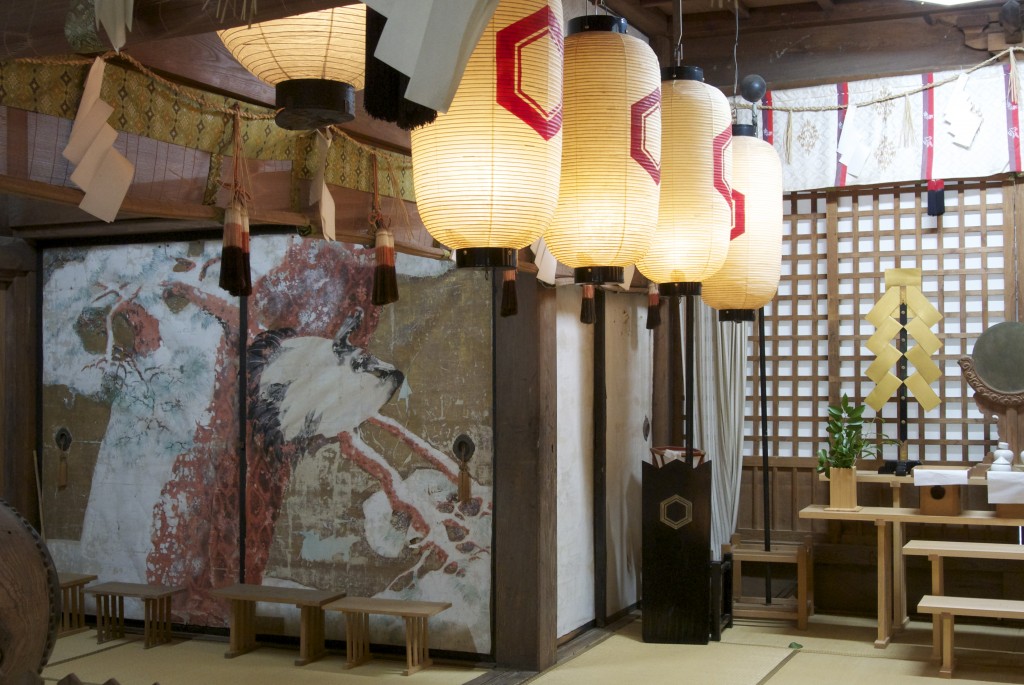
Faded paintings on the fusuma inside the Worship Hall

From inside the Worship Hall looking out past the shimenawa rice rope

Globalisation

An article in the Japan Times today focusses on Shinto’s attempts to explain itself to the outside world.  Note that this is not the same as spreading Shinto to foreigners, but simply a desire to increase international awareness of Shinto.

+++++++++++++++++++++++++
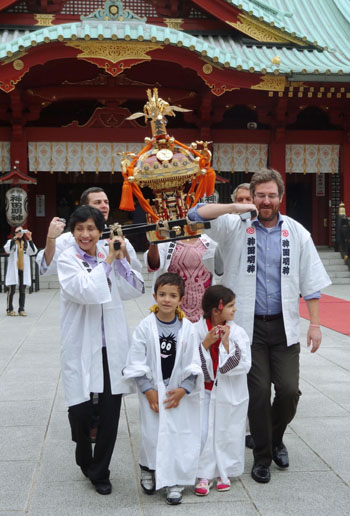
Hands-on Shinto: Diplomats and their families in happi coats carry a portable shrine at Kanda Myojin Shrine during an Oct. 27 seminar for foreign envoys stationed in Japan. KYODO

Tuesday, Jan. 15, 2013  By TAKESHI NISHIDE  (Kyodo)

Shinto trying to stay relevant in global, green era
Priests becoming more proactive in explaining cultural nuances of native religion to foreigners

One morning last fall, a group of around a dozen people of various nationalities and religious faiths visited Kanda Myojin Shrine in central Tokyo.

The diplomats and their families from various countries in Europe, Latin America and Africa, including Luxembourg, Romania and Costa Rica, were participating in an Oct. 26-27 Shinto seminar for foreign envoys stationed in Japan.

The seminar, the first of its kind, was organized by the Association of Shinto Shrines, the umbrella organization for the 80,000 or so shrines scattered across Japan.

On the first day, the participants received lessons on the Shinto elements of life in Japan, such as the practice of visiting a shrine at the beginning of a new year and the traditional “shichi-go-san” rite of passage for children aged 3, 5 and 7.

During the group’s visit to Kanda Myojin on the second day, the participants went through the rituals of worship and then practiced taking part in carrying “mikoshi” (portable shrines) in a procession while wearing traditional happi coats and making the traditional “wasshoi” chant.

One diplomat welcomed the occasion as a hands-on cultural experience, while another said the seminar offered a glimpse into how the Japanese look at life and nature via the influence of Shinto.

The seminar was one of several unrelated initiatives intended to promote the understanding of Shinto outside Japan and use it as a means of cultural exchange in an era of globalization.
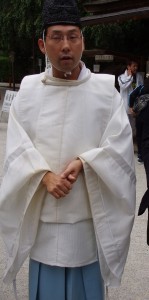
Inui Mitsutaka of Kamigamo Shrine, Kyoto

Katsuji Iwahashi, a lecturer at Kokugakuin University in Tokyo, is teaching a course to help would-be Shinto priests develop English communications skills.

Iwahashi is frequently asked by foreigners about the concept of deities in Shinto.

He explained that the people may recognize a god wherever they feel the presence of something supernatural, referring to the ephemeral nature of Shinto gods compared with the distinct identity of the Christian or Muslim God.

Iwahashi believes the vagueness that is the hallmark of Shinto can be effective in dealing with the demands of modern society.

“I am not trying to spread Shinto around the world. I’m hoping to help people understand the Shinto mind that is different from digital thinking,” he said.

In the ancient capital of Kyoto, Mitsutaka Inui, a priest at Kamigamo Shrine, a World Heritage site, is trying to get foreign tourists to become familiar with the religion.

When receiving foreign visitors, Inui explains in English the history of the shrine, as well as some of the rituals and concepts unique to Shinto.

“Shinto is a religion of experiences,” Inui said, stressing the importance of engaging in practical activities. He is considering a plan to launch a sleepover Shinto experience program for foreign visitors that involves such activities as sweeping the shrine precincts early in the morning and hand-copying religious writings.
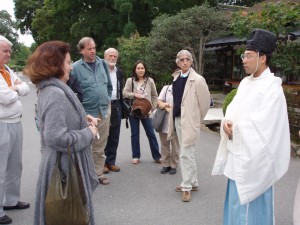
Inui sensei explaining some points to a group of visitors at Kamigamo Shrine

Inui, who was born in a salaried worker’s family but who has a Shinto priest among his ancestors, decided to become a priest while in junior high school.

Instead of enrolling with a Shinto-affiliated university as prospective priests usually do, Inui studied at Ritsumeikan University, a nonreligious institution. As he wanted to develop a global perspective, Inui devoted himself to studying Esperanto, an artificial language created as a means of international communication, as an extracurricular club activity.

After becoming a priest at Kamigamo Shrine, Inui saw tour guides give foreign tourists misleading information about Shinto by explaining it in terms of monotheism.

He came to the conclusion that the best way to prevent foreign visitors from developing erroneous perceptions is for priests themselves to communicate with them, so he strived to develop his English skills at the Interfaith Center of New York while working there under a temporary transfer program.

Inui believes Shinto can continue to gain people’s interest as something that transcends the everlasting march of science and technology.

“The thinking that we must not pollute water because a god resides in it helps to keep water and nature in pristine condition,” he said.
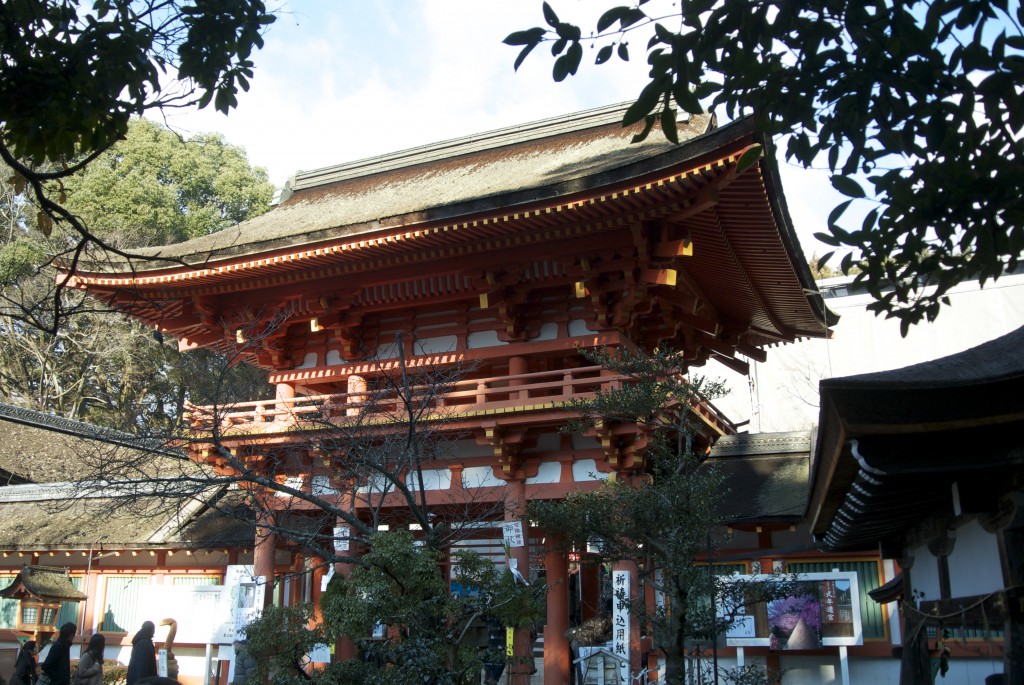
Kamigamo Shrine shining in the sunshine on New Year's day...

Iwami Silver Mine (1)

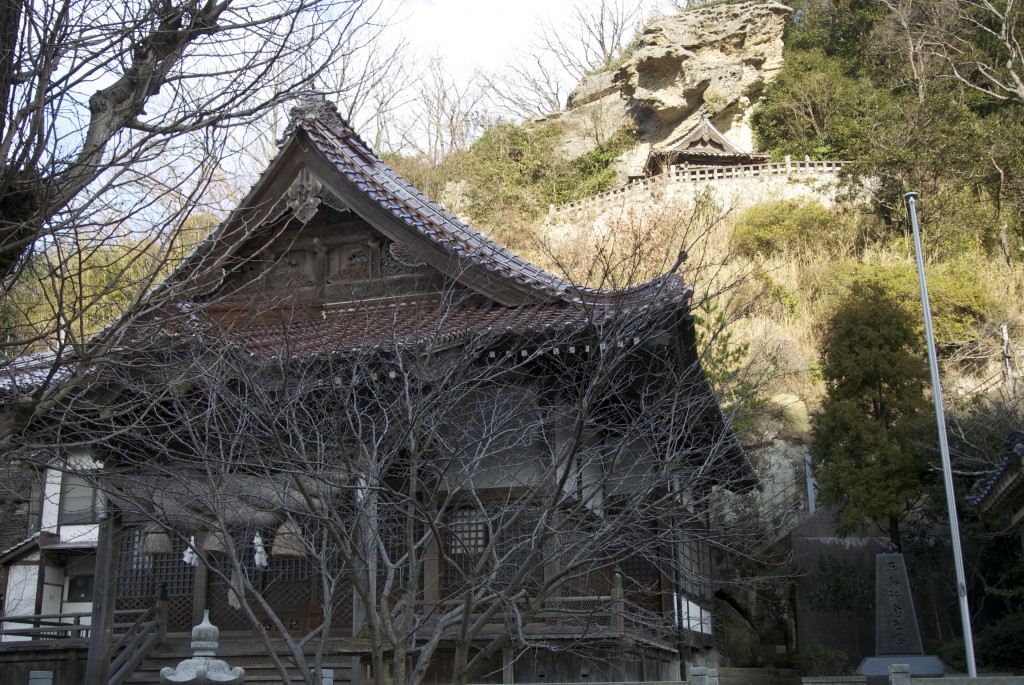
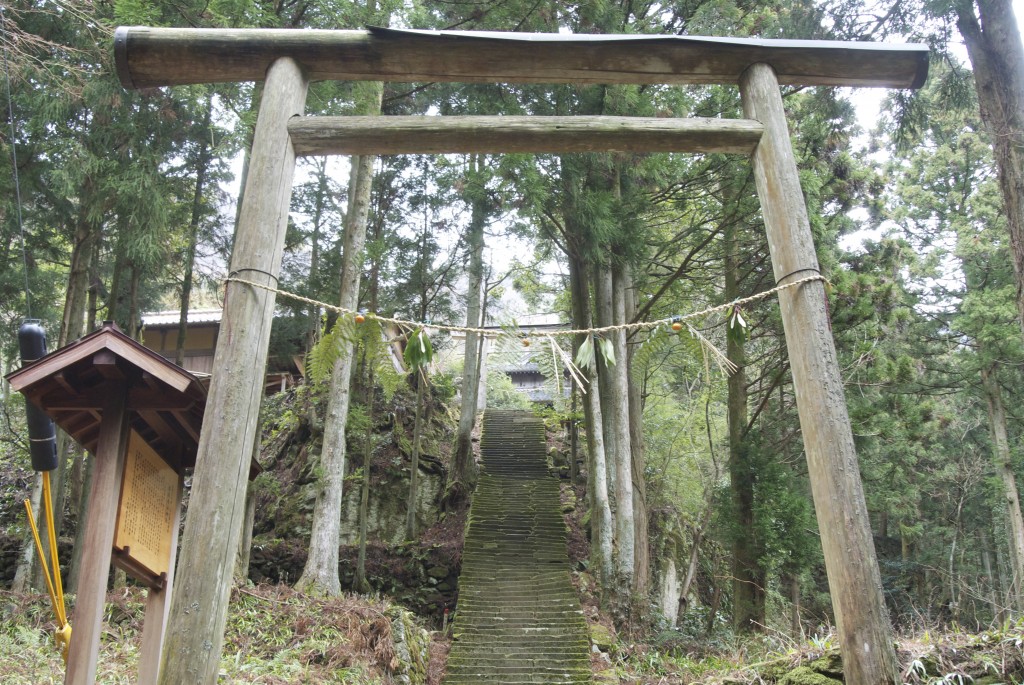
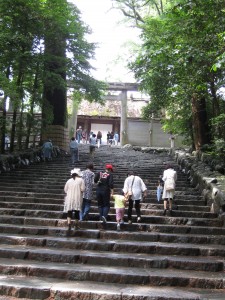
The steps up to Samehimeyama Jinja, the tutelary shrine of the Iwami Silver Mine


Iwami Ginzan (Silver Mine) is a World Heritage site, situated in Shimane prefecture on the Japan Sea coast.  In the late sixteenth and early seventeenth centuries, Iwami was not only Japan’s leading silver mine but was of global significance.  It was even marked on a map of the world produced in Europe.  At the time Japanese silver made up a third of the world’s total, half of which was produced at Iwami.  Portuguese ships traded it for the Chinese goods they brought to Japan, and the Jesuit mission was able to flourish as a result – until the shoguns turned violently against Christianity for fear of colonialism.

Dotted over the wooded hill are the remains of 600 shaft openings

The mine was first developed in 1526 by a merchant from Hakata, who noticed a glow from one of the area’s hills.  Soon afterwards he invited a pair of Koreans to set up an advanced production method known as ‘cupellation‘, by which crushed silver ore is mixed with a solvent to remove impurities.  The method soon spread to Japan’s other silver mines, transforming the country from a net importer to a major exporter.  At its peak the mine involved ten thousand people and 150 villages.  Some 600 shafts were dug during the four centuries of its operation.

Once the surface ore was used up, digging had to go deeper and deeper which meant that drainage became ever more costly.  Eventually the business became unprofitable, and in 1923 the mine was forced to close.  The area fell into decay until a determined effort at conservation led to national recognition.

World Heritage registration rested on several factors, which included the mine’s global significance, the well-preserved remnants, and the environmental aspect, for extensive replanting was carried out over the centuries to replace trees used for fuel.  It means that today the whole area – unexpectedly – is immersed in a pleasant mixed woodland.

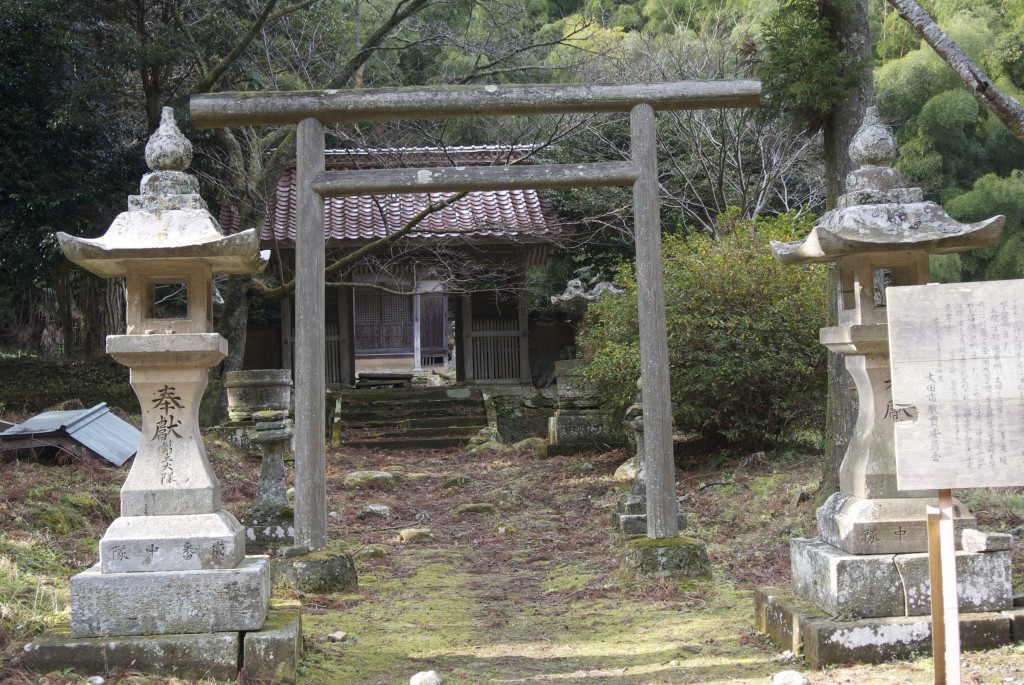
View from the Chumon gate of the dilapidated Toyosaka Jinja, in disuse like the mine itself

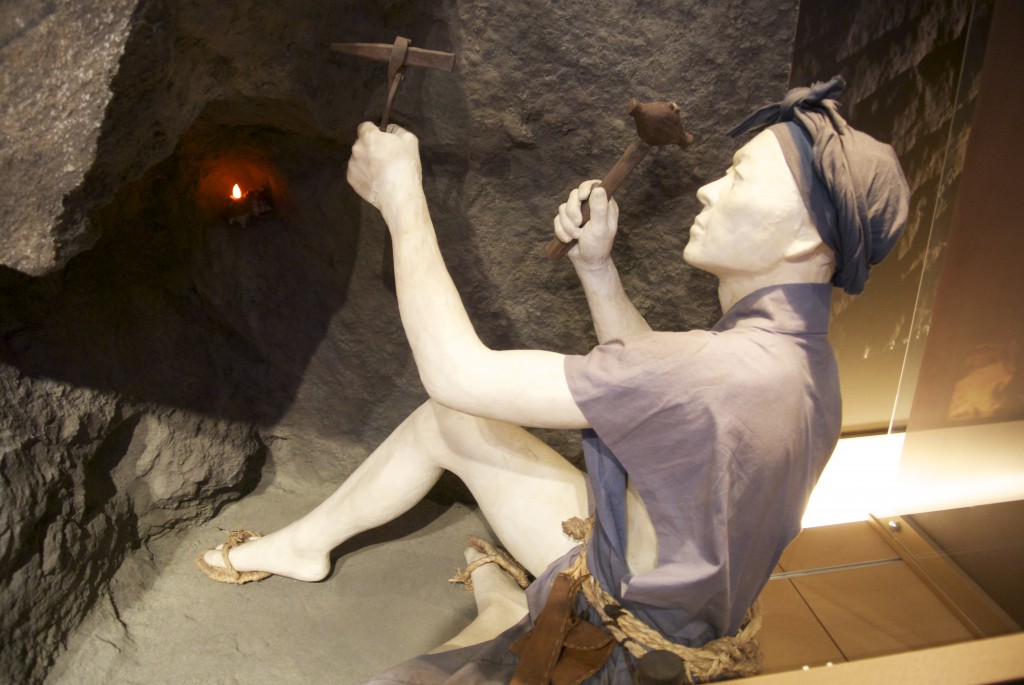
Mining was carried out manually with a hammer and chisel, the only light being a simple wick in a turtle shell.  Conditions were harsh, with poor ventilation, dusty air and back-breaking loads carried along low passages.  Few survived very long, and there were celebrations for those who reached their thirtieth birthday.

Walking through the area one often comes across protective shrines and Buddhist memorials.  The main shrine was Sahimeyama Jinja (see pic above), where the kami of mines and metallurgy was worshipped – Kanayamahiko no mikoto.  The shrine was founded in the mid-fifteenth century, though the current buildings date to 1819.  According to a World Heritage publication, it’s one of the biggest mountain shrines in the country.

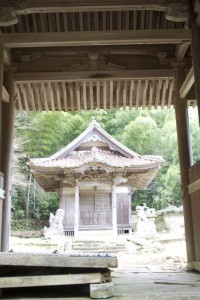
Not far away is Toyosaka Jinja, built for the Mori clan who at one time owned the mine.  After the battle of Sekigahara in 1600, the Tokugawa took direct ownership of the mine and installed their own administrators.  The shrine was neglected and fell into disrepair, only to be repaired in the nineteenth century by the Choshu clan based in nearby Yamaguchi who fought against the Tokugawa in the Meiji Restoration.  As the mining wound down, however, so did the fortunes of the shrine and today it has a forlorn and deserted air.


Toyosaka Jinja, which has seen better days


Model of a how a miner would have looked and worked, with a simple wick in a sea shell for light


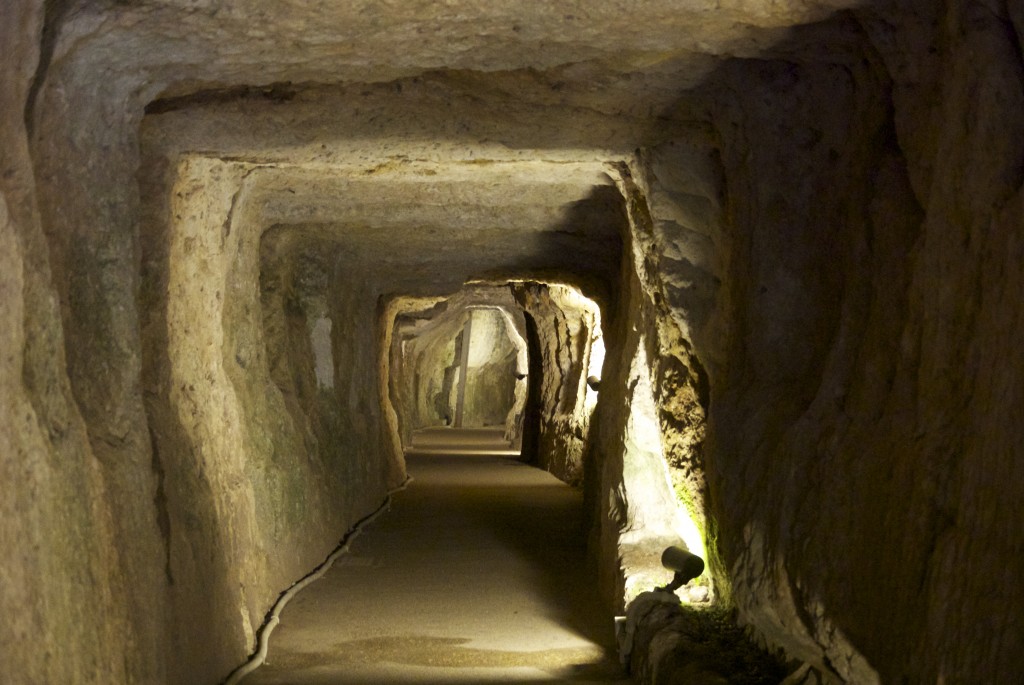
The Ryugenji mine shaft, which was once worked on by 36 miners, including ten-year old boys who carried out chores and errands


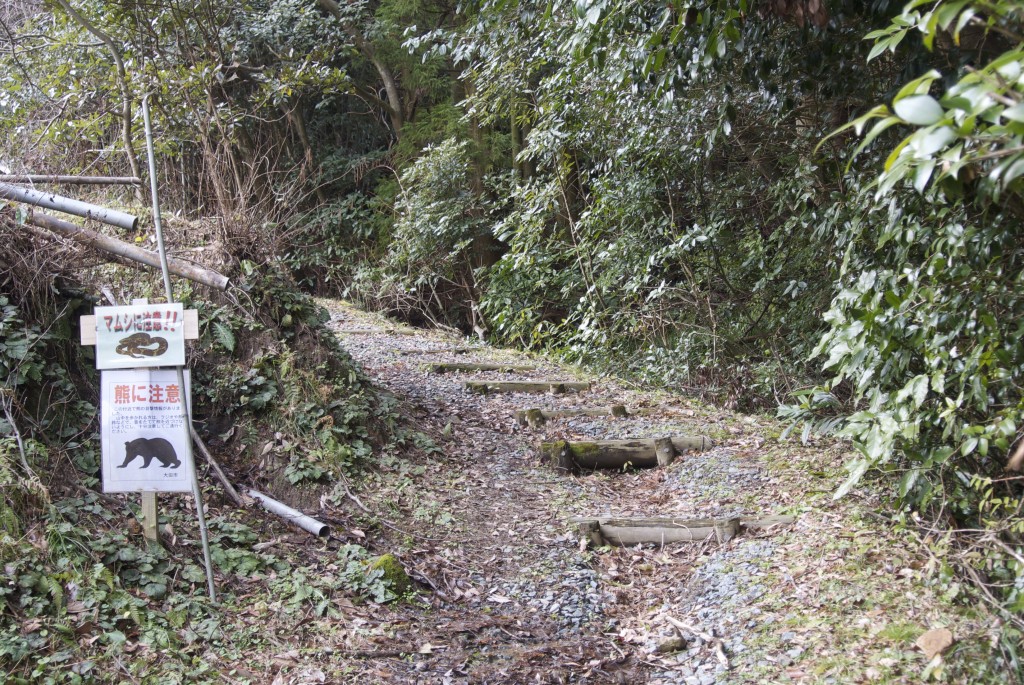
One of several tracks in the area, in this case leading to a hillfort. 'Beware of bears; beware of poisonous snakes,' warn the notices. Beware of falling down mine holes, they could have added...

Talk: Assembling Shinto

There’s an exciting lecture coming up in Kyoto on the 23rd of this month on “Assembling Shinto: Buddhist approaches to kami worship in medieval Japan” by Anna Andreeva. It’s part of an excellent series put on by the European Consortium for Asian Field Study (comprising the Italian School of Oriental Asian Studies and the French School of Study of the Far East).

**************************************************
KYOTO LECTURES 2013   Wednesday, January 23rd, 18:00h

co-hosted by the International Research Center (Institute for Research in Humanities, Kyoto University)
The lecture is at the Institute for Research in Humanities (IRH), Kyoto University (seminar room 1, 1st floor)

Speaker: Anna Andreeva

Recent discoveries at Buddhist temples and private collections demonstrate that there is still much to be learned about medieval Japan. From fourteenth century ritual texts Japan emerges as a multi-layered landscape where ancient sacred mountains and cultic sites were constantly criss-crossed, appropriated and reimagined by peregrinating holy men, mountain ascetics, Buddhist monks and, in many cases, the Shinto clergy.

A modern-day pilgrim at Miwa, walking in the footsteps of the peregrinating holy men of the past

Traversing the history of Mt Miwa in present-day Nara prefecture, this talk will concentrate on the agency, ritual goals and motivations of local Buddhist practitioners, and will cast light on the concepts found in medieval Buddhist and Shinto ritual texts, images and doctrines, that circulated at Ise, Miwa, Hiei and other cultic sites.

We will see how, why and to what extent Buddhist ideas encapsulated in the imagery of the Womb and Diamond Realm Mandalas (Kongōkai and Taizōkai) had penetrated and influenced the ideas about kami in fourteenth-century Japan. To this end, the talk will show that these ideas were integral to the ritual constructions of buddhahood and symbolic acquisition of rulership.

**************************************************
Anna Andreeva is an academic fellow at Karl Jaspers Centre, University of Heidelberg. Her previous work explored the medieval engi texts (“The Origins of the Great Miwa Deity: The transformation of a sacred mountain in premodern Japan”, 2011, Monumenta Nipponica) and the Buddhist approaches to kami worship (“The Deity of Miwa and Tendai esoteric thought”, in Esoteric Buddhism and the Tantras in East Asia, Brill 2011.

Miwa Shrine overlooking the Yamato basin, at one time deeply syncretic

Sacred arrows


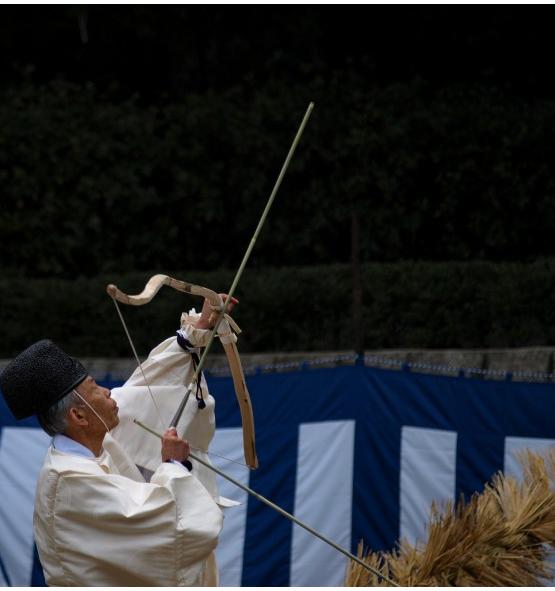
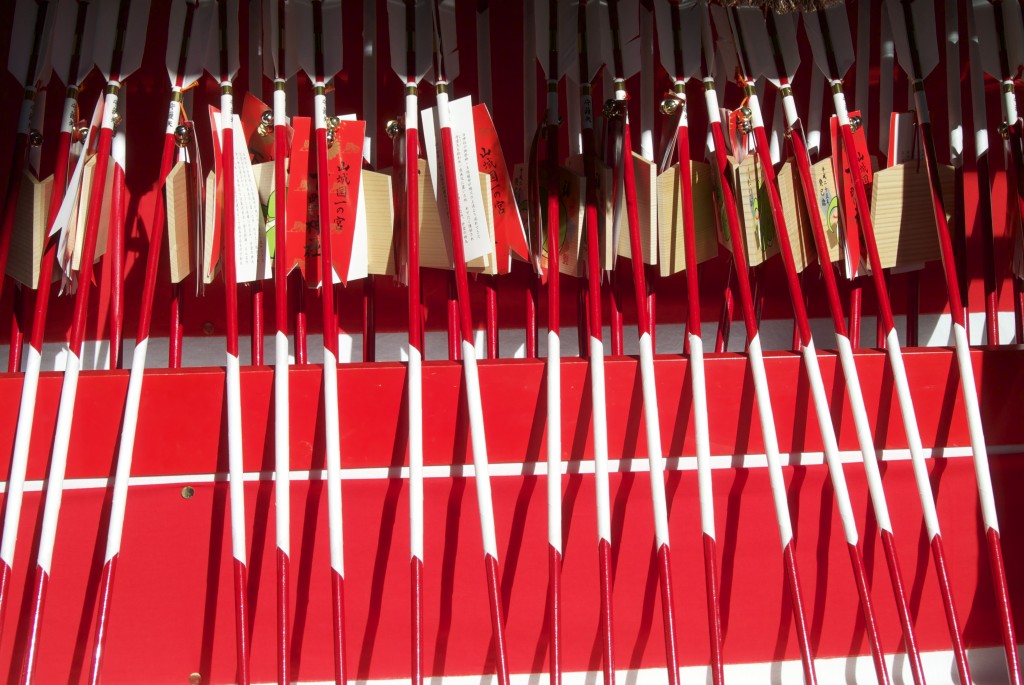
Today is auspicious arrow day…  A symbolic shooting of arrows in the air in the direction of the four quarters to ward off evil.

There’s a sacred archery festival (busha sai) at Fushimi Inari, which has a close connection with arrows through its founding by the Hata clan.  According to tradition,  Hata no Iroko was hunting in 711 on Fushimi hill when he shot an arrow at a ball of rice which turned into a white egret and flew to the top of the hill where it revealed rice.  The story speaks to the fertility of the phallic object, rather than the piercing of unseen demons featured in the festival.

There’s also an archery event at another shrine founded by the immigrant Hata clan, at Matsuo Taisha here in Kyoto.  Kokugakuin says: “There is a religious archery event called Hōsha shiki on January 10 and 12 at Matsu-no-o Great Shrine (Matsu-no-o taisha) in Ukyō ward, Kyoto City, Kyoto Prefecture. Nusa (ritual paper streamers) are placed in front of the Nō stage and archery targets are hung up. On the back of these targets is written the Chinese character Oni or demon.

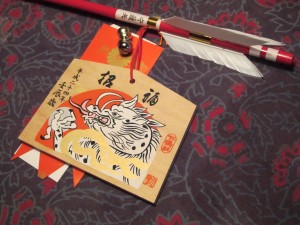
Last year's arrow, year of the dragon, due to be ritually burnt on Jan 15

Food offerings (shinsen) in the old style are offered. The archers take up the bows and arrows. First they shoot the bows in the ushi-tora (northeast) direction, then to the four quarters, then heavenwards. After they have shot at the target, the shrine officials shoot arrows.”

Arrows are also used for divination purposes in Shinto, and the New Year arrow (hamaya) is a popular item to place in the house for protection through the new year.  Kokugakuin says: ‘the arrow is to ward off misfortune and to attract good luck.  From the Edo to the early Meiji period, arrows were given as gifts to celebrate the first New Year of a male baby’s life, frequently in a set together with a pair of decorative bows called hamayumi (“demon-breaking bows”).

The custom of selling the arrow alone is thought to be a later abbreviation of this custom. Even today, the custom persists of standing such symbolic bows and arrows at the northeast and southwest corners of a new house (called kimon, the directions thought particularly susceptible to evil influences) on the occasion of the roof-raising ceremonies.”

New year good luck arrows on display at Shimogamo Jinja

« Older posts Newer posts »

© 2026 Green Shinto

Theme by Anders NorénUp ↑