Author: John D. (Page 153 of 202)

The yearly round

New Year decoration

The pagan tradition
The New Year rites in Japan are a reminder of how celebrating the yearly round is an important part of pagan traditions. It signifies our connection with the natural cycle and our rootedness in Mother Earth. Above all, it heightens awareness of living in the moment; through reflecting on the seasonal blessings we expand and enrich our consciousness.

Modern paganism has tended towards celebration of the four solar quarters together with the four great Celtic seasonal festivals. This begins with Imbolc in early February, when the first roots and shoots become apparent after the dark days of winter, followed by the spring equinox in March, when day and night are equally balanced and the prospect of brighter days lies ahead.

At the start of May comes Beltane, a time of vibrancy and fertility rites. With midsummer the solar energy is at its zenith, sunrise signalling the longest day of the year, while Lammas in early August sees the first fruits and harvest. The autumn equinox means a rebalancing of energies as thoughts turn towards Samhain at the end of October and a more reflective period. The winter solstice represents the heart of darkness in which the evergreen tree speaks of continuity and the spark of rebirth is kindled from Yule logs.
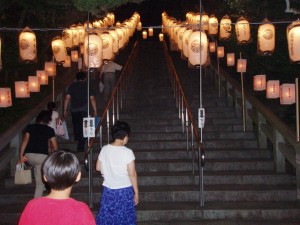
Obon: a midsummer time to meet with ancestral spirits

What then does Shinto have to offer?
Well, if you turn to Jinja Honcho, the Association of Shrines, you get the official version.  In their pamphlet An Invitation to Shinto Spiritualism, the major festivals are listed as follows. Jan 1 – New Year’s Festival. Feb. 11 – Japan Foundation Day. Feb 17 – Kinen-sai (Spring Festival for Harvest) Oct 15 – Kanname-sai (Harvest Thanksgiving Festival) Nov. 23 – Niname-sai (Festival of First Fruits) Dec. 23 – the Emperor’s Birthday

Despite their name, most of these rites are oriented towards state and emperor.  For a non-Japanese of democratic leanings, they are hardly life-enhancing.  For more vital appeal with popular participation one would have to look elsewhere, such as the syncretic folk customs of the general populace.  It is here that one finds the true vigour of the seasonal round in Japan.

An alternative calendar for the annual cycle would also begin with the New Year, as the nation turns out en masse to initiate a fresh start, followed by the coming of age day on the second Monday of the year when 20-year olds dress up in their best to be ritually proclaimed adults.  The popular Setsubun festivities take place on Feb 3 to drive out evil spirits with bean-throwing, then on March 3 is Doll’s Day, considered a festival for young girls.  At the spring equinox (Shunbun) people visit the graves of their ancestors to pray to them.
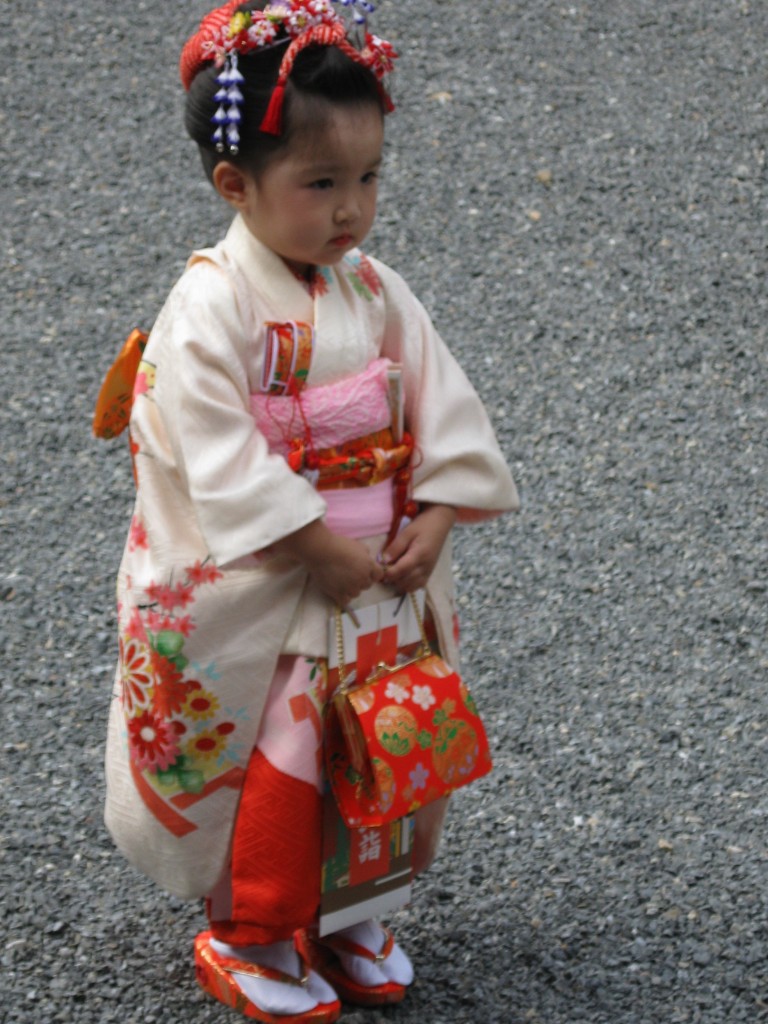
Shichi-go-san, involving children of 7, 5 and 3, takes place around Nov. 15

In early April there is cherry blossom viewing, with its connotations of evanescence, and on May 5 the boy’s festival when carp windsocks are hung up. On June 30 comes the summer purification rite of passing through the Chinowa circle, then the Tanabata festival of July 7 when the star lovers meet.

August is the time of Obon, the great festival of the dead when ancestral spirits are welcomed back.

On Sept 23 (Shubun), the autumn equinox, people again visit family graves, while around this time comes the harvest moon viewing, thought to be the largest and most beautiful full moon of the year.

November is the time of Shichi-go-san, when children of seven, five and three years old are taken to the shrine, and also a time for viewing the changing colours of the trees.

In December comes the Big Clean-up as people prepare for new beginnings and a fresh start with another cycle of the annual round.

Looked at in this way, the Japanese tradition has as much to offer as modern paganism. As we move into the early stages of 2013, let’s be mindful of our blessings and get ready for celebration of this miraculous great merry-go-round on which we’re all riding.
 

It’s Issa Day

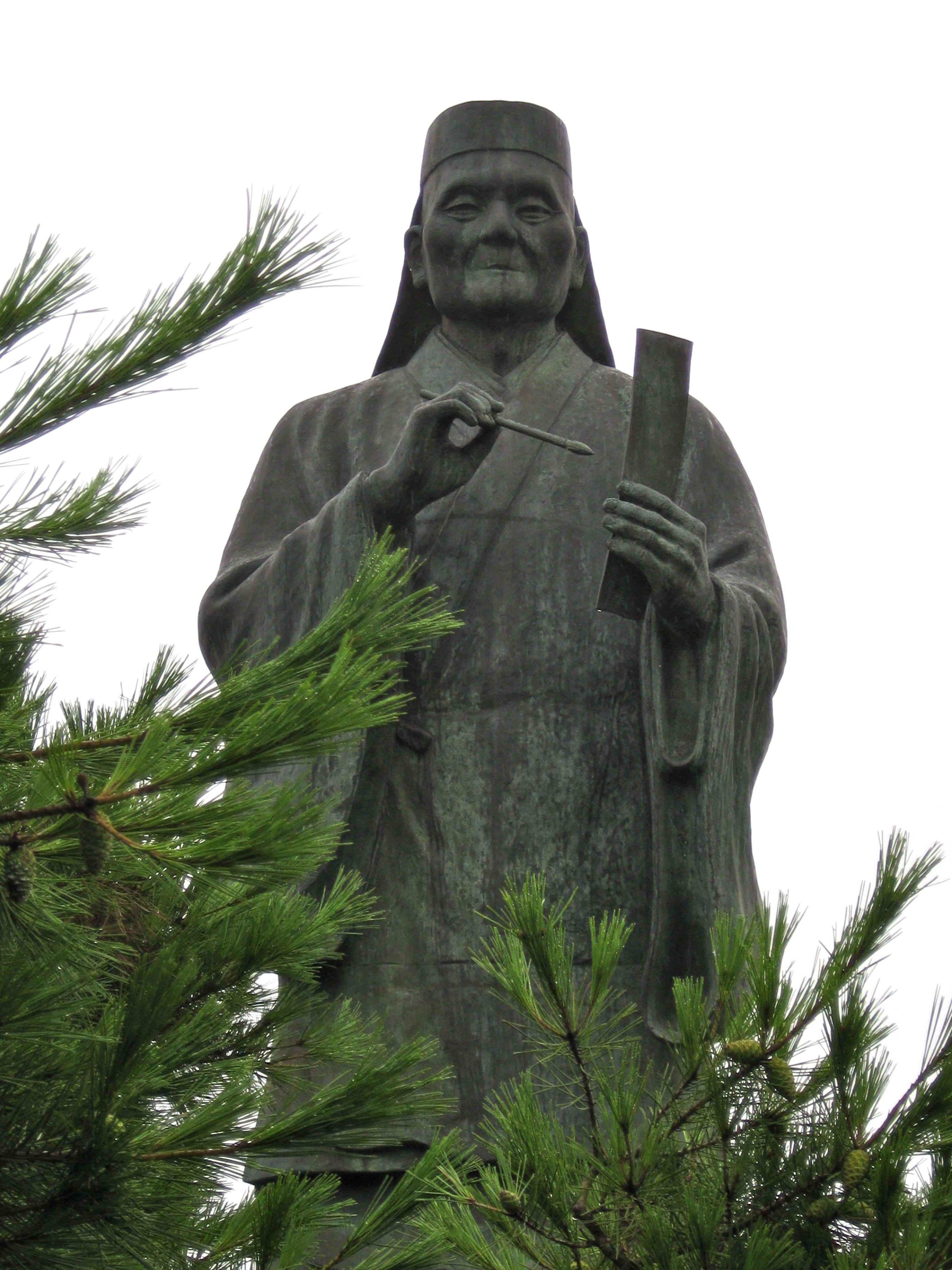
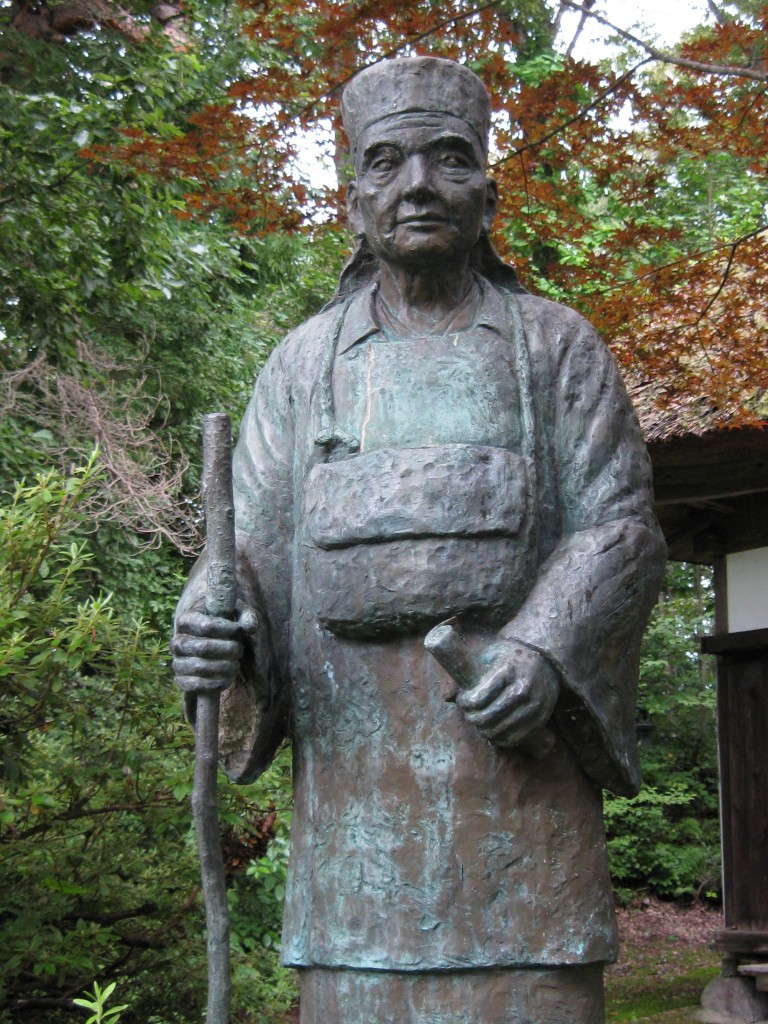
Kobayahsi Issa's statue at Kashiwabara

Today is Kobayashi Issa’s memorial day, for it was on Jan. 5 that he died.  Issa (1763-1828) is known as one of the Big Four of Japanese haiku, together with Basho, Buson and Shiki.

Issa was a follower of Pure Land Buddhism, but his poetry speaks very much of the integration with nature that characterises Shinto and Japanese traditional culture. It speaks too of the wonder of life.

In the article below,  Roger Pulvers writes of Issa’s poetry and his tragic life.  All translations are by Pulvers himself.

***************************************************************************

By ROGER PULVERS
Skinny frog Don’t give up! Issa is here
The Japan Times July 26, 2008

He has been dead for 180 years, but Kobayashi Issa’s haiku keep reminding us that the essence of Japan’s culture lies in its intimate tie to nature. Humans are seen by him entirely as an element in nature, where ideally there is no artificial hierarchy and certainly no holier-than-thou moralizing.

Kobayashi is one poet who epitomized this intimate tie. Taking a brief look at his legacy might help us all rededicate ourselves to what is our own century’s greatest task: restoring the equilibrium between humankind and nature that we have systematically destroyed over the past two centuries.

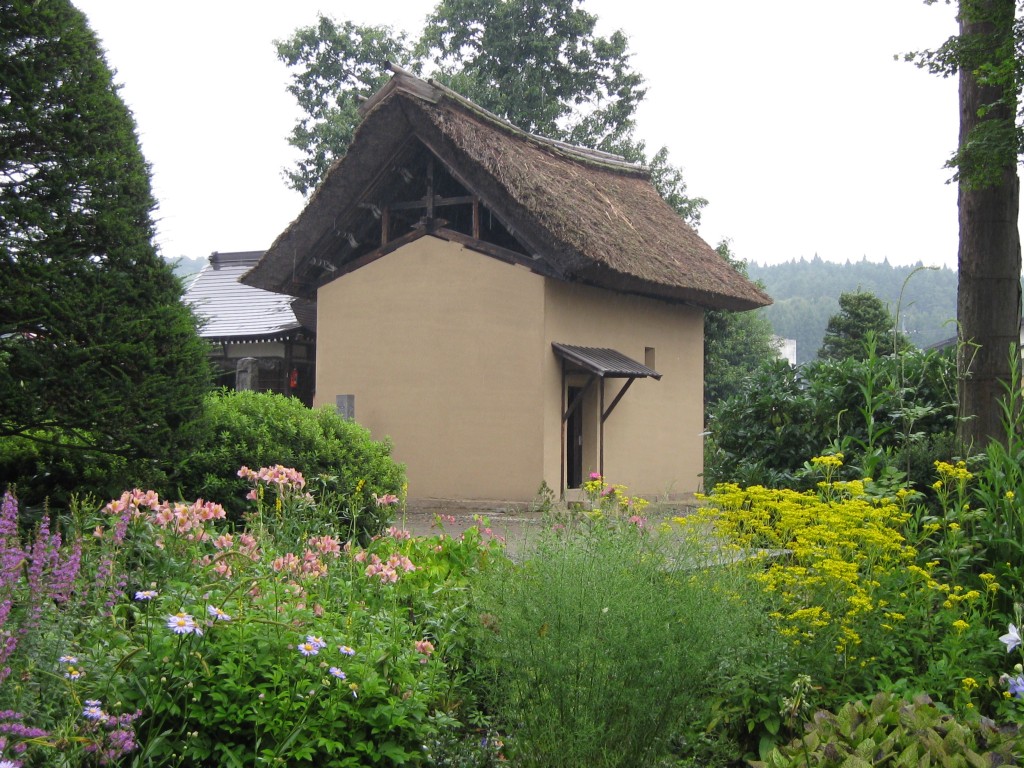
The storehouse in Kashiwabara where Issa took refuge when his house burnt down

Japan, in other words, has the answer to our century’s dilemma within its own tradition.

The people in Kobayashi’s haiku wallow in their association with the elements, the animals and the plants, even when lazy or oblivious to what surrounds them. Here he himself is blissfully unaware . . .

Asleep on my back
Midsummer clouds
Over my knees

As with the reference to the “skinny frog” above (this is such a famous haiku that Japan Post once issued a stamp commemorating it), Kobayashi often writes about the smaller and weaker animals that he relates to. It is here that his humor, an integral part of the Japanese view of nature, shines through.

Here another frog, with a little help from perspective, appears larger than life . . .

A frog in the evening croaks
Lining up its bottom
With the top of Mount Fuji

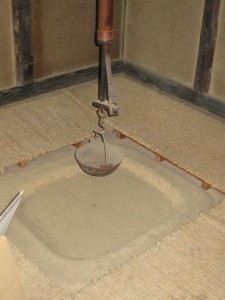
Inside Issa's storehouse, nothing but a simple hearth

He loves the birds, too, and feels for them . . .

The little orphan sparrow
Once again opens its mouth
In vain

The “once again” turns this plaintive poem into a little tragedy. Kobayashi sees himself in this light, identifying with the sparrow . . .

C’mon, play with me!
Orphan
Sparrow

In fact, it is harder to imagine a life filled with more personal tragedy than Kobayashi’s.

Born in 1763 in Kashiwabara, in what is now Nagano Prefecutre, Kobayashi lost his mother at age 3. He was brutally mistreated by his stepmother, who threw him out of the house at age 14, when he went to Edo (present-day Tokyo). He spent his youth and his early years of adulthood traveling the country, particularly to temples, making a name for himself as a haiku poet.

He didn’t marry until he was 49. His wife, Kiku, gave birth to three children, all of whom perished; and then, giving birth to a fourth, she herself died. (The fourth child, too, died, probably as a result of neglect by its nurse.)

A second marriage ended in divorce, but a third, to a woman named Yao, was happier, producing two children. But then he suffered what was probably a series of minor strokes that left him hemiplegic. Not long after that a fire destroyed his home and he came to live in the storehouse beside it, where he passed away, on Jan. 5, 1828.

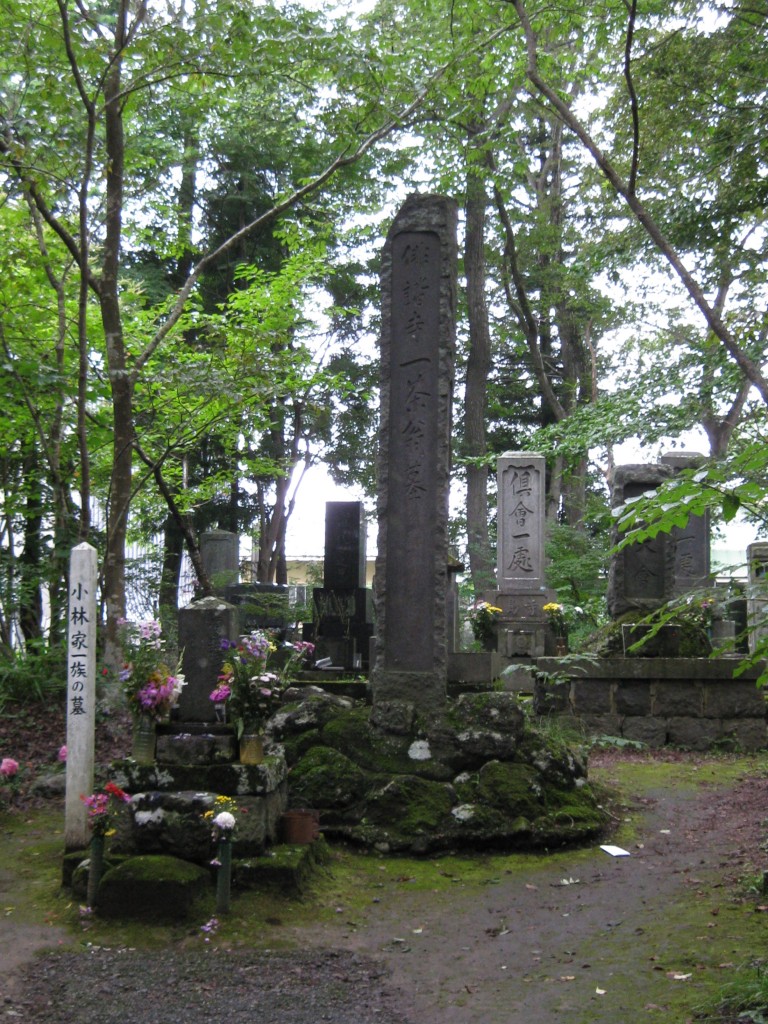
The grave of Issa at Kashiwabara

Here are some of the wonderful haiku he left us about animals . . .

I open a window
To set a butterfly off
Into the meadow

In a better world
I’d welcome more of you in my rice
Little fly

I’ll be tossing in my sleep
So, move over
Cricket

The lark cries
Around the thicket
That conceals her chicks

Each of these speaks of a love of nature in a particularly protective, melancholic or whimsical way; yet each shows respect for all creatures. Kobayashi was by no means well off, and when he went to the outstandingly scenic Matsushima islets in present-day Miyagi Prefecture, he took along some “fellow travelers” as a matter of course . . .

I’ll show you Matsushima
Then you’re on your own
Little fleas

But there is a foreboding in his work as well. The primary theme of nature is renewal; and renewal means that all things pass from this living phase of existence into another.

Kobayashi’s world view cannot be understood outside of the context of his Buddhist beliefs. There are portents of this . . .

The cow appeared
Out of the fog
Mooing and mooing and mooing

A bird is building its nest
Unaware that the tree
Is marked for felling

Pen and paper to hand, Issa stands ever ready to write

Despite the ever-presence of death, his faith is open to spoof and even ridicule. This makes it very different from that of most adherents to the three dominant Middle Eastern religions, who generally seem to take themselves more seriously . . .

A swallow shoots out
Of the nose
Of the Great Buddha

His comments on society are often cutting . . .

Even while strolling
Under the cherry blossoms
People lecture each other

I have made two trips to Kashiwabara [where Issa lived and died], in mid-summer and mid-winter, sitting for hours in the little storehouse that is now a museum.

I imagined that I heard his voice then, as if telling us to observe and live with nature and not destroy it.


What a world!
Even the grass that you see
Turns into rice cakes

And it astounds us, even if we are so poor as to have holes in our flimsy doors . . .

How beautiful!
The Milky Way from a hole
In my sliding rice-paper door

Kobayashi faces his own death in his haiku time and again. The most famous of these is probably this one, with its reference to his “final home” . . .

Oh well, is this to be
My final home
These six feet of snow

He wrote more than 20,000 haiku, and I have read but a fraction of these. But of those I know, the following one is my favorite, and, perhaps, the most telling of his devotion to life . . .

The fields are on fire
The birds, too, seem to be saying . . .
“Love when you can”

****************************************************************************

For more on Issa, see this page by translator David G. Lanoue: http://haikuguy.com/issa/aboutissa.html

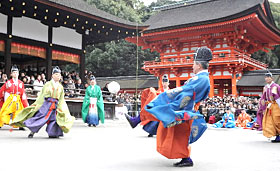
Kemari, game of the gods (Shimogamo)

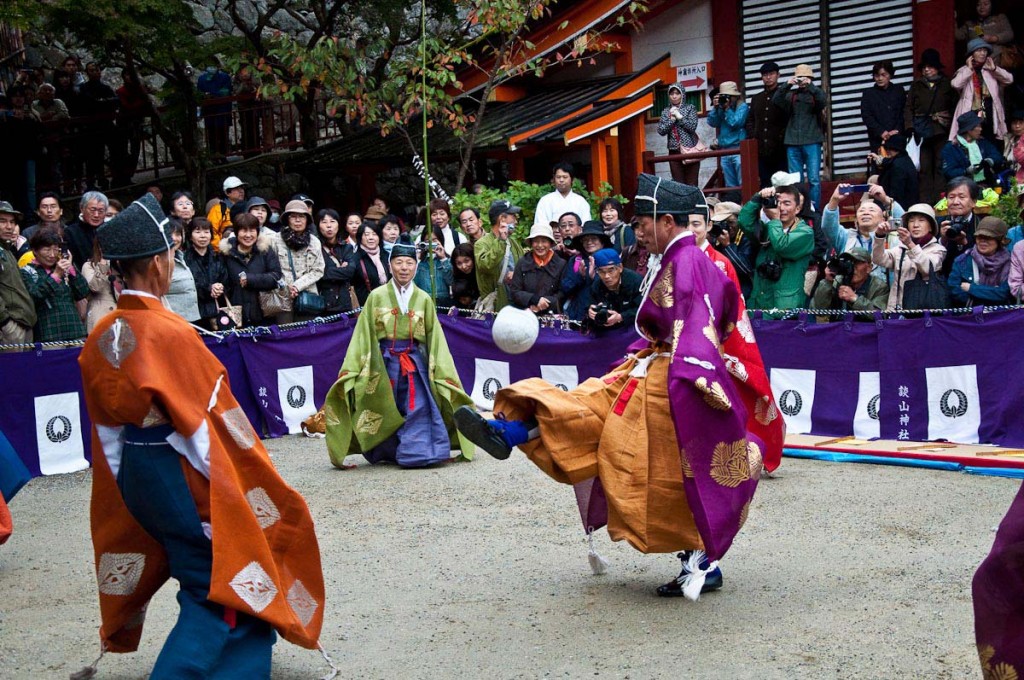
The game of kemari (courtesy of stephansblog.com)


It’s a game of the gods.  Some say it’s the origins of football.  But the way I see it, kemari is an ancient rite in which participants kick a ball to each other with the intention of not letting it drop on the ground (polluted space) and keeping it in the air (realm of the spirits).

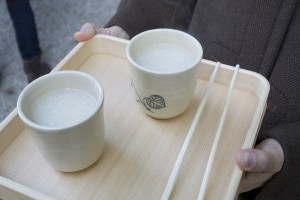
A warming cup of heated saké with lashings of ginger

Participants are dressed in the aristocratic garb of the Heian period (794-1186).  The idea is that they maintain grace and elegance while kicking the ball, in keeping with the courtly code of aesthetics.  By so doing, the gods will be pleased and the year kicked off to a good start.

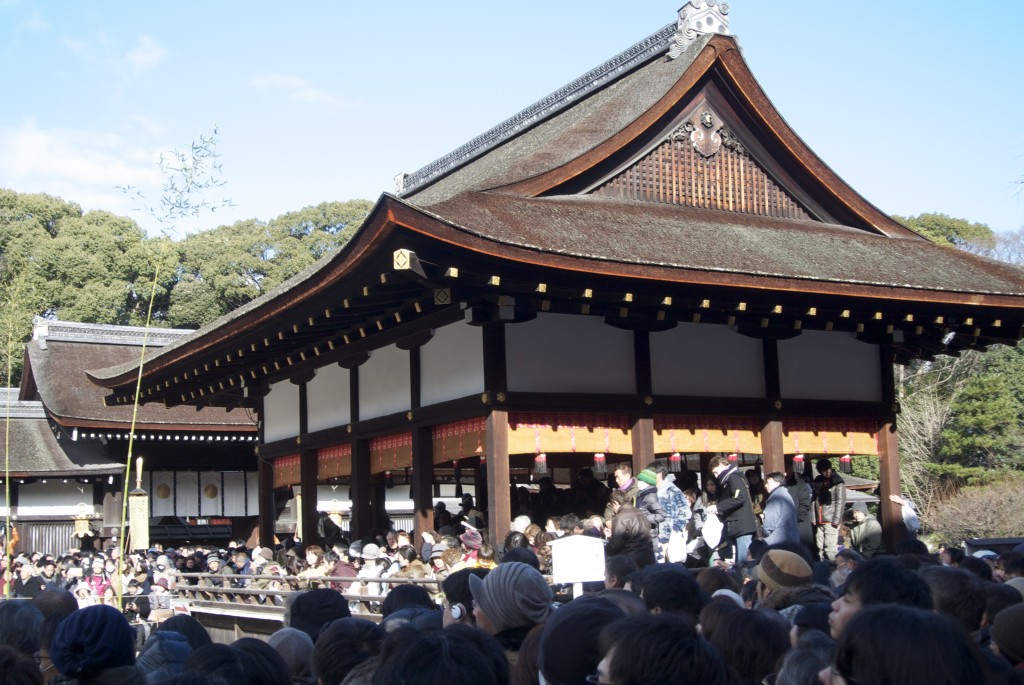
There were snow flurries and a mere 4 degrees centigrade, but Shimogamo was absolutely packed for the event, with something like 3000 people crammed into the outer compound.  Most people could not even see anything!  But the atmosphere and the warming cups of ginger-laced saké kept everyone in good spirits.

***********************************************************************

Here follows a Kyoto Shinbun report of the event:

“Kemari Hajime” Kicks Off at Shimogamo Shrine
Court Tradition Reenacted

The New Year ritual of “Kemari Hajime,” or the first “Mari” ball kicking game of the year, took place on January 4 at Shimogamo Shrine in Sakyo Ward, Kyoto. Dressed in colorful court costumes, Kemari players performed the traditional court game that has been passed down to the present by kicking the deer-skin ball high into the air while calling out.

Kemari was introduced to Japan from China in the Asuka Period, and its ritual procedures and the rules for the game were established in the Kamakura Period. Although Kemari declined since the Meiji Restoration, the establishment of the Kemari preservation group “Shukiku Hozonkai” in 1903 revived the tradition and handed it down to the present.

Fifteen players, dressed in Kemari costumes of “Mari-suikan” jackets, “Eboshi” caps, and “Mari-gutsu” shoes, appeared on the roughly 15-square-meter Kemari court which was specially set up on the shrine grounds. They performed exquisitely by kicking the white ball high into the air using only their right feet while shouting the game’s unique calls of “Ari,” “Ya” and “Oh.” Spectators cheered every time the ball was on the verge of flying out of the Kemari court but was returned sailing in a beautiful arc.

Packed to the rafters: spectators watching the kemari ritual at Shimogamo


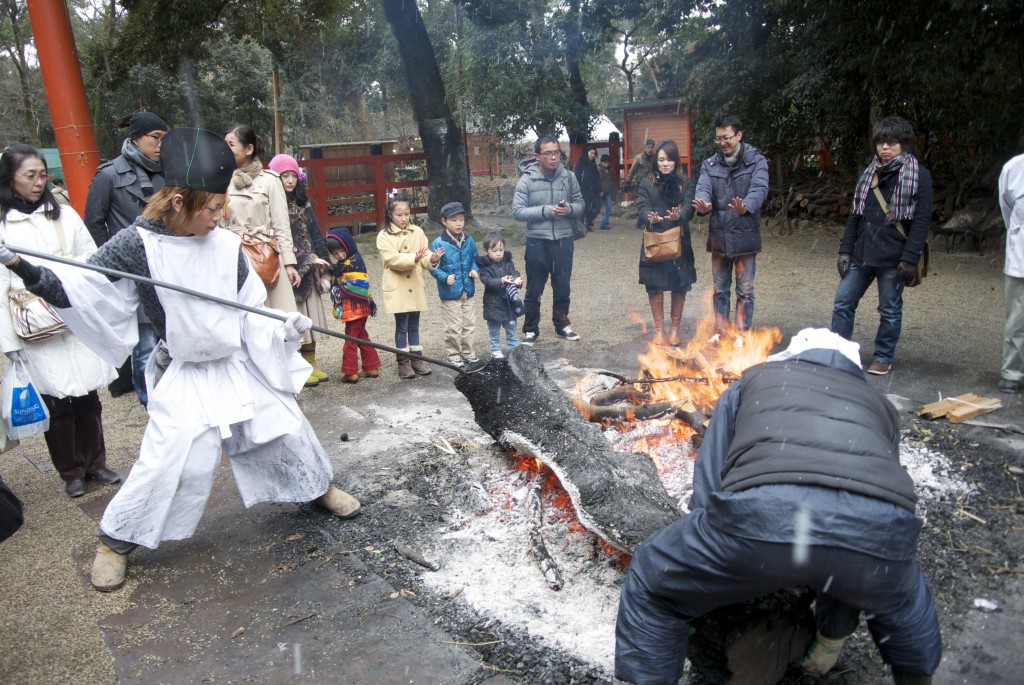
In the shrine grounds a ritual new year fire is stoked to keep burning


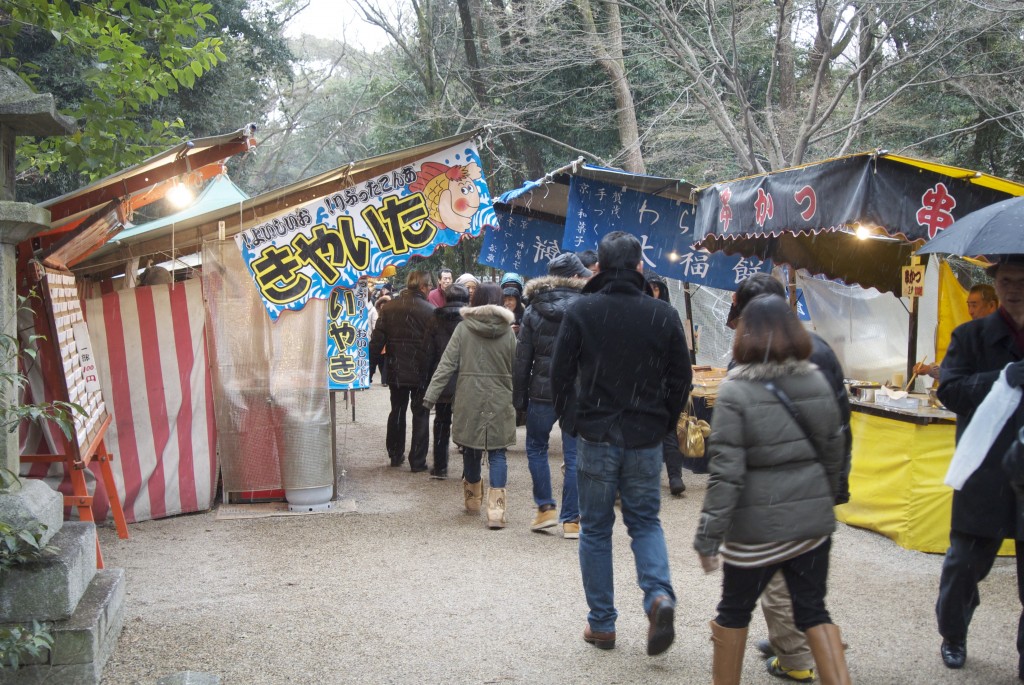
On the way out there's opportunity to savour the offerings at the various stalls

Native American links

Japan Times, Jan. 3, 2013
http://www.japantimes.co.jp/text/fm20130103a1.html

*************************************

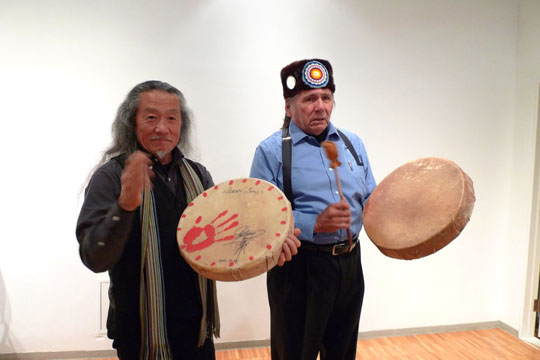
New-age musician Kitaro (left) and Native American leader Dennis Banks meet up in Tokyo (photo by Sachiko Tamashige)

Kitaro taps into Native American culture
By SACHIKO TAMASHIGE

New-age musician Kitaro (left) and Native American leader Dennis Banks met up in Tokyo at a party that showcased their joint album, “Let Mother Earth Speak.”

“Kitaro and I were destined to meet each other,” Dennis Banks tells The Japan Times. “Our beliefs are similar: Mother Earth, who we are … we are all the children of this Earth.”

Banks, 75, is a Native American activist and leader of the Anishinaabe people from northern Minnesota. He is known for leading the Longest Walk in 1978, a pilgrimage of 26 Native Americans who walked across the United States to draw attention to Native American rights.

In November, Banks reunited with new-age music composer Kitaro (real name: Masanori Takahashi) in the posh Omotesando district of Tokyo at a party to showcase their album, “Let Mother Earth Speak.” Kitaro, 59, is a Golden Globe and Grammy Award-winning multi-instrumentalist regarded as a pioneer in the new age genre.

“The recording session went smoothly as being in Kitaro’s studio made me want to sing,” Banks adds. “There were more than a hundred instruments in his studio. Just being with Kitaro playing all sorts of instruments inspired me to sing stronger and higher.”

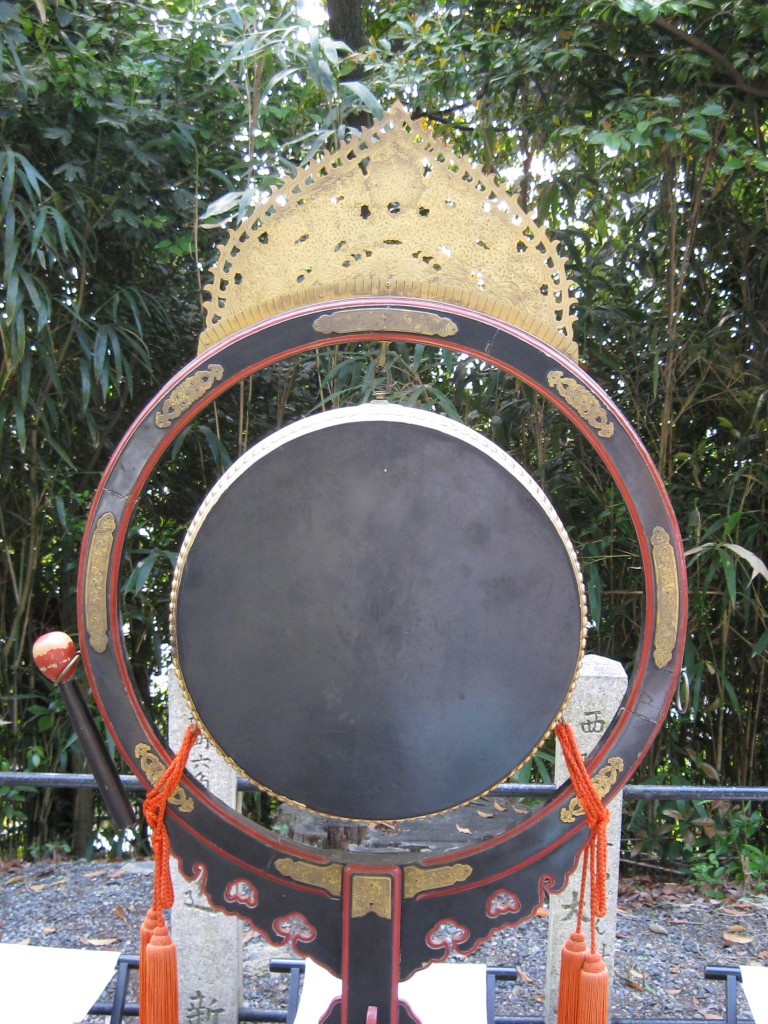
Shinto drum at Yoshida Jinja

The flattery goes both ways as Kitaro praises Banks’ voice: “His voice is always in tune and most of the tracks were recorded in one take. It was amazing.”

“Let Mother Earth Speak” was released last year and features nine tracks of Kitaro’s musical stylings with Banks’ spoken word poetry. The album is filled with traditional Native American instruments and, of course, Banks contributes a number of songs indigenous to his cultural background.

The first track, “Thank you Great Spirit (Migwetch Gitchi Manitou),” features Kitaro on a Native American-style flute as Banks addresses the listener and plainly sets out the theme for the rest of the album. The effect this has might be akin to sitting around a fire in the woods and listening to someone telling a story before slipping into a dream.

Kitaro says the tunes on the album came from Native American culture and directly reflect Native American’s lives, including Banks’. They are about family, love, history and responsibility.

“Native Americans lead balanced lives in harmony with animals and nature,” Kitaro says. “Their wisdom has accumulated over generations and I tried to condense that in our CD. I hope that it can be a kind of textbook to help the youth — or anyone on the planet — live in harmony with nature.”

Banks elaborates on the message by addressing what he calls the “seventh generation.”

“(Our community) always talks about the seventh generation, which is how far our responsibilities go,” he says. “Our chief used to say we always have to think ahead, not only for this generation or the next generation but ahead to the seventh generation.”

The concept is one that Kitaro feels he can relate to as a Japanese in the land of Shinto, a nature-based religion. He also feels that the Japanese can learn from Native American beliefs.

“We, the Japanese and the Native American, have the same ancestral roots,” Kitaro says. “Deep down we share the same spirit and respectful attitude toward nature, and it has profoundly influenced our ways of life.”

*******************************************************************************

“Let Mother Earth Speak” is available from Domo Music Group in stores. For more information, visit www.domomusicgroup.com/kitaro/index.php

Year of the Snake (pt 2)

In a previous entry I wrote of the mythological significance of the snake.  In the Daily Yomiuri, naturalist Kevin Short provides a different angle, focussing on the watery connections in Japan.

In the first part of the article, Short notes that there are about 50 species in the country, though only 8 of them live on the main islands.  One of them has a very nasty bite and can reach up to two meters or more in length.  Watch out!

In the rest of the article, Short considers the connection with water spirits, as follows below: *************************************************************************************************

In addition to being one of the 12 animals of the traditional Asian almanac, snakes are widely revered as messengers and familiars of local deities. Here in Japan, they are primarily associated with water spirits.

A good place to look for spiritual snakes is at tame-ike irrigation ponds. In the Kanto region, these are usually formed by damming the upper reaches of a narrow valley, at a spot where water naturally springs or seeps from the surrounding slopes. The water is held in the pond, then directed downstream though a series of canals and ditches to the waiting rice paddies.

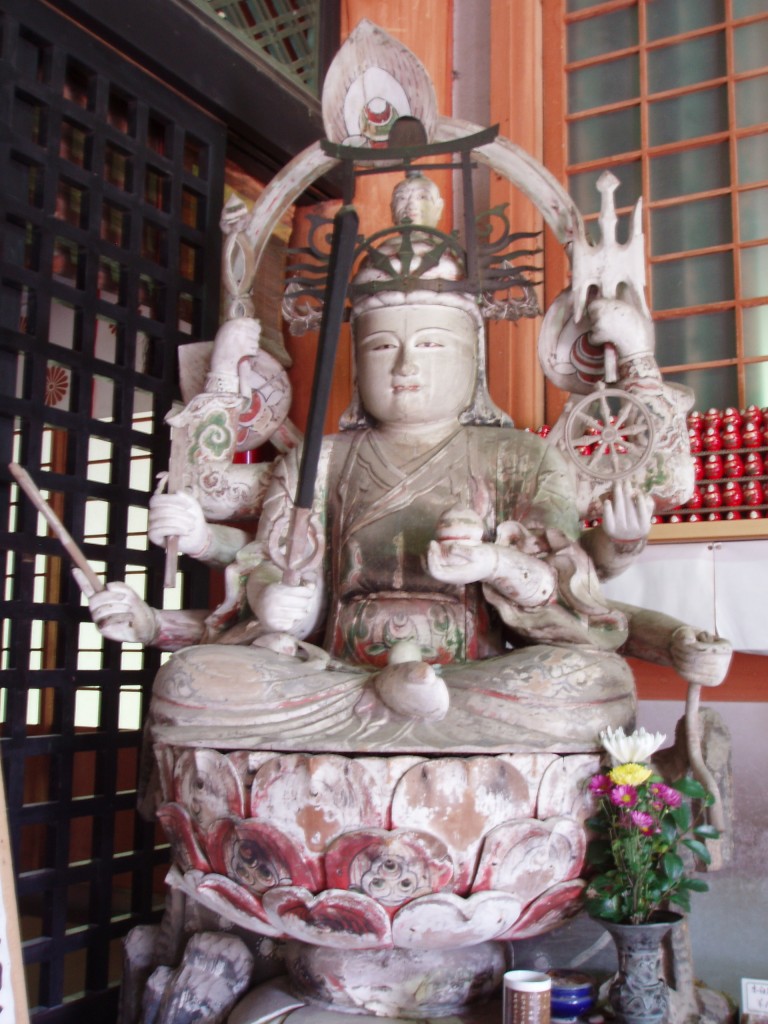
Benzaiten on Chikubushima in Lake Biwa

Japanese civilization was built on irrigated rice cultivation, and securing a sufficient source of water has always been the key to successful farming. Naturally, the Japanese, as did people in most of the world, placed a high cultural value on spots that form their major source of water.

Tame-ike irrigation ponds have traditionally been treated as sacred places, inhabited and protected by spirits known generically as Suijin (literally water deities).

Suijin are typically revered in shrines constructed on small islands in the pond, or at least on chunks of land jutting out from the shore. A good example of this arrangement can be seen at Shinobazu Pond in Ueno Park [Tokyo]. The Suijin enshrined here is an extremely popular Buddhist deity known as Benzaiten.

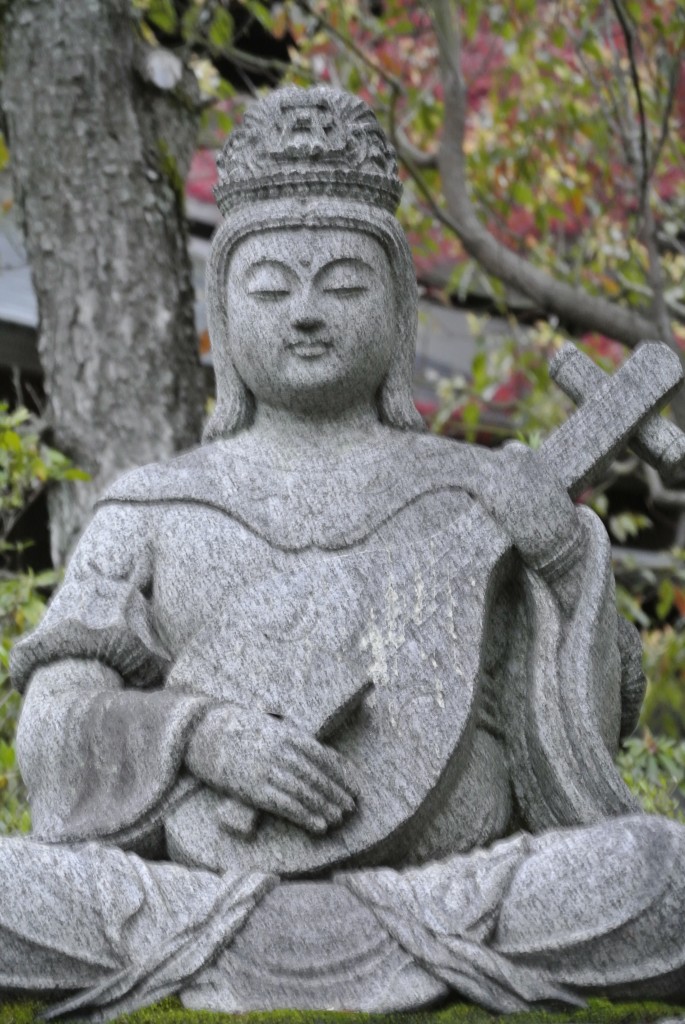
Benzaiten originated as a native river or water goddess in India, and was transmitted to Japan along with Buddhism. She is usually depicted as a seated goddess playing a three-stringed instrument called a biwa, and in addition to watching over water sources, is also a special patron of musicians and other performers.

Benzaiten is sometimes depicted with a coiled snake sitting on top of her head. In rare instances she also appears in a very special avatar, with the body of a coiled snake and the head of a human being. This avatar is known as Jatai-Benzai, or “Snake-body Benzai.” A closely related Suijin, also often revered at irrigation ponds, is called Ugajin.

Benten in muse mode playing her biwa

Snake-body Suijin are rare, but you can see a stone statue of Ugajin just above the pond at Inokashira-koen park in western Tokyo. At one tiny irrigation pond in the Saitama countryside, I discovered a wonderful statue of a snake-body Benzaiten, only about a half-meter high, along with a tile plaque depicting a snake that serves as her familiar.

In this case, the sculptor went through considerable effort to depict a real snake. The short but thick body, fat head with puffed cheeks holding the poison glands, and mottled markings were clearly those of a mamushi pit viper!

It is perhaps natural that snakes in Japan be associated with water and water-spirits. Snakes here prey heavily on frogs and other small animals that live around the water. The mamushi in particular prefers moist habitats.

Also, most snakes have only one developed lung, but this is long and extends well down into the body. When filled with air the lung serves almost like an internal float, allowing the snake to swim effortlessly across the surface of the pond.

***********************************

Short is a naturalist and cultural anthropology professor at Tokyo University of Information Sciences.  (Daily Yomiuri Jan. 3, 2013)

Hatsumode (Ujigami Shrine)

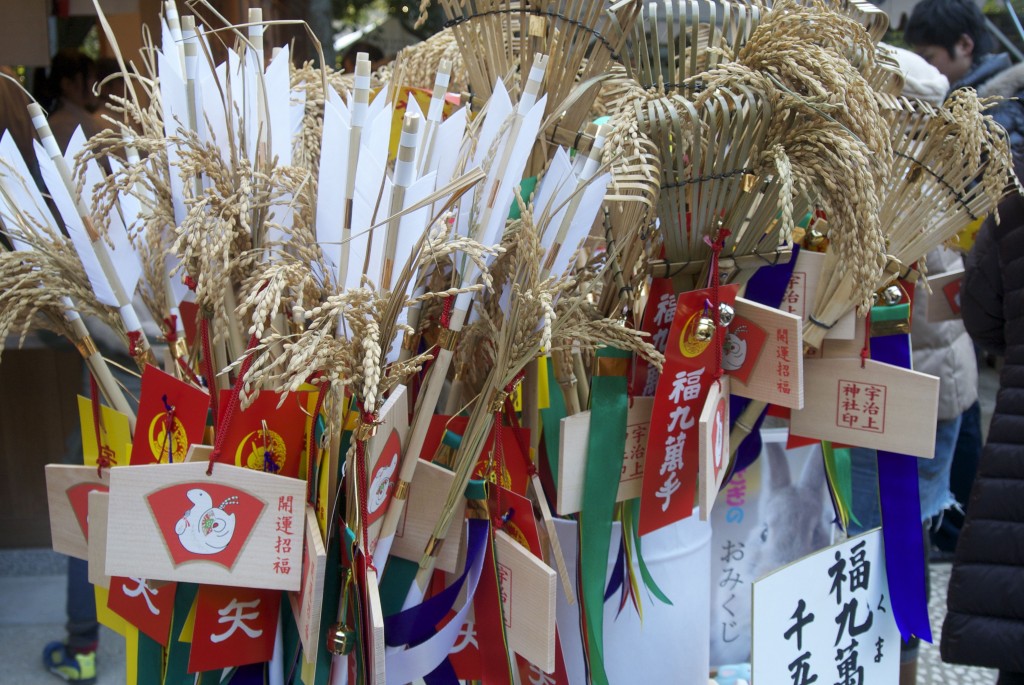
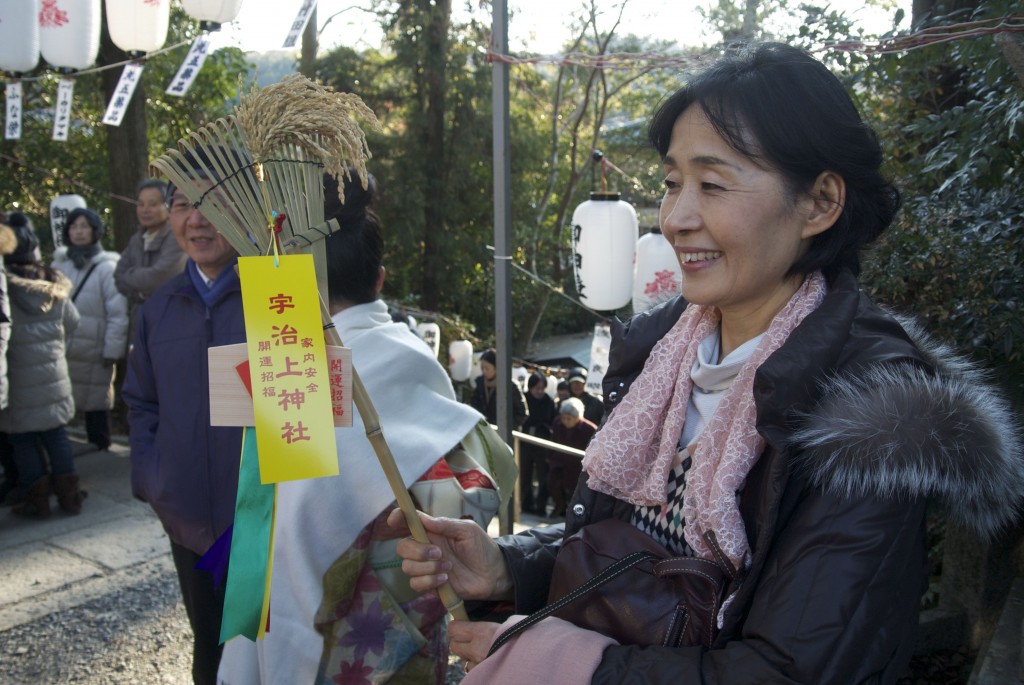
Auspicious items for the New Year from Ujigami Jinja


The town of Uji, south-east of Kyoto, was once a place of aristocratic villas set along the Ujigawa river.  A bridge was built across it in 646, making it one of the oldest known bridges in Japan.  Battles were fought here in Heike times (twelfth century), and chapters of Genji Monogatari, the world’s oldest novel (c.1005) are set in the town. Now it’s famous for its green tea and boasts two World Heritage Sites – Ujigami Jinja and the temple of Byodo-in.

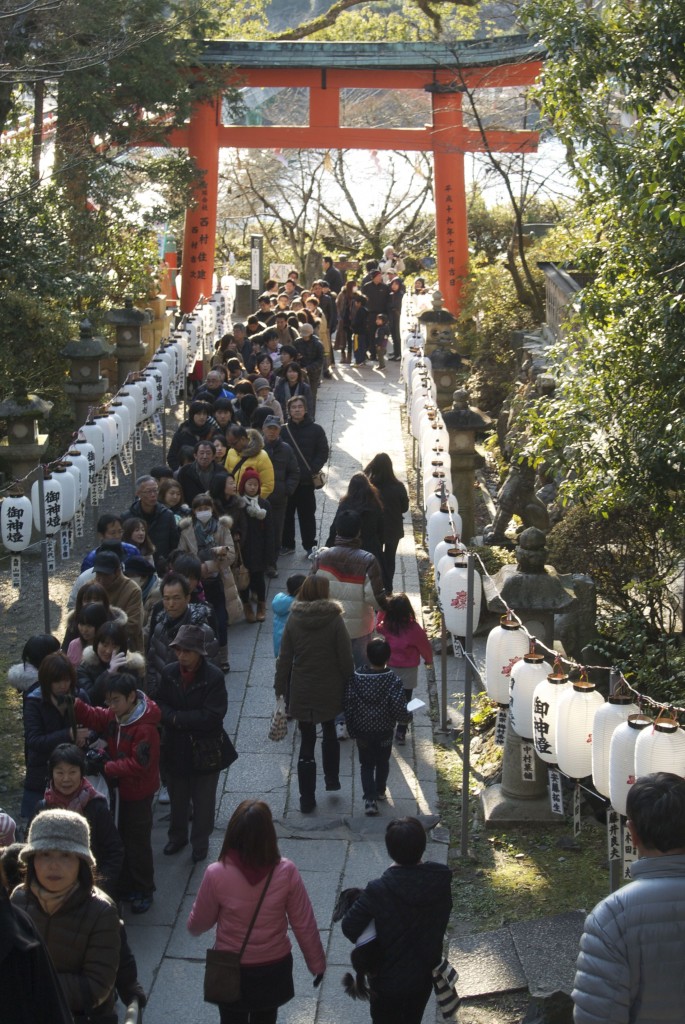
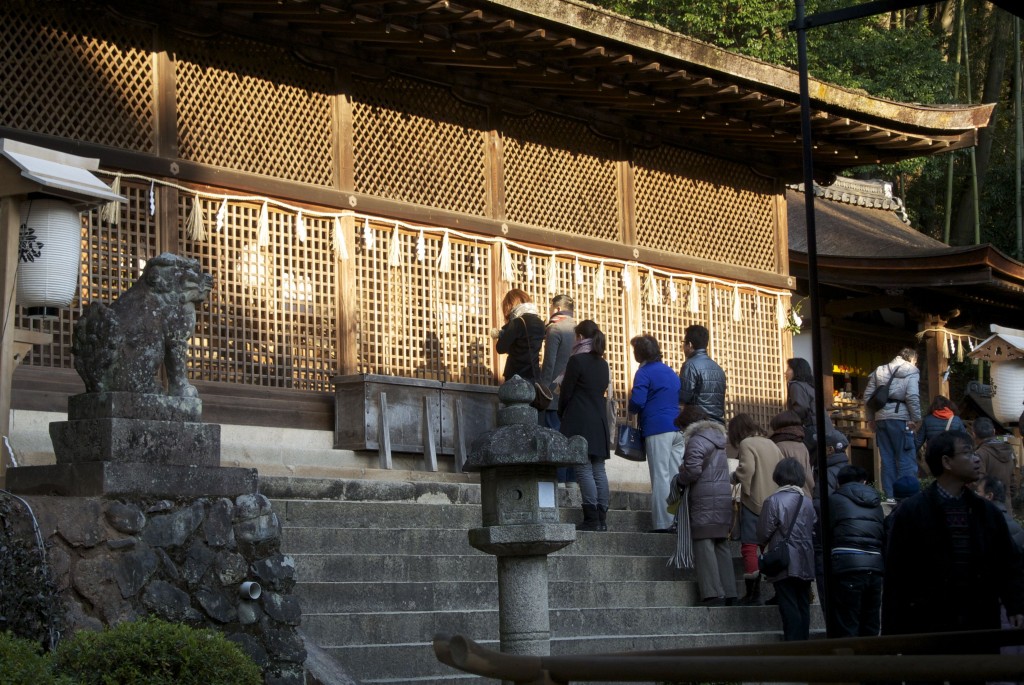
At Uji Jinja, not Ujigami Jinja, there were long queues

Ujigami is one of Kyoto’s 17 Unesco properties, though you’d hardly think so from visiting the shrine.  For one thing it’s a modest affair.  For another it’s outranked in popularity by the neighbouring Uji Jinja. (Until the Meiji period, the two shrines were in fact considered as one.)

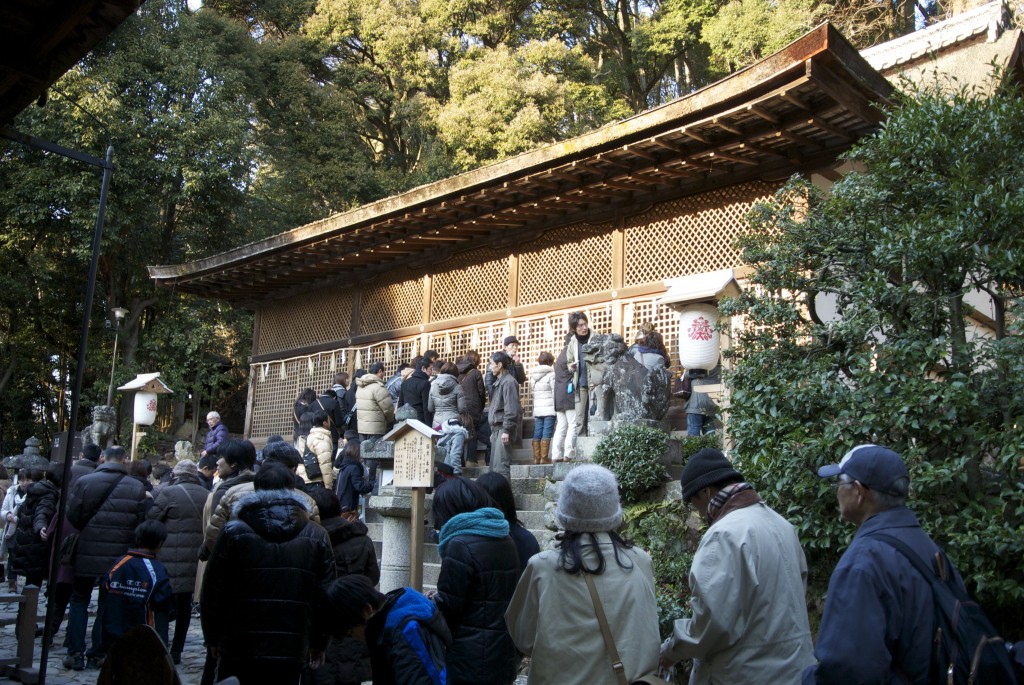
You’d expect a World Heritage Site to have pulling power, but when I visited on Jan. 1 there were huge queues down the steps at Uji Jinja, but not so many people at its illustrious neighbour.  How come?

The reason for Ujigami’s World Heritage designation has not to do with its size or prestige, but to do with the age of its buildings.  It has the oldest structure of any shrine in Japan, with the honden (sanctuary) thought to date to around 1060.  (That compares with the pagoda at Horyu-ji, the oldest standing Buddhist building, which dates to 711.)

The honden actually consists of three different shrines, which stand side-by-side within an encompassing building.  There’s a cypress-bark roof and an open latticework on the front wall.

According to Joseph Cali in Shinto Shrines, the middle shrine was built first and stands independently, with its own gabled roof.  The two adjoining shrines were however part of the original design and make a unified whole.

The queue at Ujigami's honden, much shorter than that at Uji Jinja


View of the lattice work on the oldest shrine building in Japan


Ujigami enshrines legendary Emperor Ojin and two of his four sons (neighbouring Uji Jinja is said to be built on the villa of Ojin’s son, Uji no Wakiiratsuko).  In 1067, the shrine was made the guardian shrine of Byodo-in, currently under reconstruction, which stands on the other side of the river.  Byodo-in represents the Pure Land of Amida, and the graceful features of its elegant wooden buildings feature on the back of the Japanese Y10 coin. The Shinto-Buddhist association of shrine and temple continued until the Meiji Restoration of 1868, following which the two religions were formally separated and Ujigami turned into an independent shrine of its own.

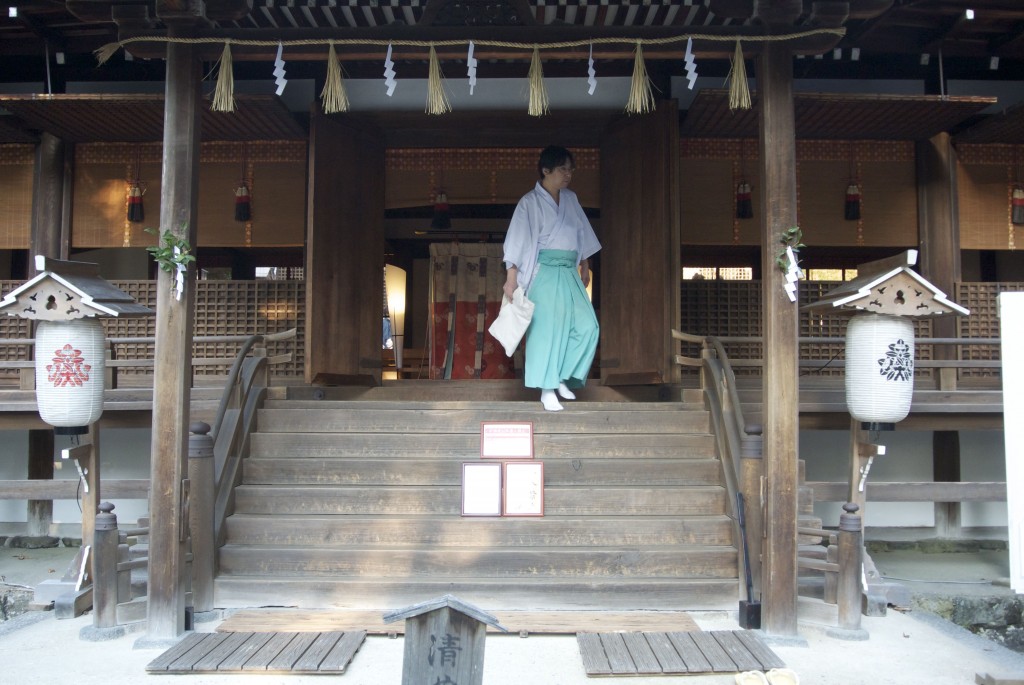
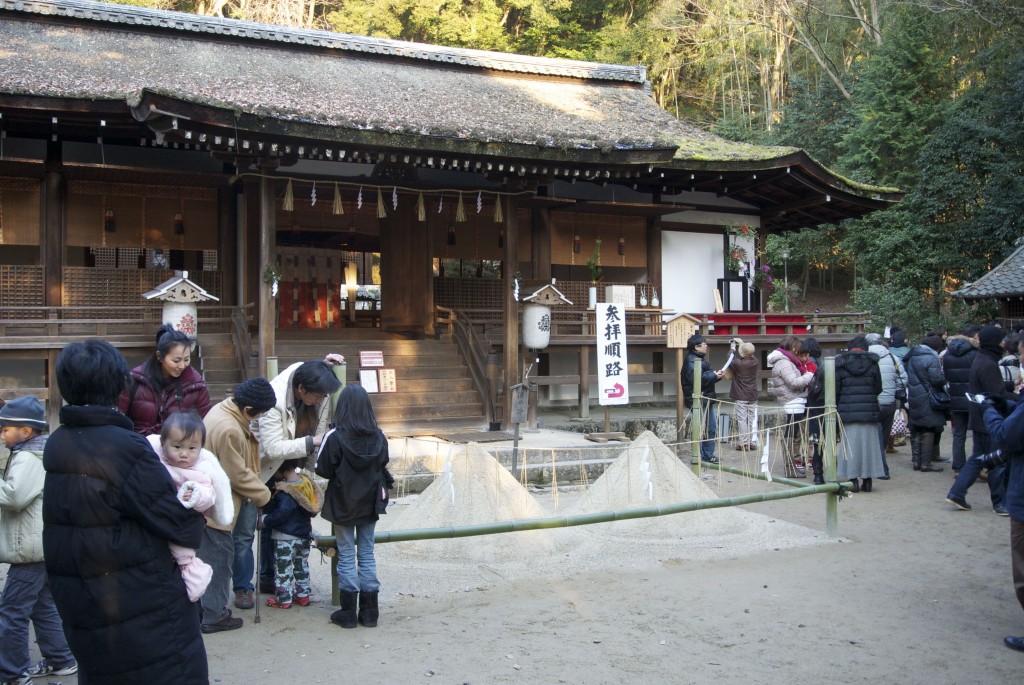
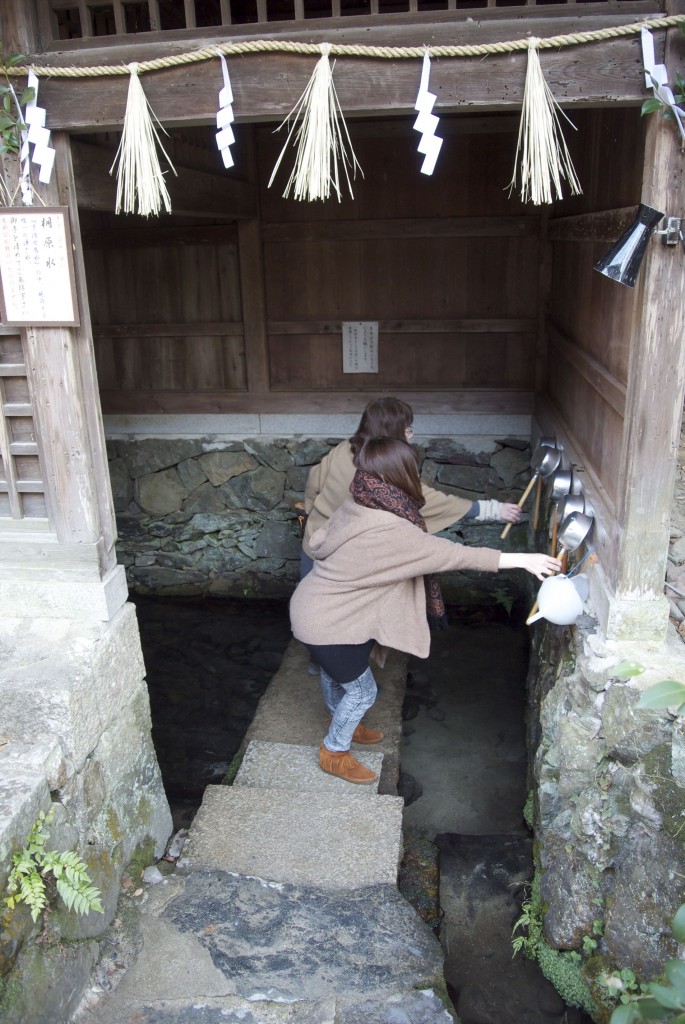
Ujiagami’s haiden (worship hall), which stands in front of the honden, dates from around 1215 and is built in the classic aristocratic palace style known as shinden-zukuri.  Lattice windows at the side swing upwards to open, and ‘wings’ are located to right and left.  Next to the haiden is an unusual well used as a temizuya (wash-basin for purifying hands and mouth).

Entrance to the haiden (worship hall)


Haiden building in the shinden-zukuri style with two sand cones in front (as at Kamigamo Jinja)


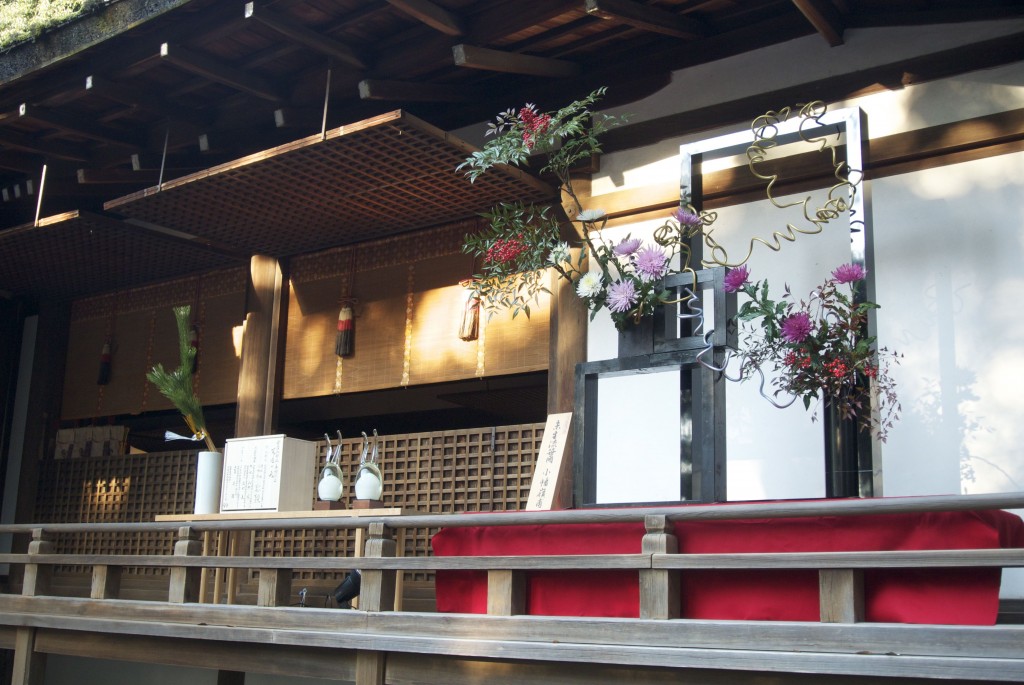
Ikebana on the haiden as a New Year decoration. Notice the upward opening lattice shutter, a typical feature of the shinden-zukuri style of architecture.


Happy hatsumode visitor able to rake in good luck and prosperity in the coming year


The unusual purification style at Ujigami, one of the seven springs for which Uji was once famous

Hatsumode (Kamigamo)


My first shrine visit of the year was to Kamigamo Shrine in north Kyoto, a World Heritage Shrine and set amidst pleasant open grassland and woods.  It dates back before Kyoto was founded in 794, but such is its antiquity no one is quite certain when and how it was founded.  According to Joseph Cali in Shinto Shrines (Uni. of Hawaii Press), the first documented date of the shrine’s founding is 678.

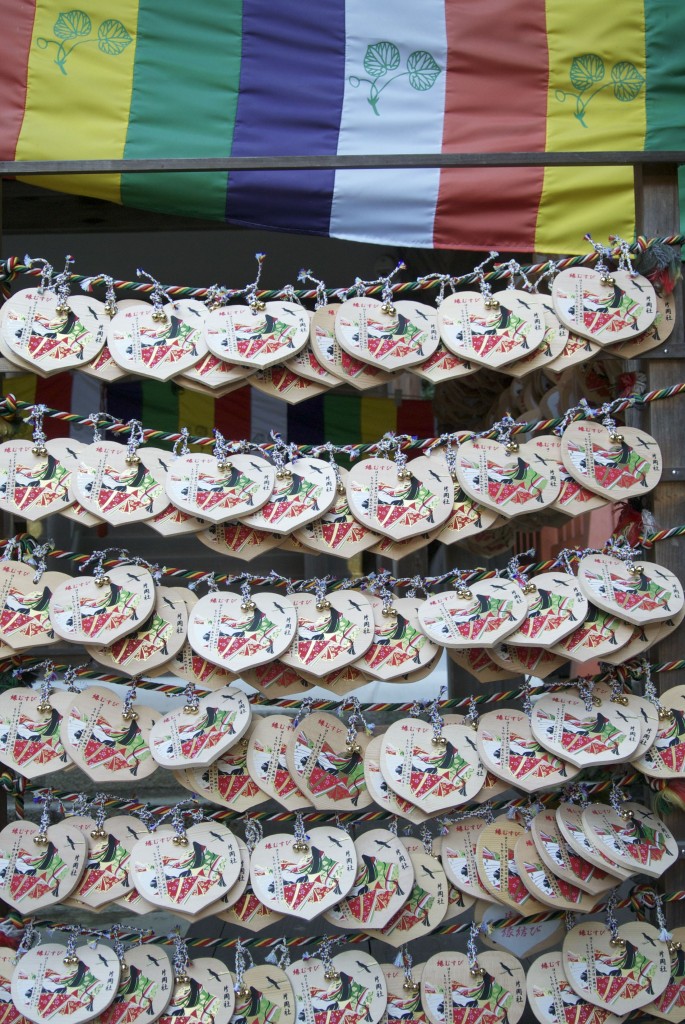
Heart ema with the Kamigamo aoi leaf emblem on the cloth above


I was early enough to beat the crowds and as it was a glorious sunny morning (an auspicious start to the year!), I wandered around for a while taking photos.  Though I’ve been to the shrine many times, I don’t recall having seen before a prominent enmusubi (love connection) shrine with its heart ema, shown in the picture above.  I’ve got the feeling that every shrine in the land is jumping on this popular bandwagon….

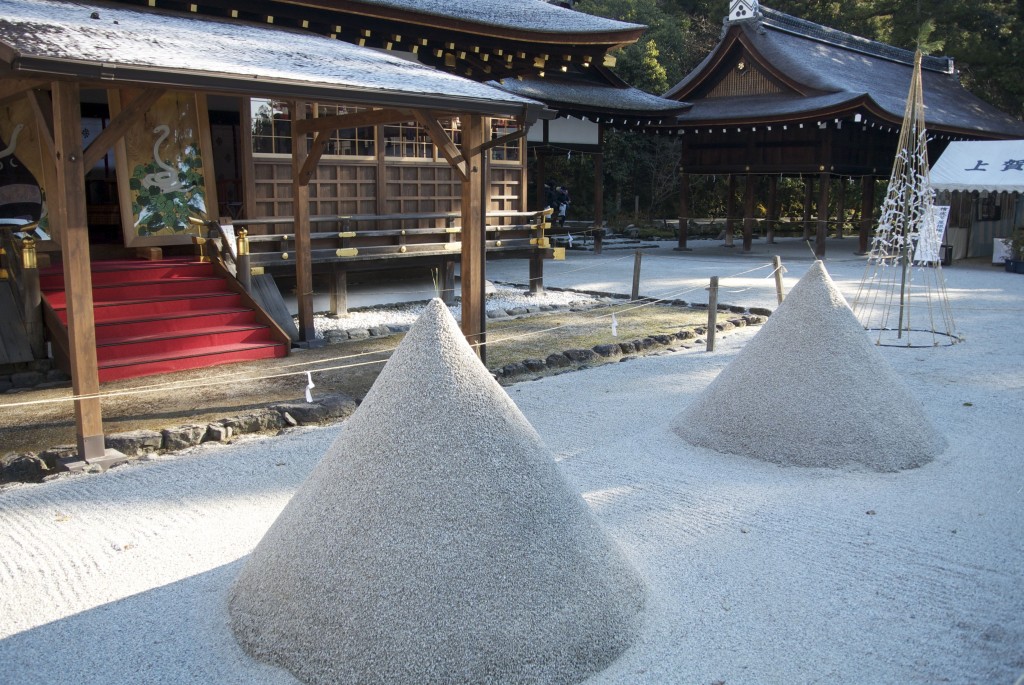
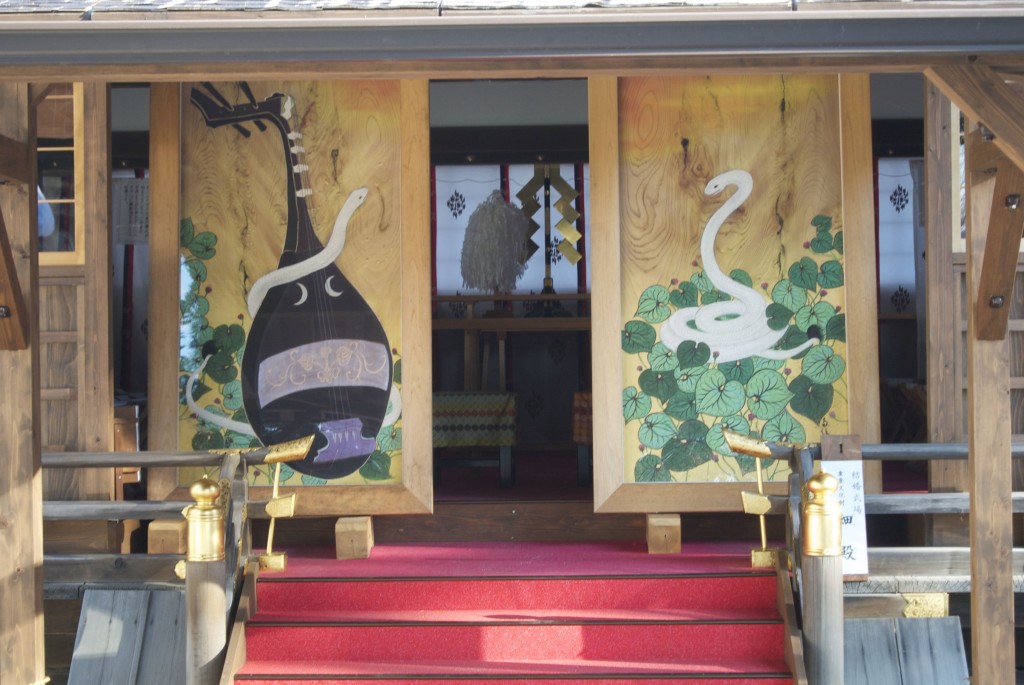
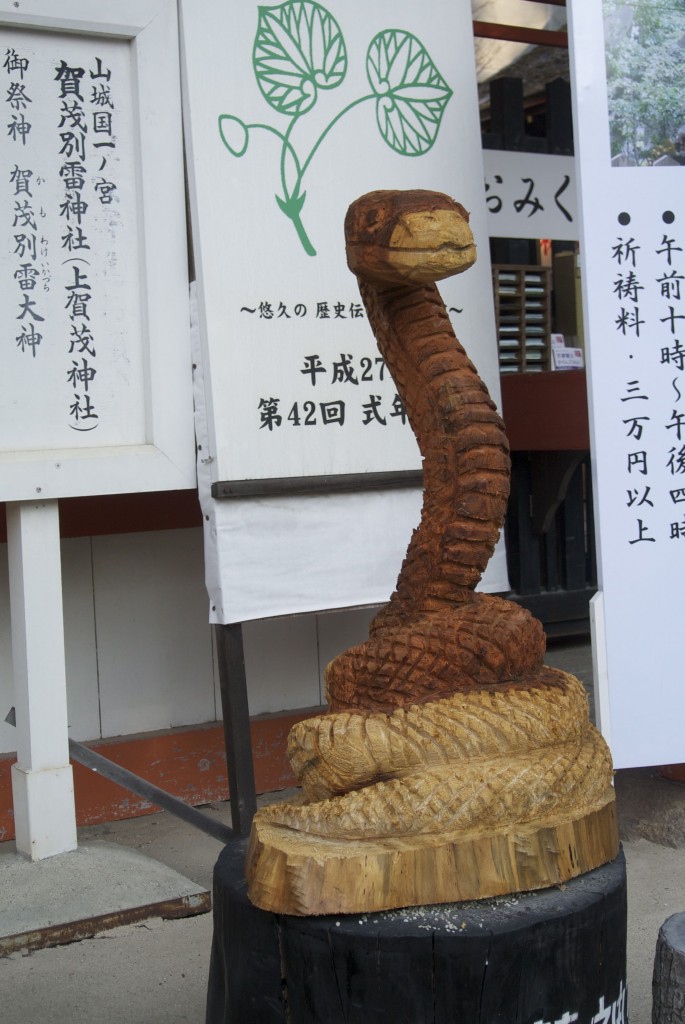
The shrine had decked itself out for the New Year, with a pair of white snakes displayed behind the two famous cones of sand that stand in its main compound (yin-yang emblems, or signifiers of change and renewal).  There was also a fine carving to greet visitors for the year of the snake.


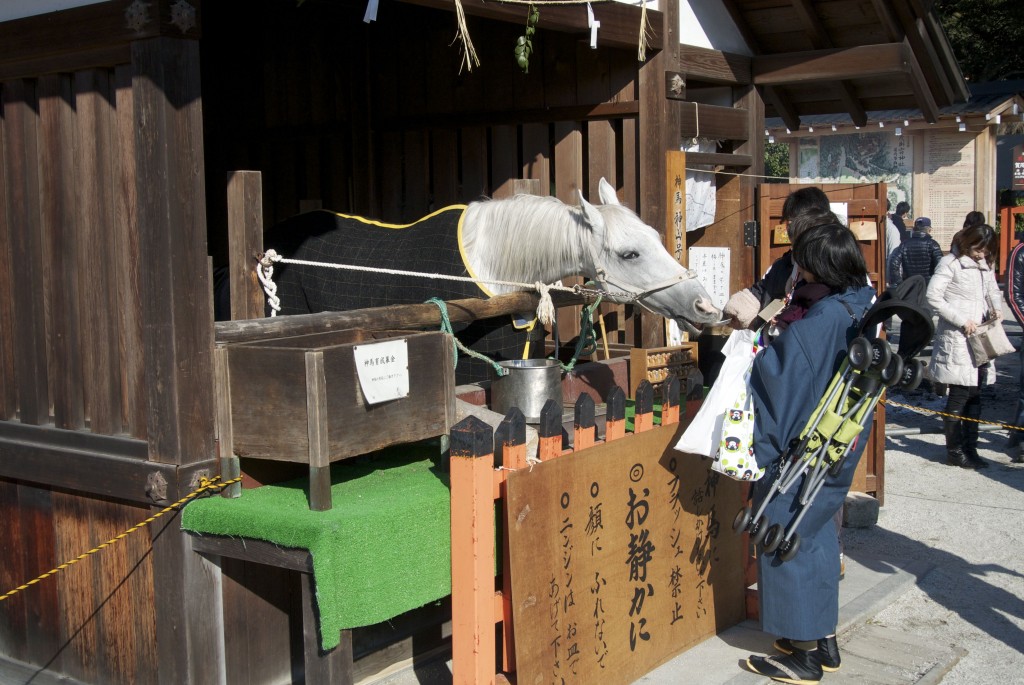
The shrine’s white horse was on display too. I think there are only about a dozen shrines in all that keep the custom of hosting a white horse, once apparently a common offering to the kami. People were lining up to pay 100 yen to feed it carrots, which were eagerly munched down. As an animal lover, I can’t say I’m fond of seeing a wild animal tied up all day for the pleasure of sightseers but it seemed happy enough (not sure if it will get stomach cramps afterwards though.  Another case of New Year overeating!).

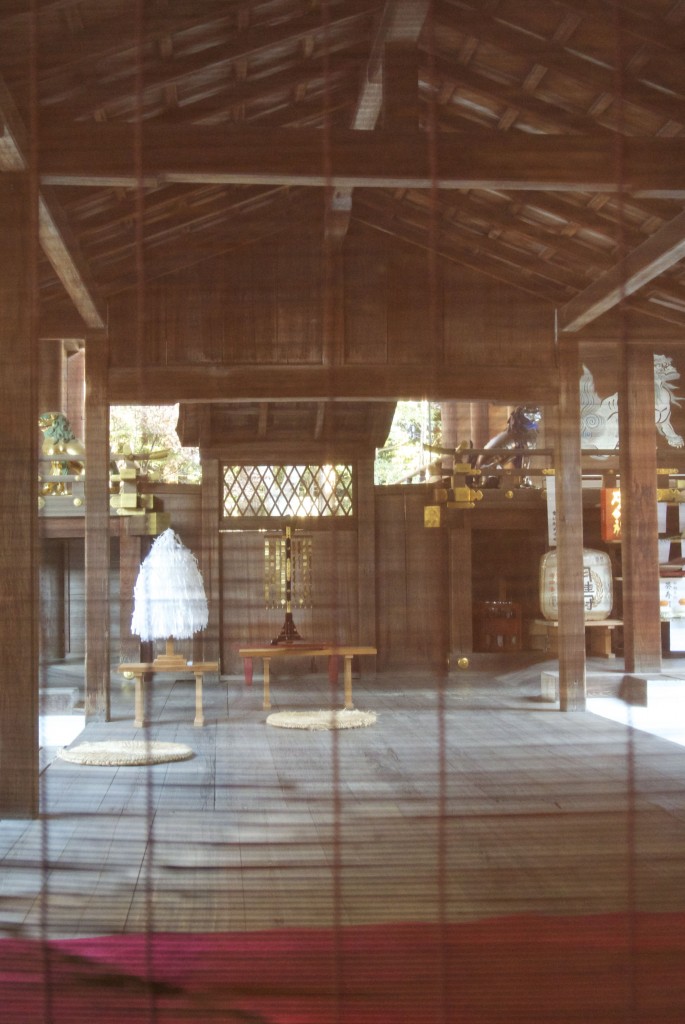
Unfortunately the main shrine was under repair, but inside there was a blind which allowed partial sight of the interior in alluring manner. I imagine it was a similar kind of screen that was used in Heian times to obscure the view.  A screen that doesn’t screen is a very Japanese trait, like the torii gate that is not a gate, or the barrier to entry into a garden that is not actually a barrier.

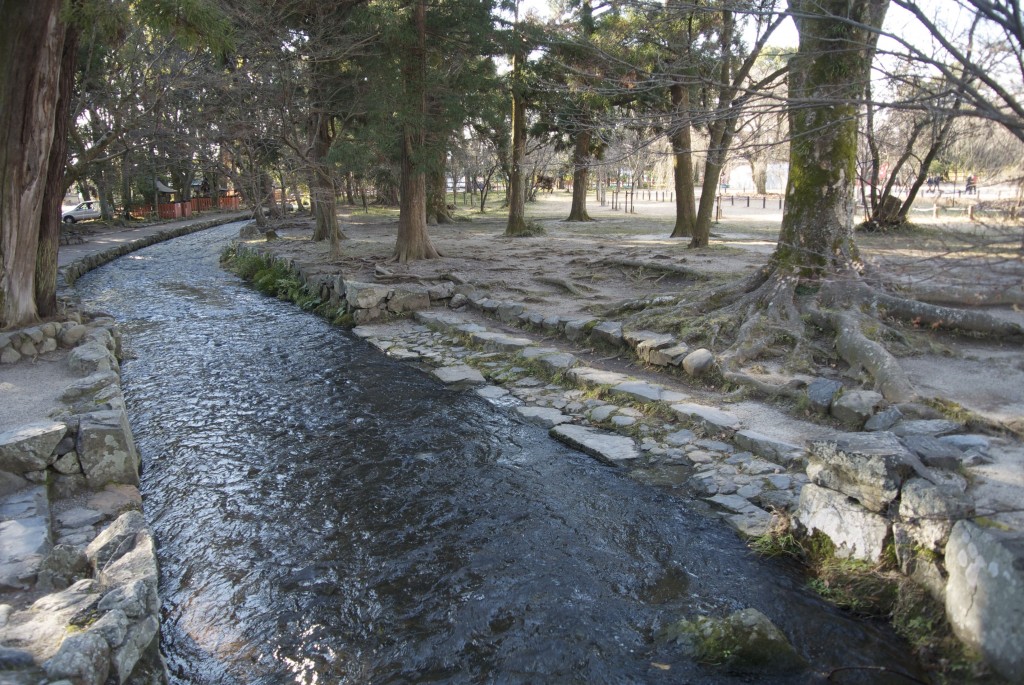
I walked back through the wooded area of the precincts and came across a place that looked as if it were desinged for doing ablutions (washing hands) in the river. Before water-basins were introduced at shrines, washing in rivers was probably the norm, and Kamigamo’s sister shrine, Shimogamo Jinja, has a similar feature. The most well-known example however is the one at Ise.  Unlike that at Ise, it doesn’t look as if anyone at Kamigamo actually uses the river though.

« Older posts Newer posts »

© 2026 Green Shinto

Theme by Anders NorénUp ↑