Author: John D. (Page 155 of 202)

Shimane mythology

2012 is the 1300th anniversary of the Kojiki, fount of Japan’s mythology.  In celebration Shimane prefecture has brought out a wonderful website which details the connections of place and folklore found in the myths.  I wish I’d had access to this when I made my trip to Izumo last year as the information is both detailed and stimulating.  Below are some of the highlights, but for the website itself please click here.

****************************************************************************************
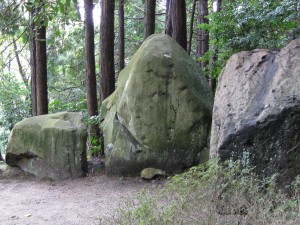
The boulders with which Izanagi supposedly blocked up the underworld

In the Yomi-no-kuni myth, Izanagi rushes out of the underworld pursued by furies released by Izanami and hurriedly blocks up the entrance with a boulder. The Shimane website says,’Yomotsu Hirasaka, the entrance to the underworld, is said to be in the Iya area of Matsue, just off of Route 9. It is a quiet, secluded place that is gloomy even on the clearest day, which creates an atmosphere appropriate to a place said to be a border between this world and the next. Several large boulders are in the area, and one wonders exactly which one was rolled over to block the entrance. Also near this area is Iya Shrine, and a slope near the shrine is said to be the same slope that led to the underworld’s entrance.’


*******************************************************************************************

An animal rights story about the culture hero, Okuninushi:
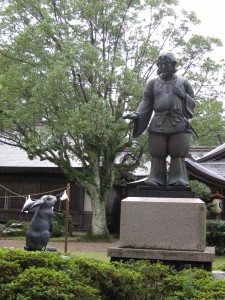
Okuninushi and the hare, one of Izumo's most famous stories

Okuninushi lived in the land of Izumo in Ashihara-no-nakatsukuni with his numerous brothers. One day, his brothers heard of a goddess of unrivaled beauty named Yagami-hime. She lived in the land of Inaba, and every one of them wanted to ask for her hand in marriage. When they set out for Inaba, they brought Okuninushi along as their servant to carry their baggage, which was so heavy that he soon lagged behind the group.
When his brothers reached Cape Keta in Inaba, they came upon a rabbit lying on the ground that had been stripped of its skin and was crying in pain. The brothers said to the rabbit, “You should wash off in seawater and then climb to the top of a high hill where the winds blow strongly to dry off. You’ll recover very quickly if you do.”
So the rabbit did as it was told, but instead of recovering, things got worse. As the winds blew, its skin dried and cracked, and the salt from the seawater got into its cracked skin. It couldn’t stand the pain, and fell down crying.
When Okuninushi, who was still trailing the group, finally reached Cape Keta, he saw the rabbit crying out in pain, and asked it what had happened…  [and what happens next can be found here.]

**************************************************************************
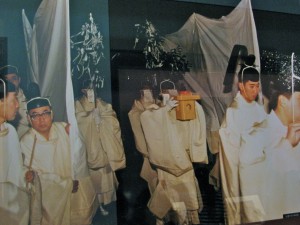
Ceremony on the beach to welcome the eight myriad kami

The Shimane website comments: ‘If you follow the road that passes in front of Izumo Taisha, you will soon arrive at Inasa-no-Hama beach. This beach is part of Sono-no-nagahama, a place that plays a large role in the Kunibiki legend, and is where Takemikazuchi presented Okuninushi with his demands to turn over Ashihara-no-nakatsukuni to Amaterasu, and where Takeminakata challenged him to a test of strength. It is also where, every year at the Kami-mukae-sai, all of the gods from around Japan are welcomed to Izumo Taisha, and the procession back to Izumo Taisha from the beach follows a path through town along the Kami Mukae Road.’

****************************************************************************
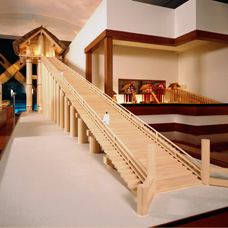
Model of how Izumo Taisha might have looked in Heian times

“In April of 2000, an amazing find of archaeological and historical significance was made on the grounds of Izumo Taisha: during construction preparations for an underground storage unit, part of a large wooden pillar was found. Upon further excavation, two other pillars were found next to it, and all three were placed together in such a way that they looked as if they had been bound together to make one massive pillar. More digging nearby uncovered two similar groupings of pillars.

Why was this such an important find? It led credence to the claim that at on point in time, Izumo Taisha’s main hall had been 48 meters high, twice the height it is now. So at some point in the past, the main hall of Izumo Taisha was taller than even the Daibutsu (Great Buddha) Hall of Todai Temple in Nara. Its floor would have been at the point where the current main hall’s ceiling is now, making it higher than the low-lying cloud cover that tends to surround the shrine. This discovery is more evidence that Izumo Taisha and Shimane played a particularly important role in ancient Japan.”
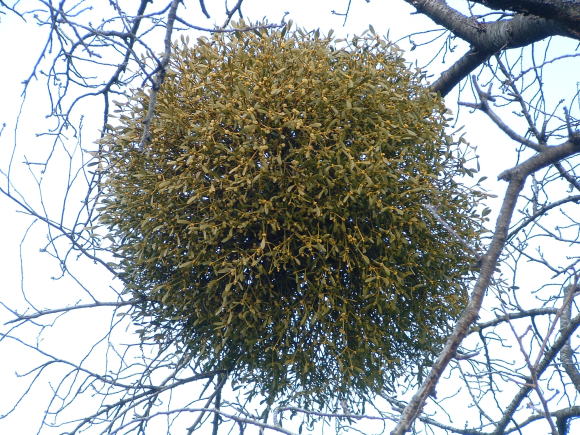

Mistletoe

Japanese mistletoe (yadorigi) - the berries are yellowish rather than white

No, mistletoe doesn’t feature in Shinto, but it’s an important part of the European pagan tradition at this time of year.   Here naturalist Kevin Short takes a seasonal look at the folklore of mistletoe in Europe, prompting thoughts about the commonality of nature religions.  (For the full  Japan Times article, click here.)

****************************************

European mistletoe is a branching evergreen shrub with thin leaves that attach in opposing pairs at each node of the branch. Small yellow flowers bloom at the tip of the branch in very early spring, in the crotch between the leaves. The fruits, small milky white berries, mature from early to mid-winter.

Mistletoe berries are poisonous to humans, but are eaten by birds. The seeds are coated with thick mucus that allows them to stick solidly when wiped off or excreted onto tree branches. The mucus later hardens, and when the seed germinates it sends out a special tap root that penetrates right into the branch of the host tree, where it funnels up water and mineral nutrients to the mistletoe leaves.

Mistletoe has since antiquity been considered a sacred plant in Celtic, Nordic and other European cultural traditions. The first-century Roman soldier and natural historian Pliny the Elder described a ceremony in which Celtic druids climbed up an oak tree to cut down sprigs of mistletoe using a golden sickle. The falling mistletoe was caught in a blanket by people waiting under the tree, and two white bulls were slaughtered as a sacrifice. The mistletoe appears to have been used in ceremonies conducted to ensure the fertility of domestic livestock. The milky white berries may have been symbolic of male sperm and fertility.

Even today, sprigs of mistletoe are widely used as decorations during the Yuletide or Christmas season. According to tradition, girls caught standing under the mistletoe may be kissed. This custom may have some base in the plant’s deep association with fertility in the Celtic tradition. Another theory is that the custom actually derives from Scandinavian mythology.

Baldur, son of Odin and Frigg, was a gentle handsome youth with a sunny disposition. A seer, however, foretold that he would be killed by a wooden spear or dagger. Frigg, anxious to protect her darling son, traveled all over the nine worlds of Norse cosmology, extracting promises from all the trees never to harm him. Unfortunately, she somehow bypassed the mistletoe. The evil trickster Loki, jealous of Baldur’s good looks and popularity, learned of this, and had the boy killed with a shaft made from mistletoe wood.

In the classic Norse myth mistletoe is responsible for the death of the peaceful Baldur. In later popular folklore, however, mistletoe conversely became associated with love and good will. Enemies that found themselves dueling under a mistletoe shrub were required to make peace; while lovers who embraced under the shrub were assured a long, happy and fertile married life.

Last of Tokyo’s Fuji views

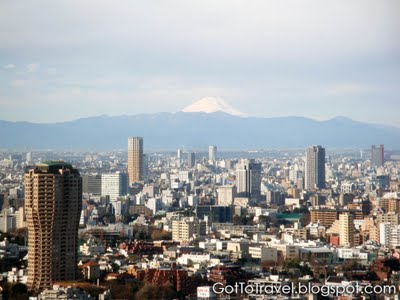
It’s said that if you dream of Fuji on the first night of the New Year, you’re in for an auspicious year ahead.  Such is the symbolic import of the sacred mountain.  Yet in modern times, rather than being treated as a spiritual being, it’s been treated with secular disdain, and from the Japan Times comes a rather sad story about it being shut out altogether for the citizens of Tokyo by the forces of commercialism.  It concerns the very last clear view of Mt Fuji from a Tokyo street.  (It can still be seen from high-rise buildings.)

http://www.japantimes.co.jp/text/fl20121216x2.html

*****************************************************************************************

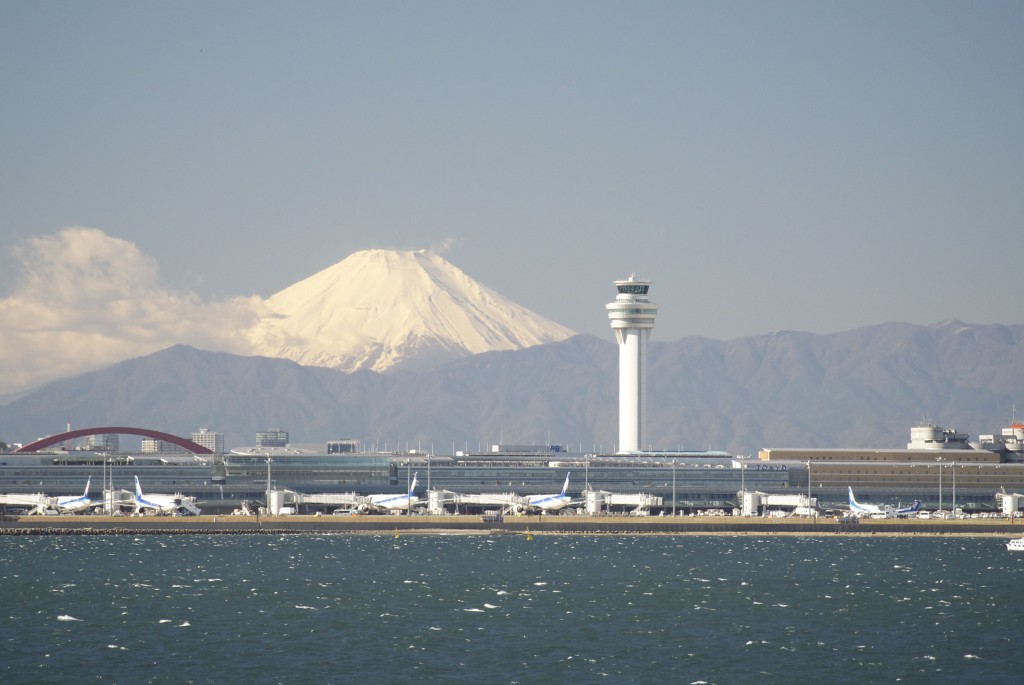
Haneda airport in front of Fuji, taken from the Ogasawara ferry


In September 2010 Sumitomo Fudosan revealed plans for a 160-meter-high, 45-story apartment building 6 km away in the Okubo 3-chome district of city-center Shinjuku Ward. That would extinguish the view entirely.

In response, the CASF appealed to the International Council on Monuments and Sites (ICOMOS), a UNESCO advisory body, which adopted a resolution supporting “the development of guidelines to protect the last remaining vistas of Mount Fuji.”

That body also contacted Sumitomo Fudosan and various Tokyo ward offices expressing “serious international concern” and urging authorities to “re-evaluate the development in view of the importance of maintaining the vista.” It may also be significant that UNESCO is expected to decide by June 2013 whether to award World Heritage Site status to Mount Fuji.

Consequently, as Akasaka put it, “If the view from Nippori’s Fujimizaka is lost, it certainly sends a message that people aren’t really concerned about the importance of Mount Fuji as a World Heritage Site.”

View from Tokyo Tower

Though Sumitomo Fudosan has denied a direct connection with such matters, work on the Okubo 3-chome site has halted. “We’re deliberating the construction plans,” said a company spokesman who withheld his name. “Since the Great East Japan Earthquake in March 2011, we’ve been changing the plans to make the building even stronger.”

Making matters worse, the CASF’s Kaneko said he was “shocked beyond words” in August when the group learned work was under way in Bunkyo Ward’s Sendagi 3-chome district on a privately financed, 11-story apartment block set for completion in November 2013. That building, to be called Fukui Mansion, would completely block out the view of the top and right side of Mount Fuji from Nippori’s Fujimizaka — utterly ruining the view.

Although CASF has urged Bunkyo Ward, the builder and construction company, Seiwa Corp., to lower the height from 11 to seven stories to preserve the view from Fujimizaka, a Bunkyo Ward planning official speaking on condition of anonymity, said: “From a legal standpoint, there is absolutely no problem with building Fukui Mansion.

“Bunkyo Ward cannot forcefully regulate the building height because that would infringe on the builder’s private rights,” he said. “And as the hill is in Arakawa Ward, it is not our job to take the preservation initiative. However, if Arakawa Ward drew up some guidelines, we would cooperate.”

Faced with pass-the-buck responses at every turn, many residents and CASF members are left pinning their hopes on the publicity and awareness generated by events such as Diamond Fuji. These are annual celebrations — usually in mid-November and late January — of the two days on which the sun sets directly behind the mountain’s peak, casting a diamond-like silhouette of the symmetrical cone.

“We want to make sure this year isn’t the last Diamond Fuji,” CASF member Eiko Ikemoto said with feeling. “By gathering people together, we’re hoping to send a message to the builder to preserve the view.”

On Nov. 13, nearly 300 people turned out for the most recent Diamond Fuji, including students, photographers and others from far beyond Tokyo. But as CASF members distributed fliers, Ikemoto pulled no punches when she said: “If we give up now, the view of Mount Fuji from Nippori’s Fujimizaka could be lost for generations to come.”

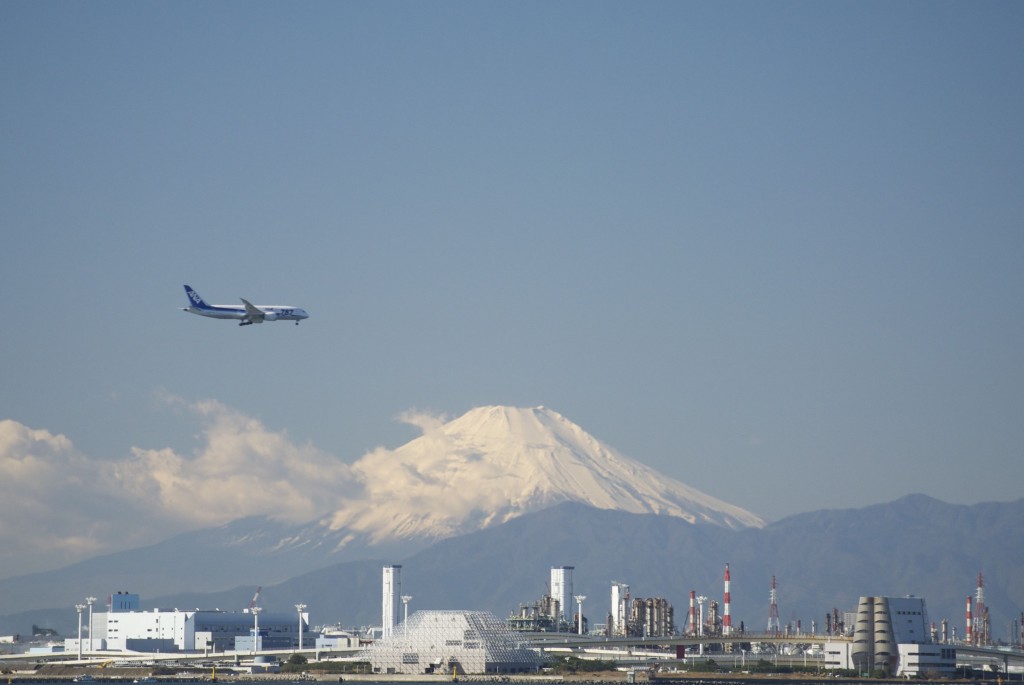
Plane landing at Haneda airport

Fuji: looking ahead to 2013

Fuji is going to feature big in 2013.  In June a Unesco committee will decide if the Japanese iconic mountain should be registered as a World Heritage site, and the decision is sure to hit the world news.  Below is a truncated Japan Times article that looks at the spiritual symbol from a number of angles.  For the full article, click here.

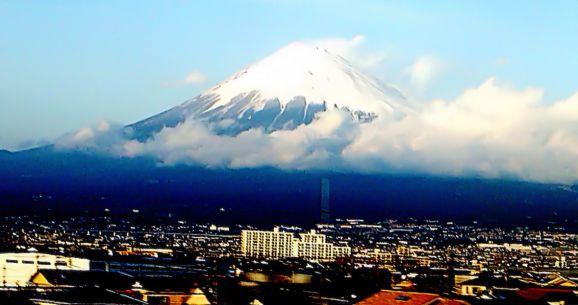
Mount Fuji from a shinkansen train south of Tokyo (Photo by Kamasami Kong


Reflecting the great affection in which it is held, Japan’s most beautiful mountain is also its most climbed. However, the beauty in the beholder’s eye definitely improves with distance. Up close, the 3,776-meter mountain presents a different aspect. Anyone who has ever clambered up it during the official two-month climbing season from July 1 — along with reportedly more than 200,000 trekkers a year — knows that ascending the thing is like a never-ending slog up an uninspiring, though wildly popular, slag heap.

The most picturesque way of appreciating the mountain’s physical form is to do so from Fuji’s Five Lakes — known in Japanese as Fuji Go-ko.  Mount Fuji is classified as an active volcano, though it has been dormant since its last eruptive outburst in 1707-08, when the spewed-out ash reaching Edo (present-day Tokyo) was so thick as to prevent daytime reading. Before then, it was anything but dormant, and lava flows from the volcano dammed up rivers, giving rise to the five lakes at its northern base. As three of these lakes are still linked by systems of underground channels, their water surfaces are at the same altitude.

—-

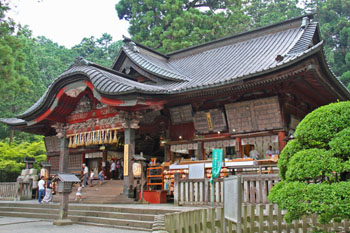
Grand main hall of Kitaguchi Hongu Fuji Sengen Shrine (Japan Times)

If scrambling around lava caves is the most hands-on fun in the Five Lakes area, the most serene spot is found in the shape of Kitaguchi Hongu Fuji Sengen Shrine. This ancient Shinto jinja is the traditional starting point for pilgrims ascending the peak and, befitting the great spiritual endeavor, the grand construction is mystically impressive with its huge overarching torii and stately avenue flanked by mossy stone lanterns and majestic cryptomerias leading up toward one of today’s several summit routes.

These days, few who make it to the top of Mount Fuji are actual pilgrims. But it is still somehow rather stirring at night in season to watch the glittering procession of distant lights as hikers make their ascent like a slowly moving constellation over the massive, looming dark hulk of the volcano.


The kami like a laugh

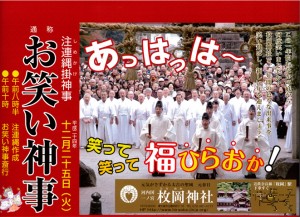
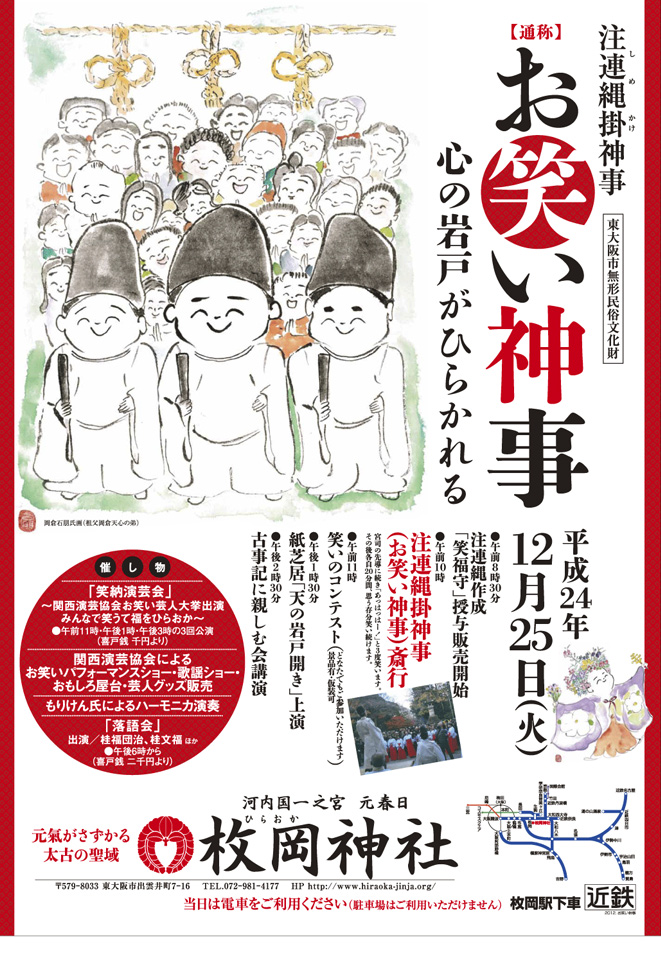
Christmas Day with a difference at a laughing festival where you can “open the Rock Door of your heart”.

It takes place on Dec. 25 at a shrine near Osaka, and you can see the event on this youtube video.  (If you want to skip the opening ceremonies, go to 2.30 minutes in where the laughing starts in earnest, so to speak.  It lasts until the 5.00 min. mark.)

****************************************************************

Dec. 22, 2012 Japan Times

Come laugh your heads off at Osaka shrine
Visitors to Hiraoka Jinja Shrine in Higashi-Osaka, Osaka Prefecture, can join in the laughing ceremony Tuesday to welcome a more joyous new year.

During the free event, which starts at 10 a.m., priests will encourage attendees to laugh for about 20 minutes. There will also be a laughing contest from 11 a.m. in which anyone can take part.

The shrine is close to Hiraoka Station on the Kintetsu Nara line.
For additional information, visit www.hiraoka-jinja.org/special/2012-owarai-shinji.html (in Japanese) or call (072) 981-4177.

Pagan solstice

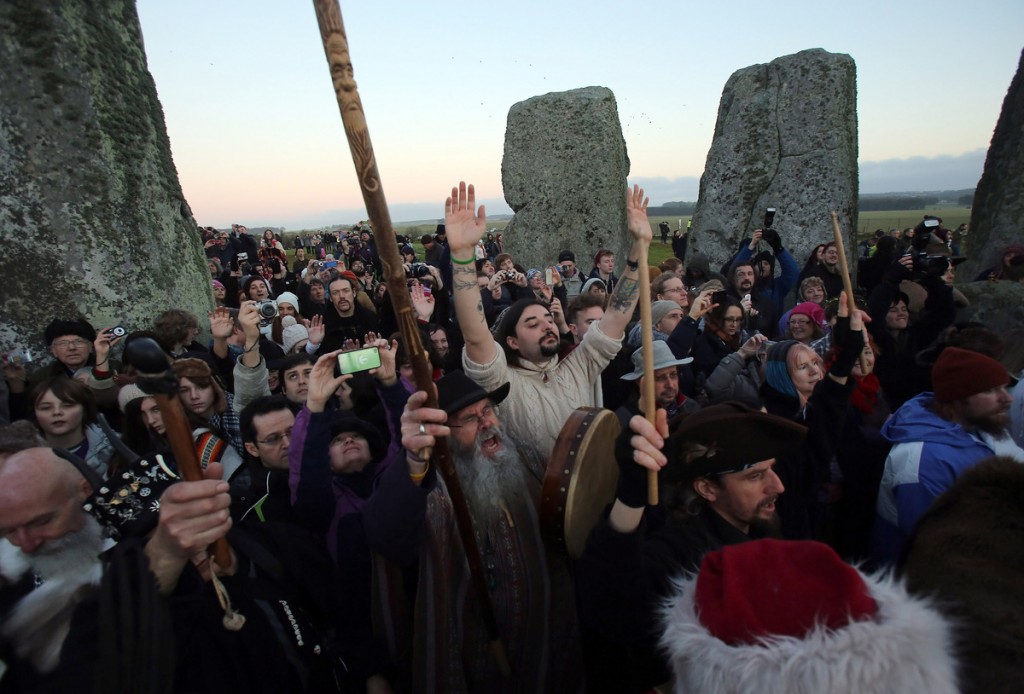
Stonehenge solstice (courtesy the Huffington Post site)


From The Huffington Post… By Jahnabi Barooah    12/20/2012

In 2012, the winter solstice in the Northern Hemisphere will occur on Dec. 21, 2012 at 6:12 a.m.  Officially the first day of winter, the winter solstice occurs when the North Pole is tilted 23.5 degrees away from the sun. This is the longest night of the year, meaning that despite the cold winter, the days get progressively longer after the winter solstice until the summer solstice in 2013.

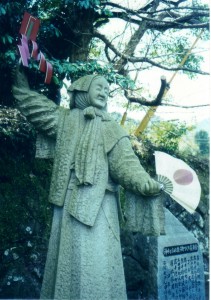
Ame no Uzume celebrates the solstice by doing a shamanic dance to resurrect the dying midwinter sun

The winter solstice is celebrated by many people around the world as the beginning of the return of the sun, and darkness turning into light. The Talmud recognizes the winter solstice as “Tekufat Tevet.” In China, the “Dongzhi” Festival is celebrated on the Winter Solstice by families getting together and eating special festive food.

Until the 16th century, the winter months were a time of famine in northern Europe. Most cattle were slaughtered so that they wouldn’t have to be fed during the winter, making the solstice a time when fresh meat was plentiful. Most celebrations of the winter solstice in Europe involved merriment and feasting. In pre-Christian Scandinavia, the Feast of Juul, or Yule, lasted for 12 days celebrating the rebirth of the sun god and giving rise to the custom of burning a Yule log.

In ancient Rome, the winter solstice was celebrated at the Feast of Saturnalia, to honor Saturn, the god of agricultural bounty. Lasting about a week, Saturnalia was characterized by feasting, debauchery and gift-giving. With Emperor Constantine’s conversion to Christianity, many of these customs were later absorbed into Christmas celebrations.

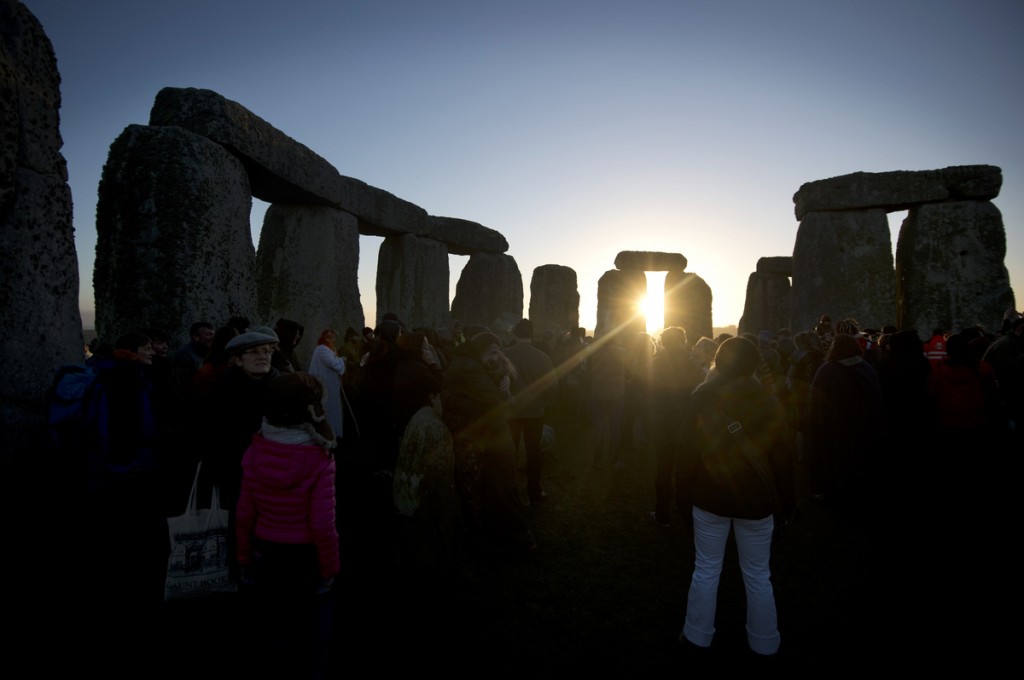
One of the most famous celebrations of the winter solstice in the world today takes place in the ancient ruins of Stonehenge, England. Thousands of druids and pagans gather there to chant, dance and sing while waiting to see the spectacular sunrise.

Solstice sunrise on the shortest day of the year

Life goes on

The end of the world appears not to have taken place after all, as Mayan freaks suggested, but symbolically with the winter solstice today the death of nature is taking place.  So commiserations and congratulations are in order.  The king is dead; long live the king!

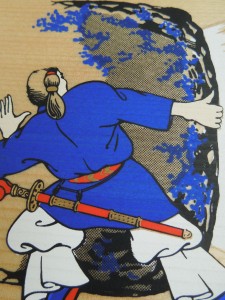
Opening Amaterasu's rock cave to relight the world with warmth and sunshine - a symbolic recreation of the winter solstice

Death and rebirth appears to be the basis of religion everywhere, based on early man’s observation of the cycle of nature.  Personified it became Jesus, or Amaterasu, or any other of a host of immortal figures.  They speak to a profound desire in mankind to transcend death.

One way to deal with the fear was to imagine a form of life after death.  But another, and to my mind a much more mature way, was to see the individual as part of a greater flow.  Trees die, but the forest lives on.

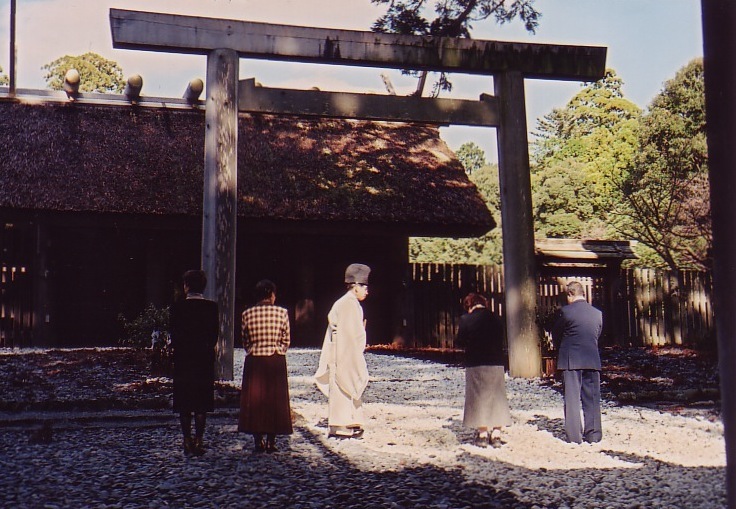
The lack of concern with an afterlife is one of Shinto’s great virtues.  The focus on this world leads to the ritual celebration of life on earth, and of its constant cycle of renewal.  The twenty-year rebuilding of Ise Shrine, due to be completed next year, is a case in point, signifying a generational renewal.  Despite the passage of time, the spiritual symbol remains forever revitalised.

For the northern hemisphere, the period between the winter solstice and the New Year is marked by a strong sense of death and renewal, which has been celebrated since ancient times by fire, jubilation and a determination to keep away the cold with high spirits – and spirit.   At this moment of survival, the exciting possibility of new beginnings opens up before us.  May I wish everyone accordingly the very warmest of season’s greetings!

Ceremony at Ise Jingu, where a twenty-year rebuilding programme symbolises decay and renewal


« Older posts Newer posts »

© 2026 Green Shinto

Theme by Anders NorénUp ↑