Author: John D. (Page 179 of 202)

More on Sacred Groves

Naturalist Kevin Short, writing for the Daily Yomiuri, provides further thoughts below on the subject of sacred groves.  I imagine the title is not of his choosing, but he seems to have done his Shinto research well enough….  (The full article can be found here; for his previous article, click here.)
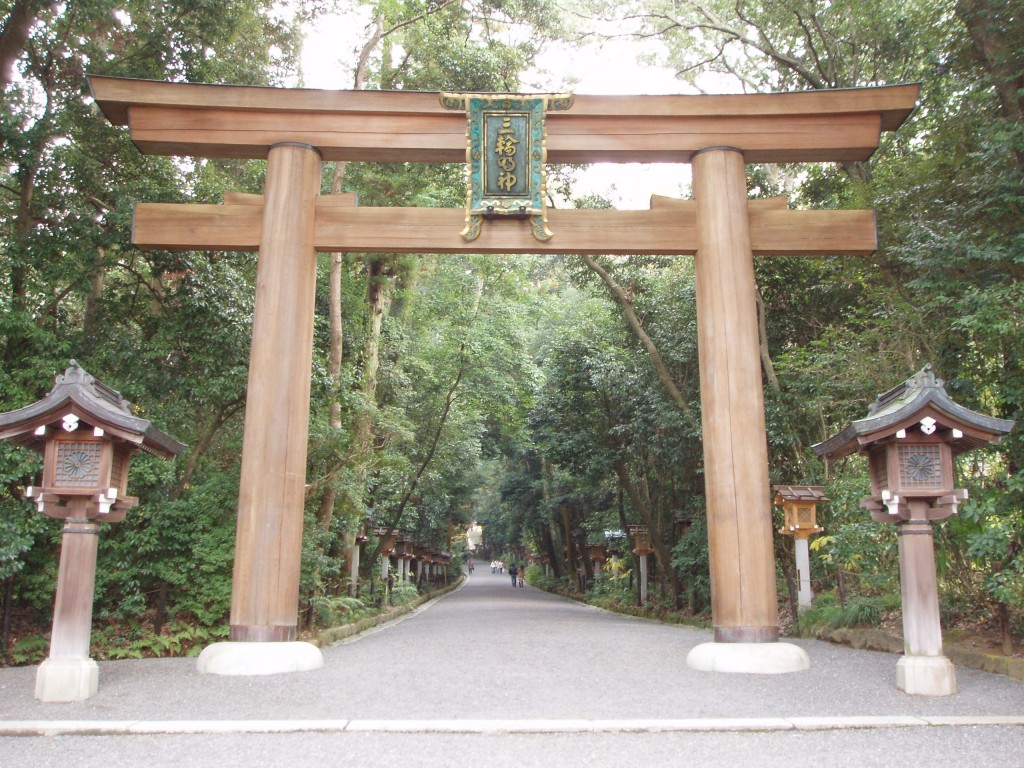
Many Shinto shrines, like Omiwa Jinja pictured here, are deeply embedded in sacred groves


****************************************************************************************************************
Sacred groves amuse nature lovers, offer spiritual refreshments

Kevin Short / Daily Yomiuri Columnist (Feb. 2, 2012)

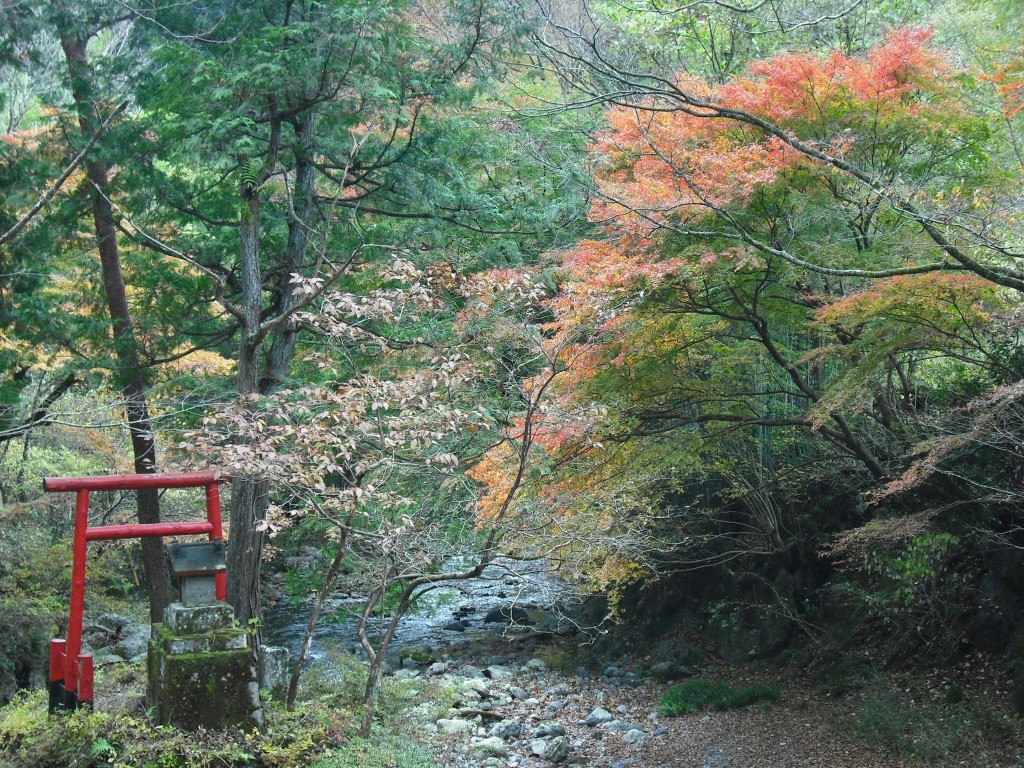
Visits to shrines and temples are an important part of any tourism experience here in Japan. Visitors enjoy the beautiful historic architecture and sense of peace and tranquility found in the precincts. Shrines and temples, many of which are surrounded by venerable old sacred trees, are also good spots to study nature or simply commune with the natural environment.

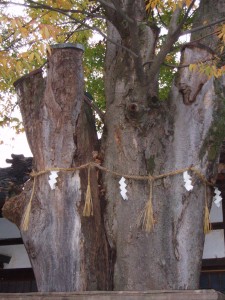
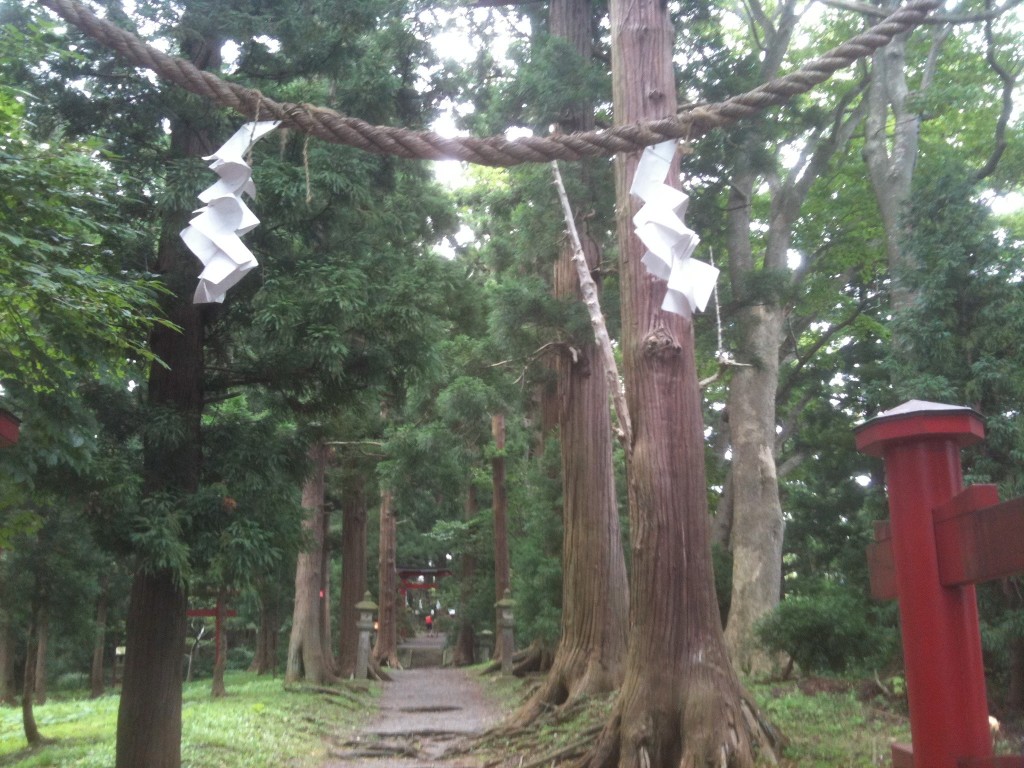
Two basic categories of big sacred trees can be found at Japanese shrines and temples. One includes individual trees, often considered especially sacred to the kami or hotoke deities enshrined there, that have been planted in front of the buildings or along the sando, or avenue of approach. At Shinto shrines, these trees will usually be marked off by a shimenawa, a twisted straw rope decorated with strips of paper cut in a zigzag shape, tied around the trunk. This type of tree may include some local native species, such as zelkova (keyaki), but frequently consist primarily of nonlocal types such as camphor (kusunoki), cryptomeria (sugi) or gingko (icho).
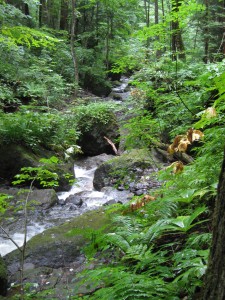
Woodland at Togakushi Shrine

Another category of big tree is found in small sacred groves that are allowed to flourish behind and around the sides of the main building. These trees are often local native species, and in many instances the sacred groves actually preserve small remnants of the original primary forest cover. The Tadasu Grove of the Shimogamo Jinja shrine in Kyoto, for example, contains a rare chunk of primary deciduous forest native to the heavily developed Kyoto Basin.

Sacred groves called chinju no mori are an almost required feature at Shinto shrines, but rich groves can often be found at Buddhist temples as well. The Yushima Seido, a Confucian temple located just adjacent to Ochanomizu Station in central Tokyo, is surrounded by a fine grove consisting of both native and nonnative trees. A more general term for sacred groves, regardless of their religious affiliation, is shajirin.

Today, the spiritual essence of the kami deities worshipped at a Shinto shrine are believed to reside in sacred objects known as shintai, which are housed within a special inner chamber, a sort of holy of holies, inside the honden, or main hall, of the shrine. In front of this stands the haiden, or worship hall, where visitors pay their respects with claps, bows and offerings.
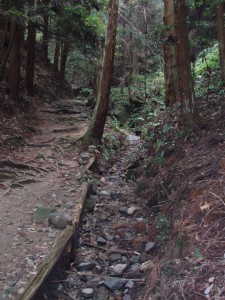
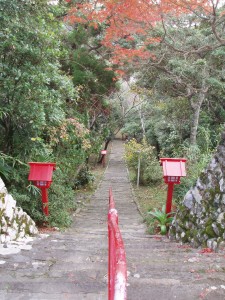
Pathway up the slopes of sacred Mt Miwa

Many historians and folklorists, however, believe that this shintai and honden complex, along with impressive shrine buildings themselves, are later developments. Originally the essence of the kami were thought to reside in specific natural features, called kannabi, such as groves of trees, large or unusually shaped rock formations, waterfalls, or even entire mountains.

Some shrines still preserve this original kannabi arrangement. Omiwa Jinja, the most important shrine in Nara Prefecture, for example, totally lacks a honden. The worship hall opens out directly onto the heavily forested slopes of Mt. Miwa. The deity enshrined here, Omononushi, is considered to be the spiritual embodiment of the mountain itself.
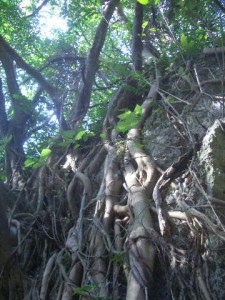
Trees at an utaki in Okinawa

This ancient layout is also well-preserved at shrines on the Ryukyu Islands, called utaki. Here, simple pavilions open out to groves of trees, in which the deities are believed to reside. Only female priests, called noro, are allowed to pass beyond the outer pavilion and tend the grove.

In the southern Kanto region, sacred groves are usually dominated by huge chinquapins (sudajii) and several species of evergreen oak, which are generically called kashi in Japanese. These are the same species that form the stalwarts of the region’s primary old-growth forests. They are evergreen trees with thick, shiny leaves that allow very little sunlight to pass. Several of these trees usually overlap their upper branches to form a dense canopy, keeping the atmosphere inside the grove cool and dimly lit. Only occasional shafts of bright sunlight thrust through small gaps in the branches.

Sacred groves often play an important role in conservation of local biodiversity. In urban areas they may represent the only substantial chunk of greenery for miles around. Even in countryside habitats, where the overall forest cover ratio remains high, the groves may be vital to regional species richness. Typical countryside forests, such as managed coppices, orchards and timber plantations, are mostly secondary or artificial in nature, containing younger trees that are harvested at regular intervals. Only in the protected sacred groves can trees grow to their full size and develop into primary forest habitat.

Sacred groves are found the world over. In Nigeria, for example a sacred grove at Osogbo, dedicated to the Vodoun goddess Osun, has been designated a UNESCO World Heritage Site. Surveys in India have identified well over 10,000 sacred groves, mostly managed and protected communally by individual villages.

Here in Japan, the total number of sacred groves must be as high as several tens, or even hundreds, of thousands. These include immense forests surrounding major shrines such as Ise Grand Shrines and Kasuga Grand Shrine, the latter of which is part of a UNESCO World Heritage Site. On the other end of the scale are groves found at uncountable tiny local shrines and temples, which may contain only several to a dozen or so trees each. Even isolated roadside stone Buddhas and commemorative mounds are usually protected by one to several sacred trees.

Sacred groves are fine spots for studying botany or watching birds. They also provide ideal sanctuaries for prayer, meditation, quiet contemplation, yoga and other forms of spiritual refreshment and empowerment.

************************************************************************************************************************

Short is a naturalist and cultural anthropology professor at Tokyo University of Information Sciences.
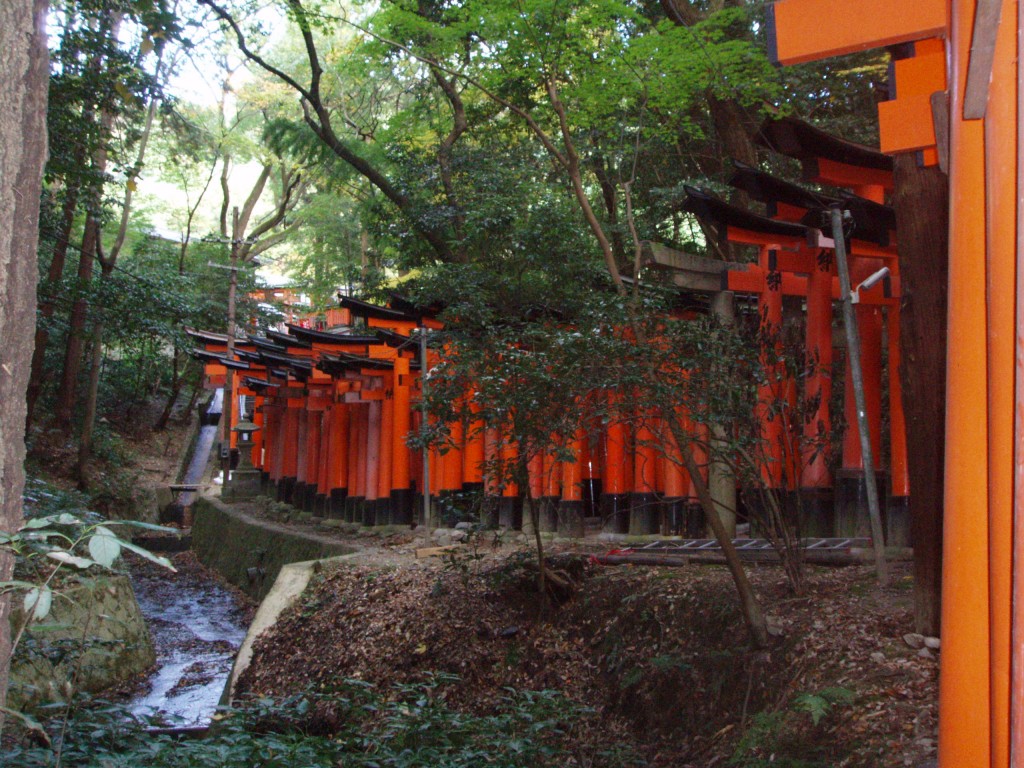
Woodland on the hill of Fushimi Inari
 

Shintai (spirit-body)

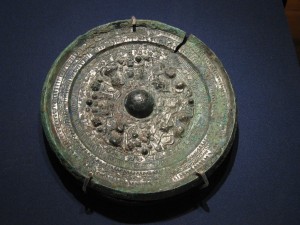
At the secret heart of the Shinto shrine is the spirit-body of the kami, locked away in the honden sanctuary and never seen or exposed to public view.  It’s a physical object in which the immaterial spirit of the kami is thought to reside.  Typically it’s a bronze mirror, though it can also be a sword, magatama jewel, gohei, rock, or simply a wooden tablet with the name of the kami.

The kind of ancient bronze mirror used as shintai. The non-reflecting side, as here, is decorated with patterned shapes and sometimes images.

Why is a mirror the most common spirit-body?  In Shinto mythology, Amaterasu the sun goddess gives a mirror to her grandson Ninigi no mikoto when he descends to earth.  Imported originally from the continent, mirrors were a shamanistic tool for repelling evil spirits.  As rare and expensive items, they were also a sign of spiritual authority. ‘Regard this mirror exactly as if were our august spirit, and reverence it as if reverencing us,’ Amaterasu says to her grandson.

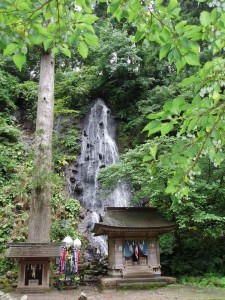
In exceptional cases the shintai is a natural phenomenon outside the shrine visible to all, such as a mountain (known as shintaizan), large rock (iwakura), sacred tree, or waterfall as at Nachi. Omiwa is the most famous case of a sacred mountain as shintai, and it’s possible to make a pilgrimage to the top.  Direct worship of natural phenomenon reflects how kami worship originally took place, before the building of shrines following the arrival of Buddhism in the sixth century.

It’s said that the use of shintai arose through the practice of offerings.  Mirrors and other items were hung on trees during rituals and festivals (as in the Rock-Cave Myth in Kojiki). These offerings were valuable items, and with the spread of Buddhism came the notion of housing them in a sanctuary (honden).  As in religious practice elsewhere, the object became identified with the spirit itself, as if the kami had looked into the mirror and entered it.  Only with the spread of permanent shrine buildings in mid-Heian times is the term shintai found (with the honorific it’s usually referred to as goshintai).

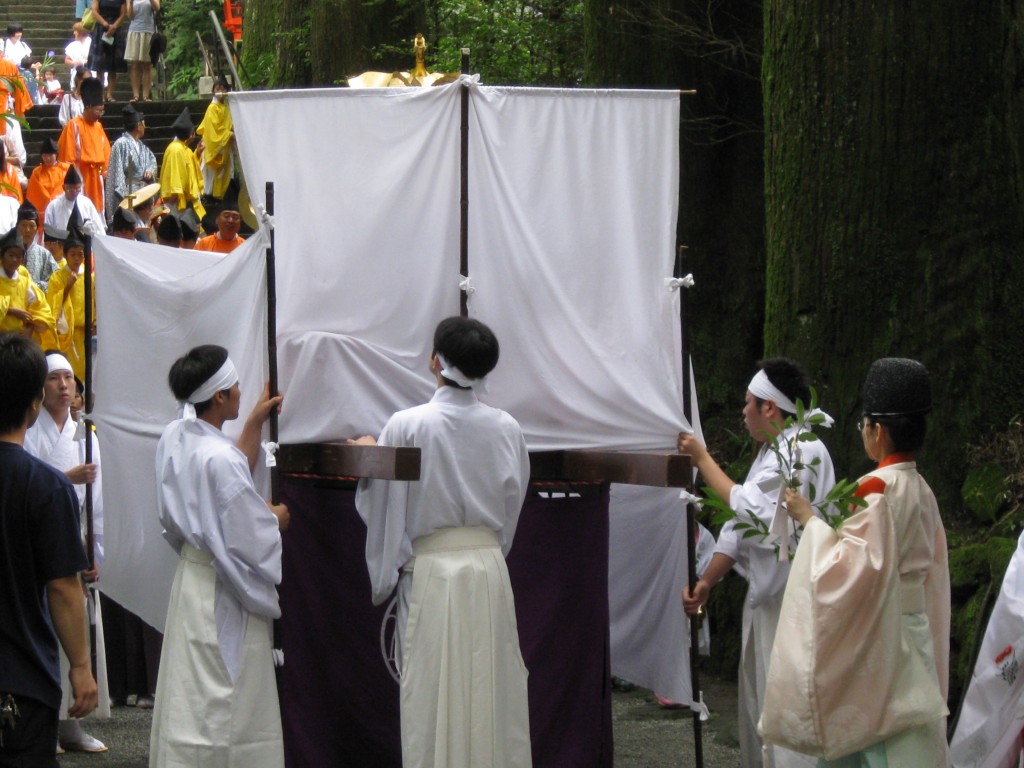
At the consecration of new shrines there is a special rite to draw down the kami into the shintai. Thereafter it’s locked away in the honden and only seen by the chief priest at the time of festival outings. In some cases, as at Ise, it is kept wrapped in a cloth covering and never seen even during removal.  In other cases it remains undisturbed for generations, and the priest himself may not know what kind of object it is.  Mystery of mysteries, indeed!

The shintai is carefully veiled from public view during a festival outing at Hakone Jinja

Shimenawa (rice rope)

One of the most striking symbols of Shinto is the rice rope used to denote sacred space, called shimenawa.  The earliest rites of Shinto are generally held to be associated with the introduction of rice culture in the Yayoi Age (300 BC – 250 AD), and as the staple food rice was treasured as a gift from the gods.  Consequently it plays a central part in the religion, from offerings of rice to rice wine as well as planting and harvesting festivals.

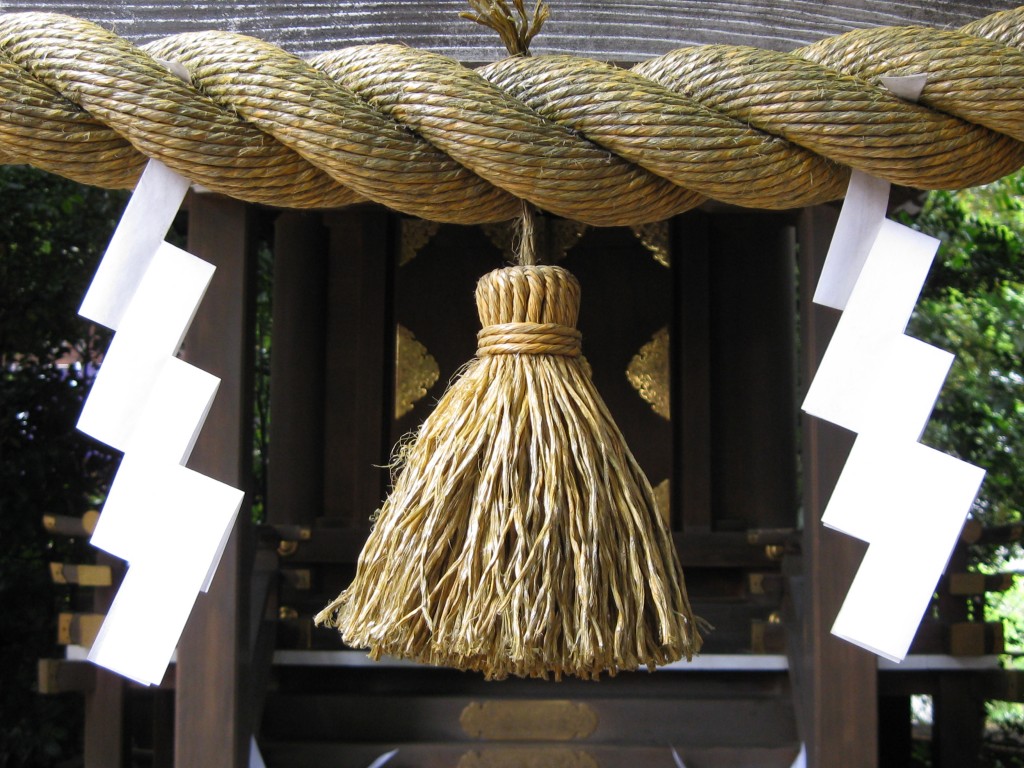
The word shimenawa breaks down into two parts: shime mean ‘to indicate or mark’; nawa is a rope. It is usually made with a left-hand twist, but the thick end is normally hung to the right.  White paper strips, known as shide, are often attached which probably originated as offerings of cloth.

According to Gunter Nitschke in From Shinto to Ando, knots were a means of denoting land occupancy since ancient times.  It provided ‘a binding agreement’ and a sense of being tied to the land.  Over time it came too to signify a connection with the spirit world.  ‘It is well documented that some of the earliest deities, not only of Japanese, but of many other mythologies are deities of binding,’ he writes.

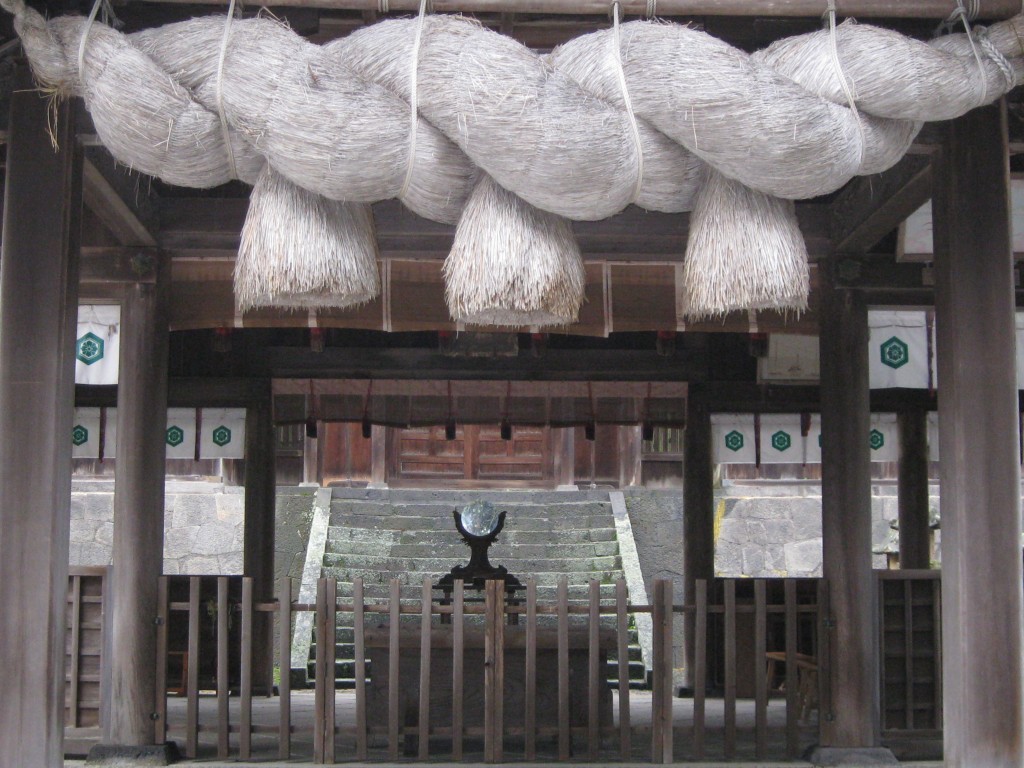
Shimenawa can be found at shrines, house altars and other sacred sites.  They’re also found on a sumo Grand Champion (yokozuna), who wears one during the ceremonial ring-entrance ceremony.  They come in a variety of styles, such as Ise, Shirakawa and Yoshida, though the best-known and most spectacular are undoubtedly those of Izumo.  They don’t come bigger than that!

Big is best: Izumo-style rope at Iya Jinja in Shimane prefecture

What is Shinto exactly?

[The following was written in conjunction with Timothy Takemoto of the Shinto Online Network]

Shinto is a ‘natural religion’, which has developed organically over time.  As such it has no founder, no doctrine, no dogma, and no holy book.  This makes defining Shinto difficult.  It is a pluralistic religion with no unified system.  Local practices differ one from another, shrines maintain their own traditions, and priests may hold contrasting opinions.

There are many disagreements among experts about what Shinto is exactly.  Amongst the main points of contention are when it first came into being; whether it is an indigenous religion or a collection of imported ideas; whether it is basically animist or ancestor worship; whether it is for Japanese only; whether it is an independent religion; indeed, there is even argument about whether it is a religion at all!

Though Shinto may defy simple definition, its polytheist framework is an intrinsic part of the Japanese mindset and its torii (gateway) has become a symbol of Japan as a whole.  Shinto practice is interwoven into the fabric of Japanese culture, and its beliefs underlie  many Japanese customs.  Here is what some commentators have written:

‘The term Shinto covers a many-hued array of Japanese religious traditions.’ (Mark Teeuwen and John Breen)

‘Shinto is a collective term that includes ceremonial customs and religious views present in the Japanese people from ancient times.’  (Haida Harahisa)

‘Shinto is a crystallized system of rites for the veneration of personalities closely connected with our existence and our national history’ (Tsuzuki Keiroku)

Shinto is ‘one of the last great truly natural, human a-rational philosophy systems’.  (Stuart Picken)

‘It is a combination of the worship of nature and of their own ancestors.’  (Percival Lowell)

Lowell’s definition offers an easy way into Shinto, for the definition suggests the blend of animism and national rites that characterises the religion.  This can be seen in the example of the primal deity, Amaterasu.  Her name means ‘Heaven Shining’, and the deity is thought to have originated with a shamaness-ruler in ancient times (ancestor worship), whose radiance was compared to the sun.  In time she became identified with the spirit of the sun and worshipped as the sun-goddess (animism).  As such, she was claimed as the founding mother of the imperial line and the supreme deity.

One could say then that the tension between nature worship and magico-political rites lies at the core of Shinto.  It is neither simply ancient paganism nor simply a vehicle for social cohesion, but it contains elements of both.  What unites the two is the concept of kami, a term that is difficult to understand but which roughly equates to ‘spirits’.  The definition of kami will be dealt with elsewhere.

Shinto as a nature religion – but it is also in a sense a religion of Japaneseness

National Foundation Day at Kashihara Jingu

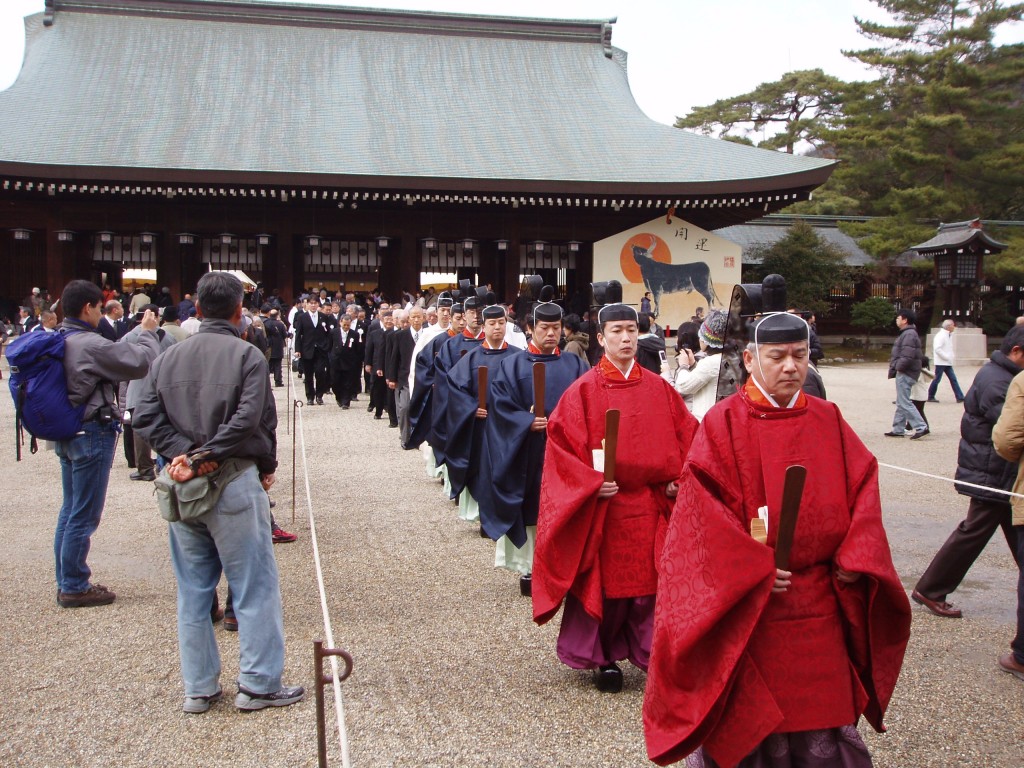
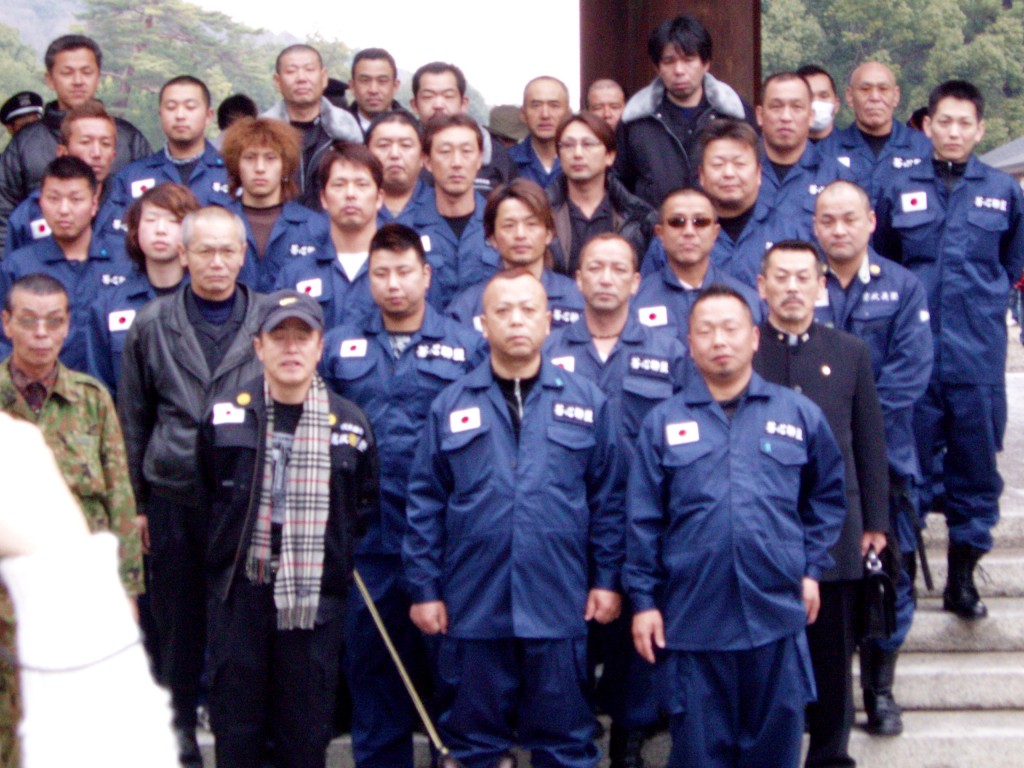
February 11 is National Foundation Day, and what could be more appropriate than to celebrate it at Kashihara Jingu in Nara prefecture (ancient Yamato). The shrine is supposedly located on the very palace where Emperor Jimmu started the country in 660 BC.  At least that’s the mythology.  Nearby lies his alleged grave, identified by the Meiji ideologues who introduced Shinto as the national religion after the restoration of the emperor system in 1868.  As such the venue is a popular meeting place for nationalists.

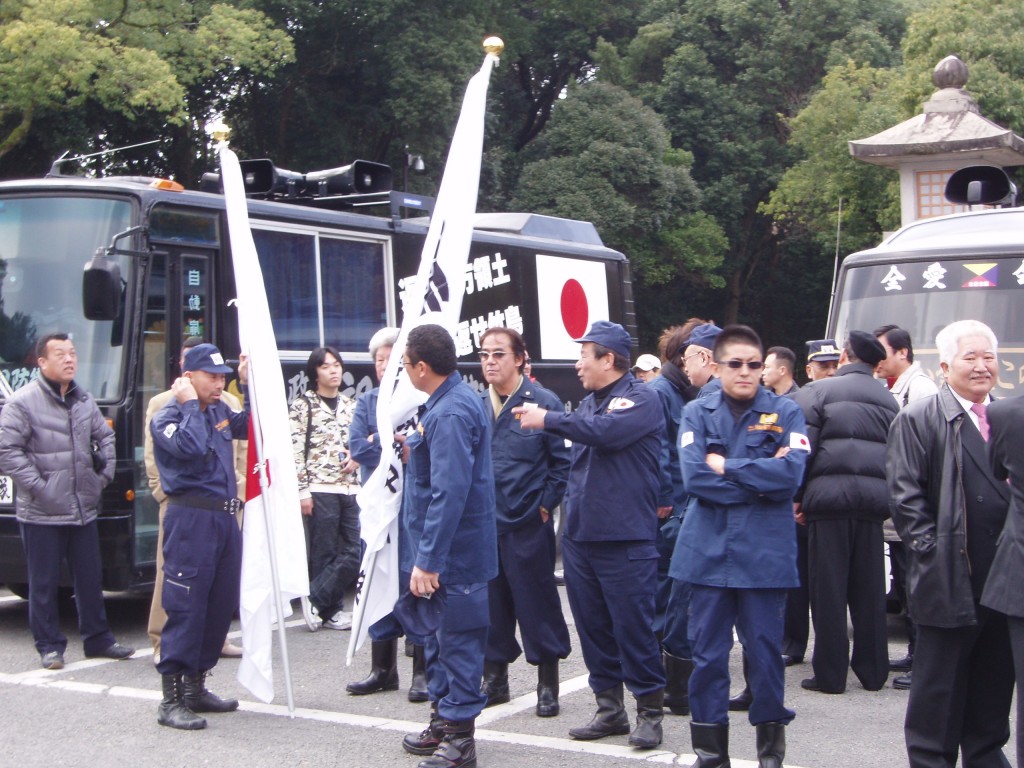
The date originally coincided with the new year on the old lunar-solar calendar, but was fixed as Feb. 11 in 1873. The holiday was big in prewar times, but military displays as at Kashihara are restricted now to the small paramilitary far right groups from around the country.

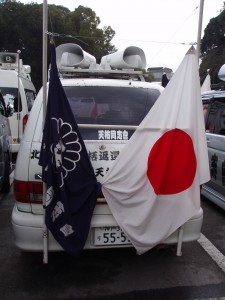
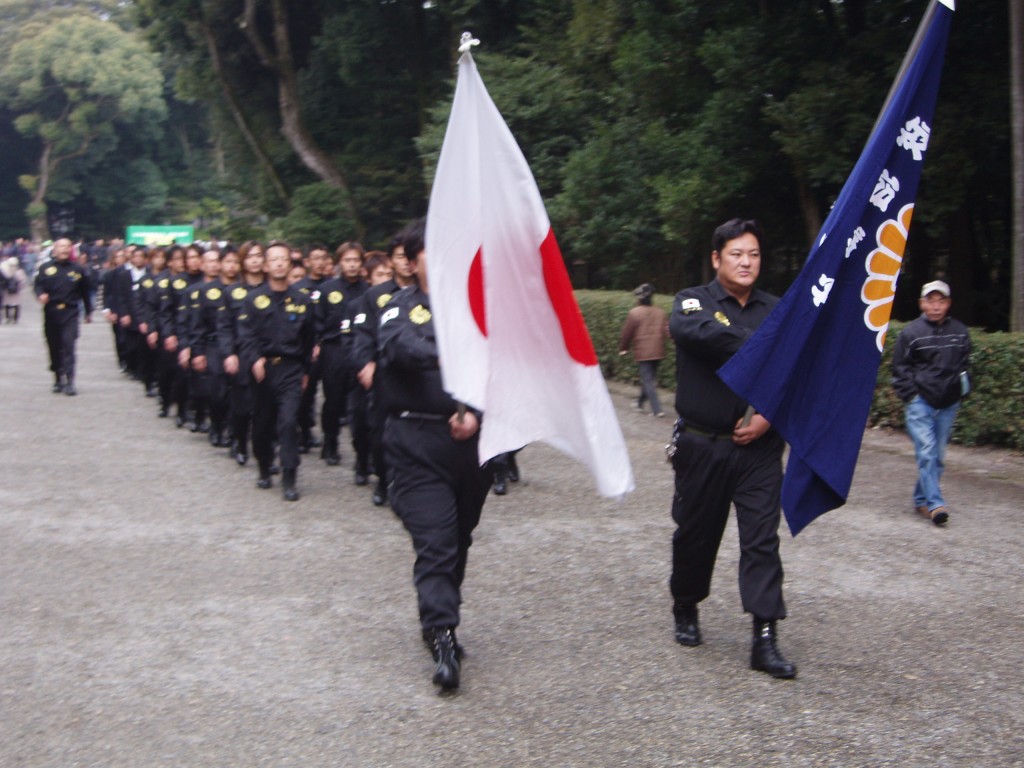
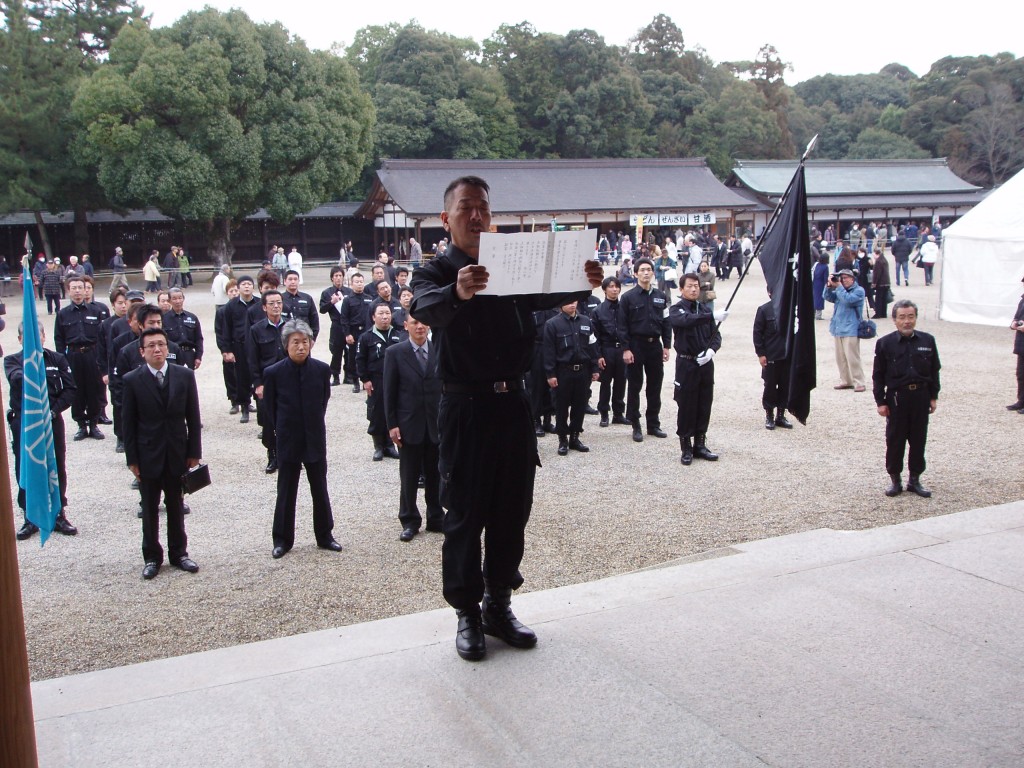
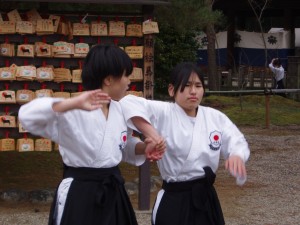
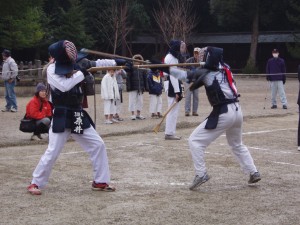
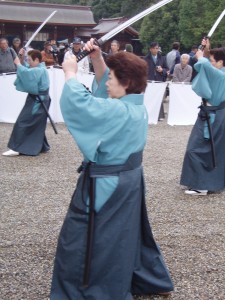
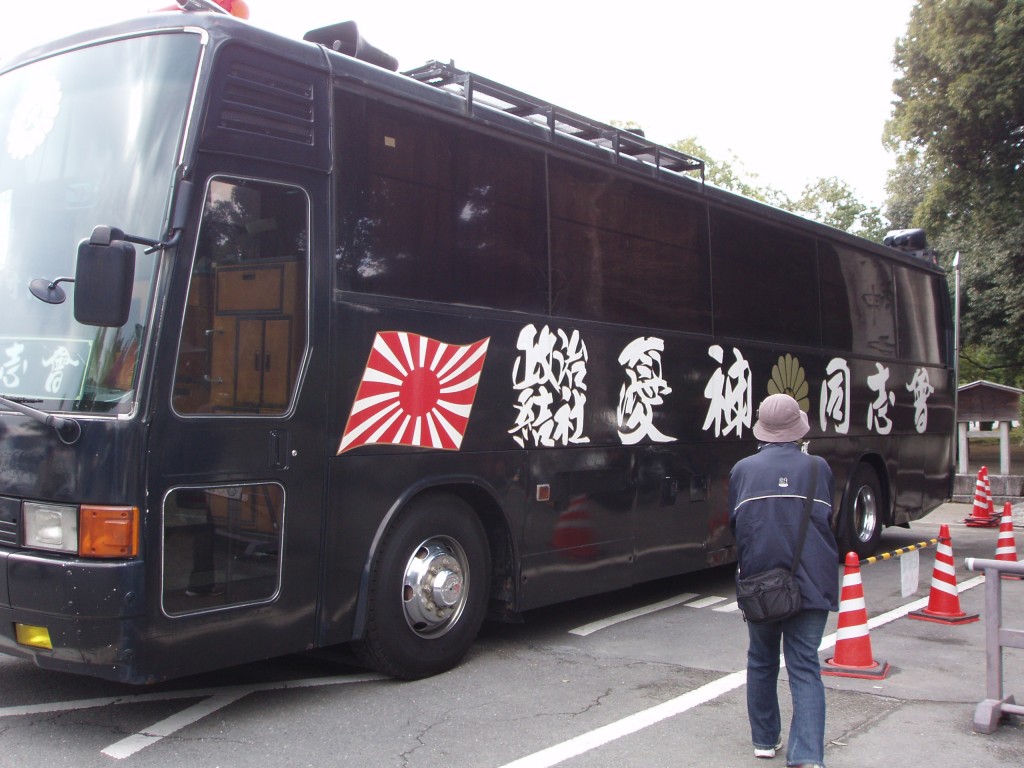
A couple of years ago I was able to walk around the car park and see vans from all over western Japan.  The paramilitary groups form up and march up to the shrine to pay respects, with orders being shouted out and their best uniforms on display.  Some are well drilled, some are somewhat amateurish and comical.  It’s all very surreal, as visitors and shrine priests politely ignore them.   At the same time in the large courtyard in front of the shrine there’s an exhibition of martial arts put on by local groups, including aikido, kendo and swordsmanship.

Recently a law was passed to outlaw the vans of the far right groups, so whether things are quite the same I’m uncertain.  Personally I find nationalism abhorrent, but intrigued by what kind of people would want to spend their free time marching around in uniform I got talking to a couple of members from a group in Nagoya.  Like most Japanese, they turned out to be perfectly modest and civil.  We didn’t talk politics, though!

Paramilitary parade to the shrine to celebrate Foundation Day

A declaration of unswerving loyalty at the shrine

Shrine priests parade too, but in somewhat different manner!

Aikido display

Kendo display

Dogs too get in on the patriotic spirit

Sword skills

Meanwhile, paramilitary groups pose for the obligatory group photograph

Afterwards it's back to the car park...

... and back home from wherever they came from

Fom animist to ancestral kami

Early Shinto showed a marked shift from animism to ancestral deities, according to Mori Mizue in ‘Ancient and Classical Japan: The Dawn of Shinto’ (in Shinto – A Short History, 1998).

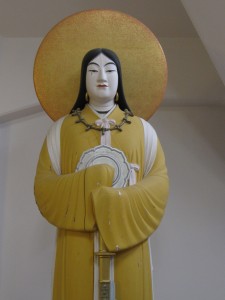
Statue of Amaterasu at Jingu Museum at Ise

The background concerns the eighth century, following the celebration of a sacral emperor in the mythologies of Kojiki (710) and the subsequent organising of shrines under a central authority.  In 768, an ambitious monk named Dōkyō made an audacious attempt to become emperor. As a result the establishment sought to strengthen the hereditary principle and the right to rule by blood lineage.  Many of the shrines originating in the late eighth and ninth century were consequently typified by family groupings and putative ancestral clan founders, shrines such as Kamo Jinja and Hie.  It was around this time too that Hachiman came to be identified as former Emperor Ojin.

The old kami were territorial, but these new kami were based on ties of blood.  Mori Mizue suggests the eighth-century verse anthology Manyoshu might have been compiled towards a similar end, in order to venerate the blood ties of the ruling class.  At the end of the century, under Emperor Kammu (who founded Heian-kyo), major shrines came to be seen as places to celebrate the ancestral spirits of those in authority, and by the time of the Engishiki (927) few of the old nature spirits are listed amongst the kami.

Kami started as nameless and formless spirits.  Personification followed, influenced by Buddhism.  Then came the transformation into ancestral spirits.  In such manner the spirit of the sun became Amaterasu, the weaver-queen.

Sacred groves

Sacred groves are the closest contemporary Shinto comes to environmentalism.  In an article in the Daily Yomiuri, naturalist Kevin Short writes of their history and the type of trees.  For the full article, click here.

*********************************************************************************************

Sacred tree in a sacred grove

Last week, I spent several days cycling around the Hokuso countryside of northern Chiba Prefecture. I am currently working on a project to document many sacred groves that surround Shinto shrines and Buddhist temples in this region. At each site, I record the species and measure the circumference at chest height for all the big trees that form the grove.

In much of Japan, the sacred groves have been left uncut for close to 150 years. Over this period, many of the trees have grown to immense size, and in some cases the grove has developed into a small packet of primary forest. In western and southern Japan, including the south Kanto region, the original primary vegetation represented the extreme northern and eastern edge of the great Asian evergreen broad-leaved forests, a huge forest tradition distributed in a wide swath from the eastern Himalayas across China to the Pacific seaboard.

The area occupied by this forest type, called Joryoku Koyo Jurin or Shoyo Jurin in Japanese, centers on the subtropical and warm temperate zones. Normally, the main Japanese islands would be well outside this area. Thanks to the ameliorating effect of the Kuroshio and Tsushima warm currents, however, the trees extend northward along the coastline as far as Aomori and Iwate prefectures in the Tohoku region.

Ise Jinja, Tanegashima

Unfortunately, the areas formerly home to Japan’s evergreen broad-leaved forests were also the areas best suited to irrigated rice agriculture. This technology was introduced into northern Kyushu from the Korean Peninsula about 3,000 years ago, and rapidly spread eastward. As the population grew, the pressure on local forest resources increased, and much of the primary forest was cut down and replaced by faster-rejuvenating oak coppices or piney woods. In the more recent post-war years, almost all the remaining swaths of primary forest were clear-cut to make room for conifer timber plantations. Sacred groves thus now play an important ecological role by preserving small patches of this vital forest habitat.

Although my sacred grove survey is still in progress, the results clearly show that two species of tree in the Fagaceae or Beech Family (buna-ka) are dominant. These are the sudajii chinquapin (Castanopis sieboldii) and the aka-gashi evergreen oak (Quercus acuta). The most common circumferences for these sacred grove trees range from 150 centimeters to 250 centimeters, which may represent a typical size for 150-year-old trees. Some specimens, however, are obviously much older, with circumferences close to 400 centimeters.

Another charismatic sacred grove species, far rarer than the oaks and chinquapins but often rivaling them in stature, is the tabunoki bay tree. These trees are classified in the Lauraceae or Laurel Family (kusunoki-ka). They are resistant to salt air, which allows them to thrive along the immediate coastline. They are also fairly hardy, and as a result usually dominate sacred groves and other protected primary coastal forests in the far northern edge of the evergreen broad-leaved distribution.

During the winter, tabunoki can be identified by a large single bud that forms at the tip of each branch. In late April, these open up to let out the flowers and a new growth of leaves. The young leaves show a distinct reddish tint, and the flowers, although small and rather inconspicuous, are nectar-rich, and attract a varied insect clientele. The fruits are dark green at first, but ripen to a bluish people.

Uga Jinja at Nojiriko in Nagano

« Older posts Newer posts »

© 2026 Green Shinto

Theme by Anders NorénUp ↑