Author: John D. (Page 181 of 202)

Aomori power spots

Japan’s craze for New Age ‘power spots’ appears to be moving from a national level down to localised areas.  According to an article in today’s Japan Times, Aomori has come up with no fewer than 58 ‘power spots’ in its prefecture.  Of course it would be the height of cynicism to suspect that tourism might have anything to do with this, but it does lead one to wonder how the spots were officially identified by the prefectural bureaucrats.  Do they perhaps have their very own Onmyoryo (Office of Yin-Yang) as in days past?

*************************************************************************
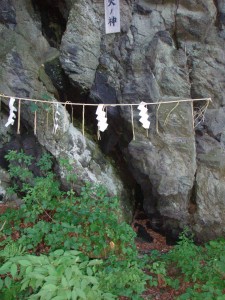
Sacred crack at the shrine beside Lake Towada, one of the prefecture's power spots

Saturday, Jan. 28, 2012

Aomori plugs its ‘power spots’

Kyodo

AOMORI — Aomori Prefecture is promoting 58 areas as “power spots” that tourists can visit to experience their mystery or healing power and energy.

Thirty-seven of the sites are renowned for their natural healing powers, according to the prefecture, including hallowed ground on Mount Osore in the city of Mutsu. The other 21 sites have been designated mystery zones and include “Jesus Christ’s grave” in the village of Shingo.

The prefecture has also designated certain shrines, springs and even trees as power spots. The downward slope of Atomodori Zaka in the town of Hashikami is a “mystery zone” as under certain conditions people feel they are walking uphill.

However, the move has made some locals uneasy. “We have concerns that there will be more people visiting our shrine without earnest motives,” said Kiyotsugu Matsuhashi, a priest at Takayama Inari Shrine in Tsugaru.
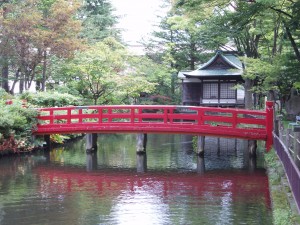
Utoh Jinja, Aomori. The shrine was formerly much more extensive, spreading down to the sea shore. The 'utou' is a bird, and the Utou clan leader founded the shrine some time around Kammu's campaign to subdue the northern Emish.
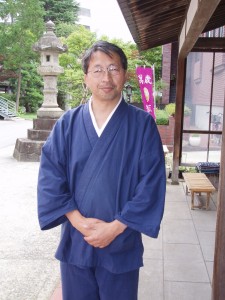
Head priest of the Utoh Jinja, now a power spot. I got the impression that his predecessors installed the daughters of Amaterasu as kami in order to show his allegiance to the Yamato clan.
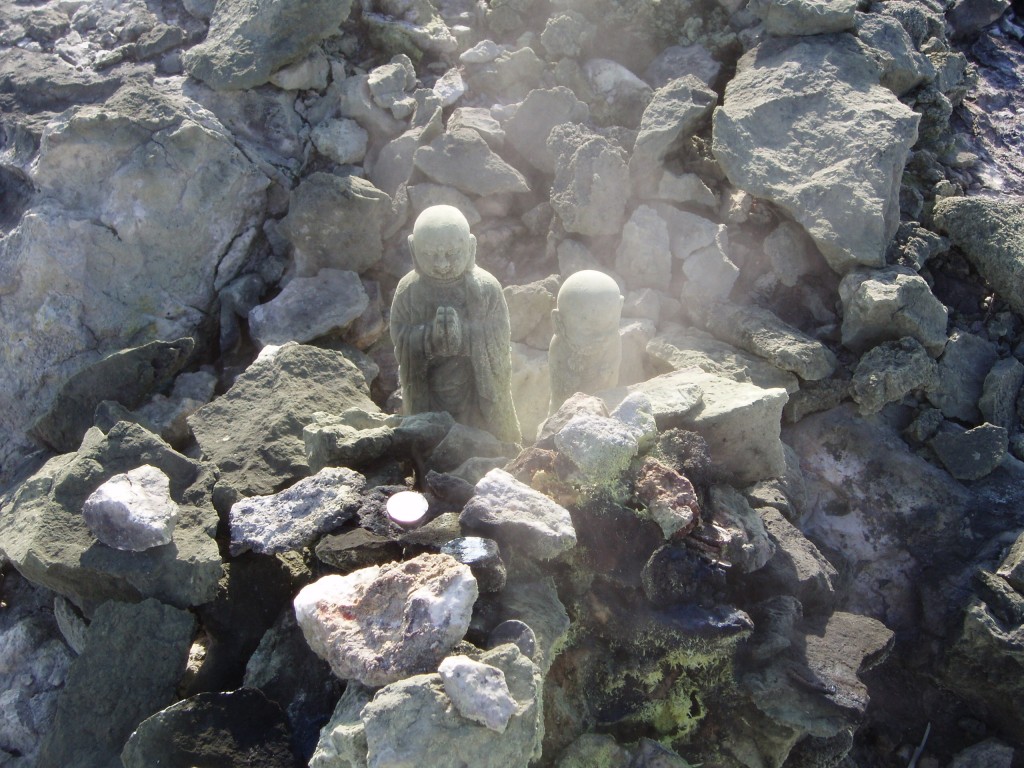
Aomori's most famous power spot: Mt Osore, which supposedly resembles the Buddhist hell because of the sulphuric gas and desolate landscape
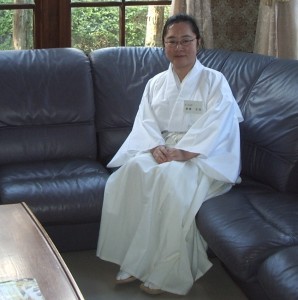
Rica Saito, head priest

Could you tell us about your shrine?

It’s in Koriyama in Nara Prefecture.  It was founded more than 1,300 years ago for the protection of the old Nara capital.  It’s mentioned in historical works, including Sei Shonagon’s Pillow Book.

How long have you been in charge?

About twelve years.  I got the qualification to become a priestess about sixteen years ago, after studying on a one-year course at a college run by Atsuta Shrine in Nagoya.

It’s unusual for a female to be in charge of a shrine, isn’t it?

About 10% of priests are women, but these are nearly always the daughters or wives of shrine priests.  What’s unusual in my case is that I had no family connections at all.  In fact, I may be the first woman in Japan to become a head priest in this way.  I was lucky because I found someone who was willing to back my application.  In olden times, Shinto was led by female shamans, so it should not be unusual for women to act as priests.

What brought you to Shinto?

When I was a child, I worked as shrine attendant (miko) and learnt kagura dance.  I’m very interested in Japanese history and literature, and Shinto is rooted in tradition.  It’s the origin of the culture.  That’s the point I enjoy most.  I don’t enjoy such aspects as misogi (cold water austerity)!

What do you have to do as a priestess?

Well, it’s not a full-time posiition and I have a regular paid job.  Each month I perform ceremonies just for the kamisama (gods).  Then there are purificaiton ceremonies to protect cars and buildings; the blessings of babies a month after their birth; and the ceremonies of Shichi-go-san for the healthy development of children.  Weddings used to be important for Shinto, but these days most couples prefer chapels.

How do you feel generally about your work?

It’s important for Japanese to keep up our traditions.  There are 80,000 shrines in Japan, but a shortage of priests with only 20,000.  Recently we resurrected a festival at our shrine, which I think was good for the community. This autumn we are going to reivive a festival based on gigaku (masked dance-drama) and are looking for volunteers to help with this.  I also have a plan to establish a shrine in the UK, and am hoping to visit London later this year in connection with that.

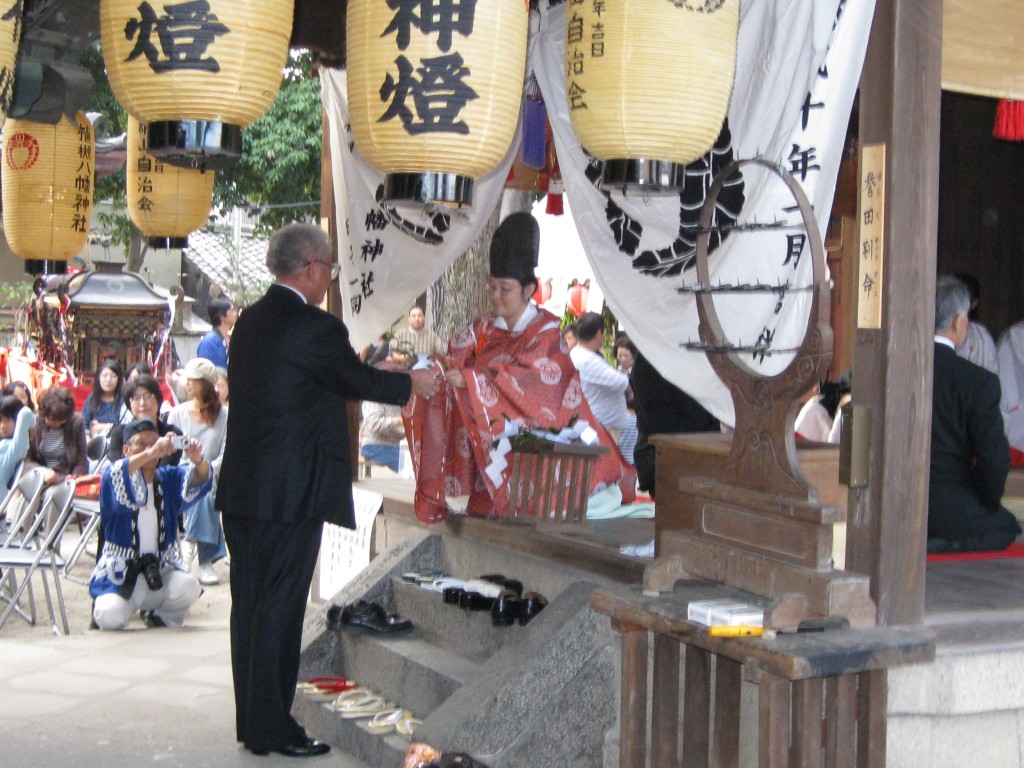
Rika Saito handing out a tamagushi at the Uetsuki Hachiman main festival

************************************************************************************

For more information about the UK Shrine project, please click here.  There is also a Facebook page, here.

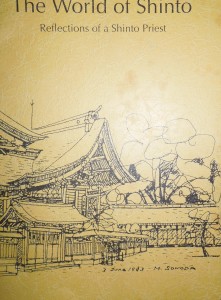
The World of Shinto (Book Review)

The World of Shinto: Reflections of a Shinto Priest  by Sonoda Minoru
Published by the International Shinto Foundation, 2002  (36 pages)

This booklet is published by the well-funded International Shinto Foundation, an independent organisation with a mission to explain Shinto to the outside world.  Here the thinking of the faith is revealed through the personal musings of an influential figure who is not only the chief priest at Chichibu Shrine but a professor emeritus at Kyoto University.

The book has four short chapters.  That on The Shrine covers the notion of kami, the function of matsuri (festivals), and the interconnectedness of life.  There follows discussion of the word ‘Shinto’ arising out of its earliest use in the Nihon shoki (720), while the chapter on The Continuity of Life deals mainly with the afterlife. Curiously given the title of the book, this is almost entirely dominated by Buddhism as we learn of the comfort given by the Pure Land and Amida.  One can’t help feeling that anyone unfamiliar with the syncretic history of Shinto would be pretty confused by this, though the writing does help illumine Japanese attitudes.

The final chapter, ‘A Misleading Image’, is given over to a robust defense of Japan’s treatment of the ‘heroes’ who died fighting for their country in World War Two.  This is clearly about Yasukuni, though the word is left unmentioned as if it were taboo.  Despite the care taken to arouse sympathy for Japanese war dead by stressing the purity of motive of such fighters as the kamikaze, there’s not a single word – let alone a paragraph or two – about the victims of Japan’s war record.  The one-sidedness is irksome.

Personally I had warmed to the author in the opening chapters, where he writes of the ties of nature and the community.  Yet by the end the author leaves one with a sense of insularity and nationalism. What is it about Shinto that makes it so concerned with Self? Where is the universalism? The paradigm Sonoda lays out extends from family to village to nation, but stops short of embracing the world at large.

‘Shinto contains an ultimate humanism and the principles for the active mutualisation of man and nature,’ writes Umeda Yoshiimi, Director General of the International Shinto Foundation, in the Foreword to the book.  The opening chapters certainly demonstrate this.  The last chapter doesn’t.  Rather than a tool of patriotism, Shinto has within it the possibilities of universalism, in keeping with the demands of a global age.  The author rightly calls for a change of thinking in terms of the environment.  He might consider a change of thinking too in terms of embracing the Other.

Atago Shrine (Kanzanji Onsen on Lake Hamana)

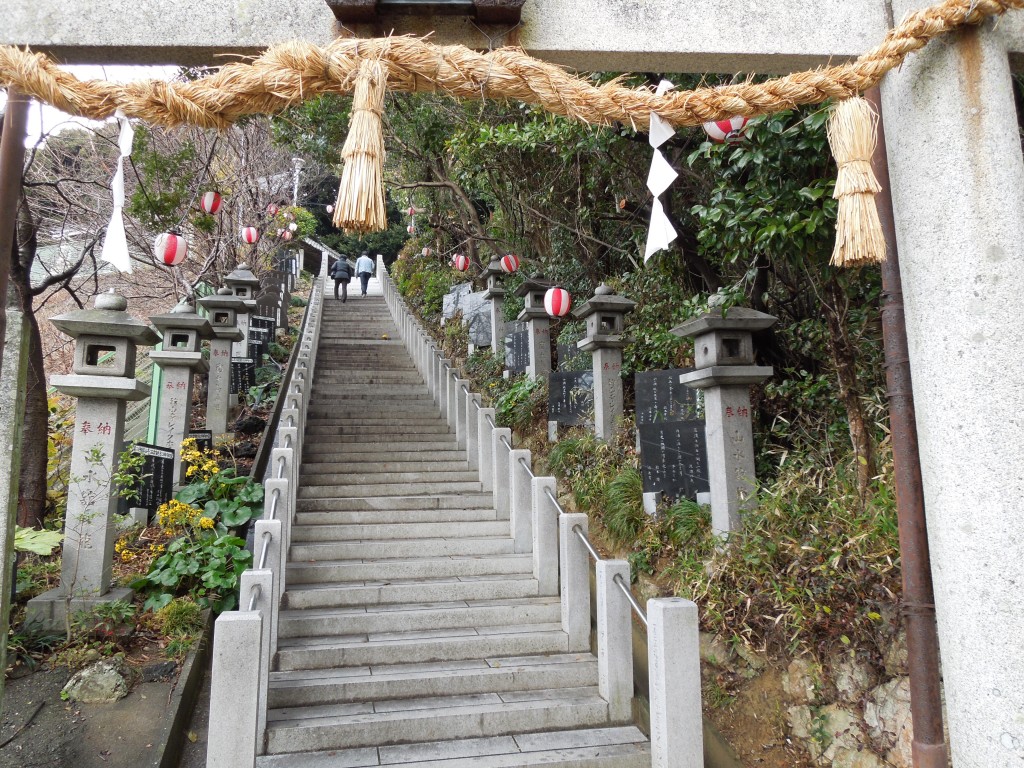
Steps leading up to Atago Shrine, lined with haiku plaques on either side


Kanzanji Onsen in Shizuoka Prefecture is a small and commercialised hot spring resort, but rather delightful out of season when there are no crowds to spoil the peace.  It’s on Hamanako, which used to be a fresh-water lake until an earthquake opened it up to the Pacific.  Now it’s famous for cultivated eel and oyster.

The hot spring resort takes its name from an ancient temple, founded in 810 by Kukai according to tradition.  Next to it stands Atago Shrine, from which a short pilgrimage trail leads round the small peninsula behind.  The trail is associated with Saigyo, who supposedly came here and meditated on a rock.  It’s rather curious that the two trailblazing figures of early Heian times should have both come to this lakeside setting, one the founder of the Shingon sect and the other the founder of Tendai.  Perhaps they were attracted by the hot springs.

The shrine is covered with the stickers of pilgrims who come to visit the site.  ‘Pray to the kami and buddhas,’ said one of them, and the syncretic atmosphere remains strongly evident.  Buddhist statues of Kannon and Jizo are placed at points around the trail, festooned with Shinto shimenawa.  Even now the temple-shrine complex looks all of a piece, despite the best efforts of the Meiji ideologues to separate the two.

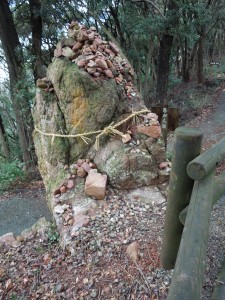
Saigyo's rock

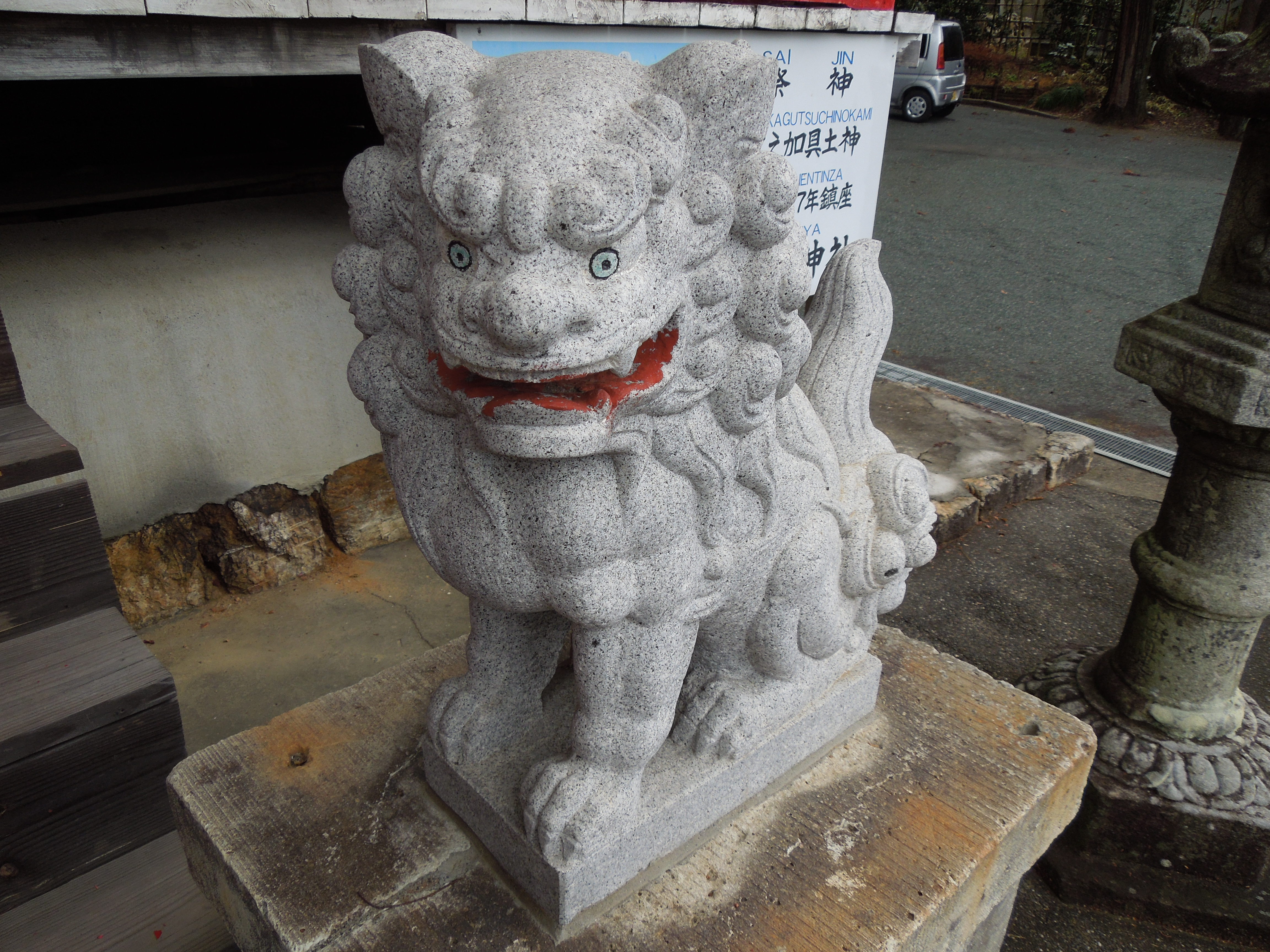
Shrine guardian with piercing eyes


Lining the steps up to the shrine are plaques celebrating the winners of the shrine’s annual Moon Viewing Haiku Contest.  (Interestingly the full moon is a symbol of Buddhist enlightenment, while Shinto is associated with the sun.)  Here on the headland, sat in the radiance of the moonlight, participants heighten their sense of wonder at the world.  This, to me, is the essence of what Shinto is all about – appreciation of the magic of life.

In Uchi Inlet
Gentle lapping of water:
Rainy moon

Evening moon –
By Saigyo’s rock
A person at prayer

Harvest moon –
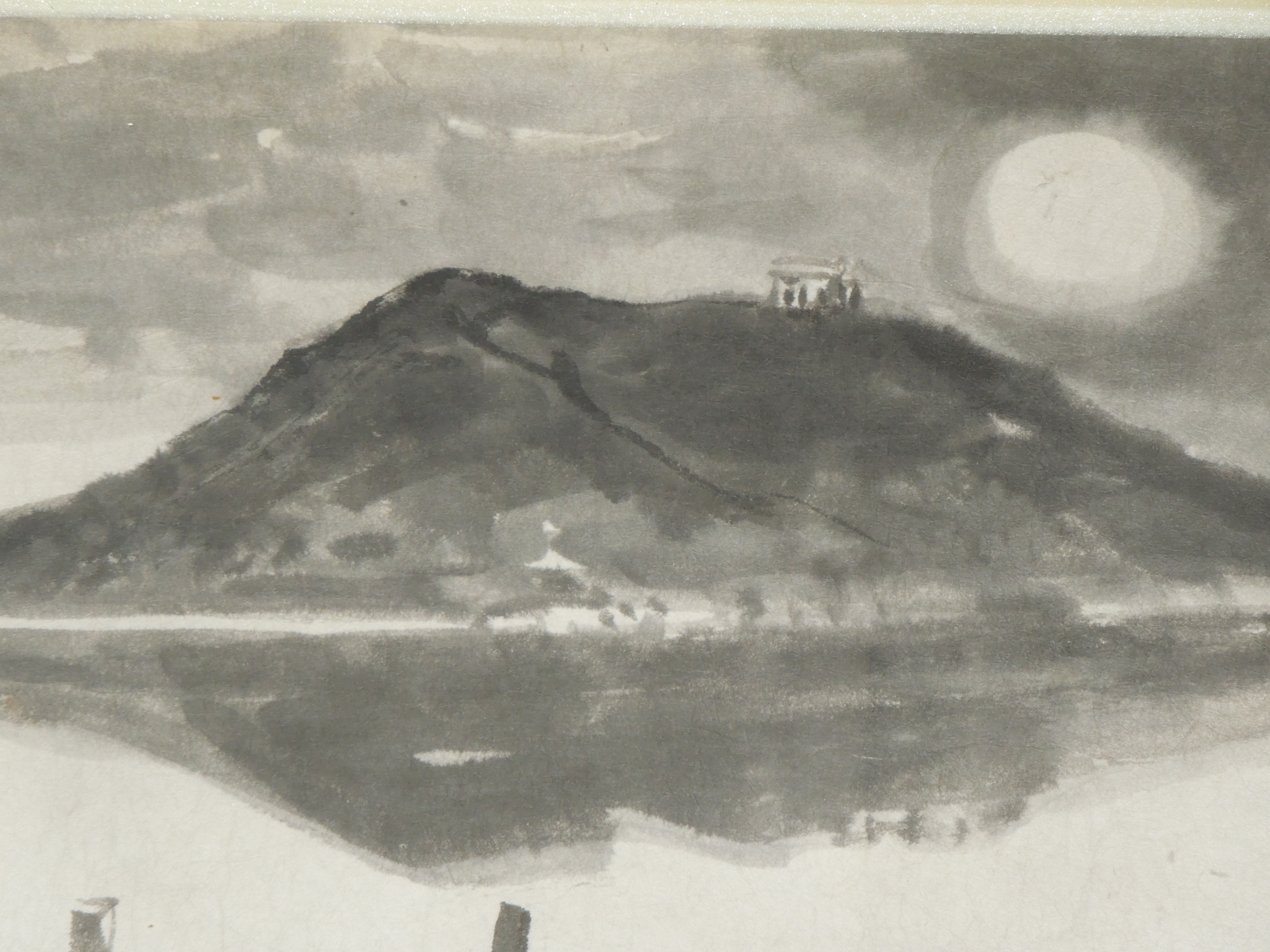
Ink painting of Kanzanji
Covering the lake


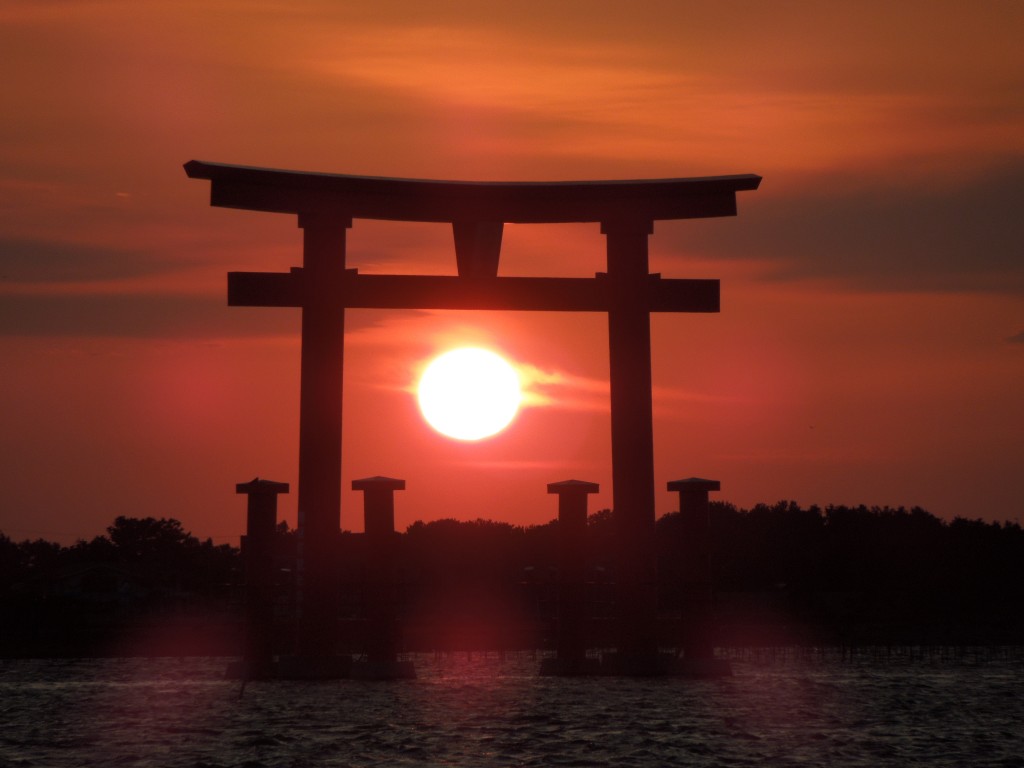
Setting sun in the Bentenjima torii of Lake Hamana

Kami etymology

In older books about Shinto, you often read that the word ‘kami’ derives from the word for ‘upper’ or ‘superior’.  It makes good sense if you think of a deity as a superior being.  It makes even better sense in a Japanese context, for the kami is always physically higher than humans.  Kamidana (spirit shelves) are placed above eye level within the house, and at shrines the place where the kami resides is raised above the place of worship.

In Shinto shrines kami are housed in a higher position than humans. On the left is the honden containing the kami's spirit body (goshintai), and on the right is the worship hall (haiden).

It turns out, however, that the equation of kami with the meaning of superior or higher is a false etymology according to modern scholarship.  In The World of Shinto by Sonoda Minoru*, the head priest of Chichibu Shrine says that the word most likely originates from the ancient Japanese kumu or kuma, meaning a secret place or recess where things are concealed. Over time it evolved into kami, meaning something hidden or invisible.

Sonoda goes on to say that another meaning of kami as the upper part of a river may have also derived from kumu or kuma.  The usage may have referred to the hidden source from which the life-giving water originated. For the rice-growing settlements the mysterious power that provided the water on which they depended became known as kami.

Unknown and concealed from view.  Life giving and life destroying.  Neither singular nor plural, these early kami had no form, no name and no substance.  Villagers set up sacred areas in groves to welcome them down from the hills and held special rituals and festivals.  Offerings and entertainment became a means of placating the kami and cultivating their good favour.  In a land of floods, earthquakes and other disasters, it was a matter of life and death.

***************************************************************

* The World of Shinto, Reflections of a Shinto Priest by Sonoda Minoru is a small booklet published by the International Shinto Foundation in 2009

Imperial quandary

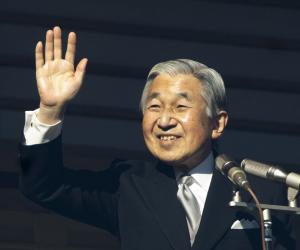
The present emperor-priest at new year, 2010 (picture by UPI/Keizo Mori)

There are many things that could be said about Japan’s emperor system.  One is that the present incumbent is certainly not the 125th in direct line from the legendary Jimmu.  There have been many hiccups on the way, and it’s generally agreed by historians that the earliest emperors are entirely fictitious.  Yet the pre-war belief in an unbroken imperial line since time immemorial has never been renounced and is still routinely trotted out.  Even Wikipedia mentions it in the very first line of its article on the present emperor.  (See Akihito.)

Since Meiji times, in an invented tradition, the emperor has been recognised as the head priest and central figure of Shinto.  Still today Jinja Honcho (Association of Shrines) devotes much effort to fostering the emperor’s prestige through its campaign to promote Ise, which is the seat of the imaginary imperial ancestor, Amaterasu.  In this respect the intriguing constitutional predicament brought about by a lack of male heirs in the imperial family is of interest, as an article in the Japan Times illustrates.  Curiously for a lineage that claims descent from the sun-goddess, females are debarred from succeeding as emperor. Hisahito, the present grandson of the ailing Emperor Akihito, is the sole male member of his generation, leading to nervous thoughts about the future.

Excerpt follows from an article by Colin P.A. Jones, professor at Kyoto’s Doshisha Law School.

*************************************************************************************

Since members of the Imperial family are prohibited by law from adopting children, there is a very real prospect that in the not-too-distant future the Japanese Imperial household will be reduced to little more than a single nuclear family headed by Prince Hisahito and his wife.

Under current law, if all of the princesses marry out of the monarchy, Hisahito would quite literally be the only one left in the household to perform a myriad of state functions and religious ceremonies. He and his lucky spouse would also have to bear the intense pressure of producing male heirs to continue the lineage, a burden that reportedly drove his aunt, Princess Masako, to the brink of despair.

The onerous responsibility imposed by state functions on the Emperor should not be underestimated. Some of them, such as appointing the prime minister, receiving foreign ambassadors and promulgating new legislation, are mandated by the Constitution. Other members of the Imperial family thus play an important role not just as a source of potential heirs, but also as proxies for the Emperor when he is unavailable due to illness or other commitments. During Akihito’s recent hospitalization the Crown Prince performed state functions in his place.

At a recent press conference Prince Akishino suggested there should be a “retirement age” after which the Emperor should perform only constitutional functions, leaving the rest of the Imperial family to handle the many other public duties not specified in the Constitution (there are no provisions in the law allowing emperors to retire completely before death). Yet even this would not be a long-term solution if there are no other Imperials around to share the burden. While the constitutional roles performed by the Emperor are formalities, if neither he nor any lawful proxies are available to perform them, a constitutional crisis is possible nonetheless.

As for succession, that having a baby boy remains a matter of fate has been demonstrated by the situation of the current Crown Prince and Princess Masako, not to mention numerous Imperial predecessors, who in days past were at least aided by the availability of official concubines. Akihito’s grandfather and great-grandfather, the Meiji and Taisho Emperors, were both born to concubines (a status that would have rendered them ineligible for the throne under current law).

*************************************************************************************

(Click here for the full article.)

Storm appeal at Tsubaki USA

A bad storm has hit the Tsubaki shrine near Seattle in the US, and an appeal has been launched to help clear the many trees that have been felled by the elements.  At one point the situation seemed quite serious, but the immediate danger has apparently passed now….  (For an account of Tsubaki America, see here; for an interview with Rev. Barrish, see here.)

_____________________________________________

Tsubaki shrine building surrounded by trees, before the storm struck

Messages from Rev Barrish and his wife that reached here on the morning of Jan 20 were as follows:

Current situation is that it is snowing moderately heavily with a large ice storm expected to arrive later this afternoon / evening…  electricity was restored last nigh at 1:00 AM…Snohomish PUD has over 100 crews out in the field, tree crews , line crews etc. who are working around the clock with minimum sleep and maximum dedication…

..owing to the particular nature of the layers of snow and ice this series of storms has been extra dangerous as the weight continues to pile up on trees….on Kaikan side many many trees are down, mostly alders, but a medium sized cedar tree has grazed our apartment as well…literally dozens of trees are already down on Kaikan side…
Jinja side…a medium sized and much loved yamazakura/ mountain cherry has fallen against the shrine building…we think the roof is intact and are dealing with that tree as well as a number of other trees that have fallen….however a pair of very large alder trees located to the north side of the Shrine building have seriously increased their angle of lean…it seems quite likely they will not last the day…we have managed to find a tree service whose owner and crew are willing to do their best to save the shrine building today…   again the situation is extremely dangerous to this crew and to the shrine building as well….
Normally to remove such large and dangerous trees costs several thousand dollars…with the added stress on the trees of the huge amounts of snow and ice and added danger the fee has increased by a factor of three as well….ganbarimasu…….

Rev. K. Barrish
America Tsubaki Okami Yashiro Kannushi

*************************************************************************

Shrine is in serious danger by snow storm !!!! Please help us!!!
Many big trees had fallen down already. And now 2 huge trees are almost to fall down on shrine building. We contacted professional tree service to save our shrine. It estimate about $6000.00. It is huge money for us. Could you help us please?On the shrine facebook and Yahoo members— there are more than 1200 people. If each of you can help us even just $5-10 , it will be big support for us. Please consider to help save our shrine.  Our paypal account is kannushi@tsubakishrine.org or if you would like to donate by credit card, please contact to Barrish sensei by phone or e-mail. But we are not sure how long we can have power here.  Thank you, thank you for your support and love to shrine in advance!!!!!!!
********************************************************************************************
Tsubaki contact details…

Tsubaki Grand Shrine of America
& Tsubaki Kannagara Jinja

17720 Crooked Mile Rd.
Granite Falls, Washington 98252
phone 360-691-6389
email at
Kannushi@TsubakiShrine.org

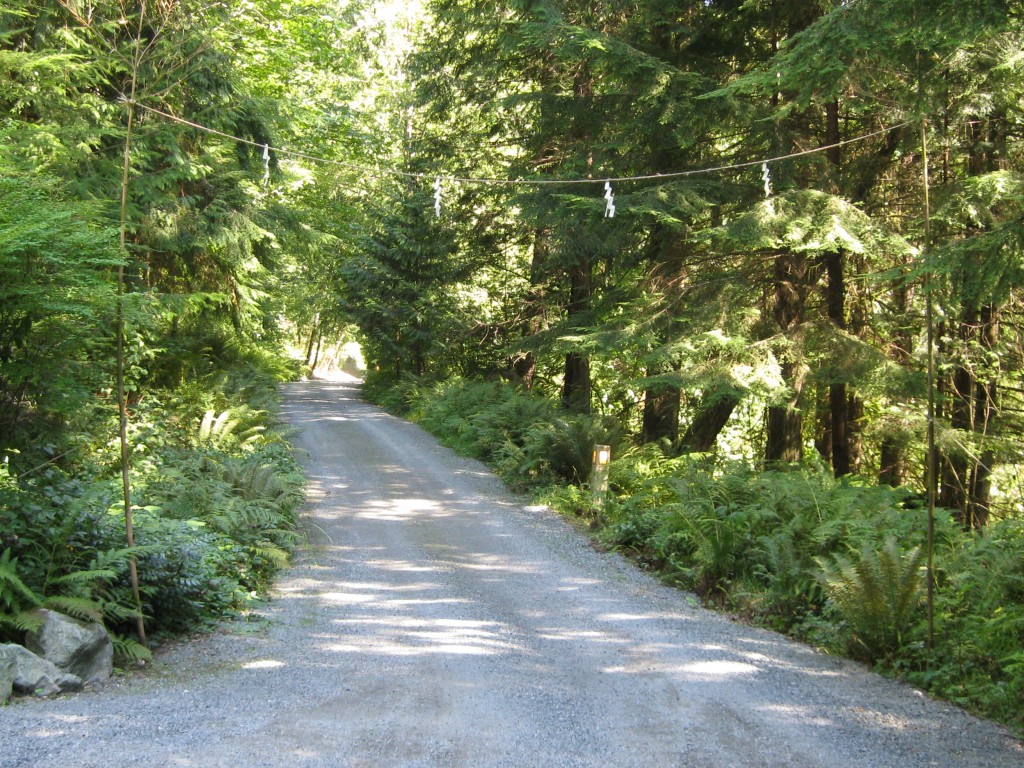
Entrance to Tsubaki America, with some of the trees that have suffered in the present storm

« Older posts Newer posts »

© 2026 Green Shinto

Theme by Anders NorénUp ↑